Synergistic innovation is becoming the key driver of deeper integration between universities and research institutions.
On April 20, a signing ceremony for an agreement to deepen cooperation between the Eastern Institute of Technology, Ningbo (EIT), and Yongjiang Laboratory (Y-Lab) was held at EIT. Benchmarking the partnership models of top-tier international universities and leading laboratories, the two parties will engage in comprehensive, multi-level cooperation in areas such as high-level talent exchange, joint graduate student cultivation, collaborative research, and sharing of platform resources — marking a new chapter in their joint innovation efforts.
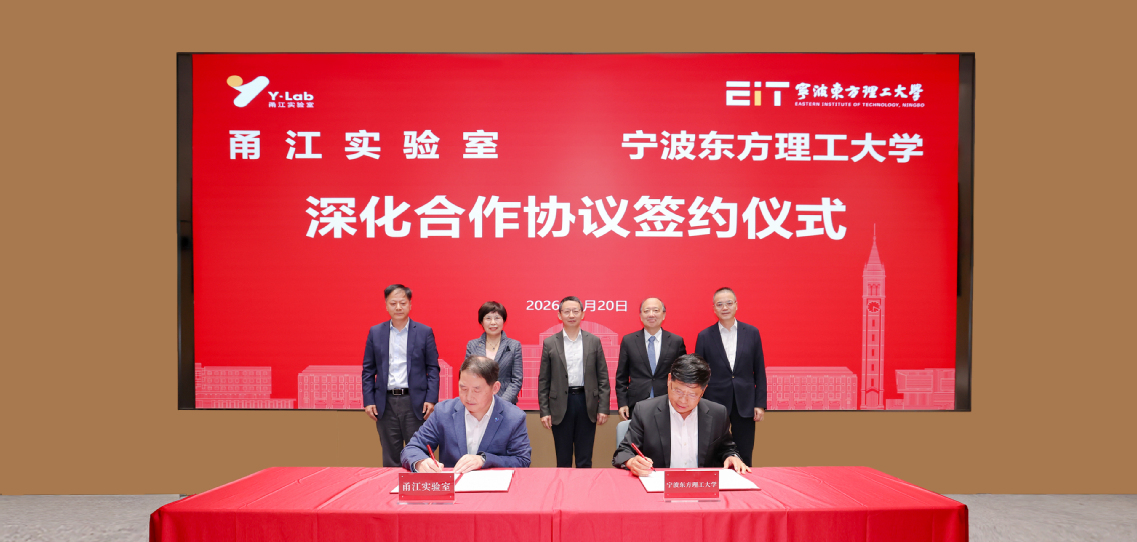
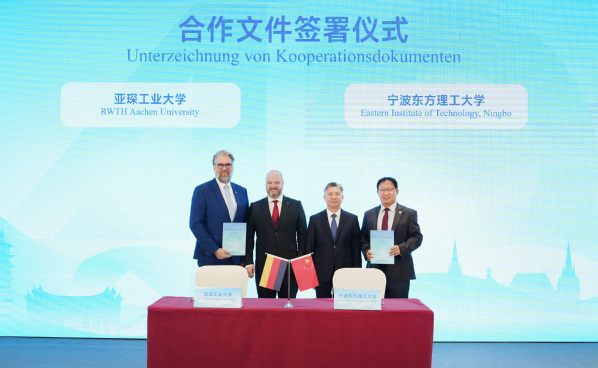
Signing Ceremony
Professor Chunmiao Zheng, Vice President of EIT, and Professor Xuedong Wu, Vice Director of Y-Lab, signed the agreement on deepened cooperation on behalf of their respective institutions. The signing was witnessed by Mr. Yan Xu, Member of the Standing Committee of the CPC Ningbo Municipal Committee and Vice Mayor of Ningbo; Professor Shiyi Chen, President of EIT and Member of the Chinese Academy of Sciences; Mr. Bo Jin, the Party Committee Secretary of EIT; Professor Ping Cui, Director of Y-Lab; and Mr. Yuan Zhu, Secretary of the Discipline Inspection Committee of Y-Lab.
Professor Dongxiao Zhang, Executive Vice President and Provost of EIT, presided over the ceremony. Senior officials from Y-Lab and members of EIT's leadership team attended the event.
Vice Mayor Yan Xu noted that universities are the main force driving fundamental research, while laboratories are the primary fronts for tackling key technological challenges; therefore, synergy between the two types of institutions is both timely and significant. The deepened cooperation between EIT and Y-Lab is a major event in Ningbo's technological innovation and higher education development. It also represents an important step for the city to advance the integrated development of education, science and technology, and talent, and to accelerate the cultivation of new quality productive forces.
The strong alliance, which aligns with world-class collaboration models while serving national strategies and regional development, will inject robust momentum into Ningbo's new journey to transform itself into a high-level, globally oriented innovative city and a "Global Hub for Smart Manufacturing and Innovation."
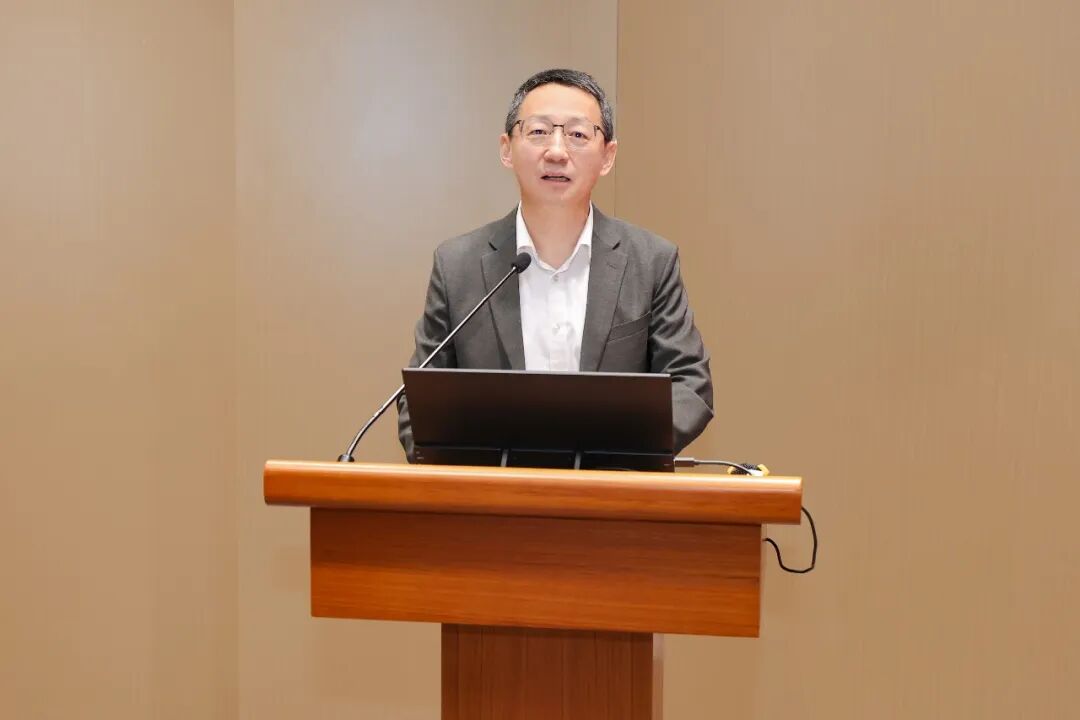
Address by Vice Mayor Yan Xu
President Shiyi Chen noted that EIT and Y-Lab are neighbors, located across the street from each other at the heart of the "Yongjiang Science and Technology Innovation Zone". Y-Lab serves as a key driver of Ningbo's scientific and technological innovation and is committed to becoming a world-class hub for new materials research and development. EIT, true to its founding principles of building a "High-Caliber Foundation, Compact yet Distinguished, Research Oriented, Globally Engaged" institution, focuses on strategic areas such as artificial intelligence, integrated circuits, and new energy and new materials. Based in Ningbo, the institute has a national mission and a global perspective.
The deepened cooperation will center on four key areas: talent exchange, joint graduate student cultivation, collaboration on critical core technologies, and sharing of major research platforms. Through comprehensive, deep, and regular joint innovation, the two sides aim to cultivate entrepreneurs with the mindset of a scientist and cultivate scientists with the vision of an entrepreneur, and tackle "bottleneck" technologies. Just as Stanford University and SLAC National Accelerator Laboratory have long driven disruptive technological innovation in service of national strategies through deep synergy, so too will this partnership.
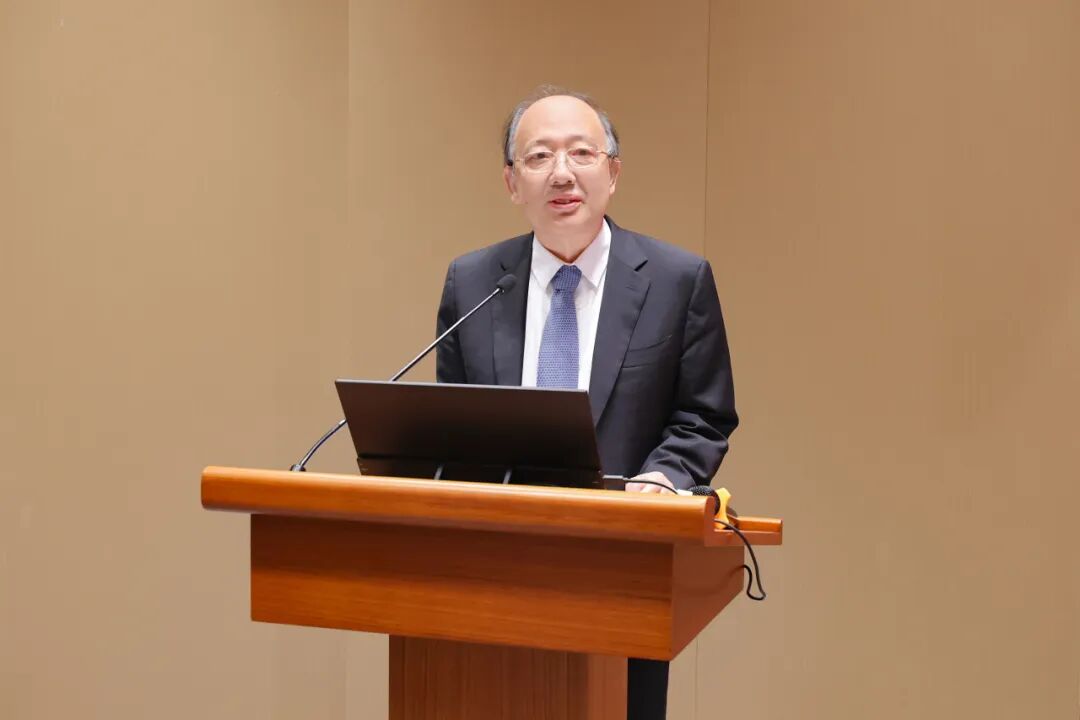
Address by President Shiyi Chen
Director Ping Cui recalled the shared journey of the two institutions as "fellow travelers" in science and education. She noted that both Y-Lab and EIT possess a flexible and pure innovation orientation, and share the historic mission of pioneering the reform of China's science and technology system. This deepened cooperation is a natural response to the global trend toward deeper integration between leading universities and top-tier research institutions.
Looking ahead, with an open approach and pragmatic actions, the two sides will tear down the "invisible walls" between institutions. Through the free flow of top minds, joint cultivation of future innovation leaders, and unreserved sharing of research resources, they will achieve deep integration, co-build a globally influential hub for science and education, and create an exemplary model of university-laboratory synergy. Their efforts will make a robust contribution to high-level national self-reliance and strength in science and technology.
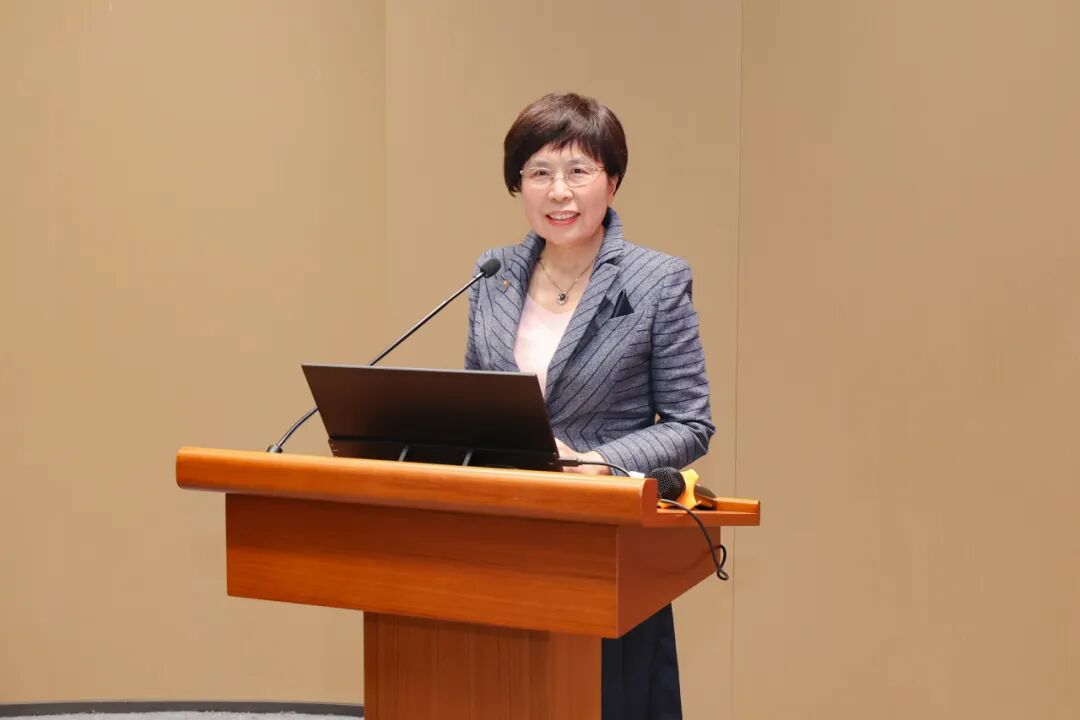
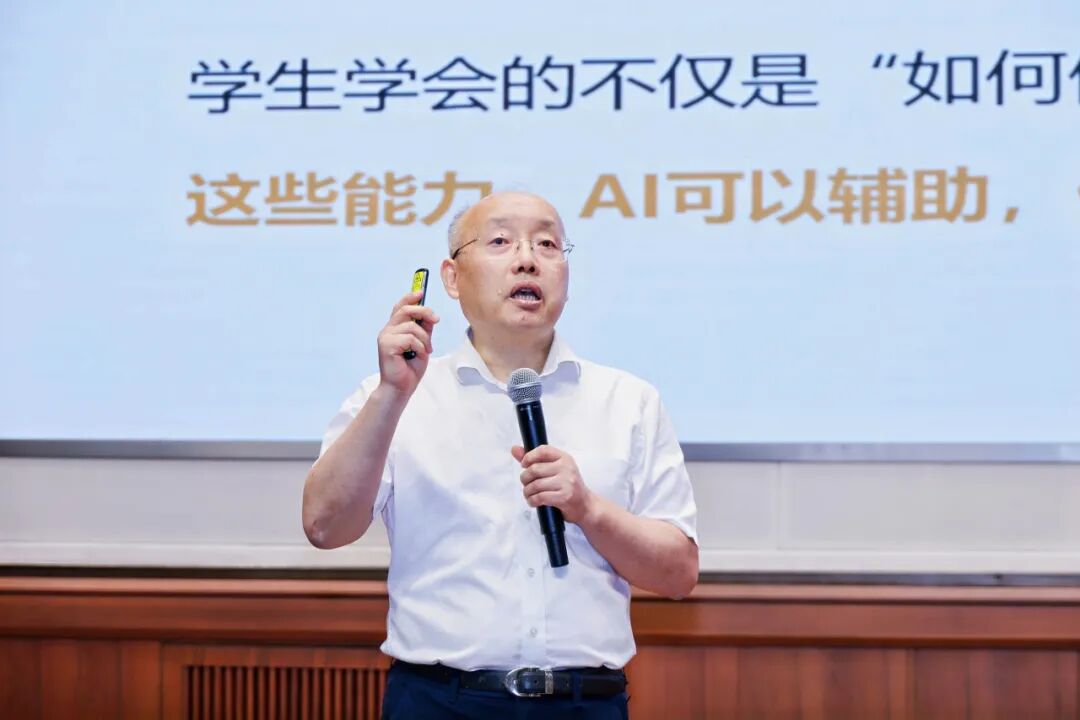
Address by Director Ping Cui
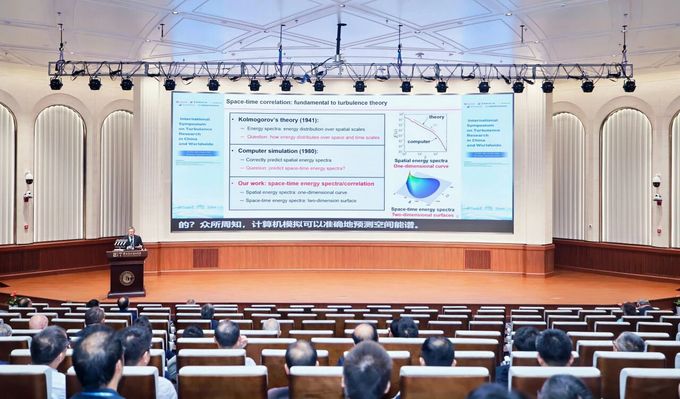
A "Two-Way Street" of shared purpose is already underway. Earlier, on April 17, the First EIT—Y-Lab Symposium on New Materials was held at EIT. Co-organized by the two institutions, the symposium focused on new materials and new energy, facilitating in-depth exchanges and collaboration.
The symposium was chaired by Professor Runwei Li, Dean and Chair Professor of the School of Materials Science and Engineering at EIT; Professor Wei Hong, Dean and Chair Professor of the School of Mechanical Engineering and Mechanics; Dr. Lei Fang, Chair Professor and Director of the Center for Functional Organic Materials at Y-Lab; and Dr. Shuo Wang, Assistant Professor at EIT, and Dr. Jiamin Fu, Associate Professor at EIT.
Fifteen speakers delivered academic presentations from diverse perspectives and engaged in a lively exchange of ideas on key frontiers and industrial pain points in materials science. Their contributions helped nurture top-tier innovative talent, accelerate the clustering and optimal allocation of innovation resources, and support Ningbo's goal of becoming a "City of Materials and Intelligence Innovation."