Recently, Fabai Wu, an associate professor at the Eastern Institute of Technology, Ningbo (EIT), boarded the manned submersible "Fendouzhe" (Striver) to dive into the hadal zone on a scientific mission to investigate microbial diversity in this extreme environment and to collect samples for research. He also took part in the sea acceptance trials of two national-level projects as an expert.
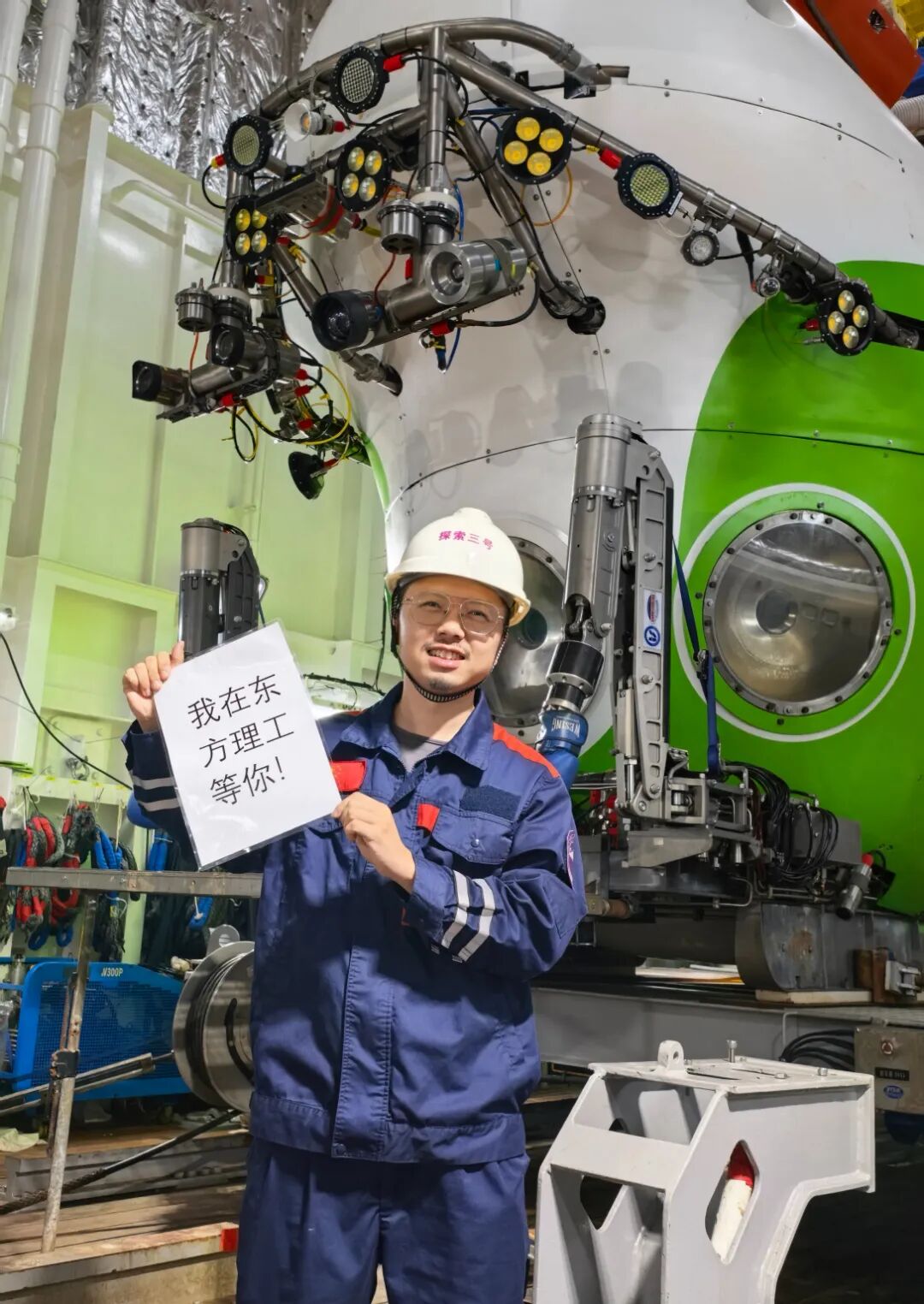
Fabai Wu poses with the "Fendouzhe"
–7,620 m: Touching the Hadal Zone with His Own Hands for the First Time
In the early morning, the target operational area was calm, but inside the "Fendouzhe" cabin, a battle of exploration was quietly unfolding.
Sharing the cabin with Associate Professor Fabai Wu were two submersible pilots from the Institute of Deep-Sea Science and Engineering, Chinese Academy of Sciences, both of whom already had extensive diving experience. For Associate Professor Fabai Wu, however, this dive was a transformative personal challenge — he had previously taken part in four oceanographic cruises to the eastern Pacific while at California Institute of Technology (Caltech), but his role had always been that of a “spectator” on deck, piloting a remotely operated vehicle through a real-time video feed to collect samples. The darkness of the deep sea had existed only on a screen. This was the very first time he would seal himself inside a crewed submersible and descend into the hadal zone in person.
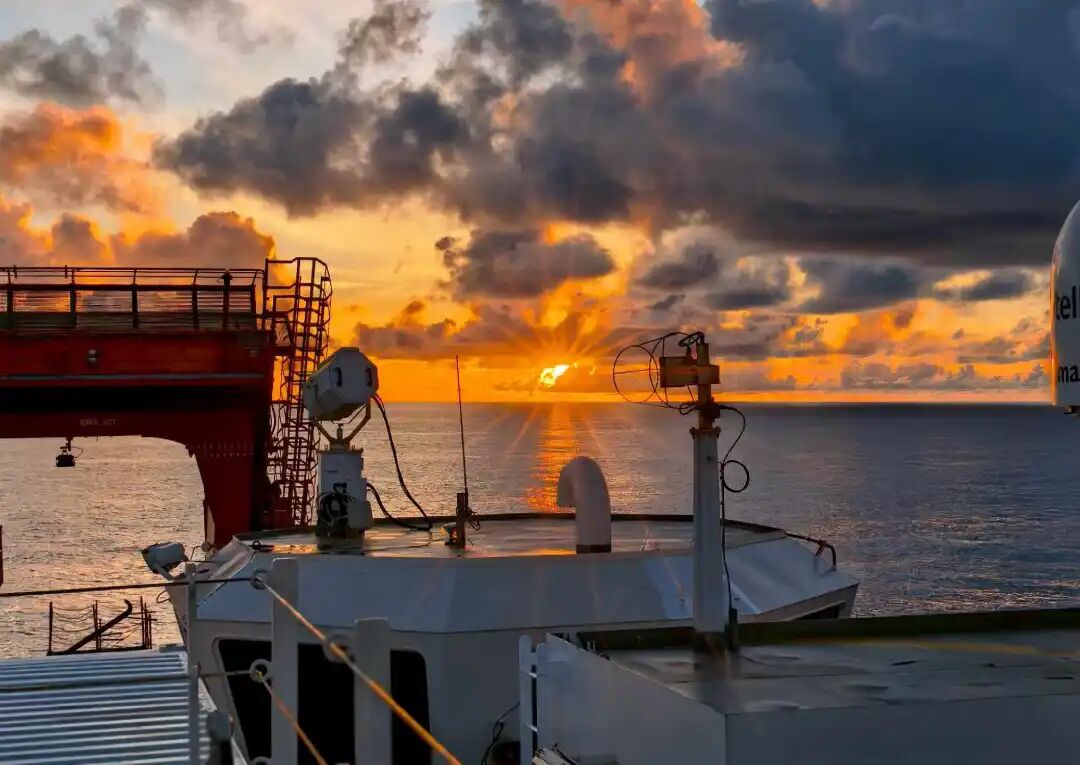
This dive marked the first time he had ever personally descended into the hadal zone
At first light, the crane hook released, and the submersible completely detached from the mother vessel. The moment seawater covered the viewport, the noise on deck was replaced by a deep, almost oppressive hum. Then came a long free fall — unpowered, pulled only by gravity, like a forgotten lead weight dropping straight toward the seafloor. Inside the cabin, only the digits on the depth gauge ticked silently: –1,000, –3,000, –5,000… Associate Professor Fabai Wu later recalled that during that period, his eyes remained fixed on the shifting colors outside the window — from deep blue to ink black — until finally not a single photon remained. More than two hours later, a slight tremor rose from the bottom; the submersible had touched down, and the depth froze at –7,620 meters.
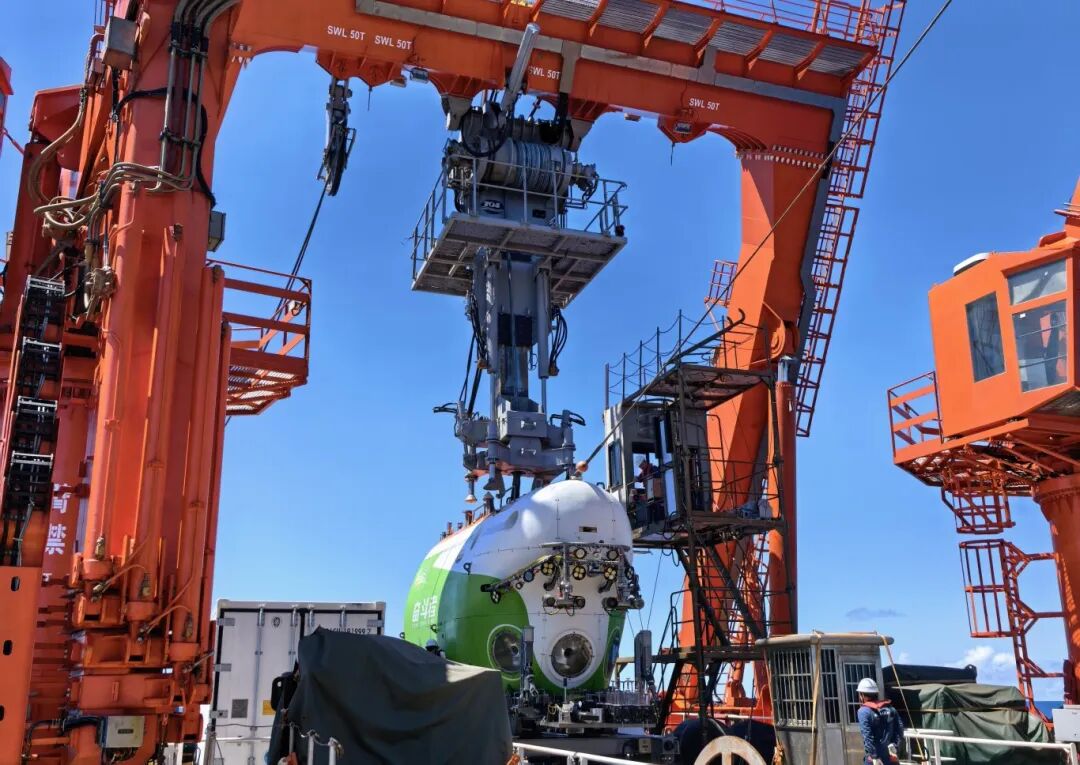
The submersible detached from the mother vessel
This was not the deepest dive — a colleague had reached –7,740 meters two days earlier — but Associate Professor Fabai Wu's mission was not to break depth records; it was to climb a seamount. The submersible, like a lumbering lunar rover, crept slowly up the slope along the sediment, rising from –7,620 meters to –7,309 meters, a vertical relief of over 300 meters. It then descended and repeated a short climb on the other flank, tracing a lopsided "Z" across the seafloor, covering a total lateral distance of roughly three to four kilometers.
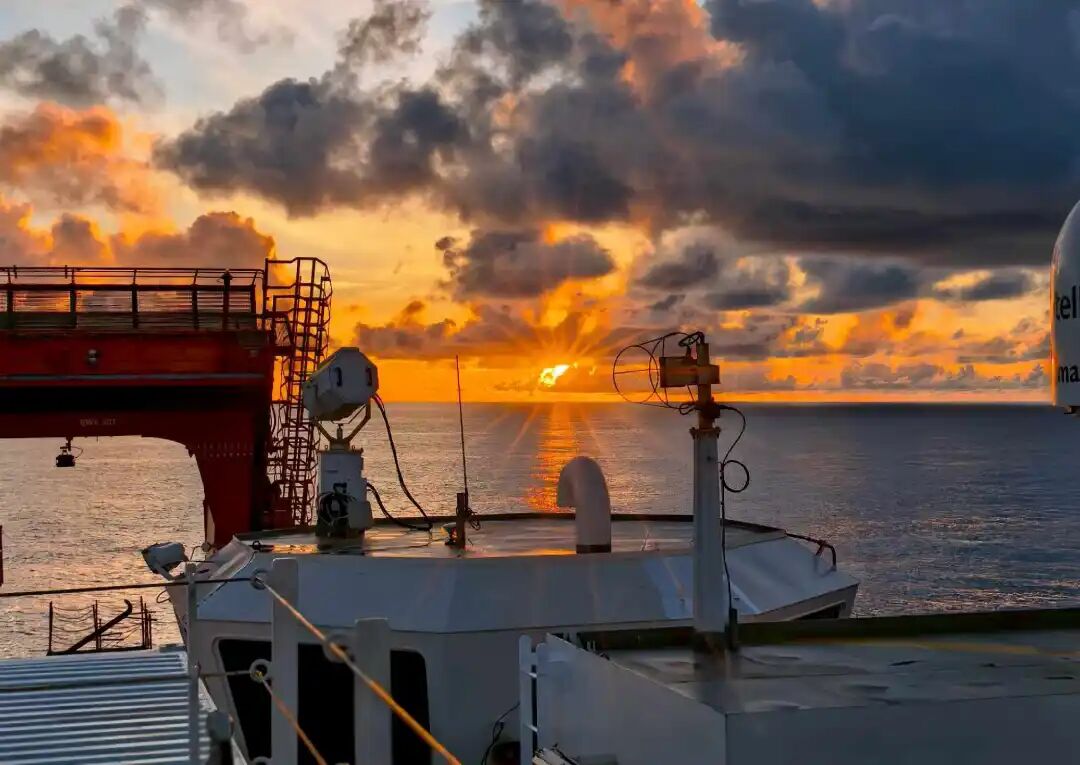
The research vessel Tansuo‑3 is operated and maintained by the Institute of Deep-Sea Science and Engineering, Chinese Academy of Sciences
As the searchlights swept over the gray-white sediment surface, brittle stars were packed densely like a net of dry twigs, sea anemone tentacles swayed in the faint bottom current, translucent snailfish glided past trailing ribbon-like fins, and amphipods bounced among the gravel — these common hadal species appeared unusually active at that moment. The manipulator arm, under the pilots' precise control, worked gently, collecting a small number of sea anemones, sea cucumbers, brittle stars, and polychaetes.
Scientific collaboration followed the well-honed routine aboard the research vessel: the anemone tissue was immediately handed to a deep-sea zoologist on board for supplementing the global genetic database of deep-sea anemones. Associate Professor Fabai Wu's attention, however, turned to the invisible "dark matter" inside those animals — their gut microbiota.
In an environment at near-freezing temperatures and under a hydrostatic pressure exceeding 700 atmospheres, how do these symbiotic microbial communities sustain their metabolism?
Could their co-evolution with their hosts conceal a set of adaptive rules for life that have not yet been recorded in any textbook?
Back on the deck, he practically dashed into the laboratory aboard Tansuo‑3, dissected and sampled the specimens in a clean bench, cryopreserved them, and inoculated portions of the gut contents into pre-prepared anaerobic enrichment media.
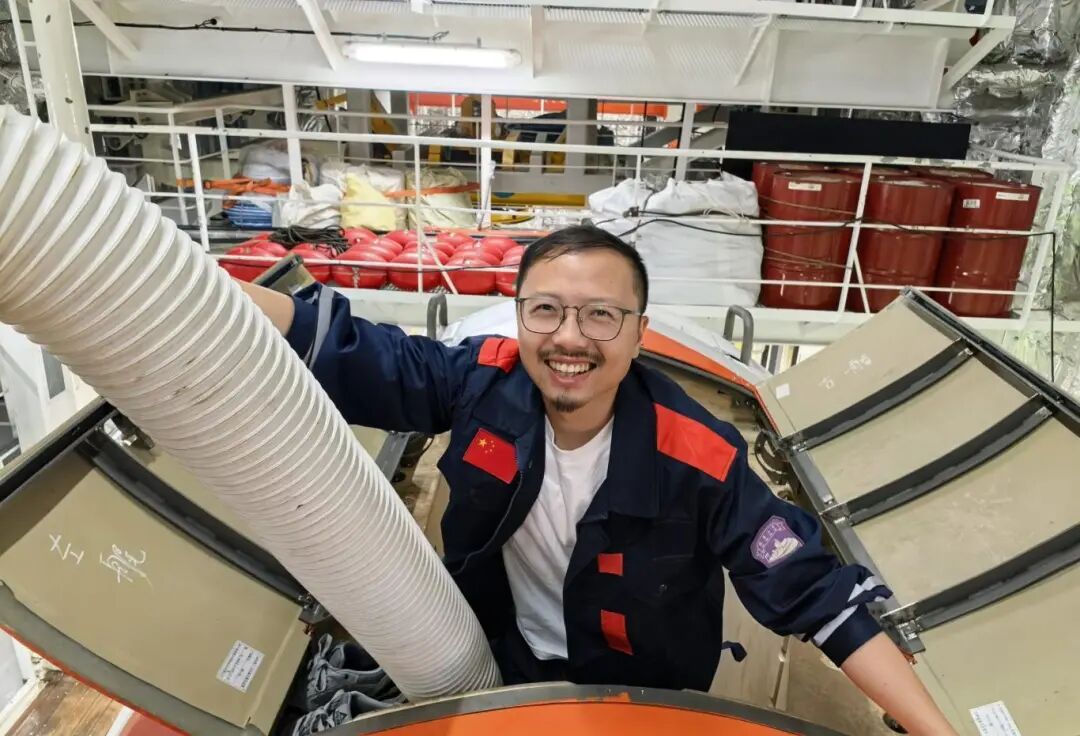
Associate Professor Fabai Wu is about to enter the "Fendouzhou" cabin
The cruise is still ongoing, but Associate Professor Fabai Wu's dive has already been dubbed the "Lucky Z" by the scientific team aboard. It proved that even on the slopes of a hadal seamount, without any additional input of energy, life can still find its crevices.
A Visitor from the Hadal Zone: An Encounter with a Dumbo Octopus on the Hadal Seafloor
More than an hour after the "Fendouzhe" settled on the seamount slope, a burnt-orange silhouette slipped quietly into the edge of the searchlight cone — an encounter that Associate Professor Fabai Wu and his two submersible pilot companions had never anticipated. Slightly larger than a palm, the creature glided slowly over the gray-white seafloor sediment, its pair of fleshy ear-like fins beating rhythmically, like a tiny parachute held aloft by the faint deep current — a dumbo octopus.
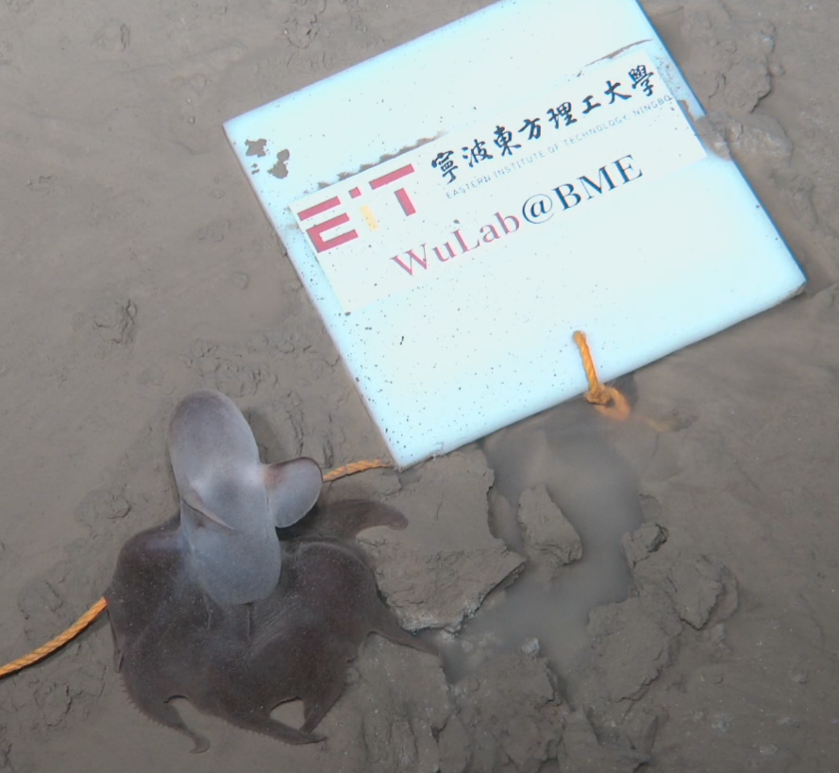
An encounter with a dumbo octopus
They typically inhabit depths of 1,000 to 4,000 meters, occasionally venturing as deep as five or six thousand meters. Veterans on board recalled that the deepest individual they had previously observed was at around 5,500 meters. Yet at this moment, the depth gauge read –7,465 meters. Even more exhilarating was the fact that this was the only octopus encounter of the entire cruise.
The next 40 minutes became the most precious gift of the entire time. The octopus seemed entirely untroubled by the low-humming metal vehicle barely three meters away. It spread its fins leisurely, sometimes crawling along the bottom with its arms gently probing the sediment surface, and at other times spreading the webbing between its arms like a miniature glider,"flying" several meters in slow motion before landing softly. The onboard camera system recorded every frame of it foraging, moving, and giving a startled bounce. After bidding a reluctant farewell to the little dumbo, the "Fendouzhe" continued on its way.
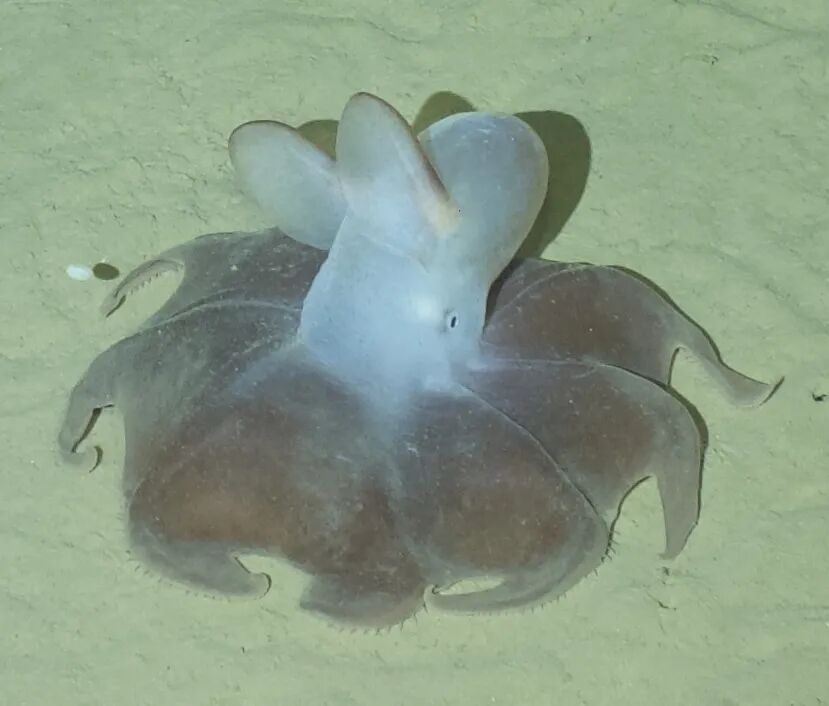
A dumbo octopus
Associate Professor Fabai Wu's primary objective for this dive was to collect sediment samples from different ecological niches, to study the physiology, ecology, and genetic diversity of the microorganisms within, and from them to obtain valuable strains and genetic resources for synthetic biology and biomanufacturing. A total of 10 sediment push cores were collected — that is, the cylindrical tubes shown in the photographs were inserted into the deep-sea sediment and retrieved to the ship with their samples.
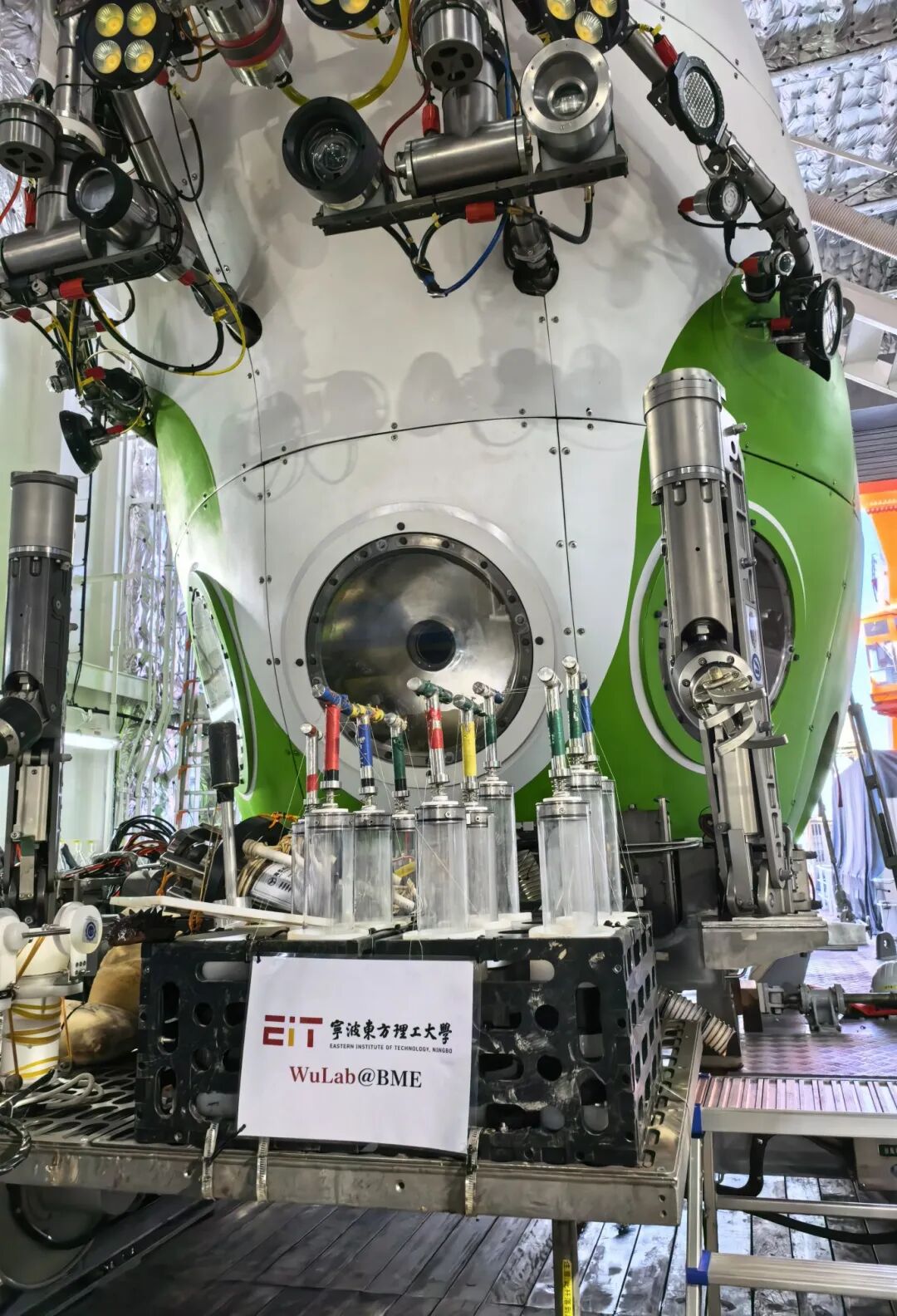
Associate Professor Fabai Wu's primary objective for this dive was to collect sediment samples from different ecological niches
The Tansuo‑3 is scheduled to dock at Sanya in one week, while the scientific exploration at EIT will continue to advance.
In the future, EIT will continue to adhere to the principle of a strong foundation in fundamental science, a focus on engineering, and the integration of the two disciplines, gathering top global talent and assembling interdisciplinary research teams to tackle grand challenges. The institute aspires to produce research that changes the world, serves national development, and drives societal progress.