On a crisp May day at the Eastern Institute of Technology, Ningbo (EIT), red brick buildings stood against lush green lawns, everything washed clean and bright as an oil painting.
The sharp contrast was fitting for the inaugural speaker of the EIT Lecture Series on Science and Technology. He has been called a great scientist who cares for his country and its people, and an upright man of unimpeachable integrity.
On May 11, Professor Yi Rao, the renowned biologist and Chair Professor at Peking University delivered a talk entitled "Whither Chinese Science?" Around four themes—"The three levels of science", "The development of science in China", "The paths facing Chinese science", and "The future of science in China"—Professor Yi Rao presented a panoramic view of the evolution of Chinese science, offering insights to inspire and guide those who will follow.
The lecture was moderated by Professor Dongxiao Zhang, Executive Vice President of EIT and Member of the U.S. National Academy of Engineering, and organized by the Office of Research.
Contributing to the World the Concept of "Science for Good"
Professor Yi Rao's slides opened with an image of a plaque from Peking University—a striking red background.
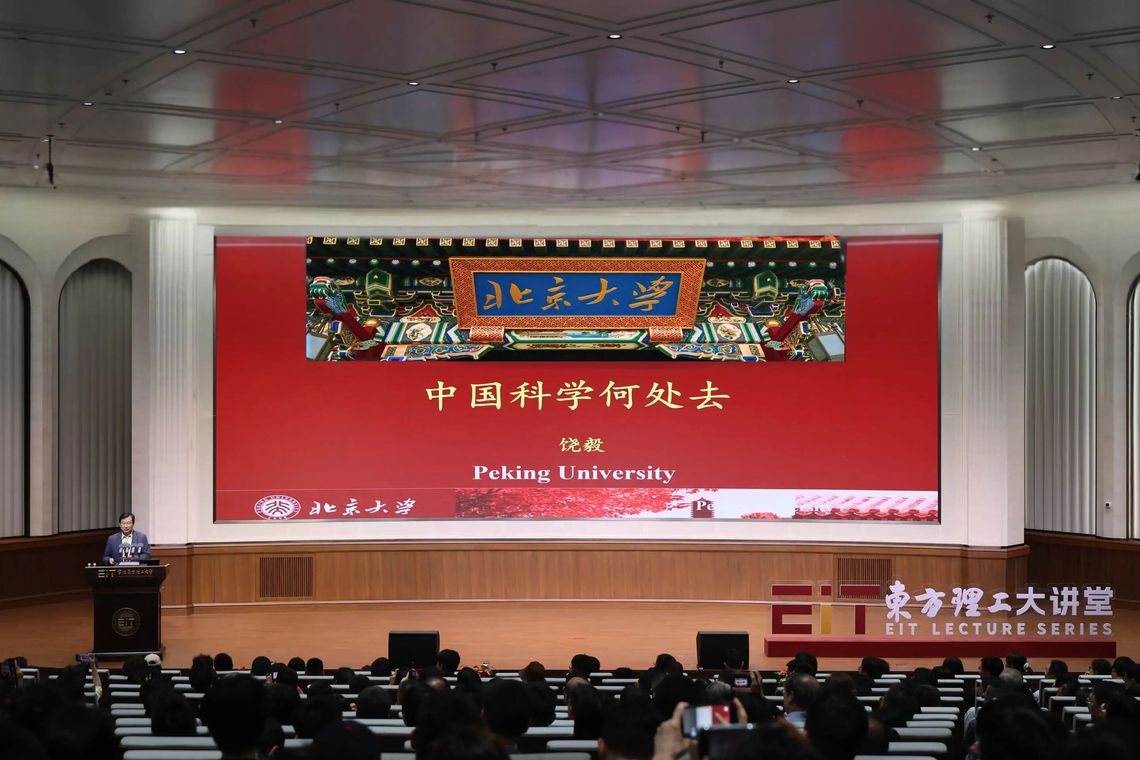
Scenes from the lecture
It was the first institution he joined after returning to China full‑time in 2007. There, he worked for seven years alongside Professor Shiyi Chen, then Founding Dean of Peking University's College of Engineering and now President of EIT and Member of the Chinese Academy of Sciences.
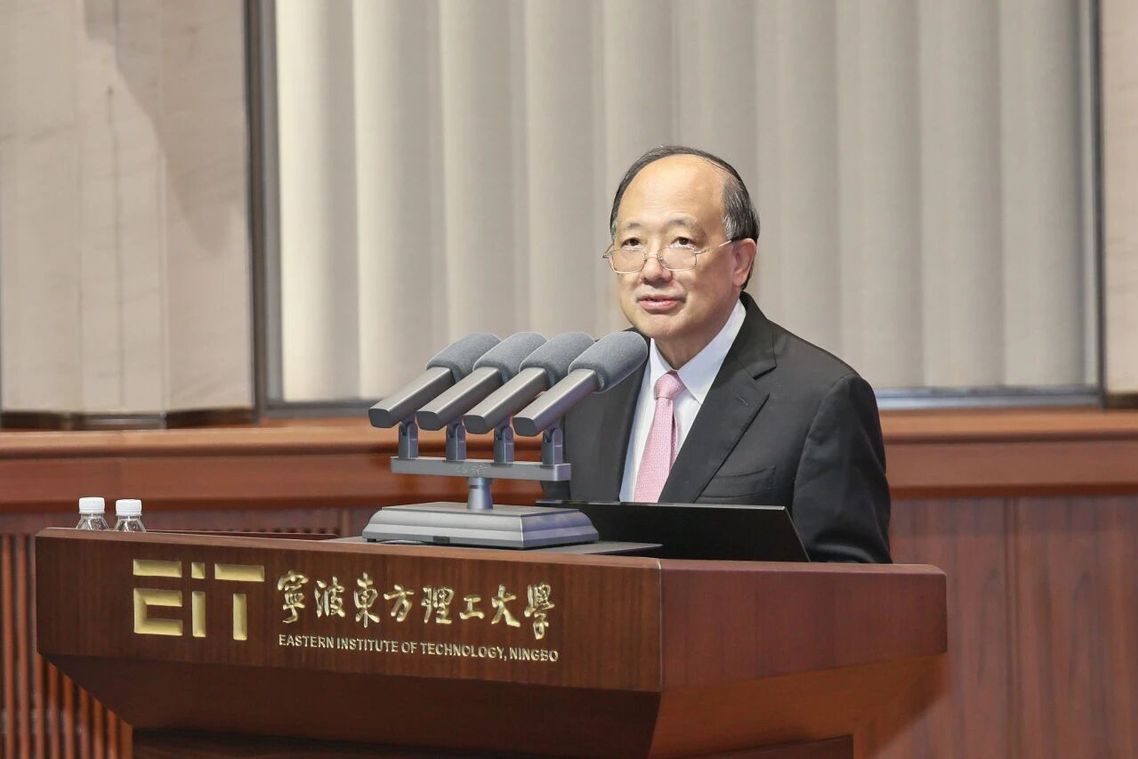
Address by Professor Shiyi Chen
In his opening remarks, President Shiyi Chen spoke highly of his former colleague and friend: Professor Yi Rao is not only a top scientist but also a thoughtful and courageous educational reformer. His spirit of relentless exploration, independent thinking, and boldness has influenced a generation of Chinese scholars and embodies the very qualities EIT hopes to cultivate in its students.
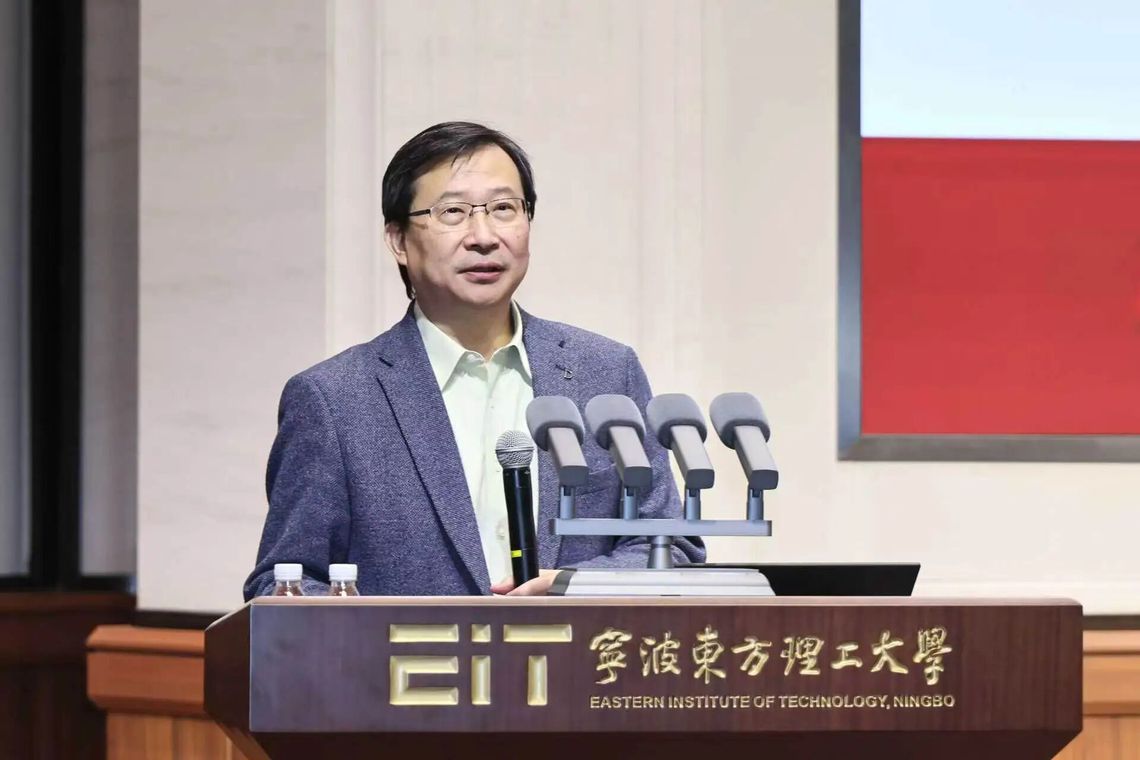
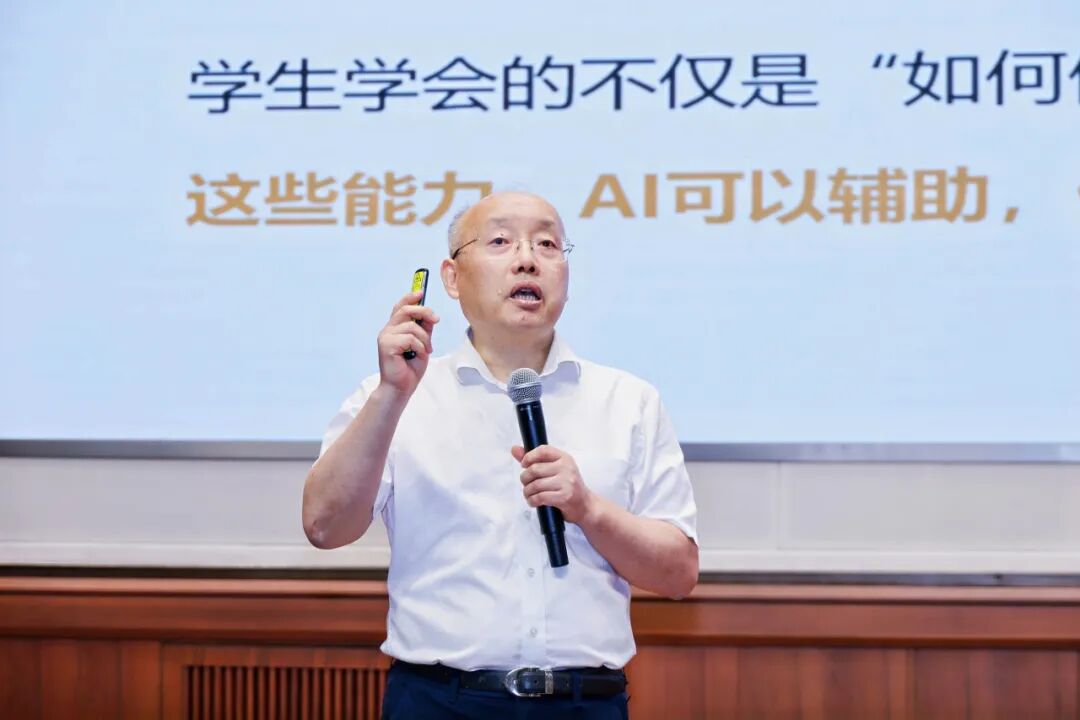
Professor Yi Rao during his lecture
Professor Yi Rao lived up to his reputation for outspokenness and wit.
Back in the 1990s, Professor Chen Ning Yang predicted that by the middle of the 21st century, China would likely become a world‑class scientific and technological powerhouse. "At that time, most people, myself included, found that laughable, because the overall scientific level in China lagged far behind," Professor Yi Rao said.
In 2002, Professor Yi Rao counted the number of papers published by Chinese life scientists in several key international journals over the previous 100 years: fewer than 100 in total. As late as 2001, the annual output of Chinese scientists in Science and Nature was still in the single digits—less than 1% of the world total.
Yet, just two decades later, Chinese scholars rank first or second globally in the number of publications in most international journals. Having solved the basic problem of quantity, Professor Yi Rao noted, the question now is: "Which path to take and what goals to pursue?"
Professor Yi Rao argued that the long‑term aspiration of Chinese science should go beyond "world‑class" to "world‑leading," and further still: China should contribute to the world the concept and practice of "science for good", ultimately leading global development and serving the well‑being of all humanity. To do so, China's scientific enterprise must rise to sufficient global stature to lead the scientific world, and it must embody sufficient intellectual integrity to unite the scientific world.
Science Cannot Be a Fuzzy Game of Mutual Praise
"China rarely produces high‑quality original discoveries at the 0‑to‑1 level, but most discoveries from 2 to 100 come from China," Professor Yi Rao said. "In that sense, China has largely taken the position Japan once held in global science."
Overall, Chinese science has played a positive role in national development. Yet, Professor Yi Rao stressed, systemic problems persist and must be addressed.
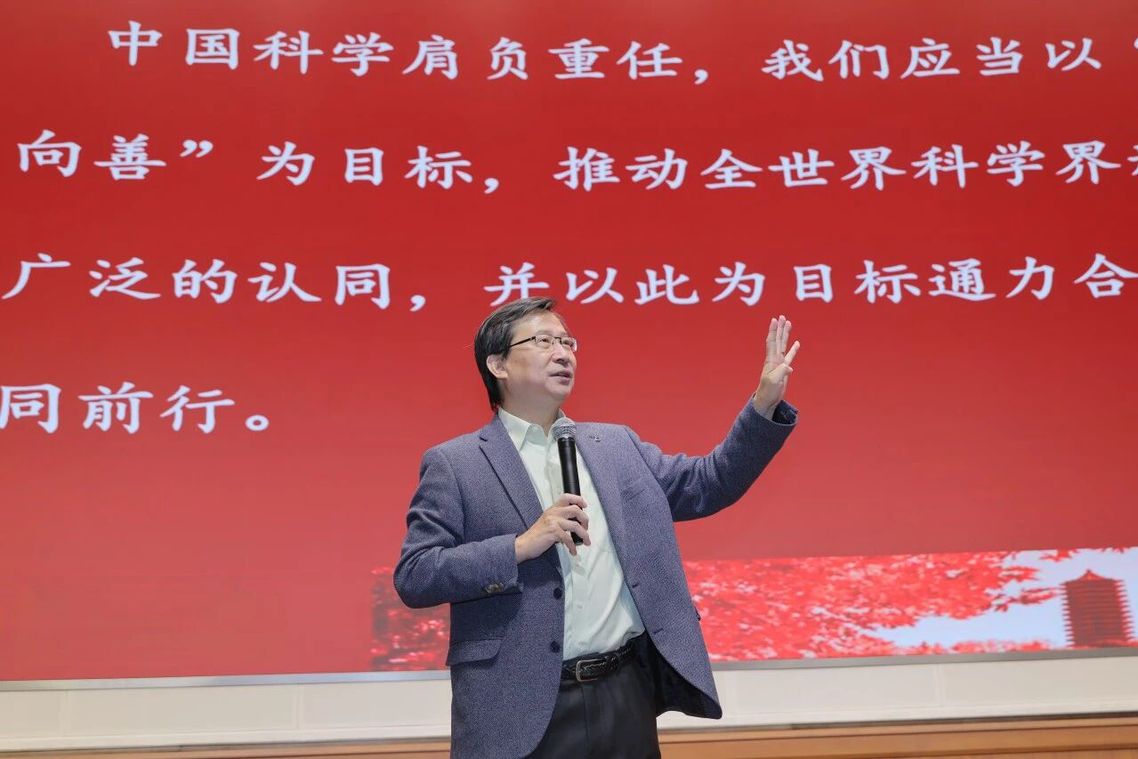
Professor Yi Rao during his lecture
Professor Yi Rao has never been one to tolerate any falsehood or misconduct.
During the lecture, he emphasized that science is governed by principles. Its bottom line is honesty, and academic norms have clear boundaries and red lines. Science is the pursuit of truth; arriving at discoveries close to the truth and creating meaningful inventions are a scientist's joy and pride. Science distinguishes right from wrong—it cannot be vague, cannot be a mutual admiration society. Right and wrong must be discerned.
To achieve the long‑term goals of Chinese science, Professor Yi Rao argued, we must have forces of "integrity and talent" to promote a clean and upright scientific system that strives for human progress. We cannot allow forces of "corruption and incompetence" to shape a parochial, careerist environment where the unworthy thrive.
This goal and path, Professor Yi Rao said, represent both a historic responsibility for China's scientific community and a modern embodiment of China's traditional respect for knowledge and education. It is also the best way to unite the world with China for common development.
Reform at New Research Universities Requires Persistence
"The future of Chinese science can be very optimistic. But how optimistic we can be depends on whether we can solve key problems in a timely manner." Professor Yi Rao identified three major issues: scientific spirit and intellectual integrity; industrial leadership and global standing; and solving common challenges facing humanity.
Everyone understands scientific spirit differently. For Professor Yi Rao, its core is the culturally meaningful atmosphere and code of conduct that science brings—a commitment to fact and truth as the foundation of social environment and governance.
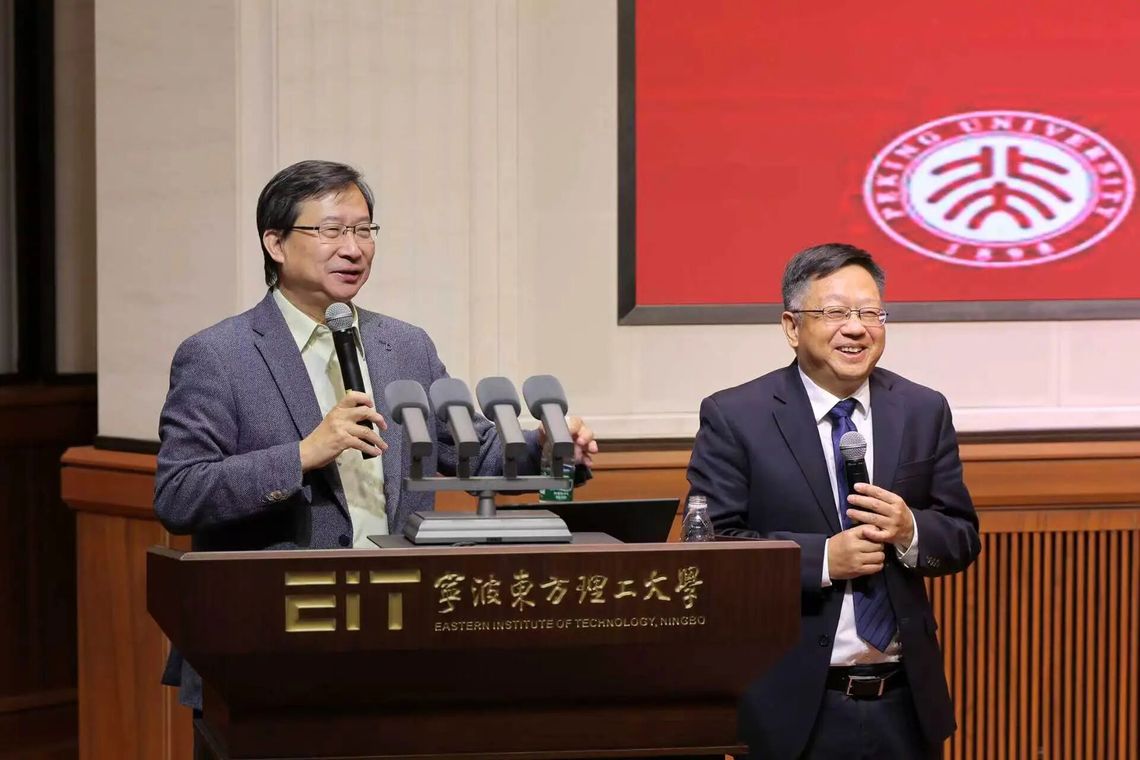
Professor Yi Rao (left) and Professor Dongxiao Zhang (right) interacting with the audience
"Reform at new research universities must be confident and persistent. Stay on course for 10, 15, or 20 years to become world‑leading. Do not judge genuine reform by simplistic quantitative indicators in the short term," Professor Yi Rao said.
He recalled how, when he and President Shiyi Chen carried out reforms at Peking University, short‑term metrics looked poor and drew skepticism. But over a longer horizon—10, 15, 20 years—the late momentum of the reforms became evident to all. "We want a clean and upright culture, one that sets standards of excellence in science and values peer evaluation."
As a new type of research university, EIT adheres to its position of being a "High-Caliber Foundation, Compact yet Distinguished, Research Oriented, and Globally Engaged" institution. It continues to explore new educational forms, new disciplinary layouts, new training models, new governance structures, and new management systems.
"Reforms implemented early on must take root—only then can we talk about scientific spirit and intellectual integrity." That was Professor Yi Rao's advice.
The Scientist's Wit and Wisdom
The audience asked questions eagerly, sparking a lively exchange with Professor Yi Rao. Topics ranged from "How to choose between basic and applied science?" and "What is the gap in life sciences between China and the rest of the world?" to "Should undergraduates study abroad or at home?", "How to break the ‘title‑fixation’culture and return to academic essence?", and "When will Chinese become the dominant language for publishing research papers?"
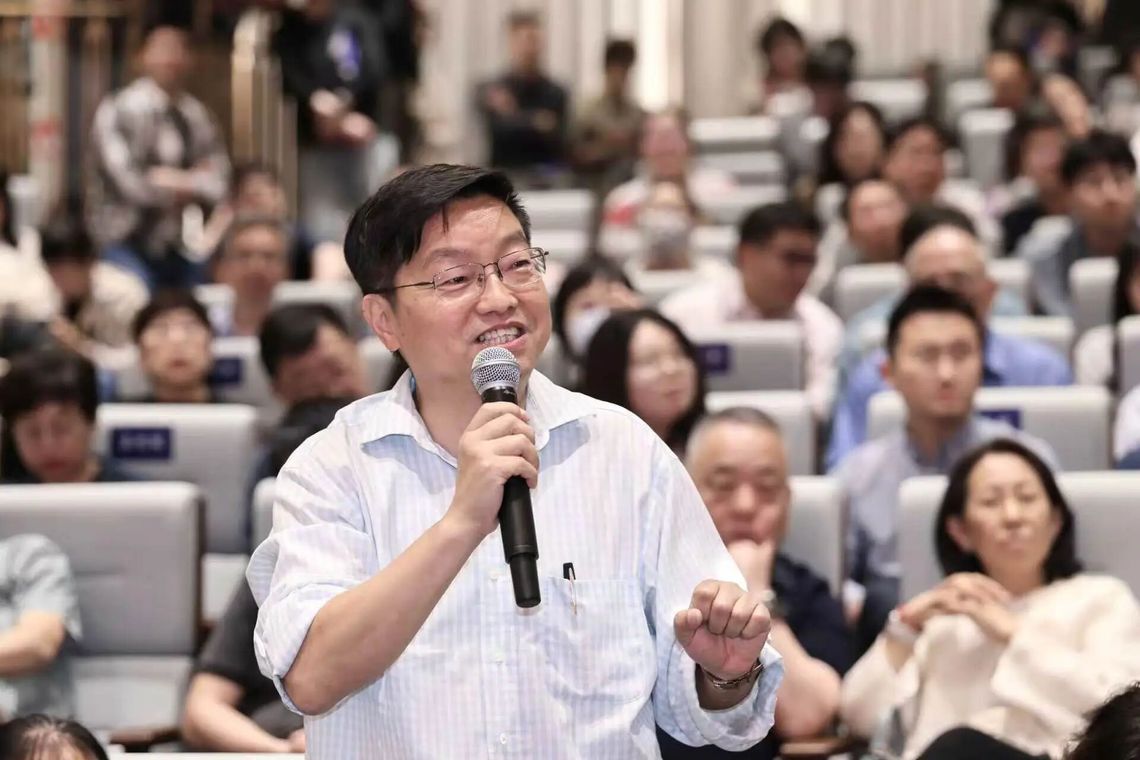
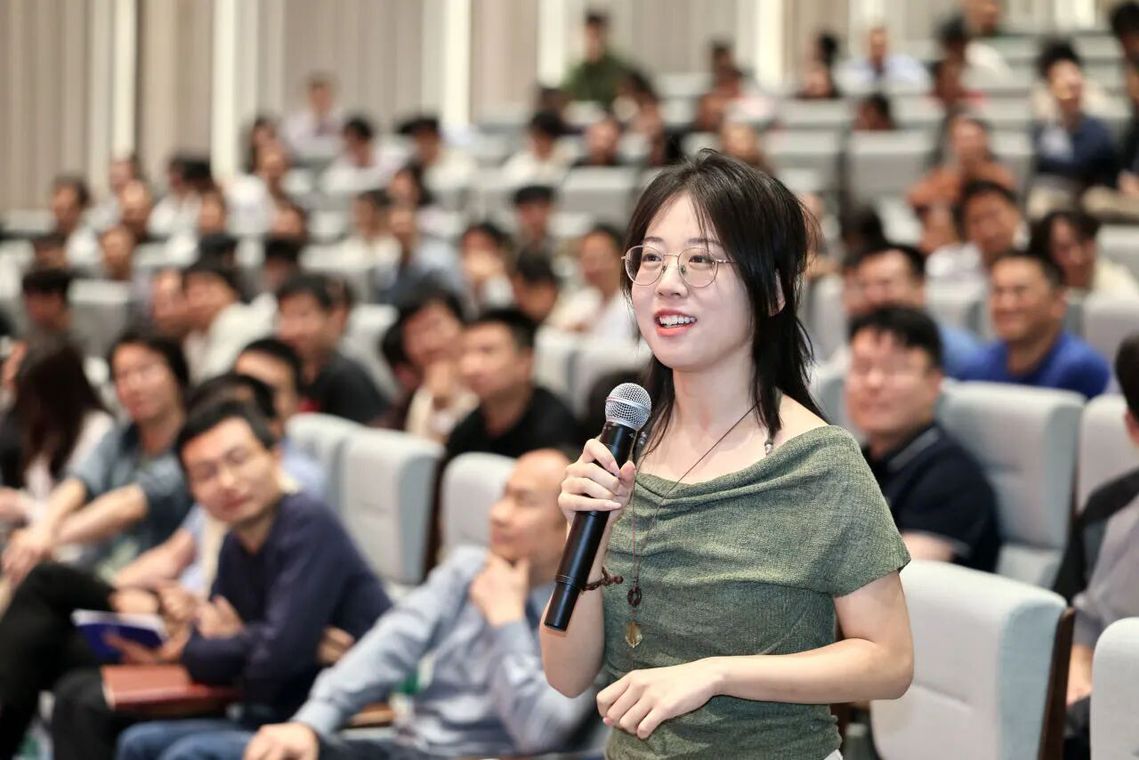
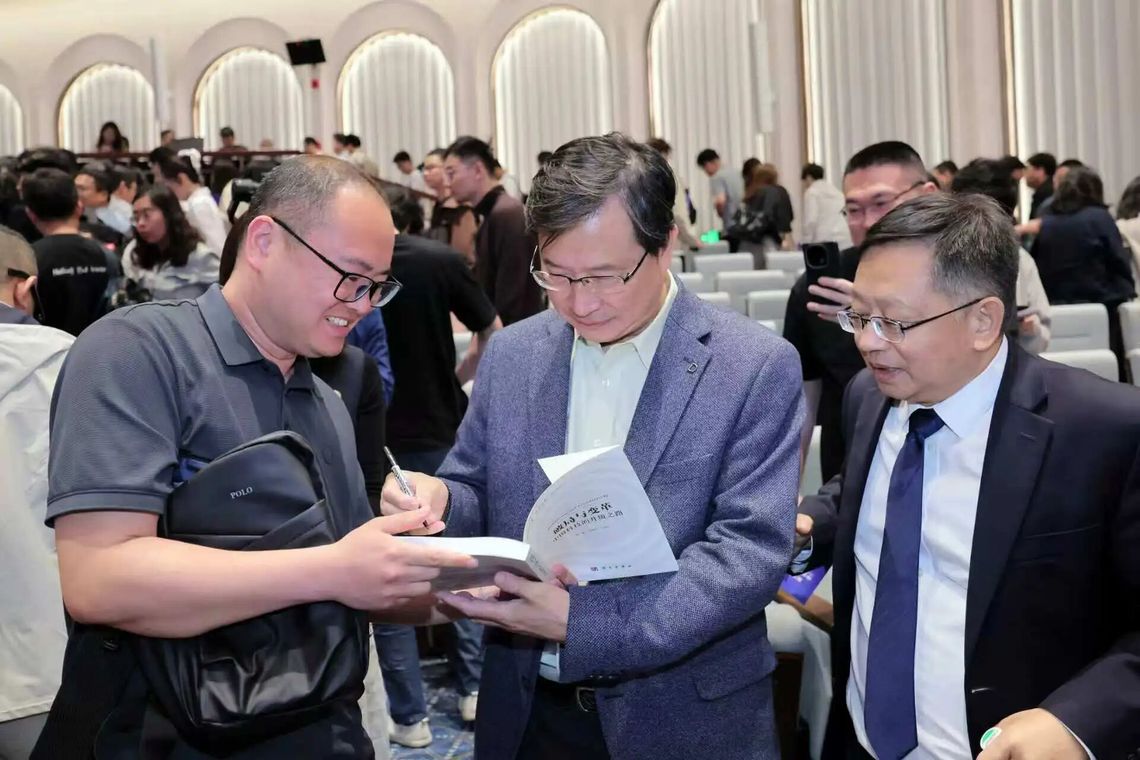
Engaging with the audience
Rao responded with wit.
"Universities that care about their reputation have faculty and staff who serve students with a sense of awe—always on their toes."
"For the West to understand China, it won't be through force, but when our fundamental science finds its way into their school and college textbooks."
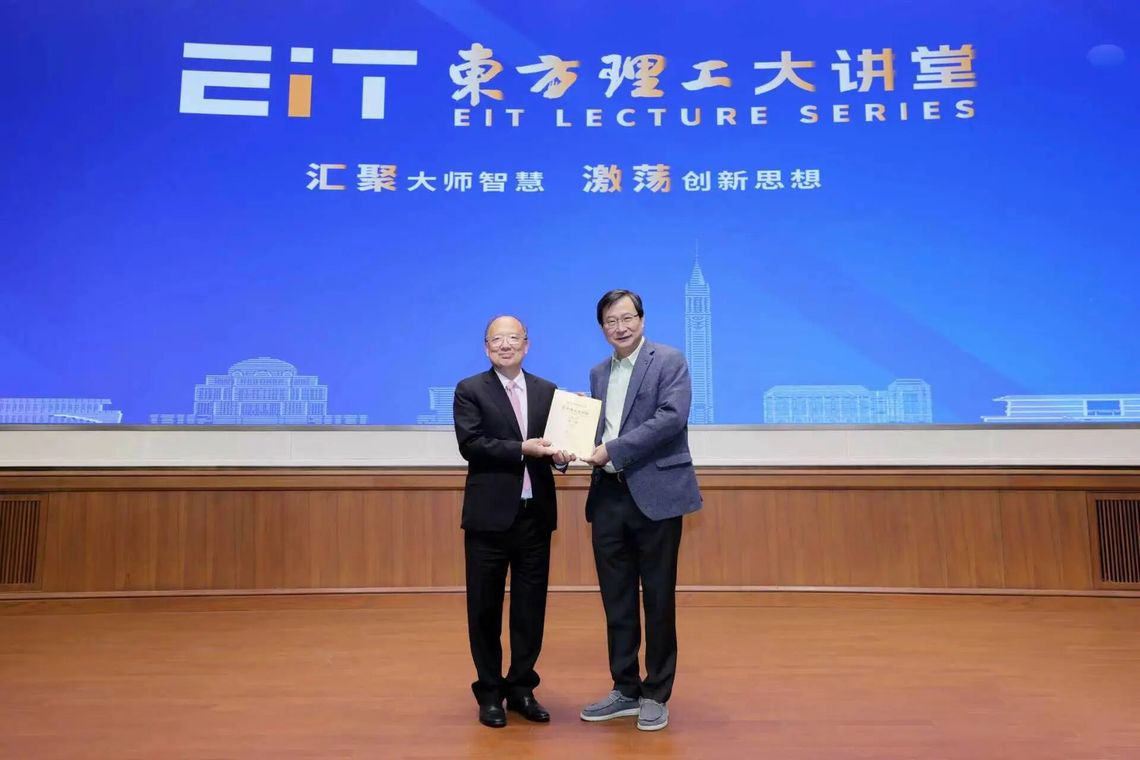
President Shiyi Chen (left) presenting a certificate to Professor Yi Rao(right)
At the end of the lecture, the two long‑time friends shook hands warmly. President Shiyi Chen presented Professor Yi Rao with a certificate of appreciation for being an EIT Lecturer—acknowledging not only their years of mutual understanding but also their shared vision and commitment to the future of Chinese science.
As a new research university dedicated to excellence and bold reform, EIT resonates deeply with this scientific conviction and reformist spirit. The EIT Lecture Series will continue to build a high‑level academic exchange platform, bringing together top minds, and advancing the journey to cultivate "scientists with an entrepreneurial spirit" and "entrepreneurs with scientific acumen."