When artificial intelligence can generate a breathtaking image in mere seconds, how do we judge whether a work possesses artistic beauty? Can the spectacles generated by algorithms truly reach the depths of the human soul? At a time when technology is rapidly reshaping the modes of artistic production, revisiting the question of what is artistic beauty has become more pressing than ever.
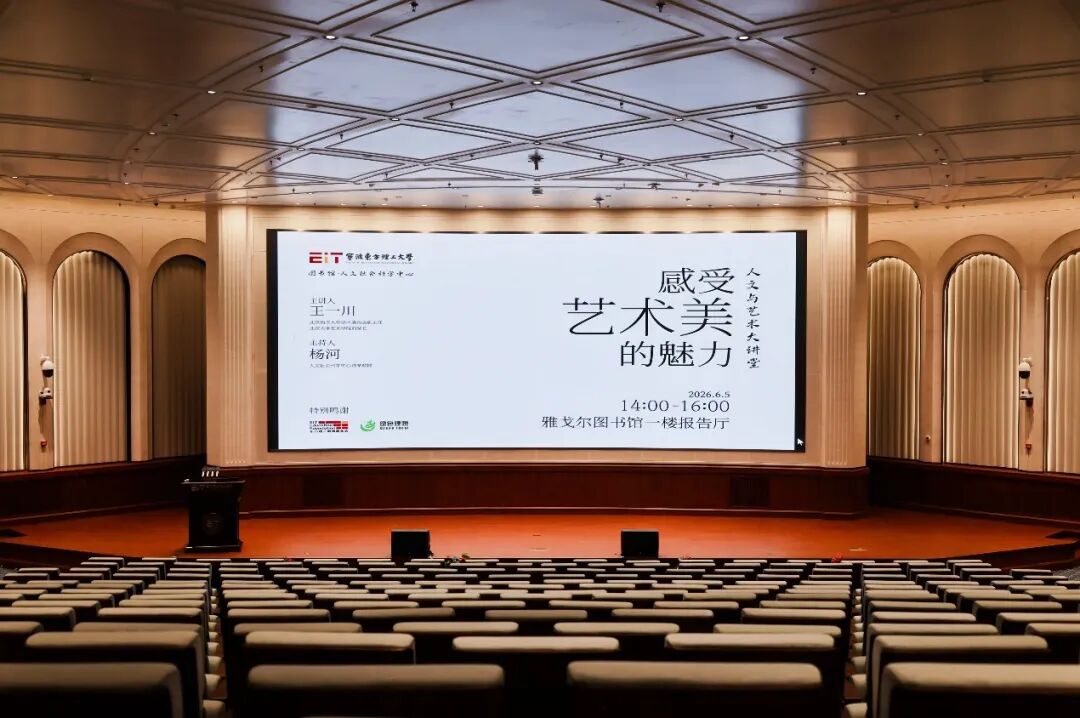
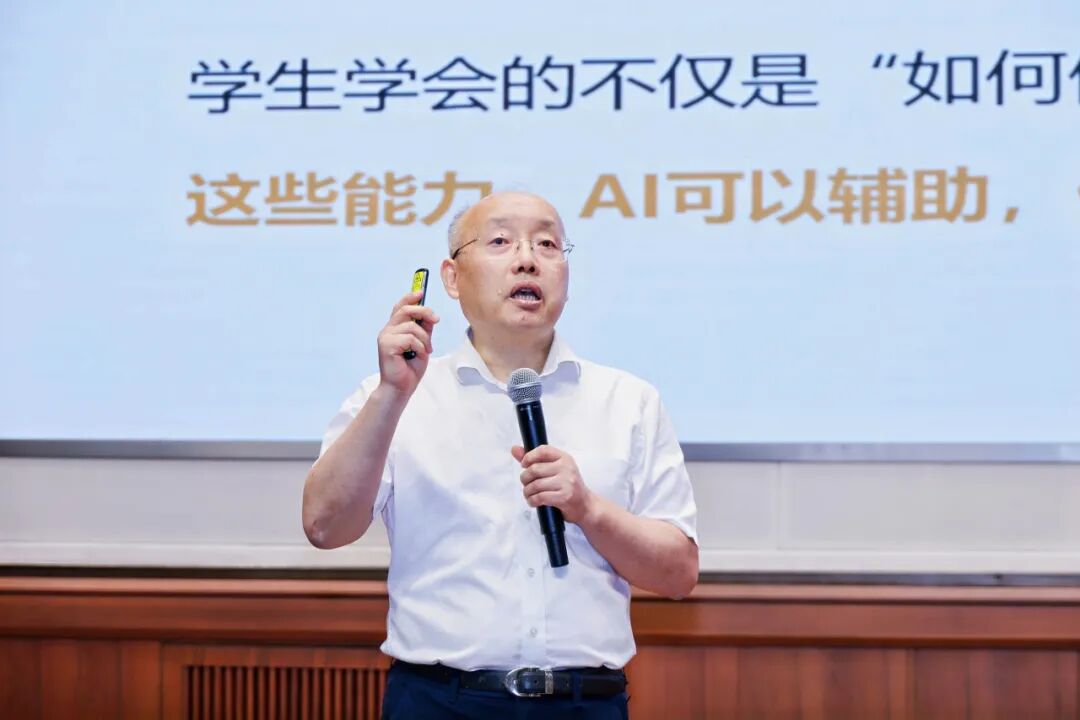
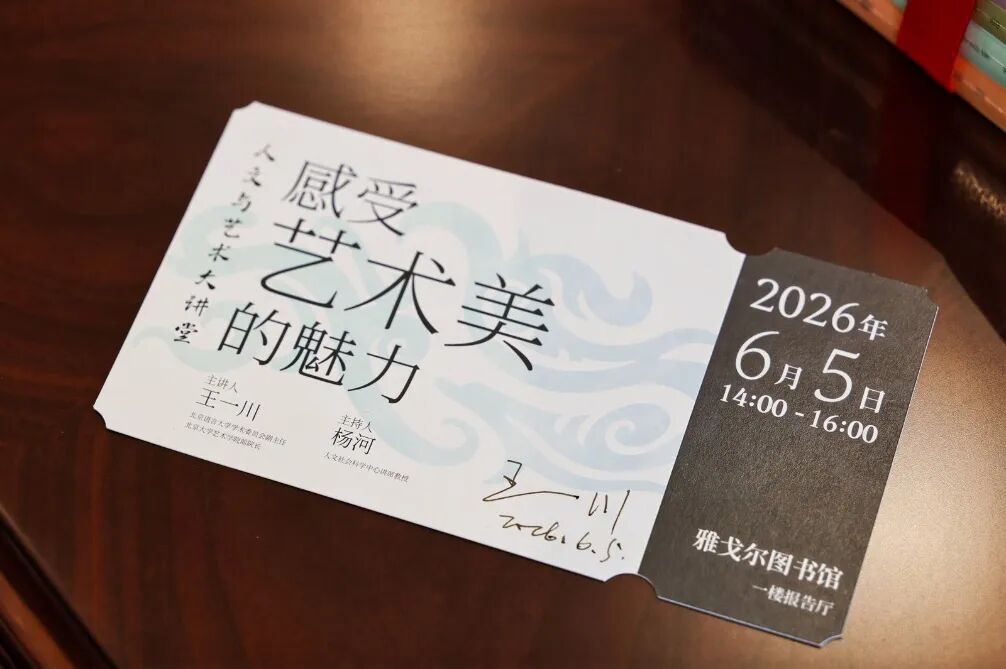
On June 5, bearing these very questions, the second lecture of the "Humanities and Arts Lecture Series" at the Eastern Institute of Technology, Ningbo (EIT) arrived as scheduled. Professor Yichuan Wang, Deputy Director of the Academic Committee of Beijing Language and Culture University and former Dean of the School of Arts at Peking University, visited EIT to deliver a compelling lecture titled "Experiencing the Allure of Artistic Beauty". The lecture was moderated by Professor He Yang, Chair Professor and Dean of the Center for Humanities and Social Sciences at EIT.
What is Artistic Beauty?
While we are no strangers to the concept of beauty, few of us engage in systematic reflection on what constitutes artistic beauty.
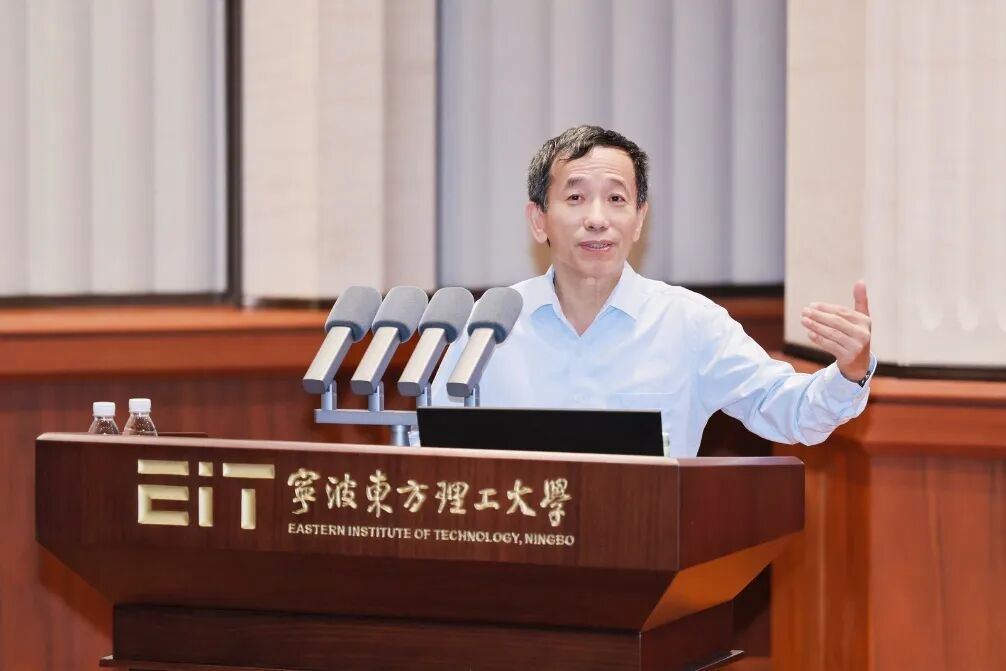
The Lecutre Speaker Professor Yichuan Wang
To understand what artistic beauty is, it's best to rephrase the question: What is not artistic beauty? Professor Yichuan Wang began the lecture by guiding the audience through a clever process of elimination.
He pointed out that the ancient pines and rugged rocks of Mount Lushan represent natural beauty, the double-helix structure of DNA embodies scientific beauty, and an elegantly designed smartphone exemplifies the beauty of a well-crafted product. True artistic beauty, by contrast, is a form of beauty that, through deliberately crafted symbolic forms, directly reveals the inner state of the human spirit and satisfies a need for disinterested aesthetic contemplation.
Professor Yichuan Wang emphasized that in this era of fragmented information and sensory overload, genuinely outstanding works of art must never remain at the level of merely delighting the senses. They must be capable of touching the heart and mind, and even reaching the transcendent realm of inspiring the spirit and intellect, awakening a profound empathy deep within the human soul.
The Living Resonance of Classical Beauty
When exploring Chinese artistic beauty, Professor Yichuan Wang not only deconstructed the well-known concept of yijing (artistic conception) but also proposed a new aesthetic category: liuxing (a resurgent flow).
If yijing is grounded in the complete, self-contained world of classical society, in the modern context, that wholeness has been shattered. Classical beauty, now fragmented and scattered, stubbornly coalesces into something new—this is the essence of liuxing. Professor Yichuan Wang used Congwen Shen's novel "Border Town" as an example. The ethereal love songs that drift across the river at midnight evoke a profound cultural nostalgia in the modern reader. They are fragments of a classical spirit that persist and linger in modern life, allowing us to sense the enduring resonance of classical beauty from these surviving cultural vestiges. This is the unique charm of liuxing.
Preserving Aesthetic Judgment in the AI Era
Responding to the audience's keen interest in AI art, Professor Yichuan Wang offered a thoughtful and measured answer. He noted that AI possesses the capability of "Calculation", whereas humans possess the capability of "Judgment".
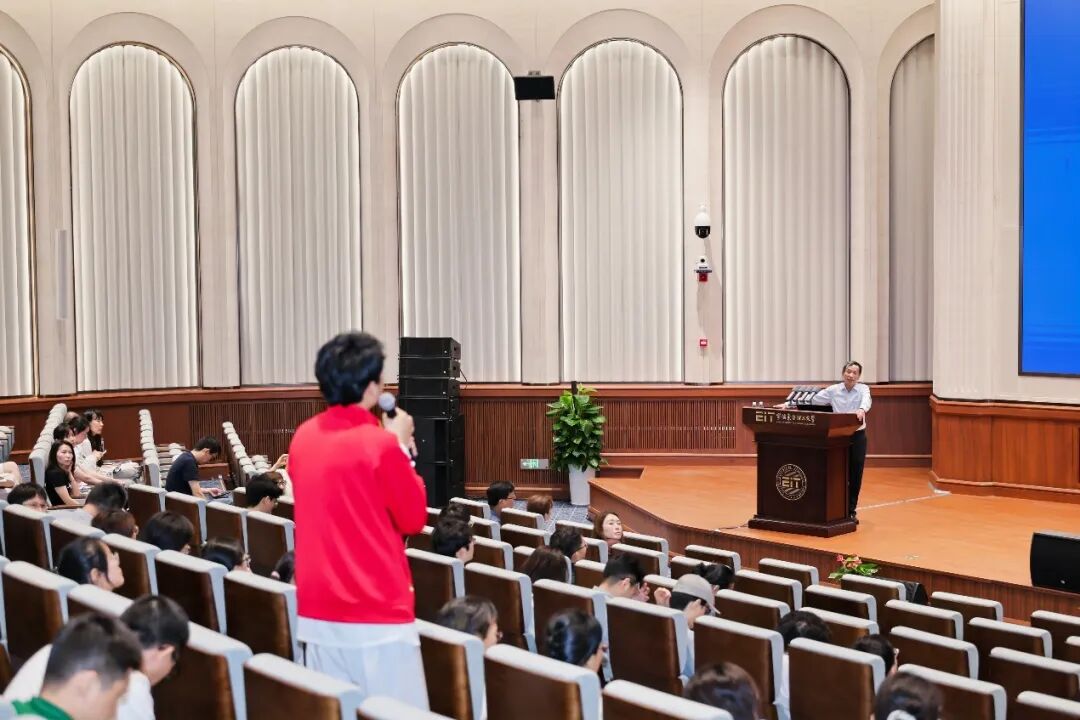
Q&A Session
During the Q&A, the audience displayed an impressive level of artistic perception and speculative depth. A student from an engineering background questioned whether contemporary art that evokes fear or revulsion could be considered artistically beautiful. Professor Yichuan Wang seized this opportunity to discuss how contemporary art, by breaking conventions and provoking shock, is reshaping aesthetic boundaries. He noted that in a pluralistic and divergent age, we must journey from "each cherishing its own beauty" to "appreciating the beauty of others," and ultimately, to a state where "shared beauty brings harmony to all."
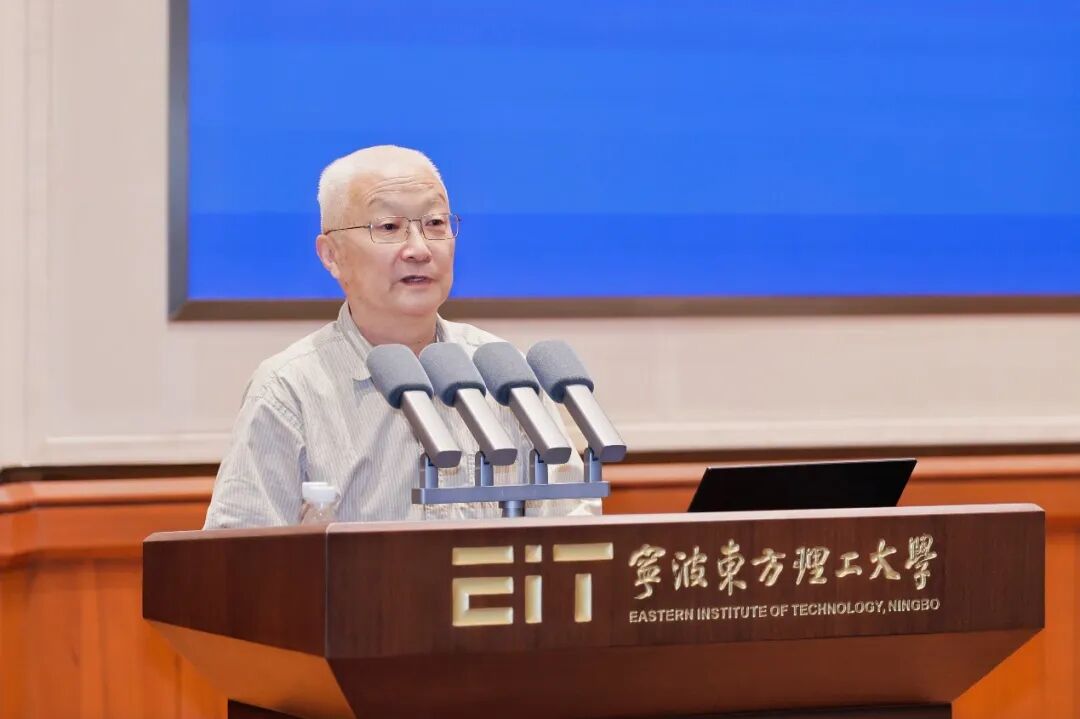
Concluding remarks by Professor He Yang
In his concluding remarks, Professor He Yang observed: "Students of science and engineering yearn for beauty just as much as their peers in the humanities. Science seeks truth; art seeks beauty. At the highest spiritual level, these two paths converge at the same destination."
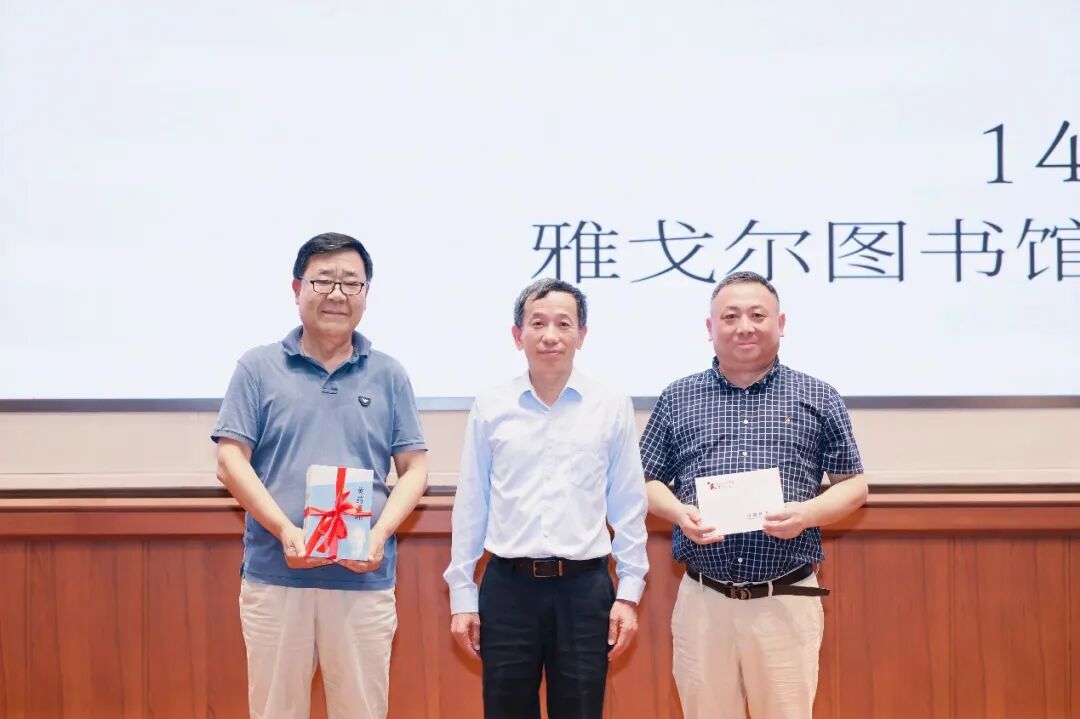
Book Donation Ceremony
The event also featured a book donation ceremony. The first volume of the "Biographies of Contemporary Chinese Literary and Art Critics series", co-edited by the Ningbo Publishing House and the Theory Research Office of the China Federation of Literary and Art Circles, with Professor Yichuan Wang serving as co-editor-in-chief and authoring the general preface, was officially published. Mr. Zhijian Yuan, President of Ningbo Publishing House and Professor Yichuan Wang jointly donated the new collection to the Youngor Library of EIT.
A first-class university is inseparable from a first-class humanities and social sciences education. The "Humanities and Arts Lecture Series", jointly initiated by the Youngor Library and the Center for Humanities and Social Sciences of EIT, will continue to invite leading scholars and artists from China and abroad. It serves as a window that bridges the boundary between the sciences and the humanities, allowing the rational light of science and the humanistic beauty of the arts to illuminate each other on the campus of this new type of research university.