Touch is the oldest of the human senses and the last frontier not yet tamed by the digital world. The cool smoothness of silk beneath a fingertip, the solid reassurance of a warm teacup in the hand, the trust conveyed by a light pat on the shoulder—these tactile qualities, irreplaceable by pixels or sound waves, have long kept the real world and the virtual dimension apart.
People have long sought to bridge this gap.
On September 8, the EIT Lecture Series welcomed its third speaker: Professor Yonggang Huang, an internationally renowned expert of solid mechanics, Foreign Member of the Chinese Academy of Sciences, Member of the U.S. National Academy of Sciences, Member of the U.S. National Academy of Engineering, Foreign Member of the Royal Society, Achenbach Professor at Northwestern University, the world's most cited scholar in solid mechanics today, and a pioneer and leader in flexible electronics.
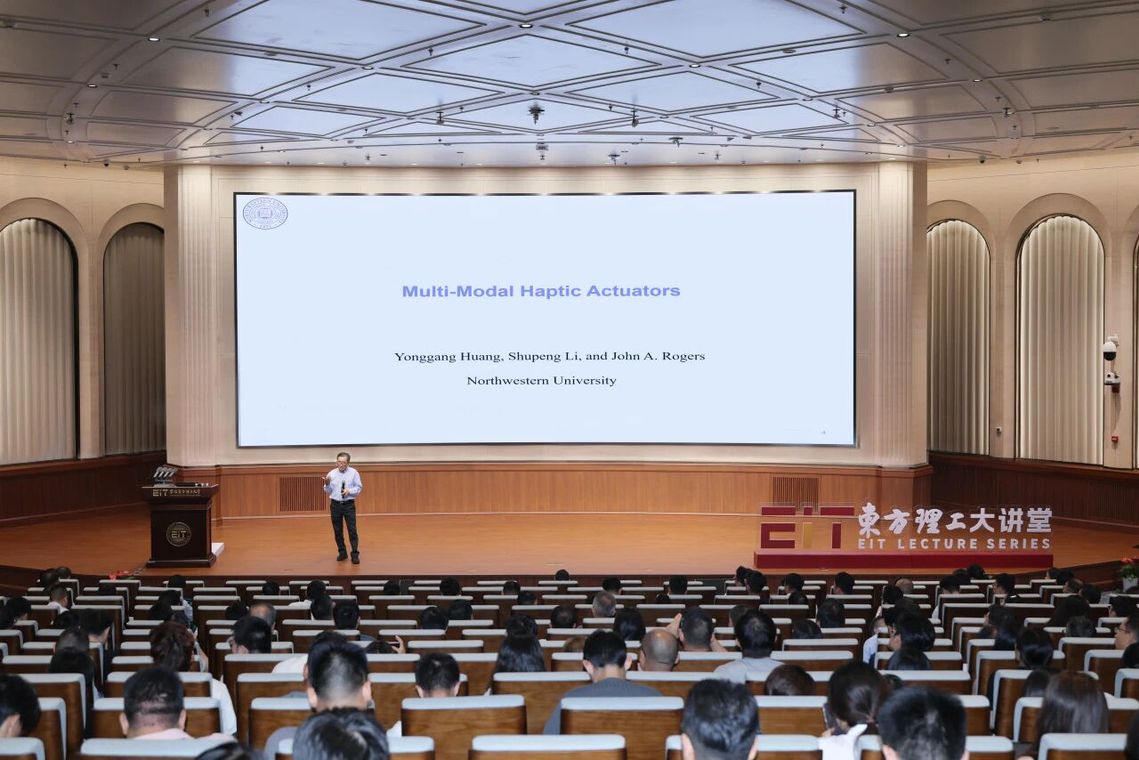
Scene from the lecutre
In a lecture titled "Breaking the Last Barrier Between the Virtual and the Real," Professor Huang wove together cutting-edge applications including Lorentz-force-driven architectures, navigation for blind individuals, texture reproduction, and VR haptics, demonstrating how mechanics serves as a bridge from fundamental science to engineering applications.
Professor Shiyi Chen, President of the Eastern Institute of Technology, Ningbo (EIT) and Member of the Chinese Academy of Sciences, warmly praised Professor Huang's scholarly dedication. The lecture was moderated by Professor Wenjun Zeng, Vice President of EIT and International Fellow of the Canadian Academy of Engineering, and was organized by the Office of Research.
Mechanics as a Bridge, Interdisciplinarity as a Gateway
"Professor Huang is not only a top-tier scientist but also a research leader deeply grounded in fundamentals, boldly advancing interdisciplinary work, and devoted to his country. His scholarly spirit is precisely what EIT hopes to impart to young students," President Shiyi Chen remarked, paying tribute to his longtime friend from Peking University.
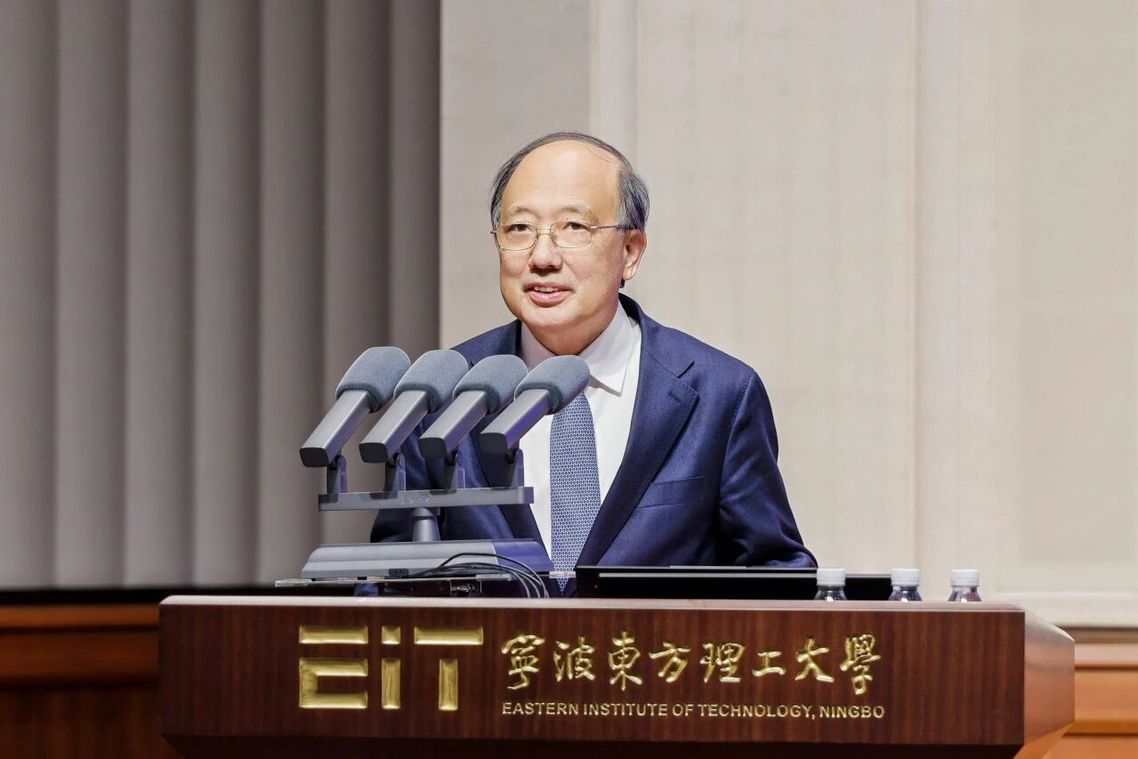
Address by President Shiyi Chen
President Shiyi Chen noted that mechanics serves as a critical bridge from fundamental science to engineering applications and forms the foundational underpinning for the university's priority areas, including intelligent manufacturing, new energy and new materials, and unmanned technologies. Strengthening the foundations of mechanics, he said, is both a wellspring of original innovation and deeply aligned with the university's undergraduate education philosophy of building solid disciplinary foundations while encouraging interdisciplinary inquiry.
"Mechanics lays the foundation of engineering; interdisciplinarity opens the door to innovation." This dual principle both encapsulates Professor Huang's academic career and carries forward the Lecture Series' core mission of serving the nation through science and education.
Breaking the Tactile Barrier: From Principles to Applications
Vision and hearing have long been digitized, but touch remains the "last barrier" between the virtual and the real. Professor Huang zeroed in on the key limitation: existing haptic devices either merely vibrate or are bulky and power-consuming, and they can hardly generate lateral shear forces. Yet human texture discrimination depends precisely on lateral sensing during finger sliding.
The inspiration traces back to high-school physics: a current-carrying wire in a magnetic field experiences a transverse Lorentz force.
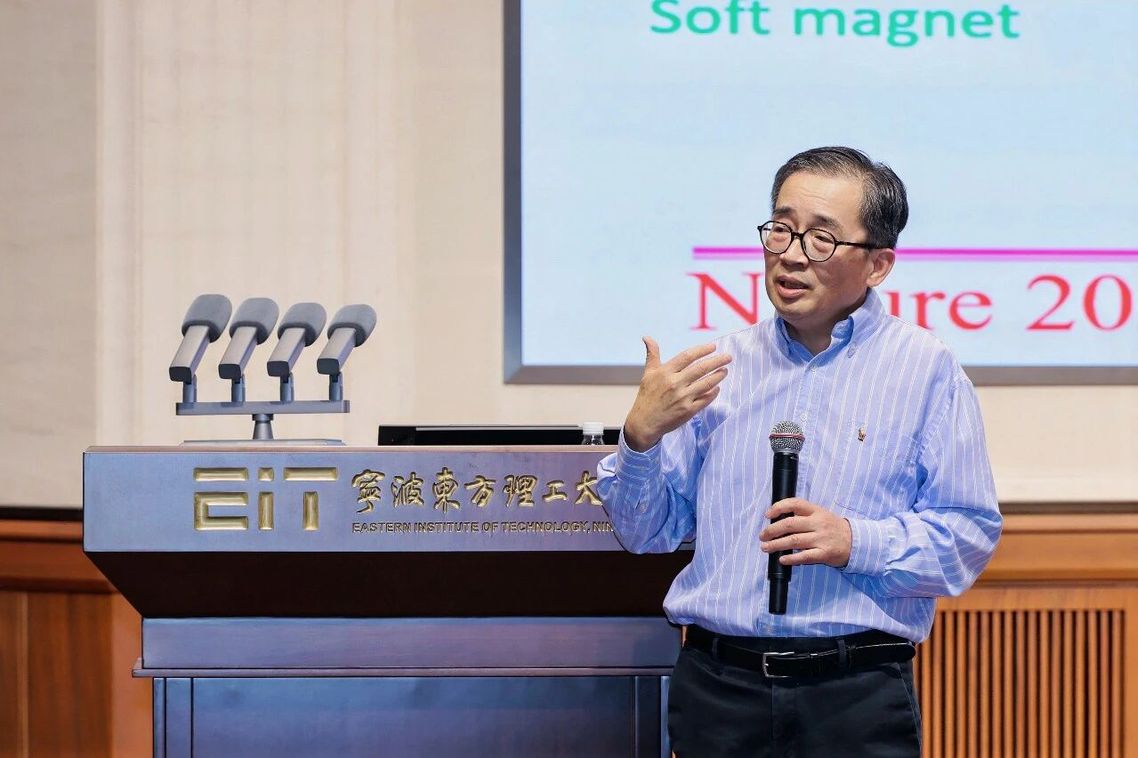
Professor Huang during the Lecture
Professor Huang's team therefore designed a nested coil structure: three sets of coils plus a small magnet, about the size of a fingernail, capable of simulating pressing, lateral pulling, and high- and low-frequency vibration, thereby fully activating the skin's tactile receptors. After optimization, the output force increased by a factor of 78 and energy efficiency by a factor of 68. Meanwhile, the power-consumption challenge was resolved through a structural innovation: a "bistable" design—akin to a light switch—that consumes energy only at the instant of switching.
The experimental demonstrations were compelling. In navigation for blind individuals, blindfolded subjects used a smartphone camera to identify objects, and the device guided the hand with forces in different directions, enabling successful grasping of a water bottle and a biscuit. In texture reproduction, tactile signals from six materials were recorded and then replayed; subjects distinguished virtual textures from real ones with a success rate as high as 96%.
Professor Huang envisions a future in which these applications help visually impaired individuals navigate, allow online shoppers to "feel" the texture of products, provide haptic feedback in telemedicine, and even enable hearing-impaired people to "sense" music through the skin.
At the close of the lecture, a poster of Ready Player One appeared. The day when the barrier is broken is drawing ever nearer.
Brief and Incisive, Lasting Echoes
Professor Huang's delivery was brief and incisive, at times lightened by humor and punctuated by rhetorical questions. Audience members praised his ability to render profound concepts in accessible terms, and questions arose one after another.
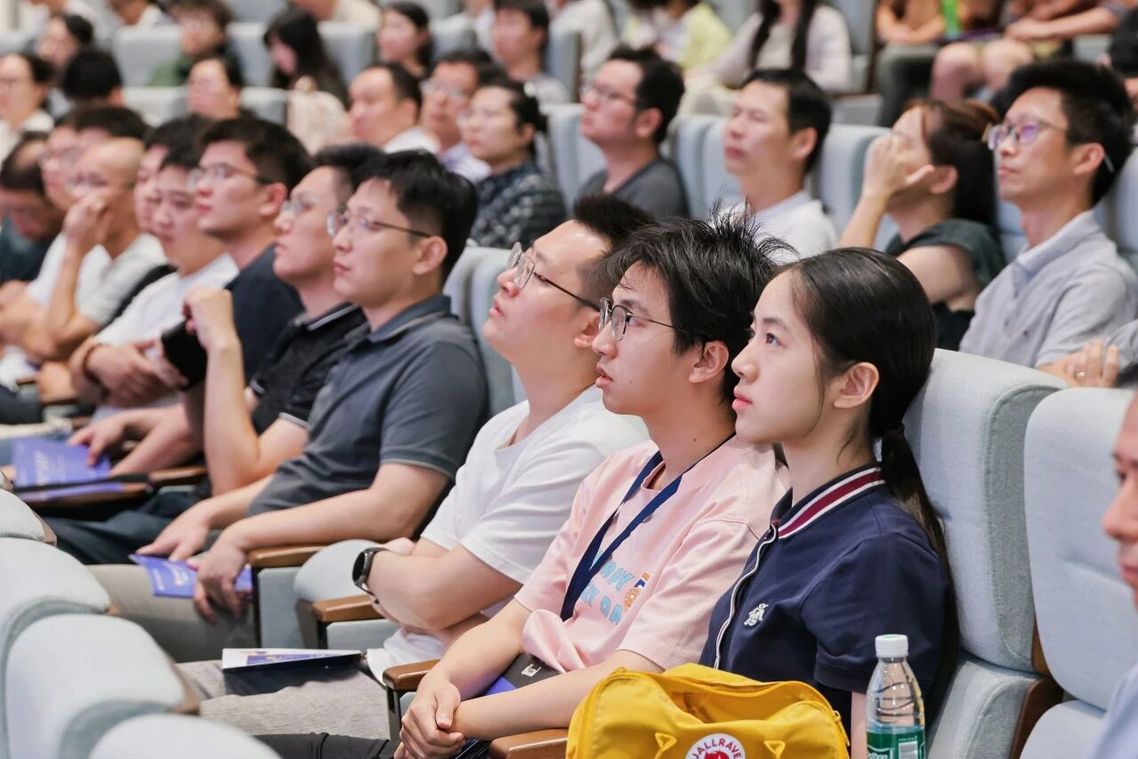
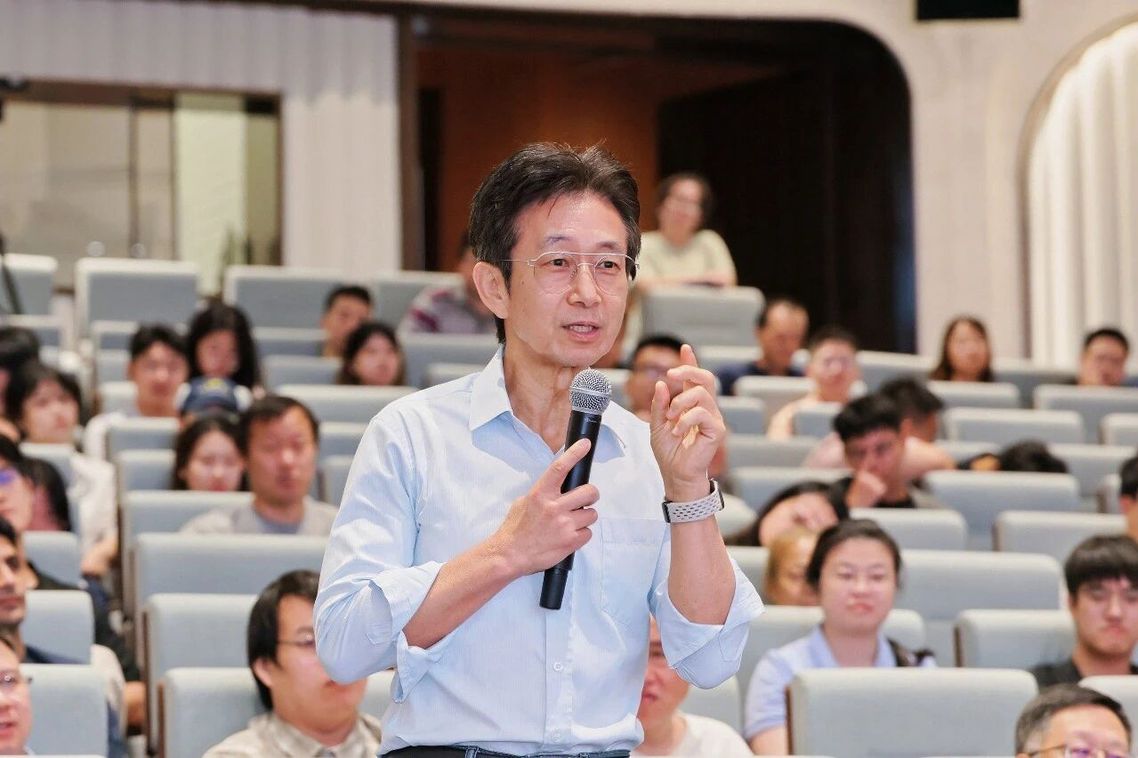
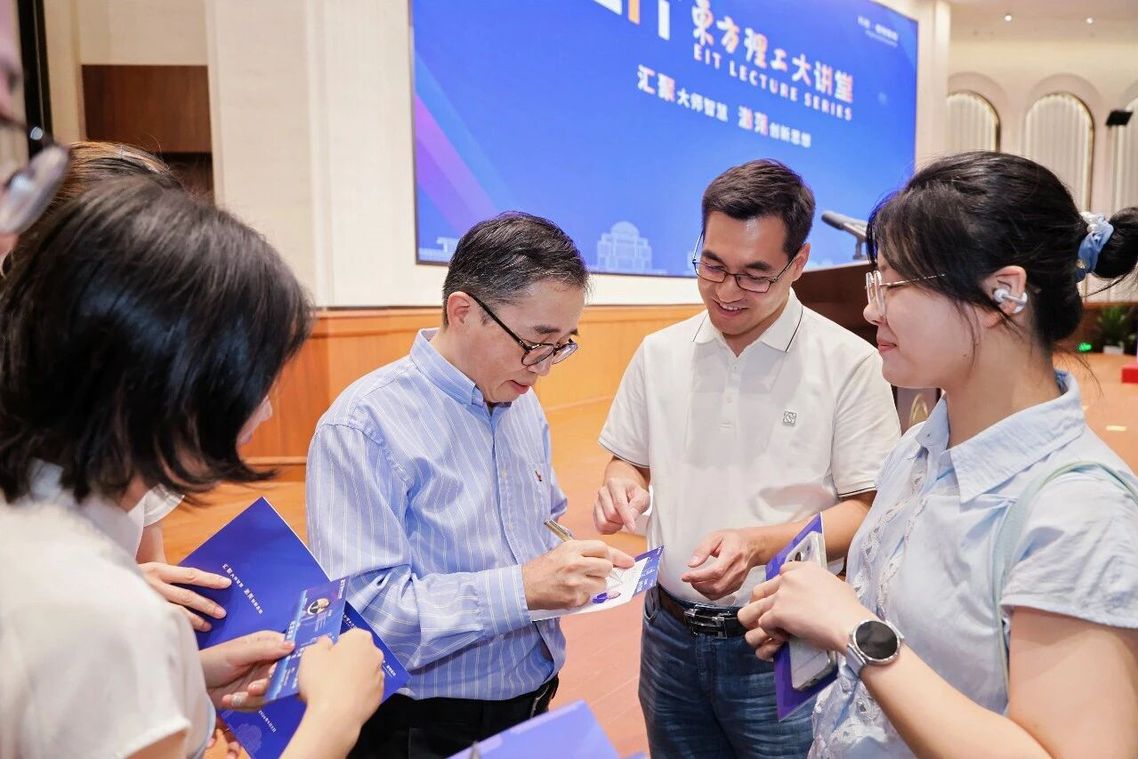
Q&A Session
A doctoral student asked, "If my father wants to twist my ear remotely, would that be feasible?" A first-year undergraduate inquired earnestly, "If I aim to pursue interdisciplinary research, what should I focus on during my undergraduate years?" A student majored in humanities remarked with genuine admiration, "This is the most lucidly explained engineering lecture I have heard in twenty years."
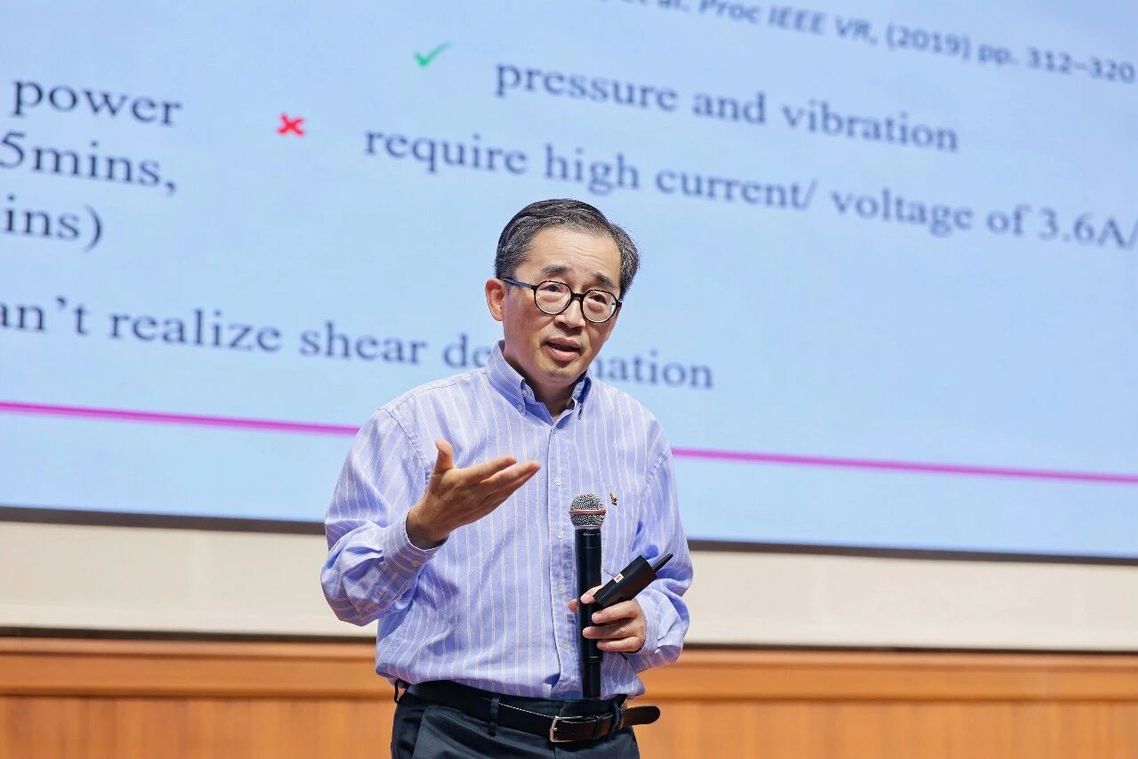
Professor Huang during the lecture
Addressing the research anxiety among young scholars, he articulated the distinction between conducting research and delivering presentations.
"Doing research and giving presentations are two distinct crafts. The former demands rigor; the latter demands resonance. One must not only grasp the underlying mechanisms deeply but also convey complexity with clarity, so that general audiences can follow and experts gain new insight."
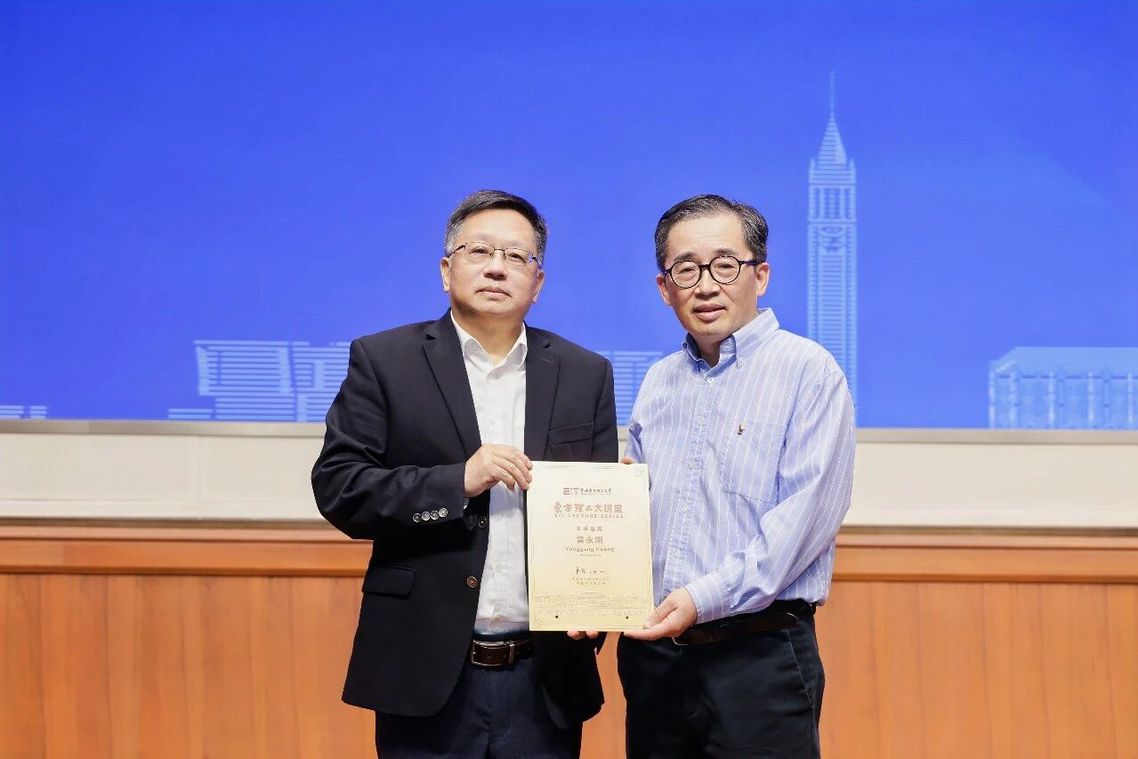
Professor Dongxiao Zhang (left) presents a certificate to Professor Huang (right)
At the conclusion of the lecture, Professor Dongxiao Zhang, Executive Vice President and Member of the U.S. National Academy of Engineering, presented Professor Huang with the certificate. Their handshake symbolized a shared commitment to advancing China's fundamental research on the global stage, grounded in mechanics and propelled by innovation. The EIT Lecture Series will continue to bring together leading minds and remain steadfast in its mission to cultivate "scientists with an entrepreneurial spirit" and "entrepreneurs with scientific literacy."