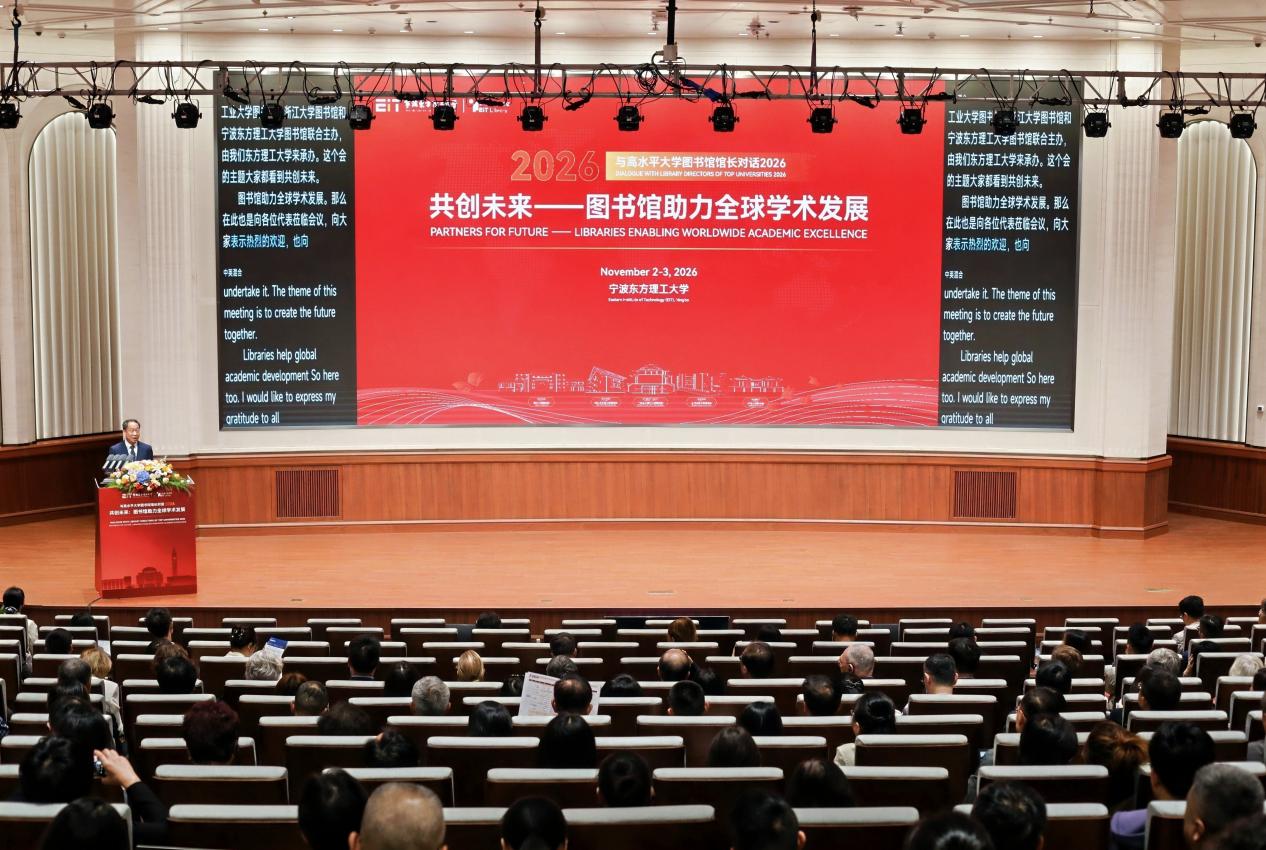
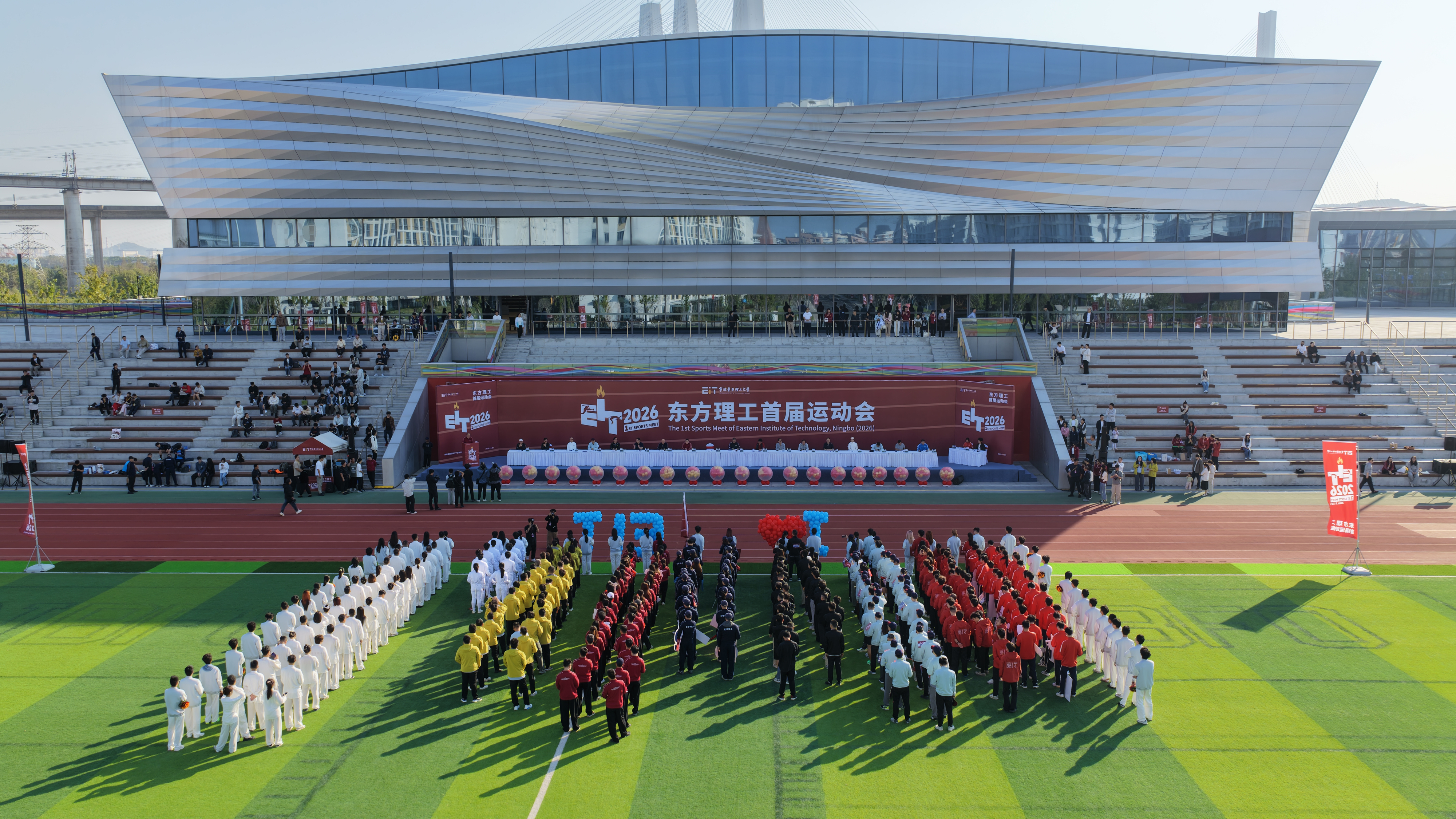
With autumn at its height and the hall full, the Inauguration Ceremony of the Shenzhou Business School Lecture Series at Eastern Institute of Technology, Ningbo (EIT) and the "International Business Studies in Ningbo" Event — was held on 10 November in Safewell Building at EIT. Under the theme "Technology reshapes business; Business defines the future," the series is designed to link business with technology and industry, and to give companies and academics a standing forum for the exchange of ideas. It marks a key step in the school's effort to deliver on its founding proposition — connecting technology and industry through business education — and to establish a platform of business thinking rooted in Ningbo and reaching across the Yangtze River Delta.
Mr. Jingdong Hua, former Vice President and Treasurer of the World Bank and Senior Advisor to the Chair of the International Sustainability Standards Board (ISSB), and Prof. Kostas Nikolopoulos, Associate Dean for Internationalisation and Chair Professor of Business Information Systems and Analytics at Durham University Business School, delivered keynote lectures. Also attending were Mr. Wei Wu, Executive Director and President of Hang Seng Bank (China) Limited, and Mr. Jian Zhang, Deputy Party Secretary and Vice President of the Agricultural Bank of China's Ningbo Branch.
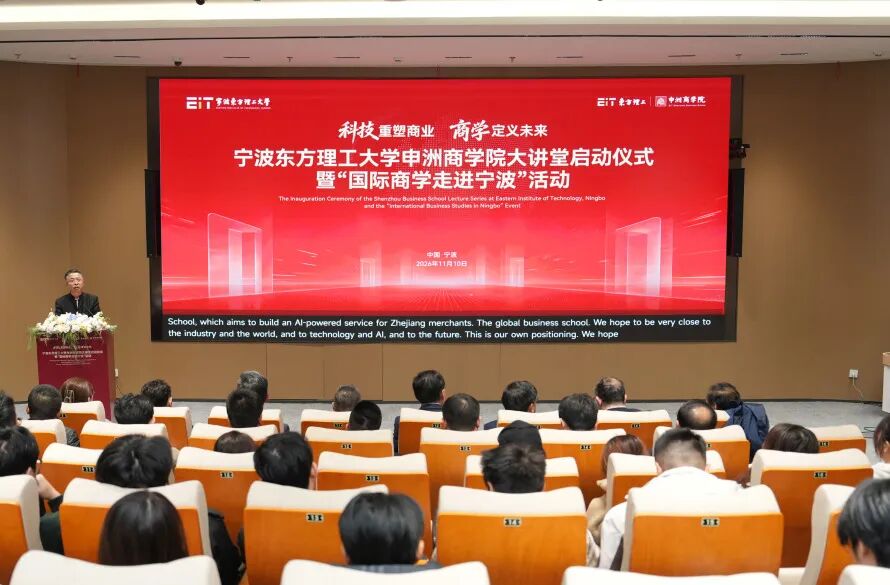
At the event
Mr. Bo Jin, the Party Committee Secretary of EIT, joined other university leaders, along with representatives of business schools from universities across Ningbo, business leaders, and faculty and student representatives. The event was moderated by Prof. Shenglin Ben, Associate Vice President and Dean of the Shenzhou Business School.
A Two-Way Invitation, a Shared Stage
Prof. Ben introduced each of the university leaders, distinguished guests and representatives of business schools in Ningbo in turn, and welcomed the speakers and friends who had travelled from afar on behalf of the university. The "International Business Studies in Ningbo" in the programme's name, he said, works both ways: it brings the world in — and it puts the problems Chinese industry actually faces squarely on the international agenda.
Since its formal approval in June 2025, Prof. Ben noted, EIT has set out to "nurture scientists with an entrepreneurial mindset", and "cultivates innovators grounded in rigorous science" for the AI era. The university already runs its own EIT Lecture Series; today, that calling card to the wider public extends one step further, into business. Two stages, one purpose: to steep this campus in the best thinking and send it out across Ningbo — and to put the wisdom of scientists and the instincts of entrepreneurs in the same room.
To applause from the assembled guests, Mr. Jingdong Hua, Mr. Wei Wu and Prof. Kostas Nikolopoulos joined Mr. Jin Bo, Prof. Chunmiao Zheng, Prof. Yiwu He, Prof. Jingxu Zhu, Prof. Xuemei Ding, Mr. Wenming Ye, Prof. Chuanwu Xi and Prof. Shenglin Ben on stage to launch the Shenzhou Business School Lecture Series.
Lecture One: Financial Innovation as a Spur to Sustainable Development
Mr. Jingdong Hua opened the series with "Financial Innovation for Sustainable Development: A World Bank Perspective." Drawing on decades of multilateral finance at the World Bank, he began with the financing gap confronting global sustainable development and set out how financial innovation can mobilise long-term capital for the green transition, for climate governance and for emerging markets. Turning to the ISSB's push for global convergence on sustainability disclosure standards, he then examined how transparent information shapes the pricing of capital and the direction in which it flows.
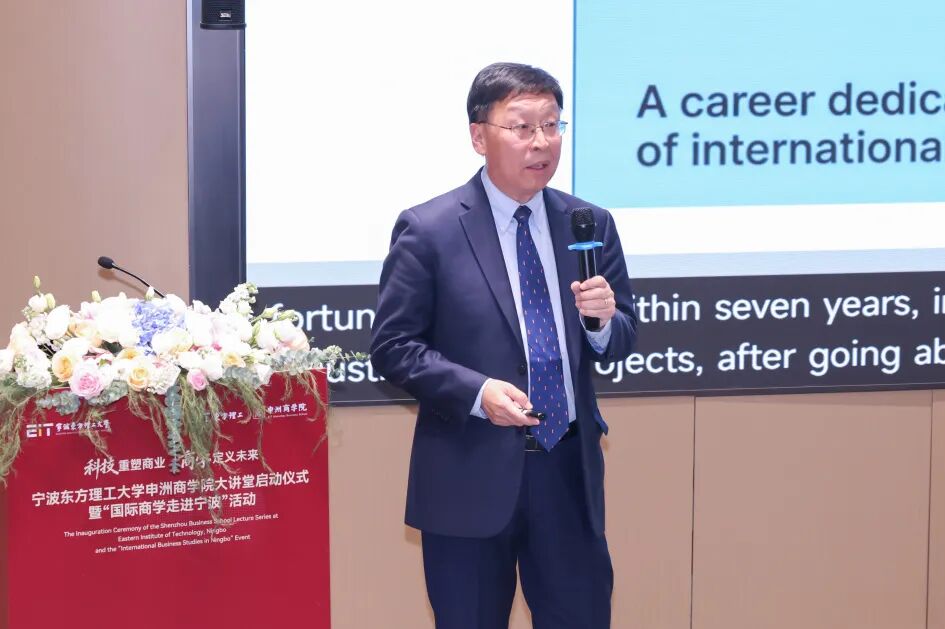
Mr.Jingdong Hua delivering his lecture
"Financial innovation is not an end in itself. The end is to move capital to where it is genuinely needed — to sustainable development, and beyond."
In his account, once sustainability is embedded in standards and instruments, "capital for good" ceases to be a vision and becomes something measurable and verifiable. Broad in scope and rich in case detail, the lecture deepened faculty and students' understanding of sustainable finance and of the international standards architecture around it.
Lecture Two: Making Sound Decisions in the Age of AI
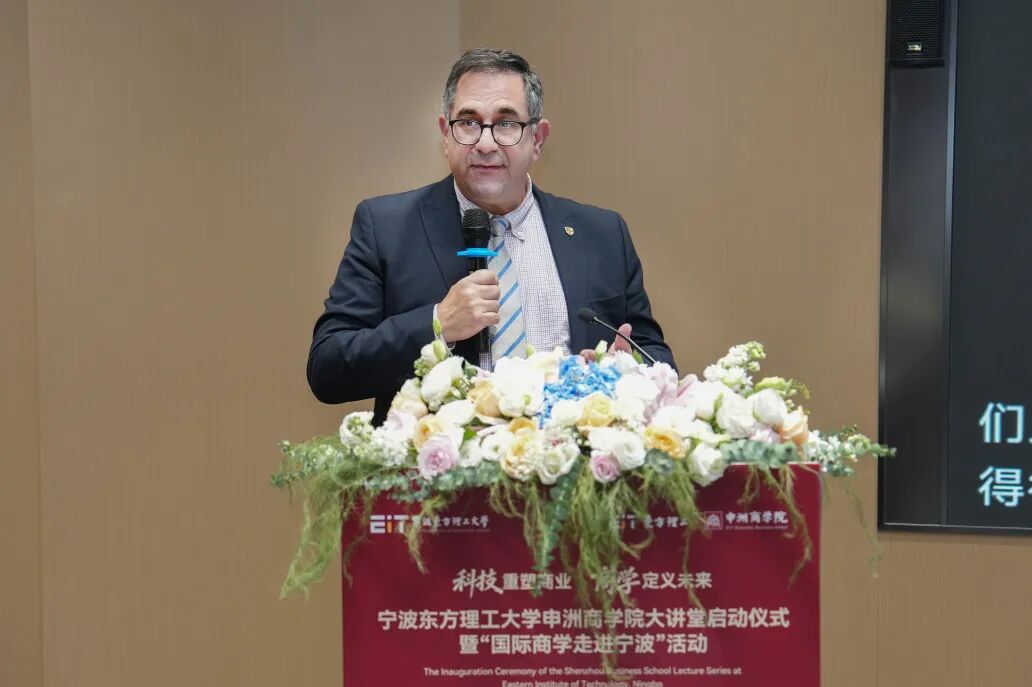
Prof. Kostas Nikolopoulos delivering his lecture
Prof. Kostas Nikolopoulos followed with "Judgmental Forecasting, Herding Behaviour and Machine-Learning-Enhanced Consensus Forecasts," turning to the science of decision-making under uncertainty. He opened with the fundamental question of why forecasting is so difficult, noting that expert judgment carries real experiential value but is also prone to cognitive bias, while herding behaviour can push collective forecasts toward the crowd and amplify error. Machine learning, by contrast, can detect bias across vast archives of past forecasts and recalibrate dynamically, bringing the consensus closer to the truth.
Algorithms, in his view, are not there to replace human judgment but to help people judge more clear-sightedly in an uncertain world. Lucid, plain-spoken and frequently witty, the lecture gave faculty and students a fresh lens on scientific decision-making in an age of human–machine collaboration.
One lecture asked where the money should go; the other asked what entitles us to our judgments. In a single afternoon, technology and business education met on equal terms — and "International Business Studies in Ningbo" gained a vivid first footnote.
This is only the opening page of the series. As a key part of EIT's effort to deepen the integration of business with science and engineering, the Shenzhou Business School will keep to three commitments: take on real problems, keep its doors open, and stay at it for the long term. Its research will be done on the shop floor, and it will be judged by what it changes in practice. The school aims to be a bridge between the university and local government, between the university and industry, and between the university and its peers — and to keep putting its ideas to work for Ningbo's industrial upgrading and for business education across the Yangtze River Delta.