From November 2 to 3, the Eastern Institute of Technology, Ningbo (EIT), hosted the international academic conference "Partners For Future: Libraries Enabling Worldwide Academic Excellence — Dialogue with Library Directors of Top Universities 2026."
More than 200 participants gathered in Ningbo. They included library directors and deputy directors from leading universities in China and overseas — among them Tsinghua University, Shanghai Jiao Tong University, and ETH Zurich — together with representatives from academic publishers and related industries. The discussion covered across the future role of university libraries, innovation in management and services, international cooperation, and the opportunities and challenges posed by artificial intelligence.
The conference was hosted by the EIT Library and co-organized with the libraries of Tsinghua University, Shanghai Jiao Tong University, Harbin Institute of Technology, and Zhejiang University.
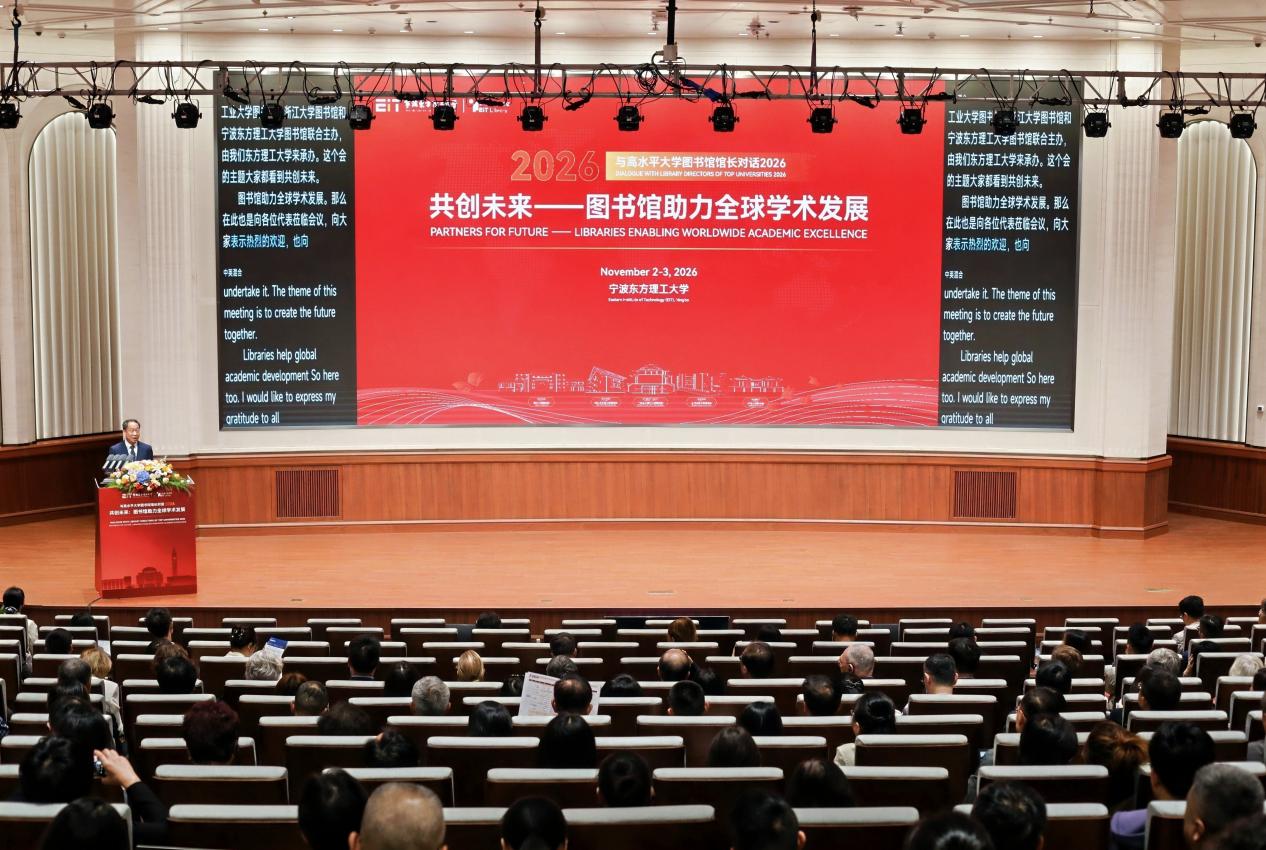
The conference in session
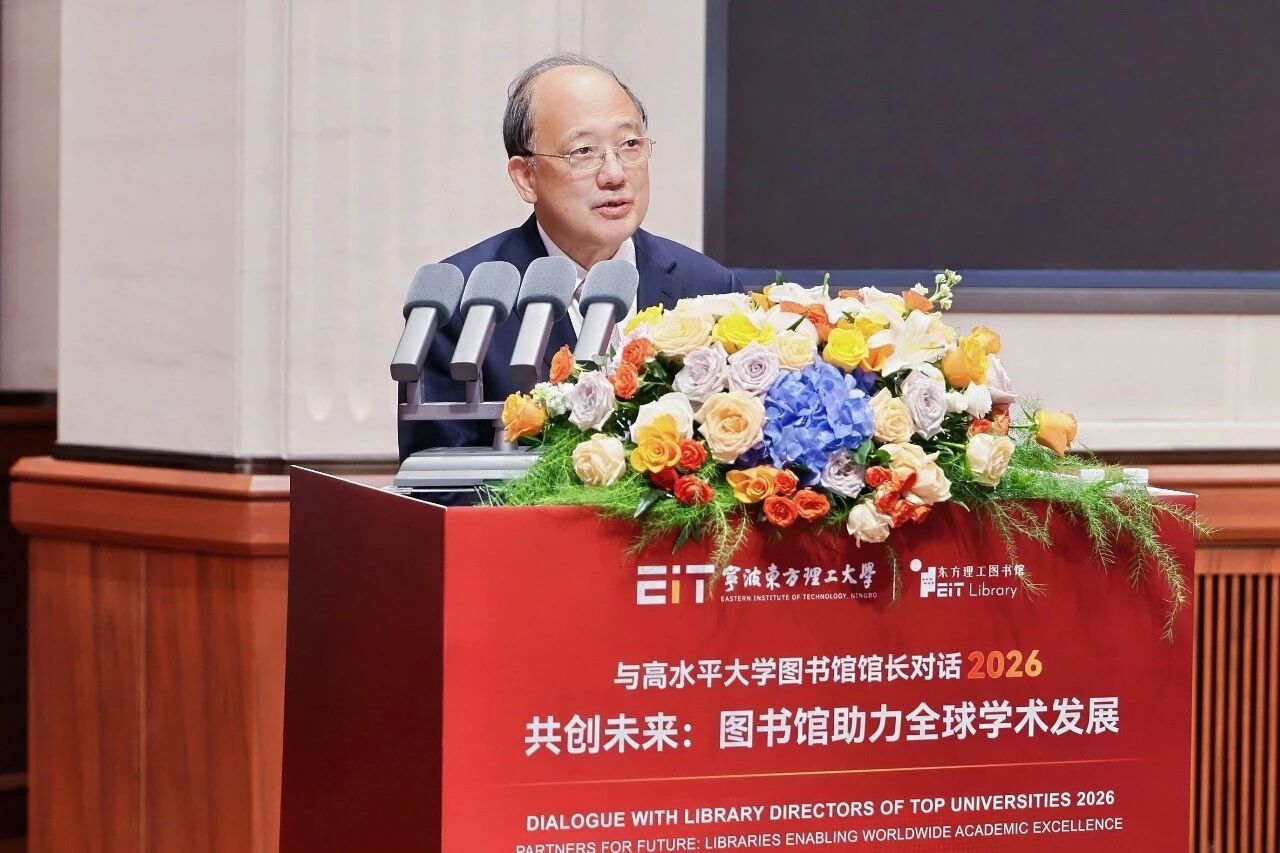
President Shiyi Chen delivers address
"In the age of AI, the function of the library is shifting — from helping you find information to helping you judge it," said Prof. Shiyi Chen, President of EIT and Member of the Chinese Academy of Sciences, in his opening address. A university library, he noted, is more than a place for collecting, lending, and providing access to literature. It should also embody the spirit of the university, serve as a wellspring of academic innovation, and offer an intellectual home where young people can grow. He hoped that librarians from universities near and far would use the gathering to exchange ideas freely and explore together what the university library of the new era should look like.
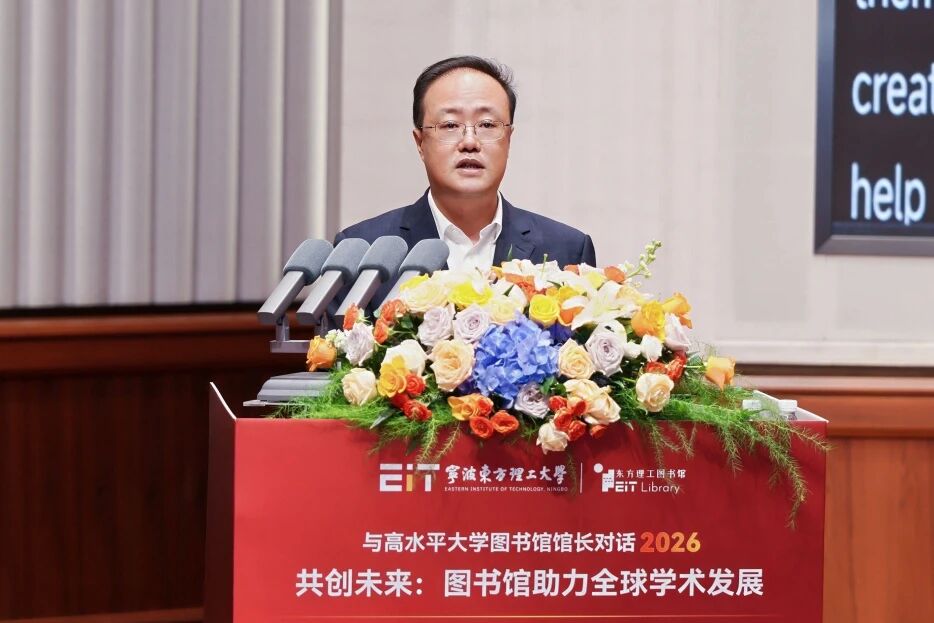
Mr. Xin Chen delivers address
Mr. Xin Chen, Deputy Director of the Ningbo Municipal Education Bureau, noted that "City of Culture and Gateway to the World" is Ningbo's best-known city slogan. As Ningbo works to build itself into a leading, innovation-driven city, he said, the development of higher education and university libraries would have an important part to play in that process.
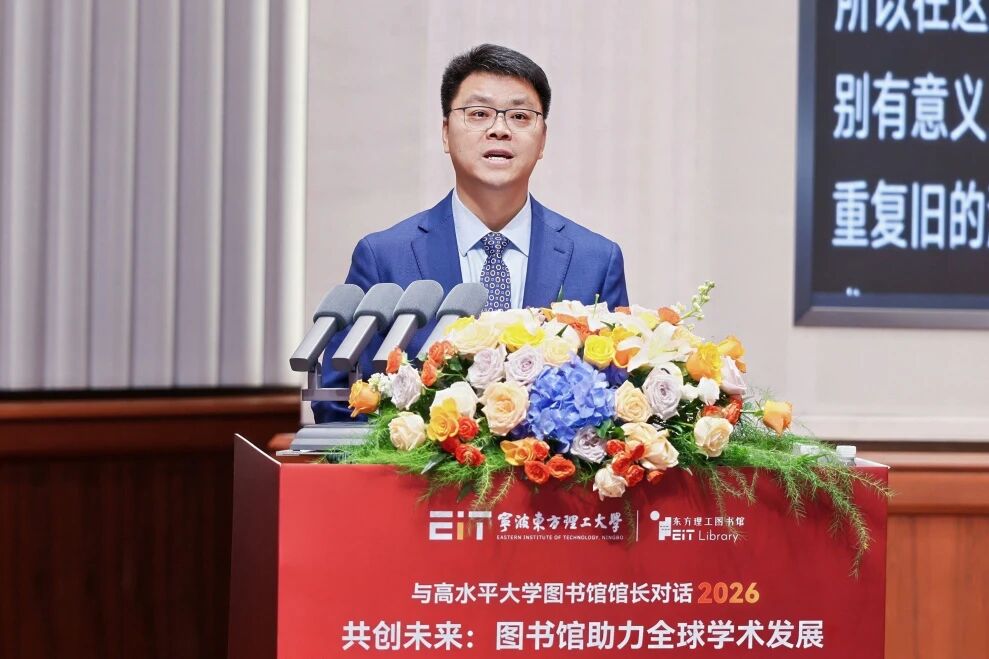
Prof. Jinhua Cheng delivers address
Prof. Jinhua Cheng, Library Director of Shanghai Jiao Tong University, observed that the work of libraries is reaching ever deeper into the academic value chain. However much the times may change, he said, libraries should hold fast to their founding purpose — to advance knowledge sharing, serve the scholarly community, and safeguard the academic values of the university.
As the paradigms of knowledge continue to evolve, university libraries stand at a critical juncture, called on to redefine their mission and strengthen the wider academic ecosystem. The first day was organized around the theme "Librarians as Entrepreneurs and Thought Leaders," focusing on the changing role of university libraries within the institution. Drawing on the practical experience of their own universities, Chinese and international speakers addressed library architecture and space design, the management of academic resources, and cross-border collaboration.
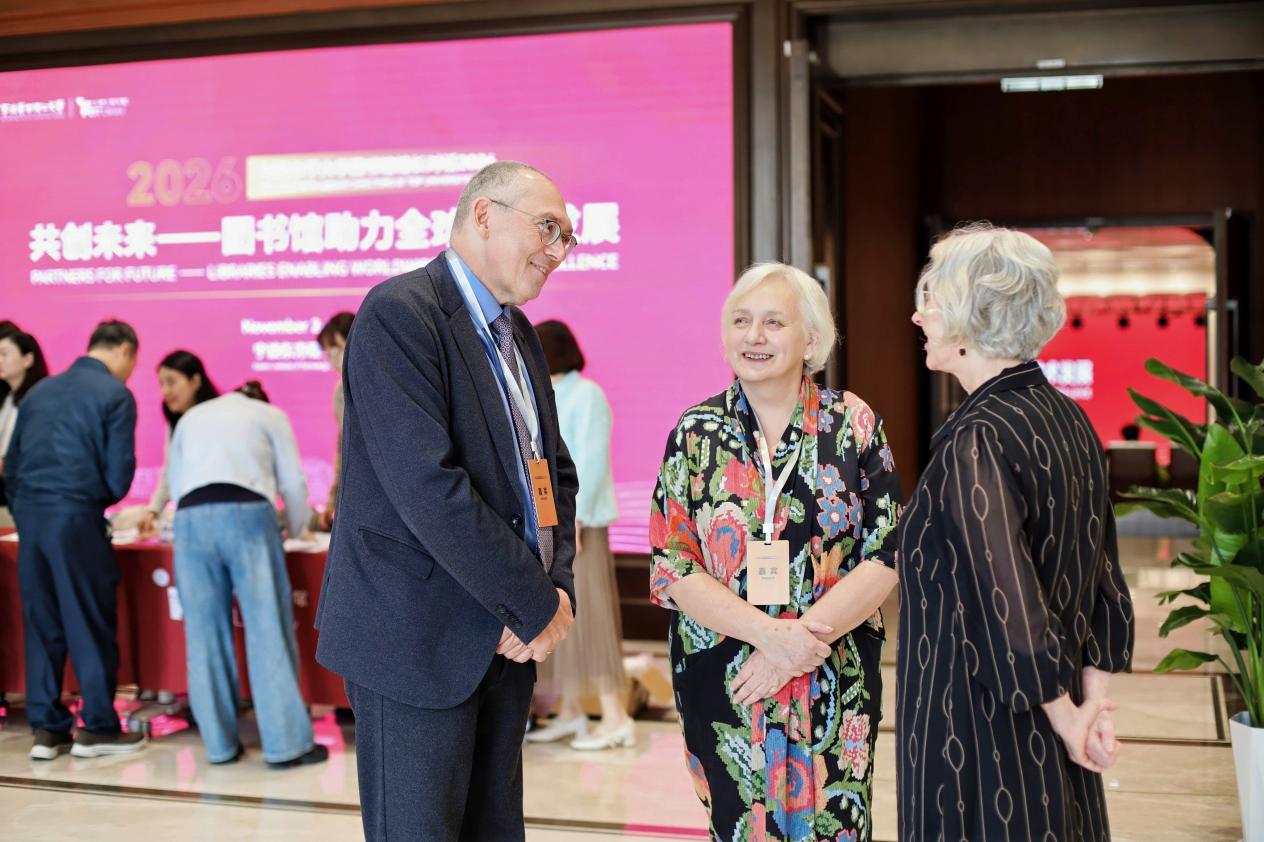
The conference in session
On the second day, under the theme "Where Do We Go from Here? The Impact and Disruptive Forces of Our Time," participants examined how technological change is reshaping the production, dissemination, and preservation of academic information. Looking at the AI era, they argued, librarians should take a measured approach to the technology and take on the key responsibility of building a more trustworthy scholarly environment. At the same time, libraries should embrace the arrival of AI while staying true to the principle that scientific research serves people — collections exist to be used, and change is how an institution stays relevant for the long haul.
Mr. Henian E, Library Director of EIT, delivered the closing address. He said the conference had been marked by the breadth of its participation and had taken up a wide range of questions spanning the development of academic collections, the dissemination of knowledge, the delivery of technology-enabled services, and the evolving needs of users. Looking ahead, university libraries should remain committed to openness, collaboration, innovation, and sharing; they should engage actively with the global academic landscape and better serve education, research, cultural heritage, and social progress.
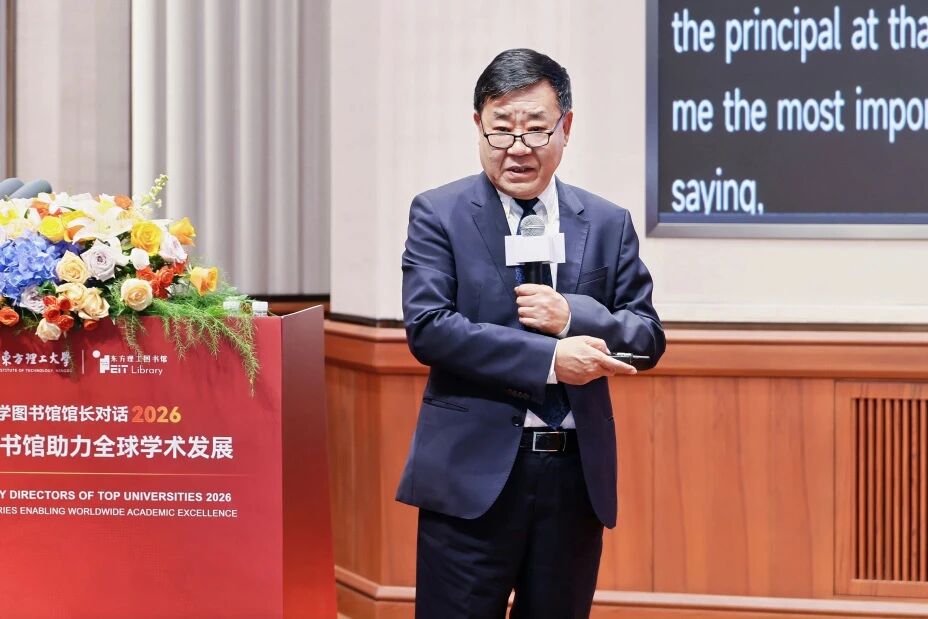
Mr. Henian E delivers closing address
Through this cross-cultural exchange, a picture of the future university library gradually came into view. As host of the conference, the EIT Library supports teaching and research while also working to create welcoming public spaces that meet a wide range of learning needs.
Open to faculty, students, and culture enthusiasts alike, the library organizes cultural events that are at once intellectually stimulating, informative, and aesthetically engaging. It has launched the "Humanities and Arts Lecture Series", and, running alongside the conference, opened a science and art exhibition titled "The Second Shelf: The Shape of Knowledge". Through cultural practice that brings the sciences and humanities together, the library enriches the intellectual life of both the campus and the local community.
Rooted in Ningbo and open to the world, EIT stays true to its positioning as a "High-caliber foundation, Compact yet Distinguished, Research Oriented, Globally engaged" university. Centered on high-quality education and frontier research, it is exploring a path for a new research university and contributing to the high-quality economic and social development of the region and the country. The conference stands as a concrete example of how the university is building an open, inclusive, and forward-looking academic environment at the frontier of knowledge.