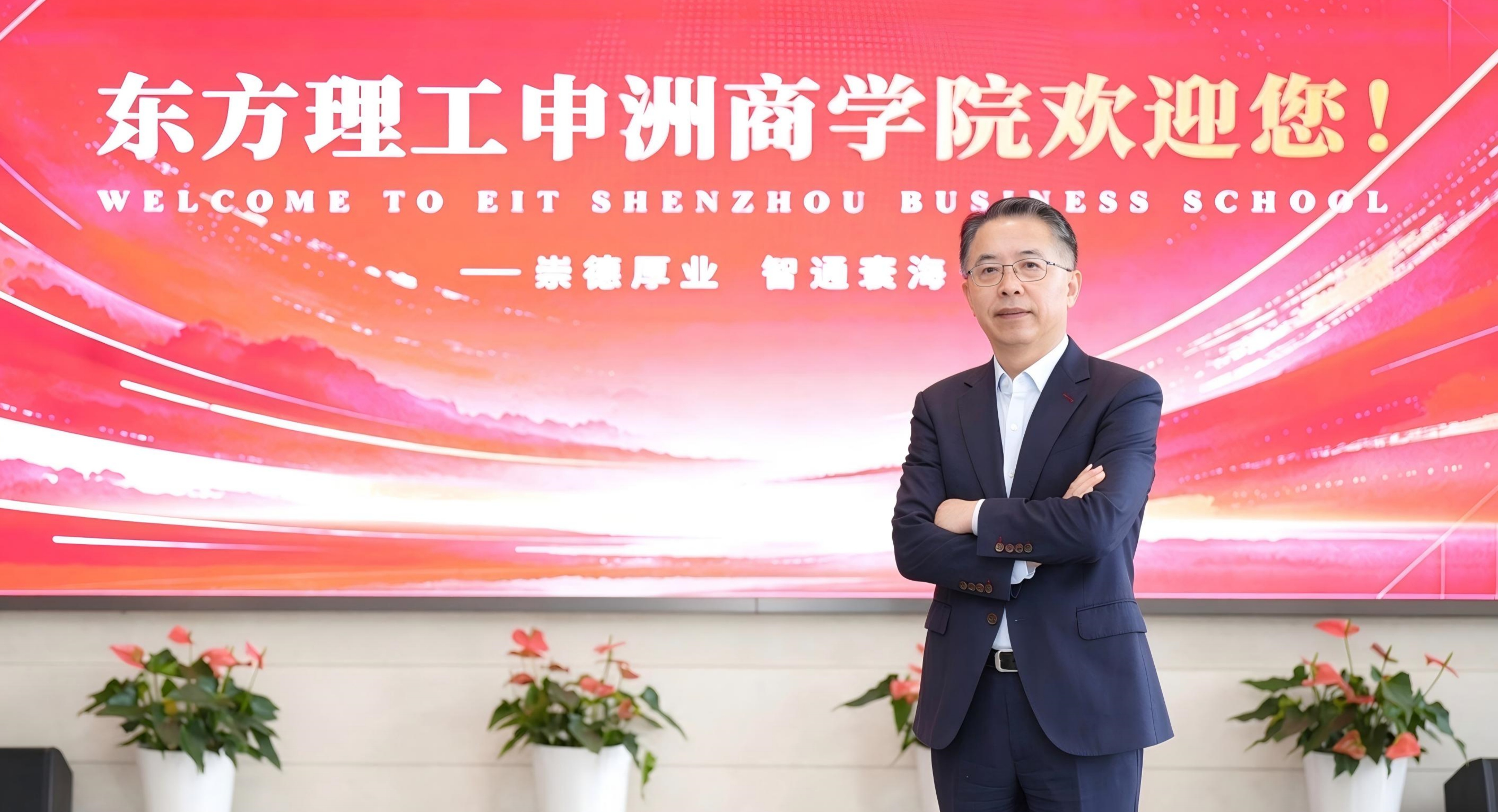
Prof. Shenglin Ben
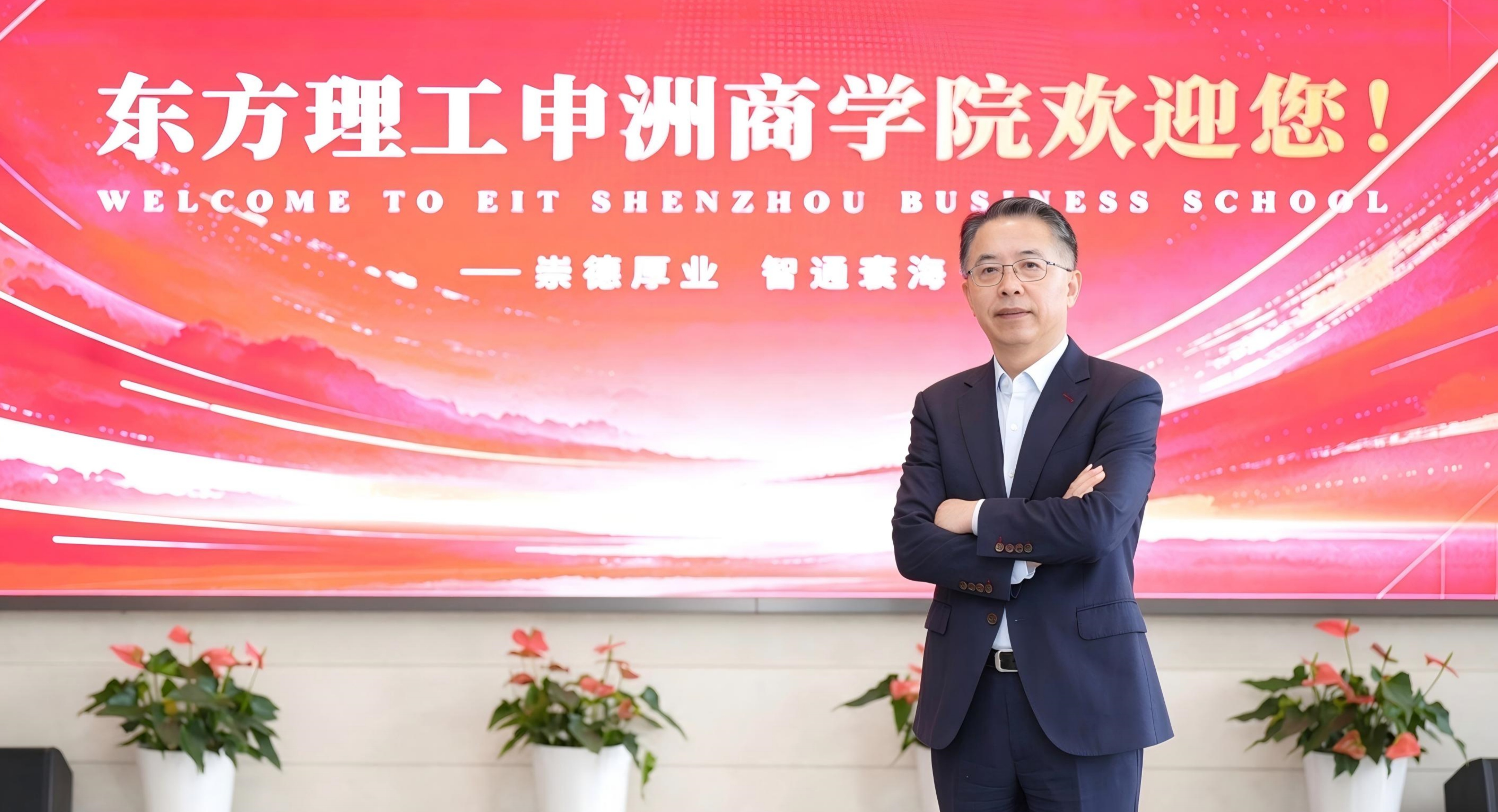
White shirt, dark suit, a brisk stride and an easy smile. On the shuttle bus to the venue, Prof. Shenglin Ben was already waving to everyone while still some distance away, his eyes bright, an unmistakable entrepreneurial energy about him.
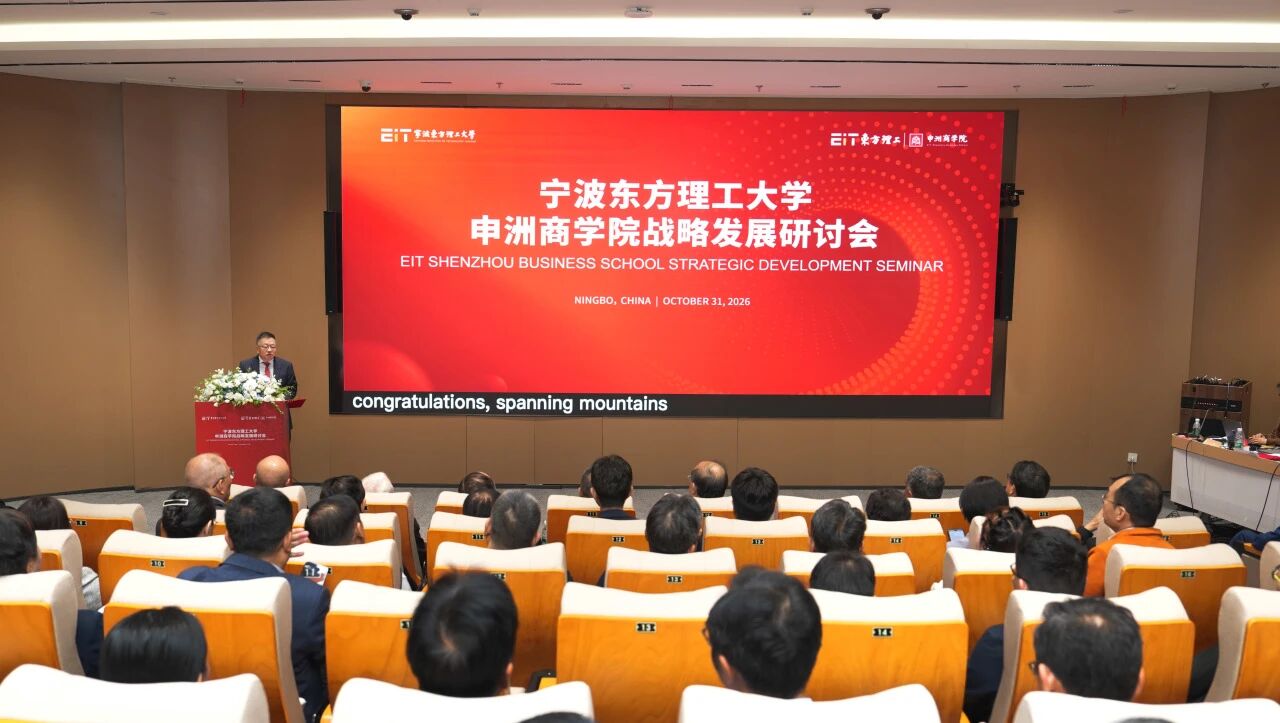
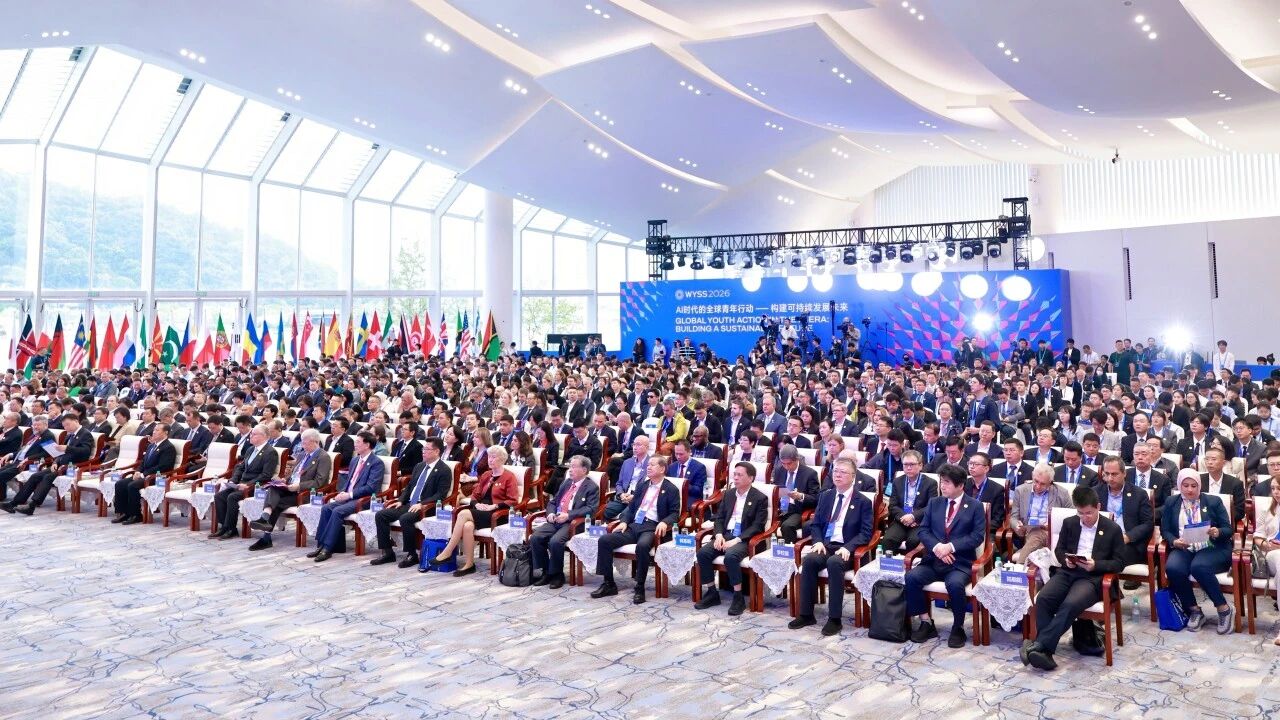
On October 31, the EIT Shenzhou Business School Strategic Development Seminar was held in Safewell Building, where Prof. Shenglin Ben was appointed the school's founding dean.
The Shenzhou Business School is named through a donation from Mr. Jianrong Ma, Executive Chairman of Shenzhou International Group Holdings Limited. Its home, Safewell Building, is named through a donation from Mr. Punan Xu, Chairman of Safewell Group Holdings (China) Co., Ltd. Behind both gifts stands the expectation and support of Ningbo Entrepreneurs for a new research university.
That trust from industry now rests on Prof. Ben's shoulders. Formerly President of JPMorgan Chase Bank (China) Co., Ltd., then a professor at Zhejiang University and founding dean of its Zhejiang University International Business School (ZIBS), he now takes on a new role: Chair Professor at EIT and Dean of the Shenzhou Business School.
From Bank CEO to Business School Professor
Some people spend their lives bound to a particular number. For Prof. Ben, that number is twelve.
The first chapter opened in 1978, the dawn of China's reform and opening up. "Back then I had one simple dream — that the Chinese people would have enough to eat."
Prof. Ben grew up in a rural village in Taixing, Jiangsu Province, one of five children. His parents always believed that no sacrifice was too great for education, and urged their children to be bold and venture far from home.
The second chapter came in 1990, when he won a full scholarship to Purdue University in the United States.
After earning a bachelor's degree in engineering from Tsinghua University and pursuing graduate studies in management at Renmin University of China, he applied to Purdue University for his doctorate.
It was the first time he had ever boarded a plane, and it carried him straight to the United States. He had expected the skyscrapers of the movies; instead, he found himself amid the cornfields of the Midwest. "We joked that we'd been sent down to the American countryside," he recalls with a laugh. Yet it was precisely this quiet corner that offered him the perfect setting to immerse himself in scholarship.
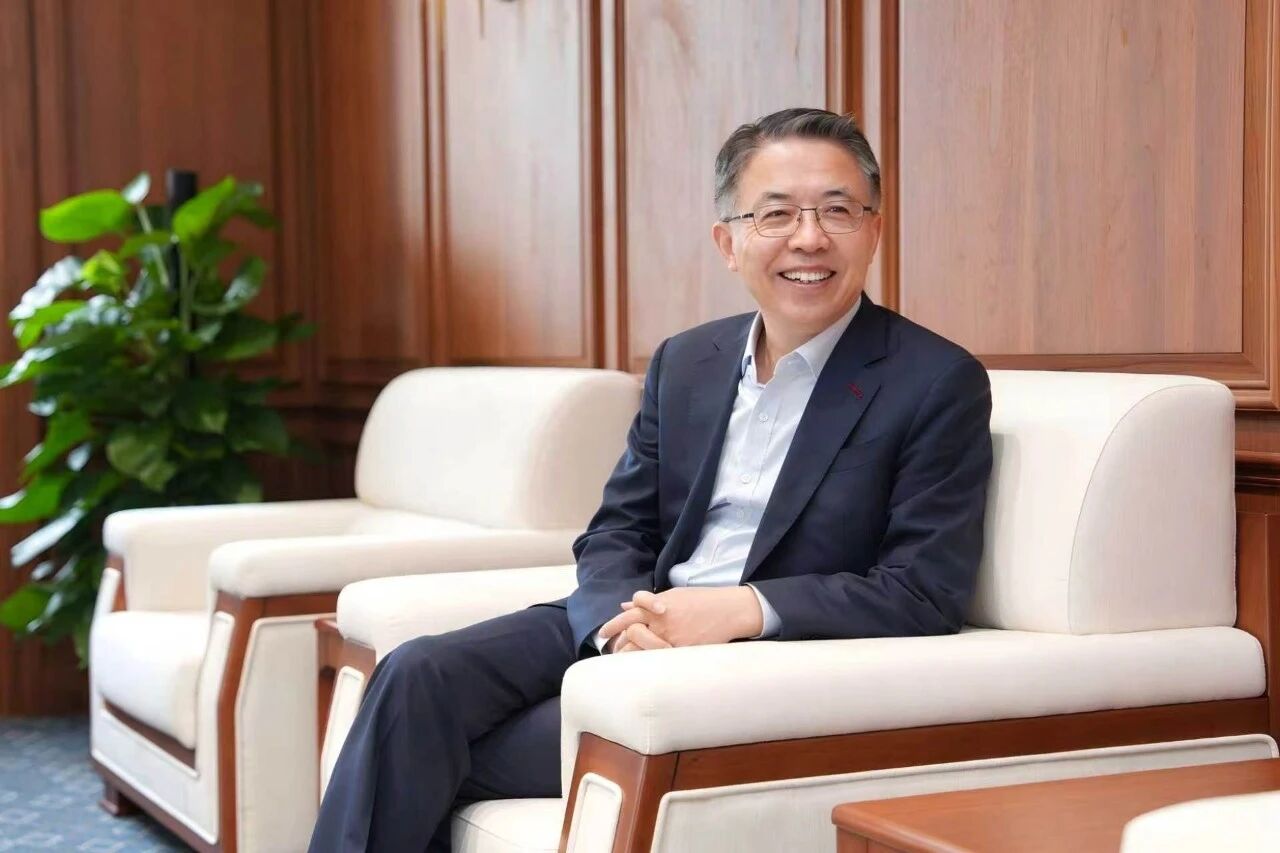
Prof. Shenglin Ben
The third chapter came in 2002, when he became the "President Ben" of multinational banking — in tailored suits in the City of London, moving between the world's major financial institutions.
After his doctorate, his supervisor had hoped he would stay in academia. But he knew that much of 1990s American economics rested on idealized theories and assumptions."I had to see the industry first, to understand the problems of the real world — and then come back."
A string of landmark titles followed: the first mainland Chinese senior vice president promoted from within ABN AMRO; the first mainland Chinese China director and General Manager of Industrial and Commercial Financial Business of HSBC Bank; and Chief Executive Officer of JP Morgan Chase Bank (China) Co., Ltd.
The fourth chapter came in 2014, when he became a university professor and turned his research focus to internet finance.
His engineering background made him prize practical application and real-world impact. A devotion to education, coupled with a deep sense of patriotic duty, led him to set a personal goal: return to academia by the age of 40.
China's entry into the WTO ushered in rare opportunities for multinational companies, and the goal slipped by a few years.
What finally brought him home was the rise of Yu'ebao in 2013. A fintech platform had delivered inclusive finance at striking speed, reaching roughly 60 billion yuan in scale in just three months — more than traditional financial institutions had built up over many years. Prof. Ben was shaken. "I decided I could wait no longer. I would return to academia immediately."
He accepted Zhejiang University's invitation and moved full-time to Hangzhou, the birthplace of China's internet finance. He led the establishment of the university's Research Center for Internet and Financial Innovation, and went on to found its Academy of Internet Finance (AIF), embarking on a second startup — this time from financial practice to academic innovation.
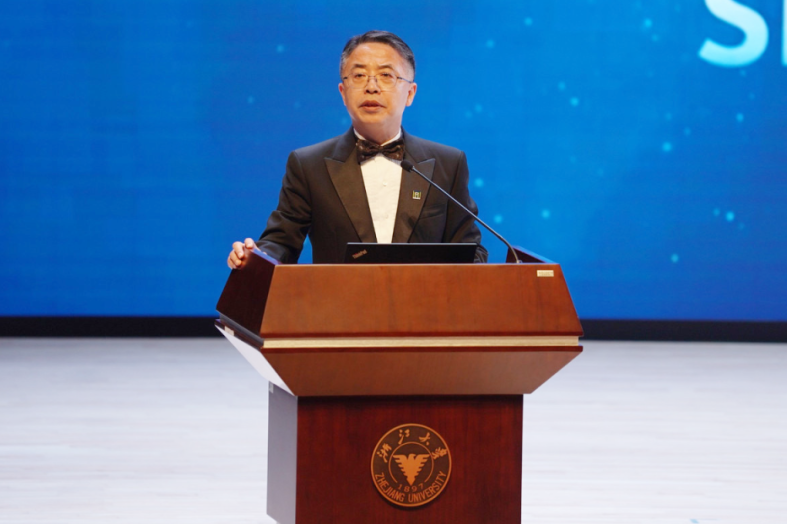
Prof. Ben during his university teaching career
In 2018, he went to Haining to build ZIBS from the ground up. As founding dean, he took the school from a single preparatory project on the International Campus to a technology-driven, global business school with multiple master's programs, nearly 30 research platforms, and students from more than 70 countries and regions.
The school's circle of partners kept expanding, with collaborations with the University of Cambridge and the Australian National University, and industry-academia-research cooperation with the People's Bank of China, Ant Group and Industrial Bank — shaping an educational model defined as global, digitally intelligent and ecosystem-driven.
"Follow your heart." The four Chinese characters he is fondest of — "sui xin fei yang" (随心飞扬), to soar wherever the heart leads — capture the principle. Following his convictions to do meaningful work, he gave up the driver and the secretary on his way from Bank CEO to Business School Professor, What others might see as a comedown was, to him, simply another way to flourish.
Building an AI-Native Business School for the Future
The fifth chapter opened in October 2026, when Prof. Ben formally joined EIT.
Here, he sees a rare convergence of opportunities:
Ningbo, a top city of "Sector Champion" Manufacturing Enterprises whose enterprises are deeply globalized, holds natural advantages in technology finance and in taking technology companies overseas;
The Zhejiang Provincial Report on the Work of the Government 2026 explicitly pledges support for EIT's drive to build a world-class new research university;
Chinese universities are accelerating innovation in business education, connecting the full chain from basic research to applied development and commercialization;
The AI era is sweeping the globe, bringing unprecedented opportunities and challenges. Born in the AI age itself, the Shenzhou Business School carries no historical baggage — which gives Prof. Ben greater flexibility and room to imagine.
"We will build an AI-native business school fit for the future, deeply bind a new research university to industry, and connect China with the world." He can barely contain his excitement at the blueprint ahead.

Safewell Building
At the Strategic Development Seminar, he set his insights on three directions:
Big Data Management and Business Analytics focuses on the digital transformation of traditional industries and fintech applications, cultivating versatile analysts who can harness big data and AI to inform business decisions, improve the operations of financial institutions and drive industrial intelligence.
Supply Chain Management and Global Operations aligns with the overseas expansion of Zhejiang entrepreneurs and the broader globalization needs of Chinese companies, cultivating internationally minded managers who can strengthen the resilience, security and efficiency of supply chains.
Innovation, Entrepreneurship and Technology Finance centers on the precise matching of technological innovation with capital in the AI era, cultivating cross-disciplinary "technology + industry + finance" professionals who can deploy financial tools to support the commercialization of research and serve the hard-tech ventures of the university's faculty and students.
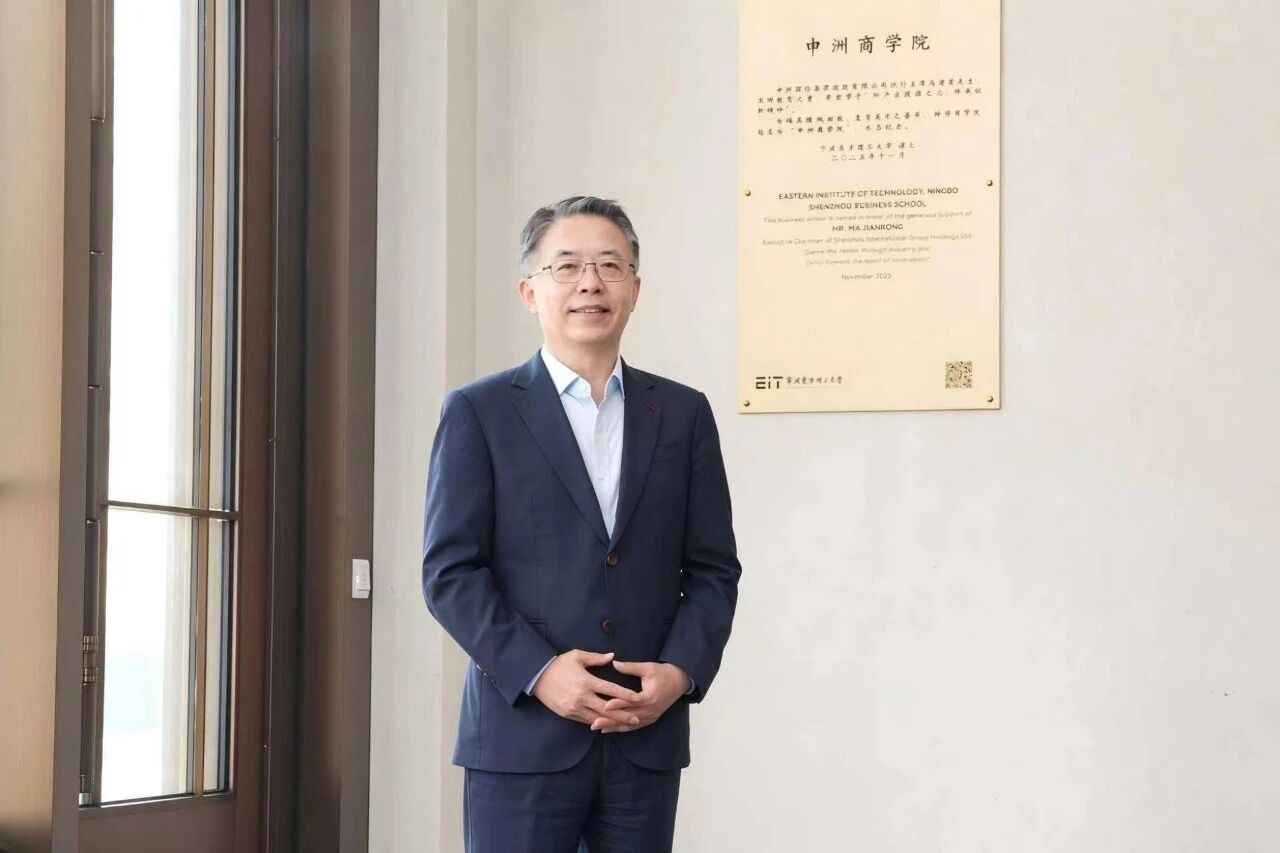
Prof. Ben at the Shenzhou Business School
"The overriding mission of the Shenzhou Business School is to be the bridge and the enabler between scientists and entrepreneurs," Prof. Ben says. The school will pursue five innovation initiatives — the Five I's:
International: embedding the school in the global network of business education and supporting EIT's internationalization strategy;
Interdisciplinary: working with principal investigators across all academic divisions to co-develop courses and translate research into results, and fostering an ecosystem in which "the university builds business education, and business education elevates the university";
Innovation: building on the three undergraduate majors to create a full-chain entrepreneurship pipeline of "curriculum–competitions–roadshows–incubation";
Integration: establishing think-tank platforms — anchored in executive education — including a Globalization Research Institute for Chinese Enterprises (Ningbo Entrepreneurs), and building an ecosystem that brings together government, industry, academia, research and investment;
Intelligence: building an "AI + business" digital teaching system and a lifelong learning platform for Zhejiang entrepreneurs around the world.
The school will recruit two types of faculty. The first is a teaching-and-research track — small in number but elite, each member able to hold their own against professors at the world's leading universities. The second is a professors-of-practice track, made up of senior executives from the world's top consultancies and major corporations, including leaders who have spearheaded corporate transformation. As at Harvard, Wharton, Stanford and other great business schools, these executives will take the podium to teach senior executives — and will never be booed off the stage.
"I want them to be people who ‘pay to work,’" Prof. Ben says. Not in the literal sense of paying for the privilege of a job — but people who love a cause so deeply that they would gladly contribute to it out of their own pockets.
Only shared values, he believes, can carry people far enough and keep them undaunted by any difficulty. He practices what he preaches: every morning, he looks in the mirror and asks himself, "Are you happy today?" The answer is yes — and he starts the day brimming with energy.
Going Toe-to-Toe with the World's Best Institutions
Off the job, Prof. Ben is an avid reader, drawn above all to economics and history. Reading Why Nations Fail, he keeps asking: why do some founders succeed? Why do some companies sail through economic cycles? Why do some nations stay prosperous?
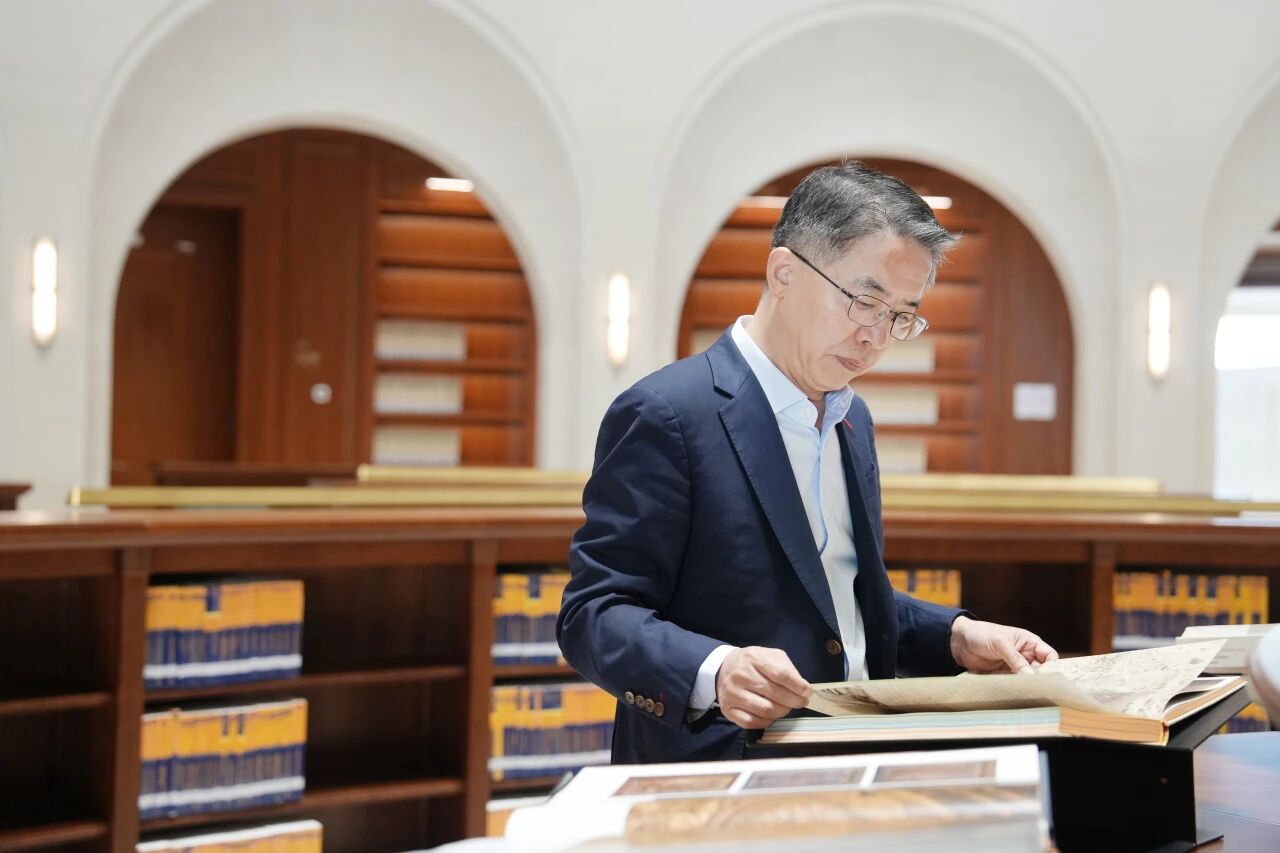
Prof. Shenglin Ben
He has concluded that even in an age in which technology reigns, culture, institutions, management and governance remain the deciding factors in whether a nation or a company becomes a century-old institution. Only sound management can ensure that technology is used for good and truly serves people.
Some countries, though small, are run almost like companies: with the right incentive structures, an inclusive culture and a free flow of information, they sustain a virtuous cycle of progress.
Prof. Ben has also observed many entrepreneurs whose weakness is not technology but management: they fail to delegate, are unwilling to let go, and ultimately put a ceiling on their organizations' growth. This is far from uncommon among Chinese private enterprises.
"We used to joke that management schools can't manage and business schools can't make money," he says with a smile. "I want the Shenzhou Business School to pursue advanced management ideas — and one day go toe-to-toe with the world's best institutions on management itself."
Prof. Ben's generation carries a strong sense of mission: in hardship, cultivate yourself; in success, serve the world (穷则独善其身,达则兼济天下). That sense of mission runs like a thread through his career.
Back in his ABN AMRO years, a reporter from the bank's in-house magazine traveled all the way from Amsterdam to interview him.
"Who is your hero?"
"My parents. In those years of grinding poverty, they would rather endure hardship themselves than hold back any of their five children, urging us to go as far as we could — and never to forget our roots. If I were in their place, I'm not sure I could have done as well as they did."
Perhaps this is the bedrock of his character: a readiness to take responsibility for the wider world and to tie his own fate to the broader currents of his era.
From financial executive to Zhejiang University professor and founding dean, and now to leading the creation of the Shenzhou Business School, Prof. Ben has placed every career choice within the larger arc of his era. This time, he wants scientists' wisdom to meet entrepreneurial savvy, innovation to travel from laboratory to market, and China to connect with the world at a deeper level.
This is his new journey.