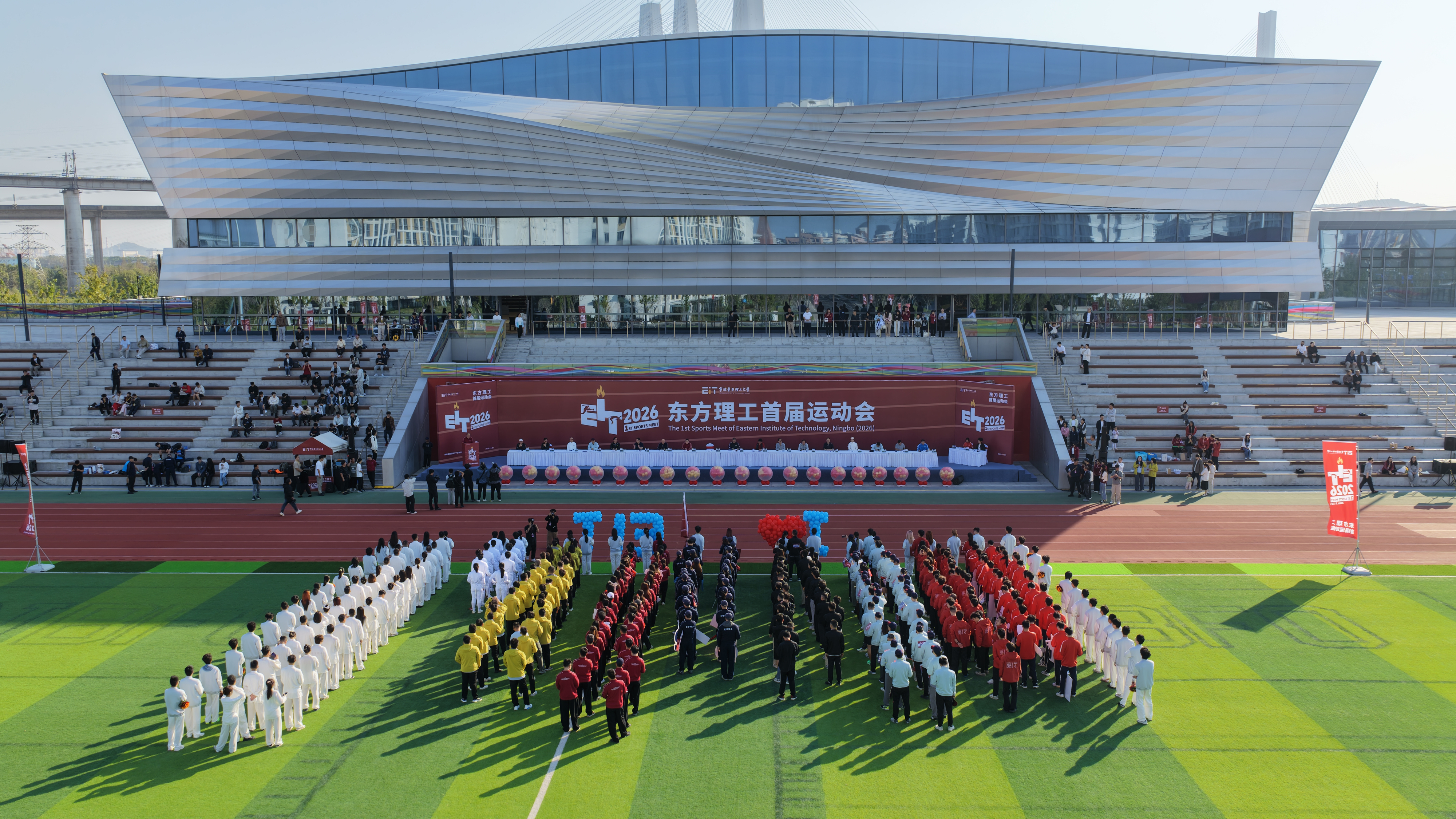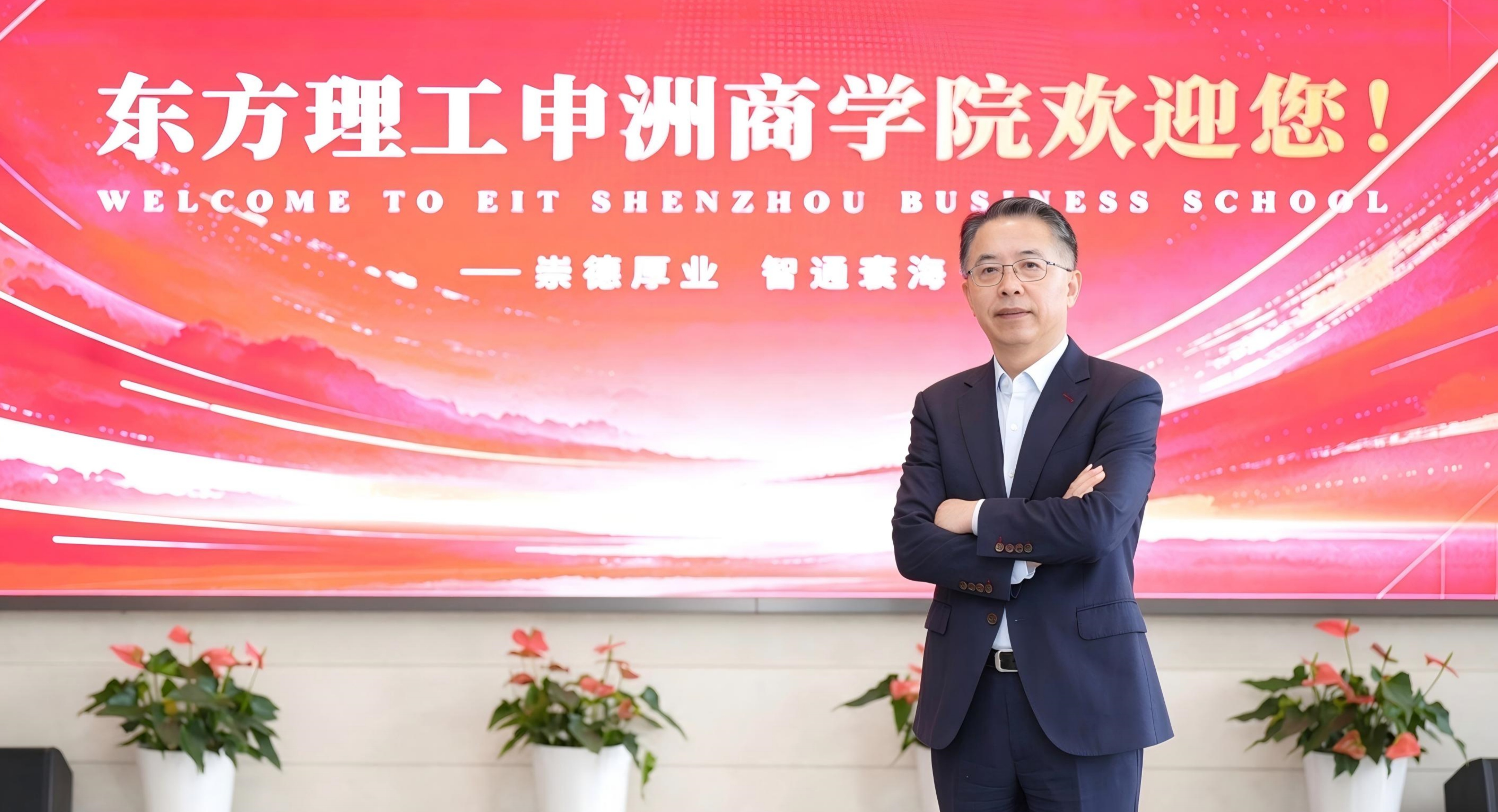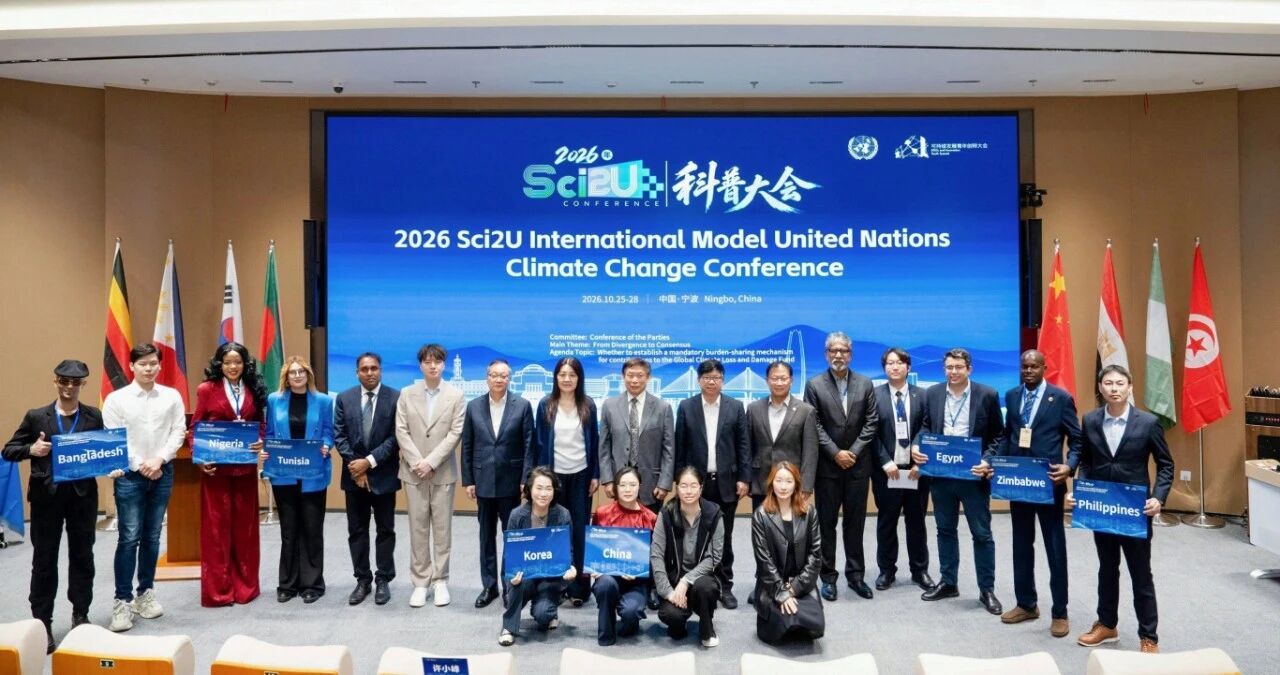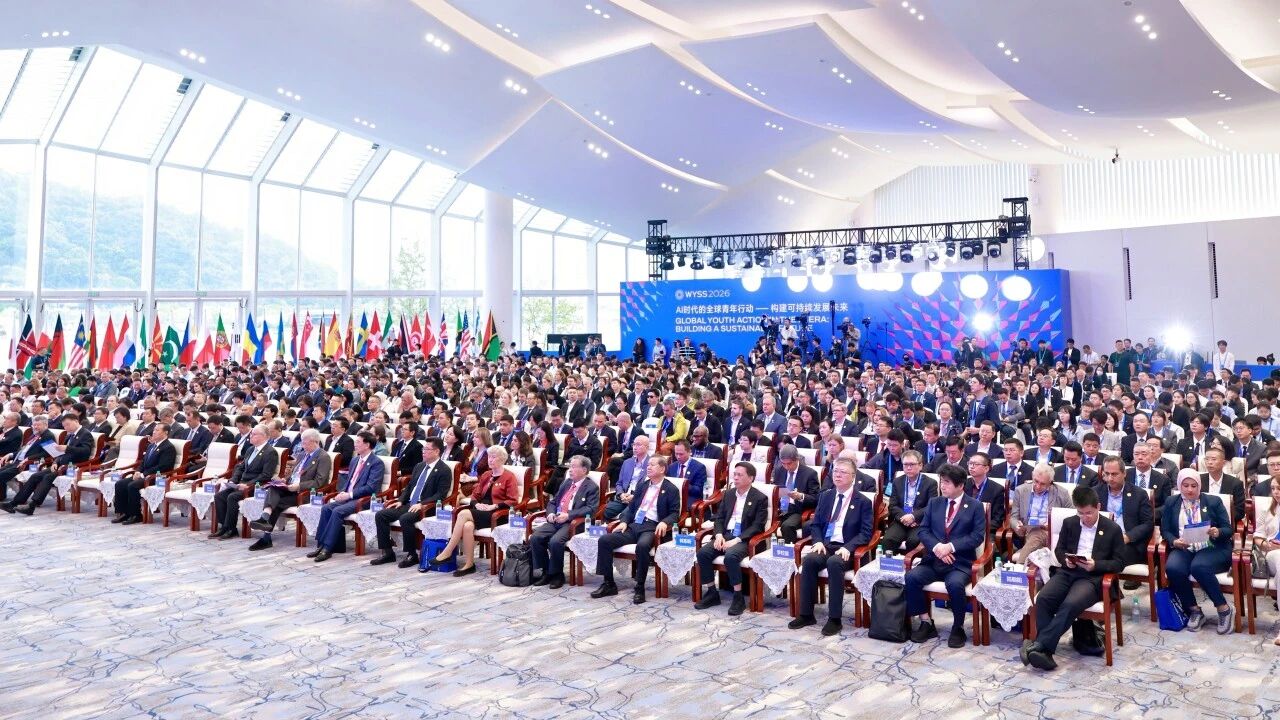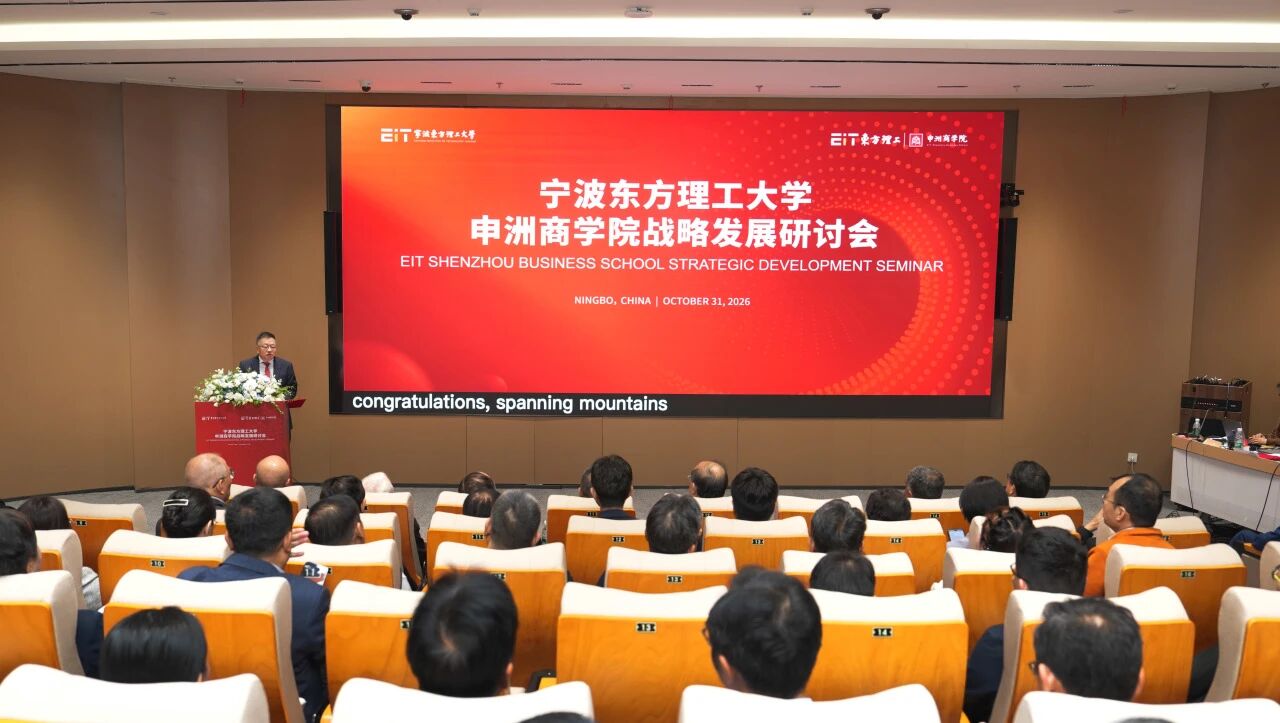
The seminar venue
As autumn hues settle over the Yong River, a new chapter in business education unfolds.
On October 31, the EIT Shenzhou Business School Strategic Development Seminar was held at the Safewell Building. The Shenzhou Business School is named through a donation from Mr. Jianrong Ma, Executive Chairman of Shenzhou International Group Holdings Limited. It is housed in the Safewell Building, whose name honors a donation from Mr. Punan Xu, Chairman of Safewell Group Holdings (China) Co., Ltd.
The seminar was attended by EIT leaders, including Prof. Shiyi Chen, President of EIT and Member of the Chinese Academy of Sciences; Mr. Bo Jin, Party Secretary; Prof. Chunmiao Zheng, Vice President and Chair Professor; and Prof. Wenjun Zeng, Vice President and International Fellow of the Canadian Academy of Engineering. The seminar was moderated by Prof. Dongxiao Zhang, Executive Vice President and Provost, and Member of the U.S. National Academy of Engineering.
Mr. Carlos Alvarez Pereira, Secretary General of the Club of Rome; Prof. Fred Dubee, a member of the Club of Rome and Fellow of the World Academy of Art and Science; and Prof. Anu Rathninde, a Fortune 500 executive, joined industry leaders from 20 provinces and municipalities across China, together with representatives of institutions including the Shanghai Female Enterprisers Association and the Zhejiang International Chamber of Commerce for the Private Sector, to celebrate the occasion and offer their congratulations.
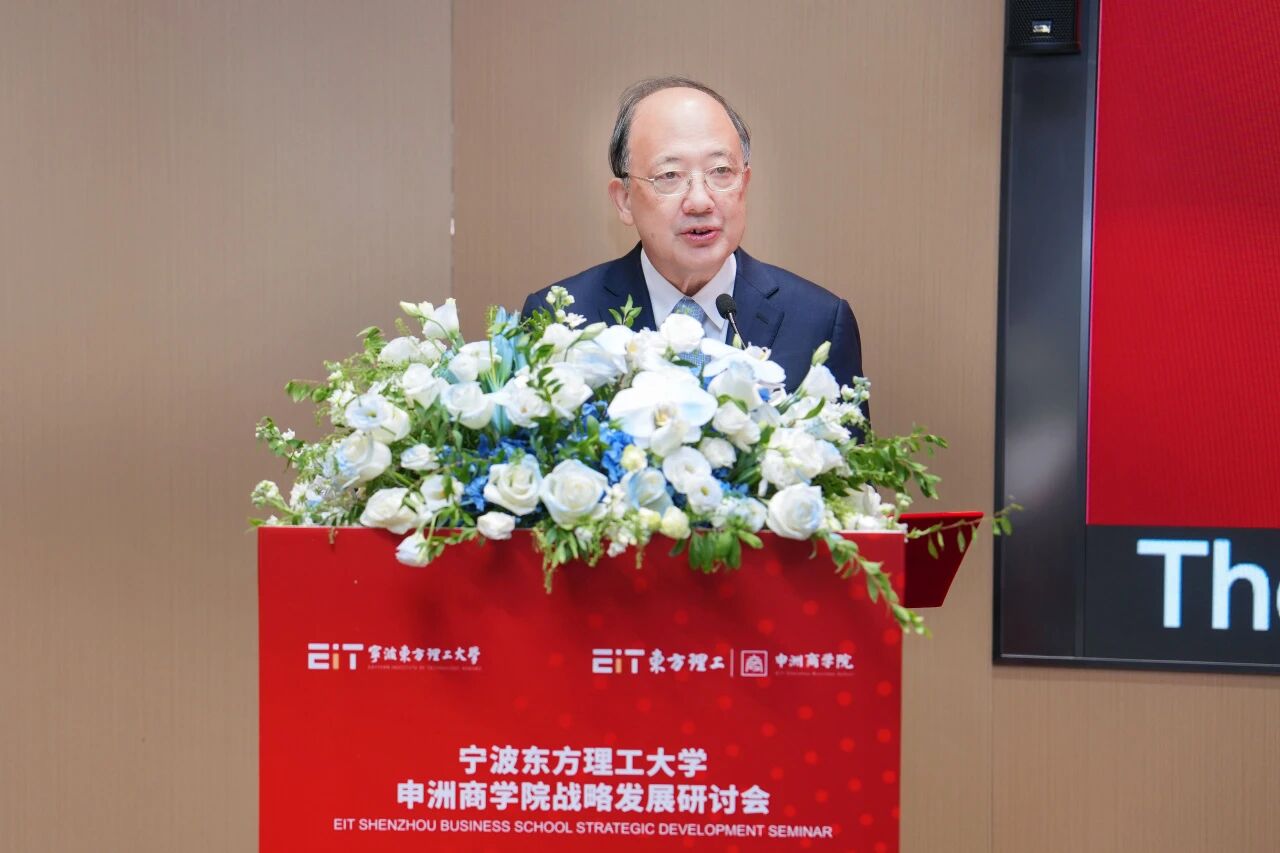
President Shiyi Chen delivers address
President Chen said that a first-rate business school of the future will no longer be a school of management alone; it will be a technology-driven, data-driven, and intelligence-enabled business school. He described business education in the new era along three dimensions.
It is interdisciplinary. Drawing on the university's strengths in artificial intelligence, new materials, and advanced manufacturing, it should take root in hard technology so that technology defines industry, data drives management, and intelligence reshapes business.
It is international. It should carry forward the spirit of Ningbo-born entrepreneurs—devoted to their country and hometown, bold in venturing far across the waves and doing business across the world—and encourage faculty and students to innovate, embrace the world, and use AI adeptly in research and practice, demonstrating their scholarly caliber on the global academic stage.
It empowers industry. It should cultivate science and innovation leaders who understand technology, AI, industry, capital, and global rules.
Prof. Shenglin Ben, Associate Vice President of EIT and Dean of the Shenzhou Business School, delivered a work report on the school's mission, development roadmap, and strategic plans. "Born in the age of AI, the Shenzhou Business School carries no historical baggage; instead, it has greater flexibility and room for imagination," he said. The school will build a future-oriented AI-native business school, serving as a bridge and enabler between scientists and entrepreneurs, forging deep ties between the new research university and industry, and connecting China with the world.
The school aims to cultivate science and innovation leaders who understand the world, technology, business, and capital—equally at home reading the science emerging from the laboratory and the rules at play across the negotiating table. To this end, it is driving deep interdisciplinary integration between business studies and engineering, so that the technical and business worlds truly speak the same language. On faculty, it is pursuing a dual-track model of teaching and research professors and professors of practice: recruiting and nurturing academic scholars who can hold their own alongside the world's leading universities, while inviting senior executives who are leading transformation at major companies to the podium. The school also runs specialized programs for private-sector entrepreneurs, bringing frontline management practice into the classroom.
The seminar also featured congratulatory video messages from friends in China and abroad, including Prof. Han Seung-soo, Honorary Chairperson of the Council of Presidents of the United Nations General Assembly, President of the 56th Session of the United Nations General Assembly, and the former Prime Minister of the Republic of Korea; Mr. Jingdong Hua, Senior Advisor to the Chair of the International Sustainability Standards Board (ISSB) and former Vice President and Treasurer of the World Bank; Prof. Geoffrey Garrett, Special Advisor to the President for Global Strategy and Engagement at the University of Southern California and former Dean of the Wharton School; and Prof. Gishan Dissanaike, Dean of Cambridge Judge Business School. They encouraged the school to stay rooted in China while looking to the world and to the future.
A panel discussion followed, bringing together Mr. Bo Jin; Prof. Chunmiao Zheng and Prof. Wenjun Zeng; Prof. Yong Yu, Distinguished Professor of Practice at the Shenzhou Business School; Mr. Min Jiang, Vice President of the All China Lawyers Association; Mr. Hai Huang, President of Jilin Heart Hospital; Ms. Wei He, Partner at King & Wood Mallesons; Ms. Li Huang, Founding Partner of Cowin Capital; Ms. Chunhua Huang, Vice President of the Shanghai Female Enterprisers Association; Ms. Tianni Chen, Board Member of the Shanghai Female Enterprisers Association and Secretary-General of its International Exchange Committee; Mr. Carlos Alvarez Pereira; and Prof. Anu Rathninde. Focusing on the school's positioning, discipline building, talent cultivation, and social cooperation, the panel offered views and proposals on building an AI-native technology business school, the deep integration of business plus science and engineering, the cultivation of interdisciplinary talent, and coordinated government–industry–academia–research–investment collaboration.
The Shenzhou Business School is a key strategic move by EIT to deepen the integration of business with science and engineering and to serve national strategy and regional economic and societal progress. Going forward, the school will build an AI-native, globally oriented new business school across five dimensions: global engagement, cross-disciplinary collaboration, innovation cultivation, ecosystem integration, and future-oriented intelligence. Rooted in Ningbo's fertile soil of private enterprise, it will closely combine the practical wisdom of entrepreneurs with the academic research of the university—bringing together the insight of scientists and the acumen of business leaders—and help more Chinese companies and brands go global.