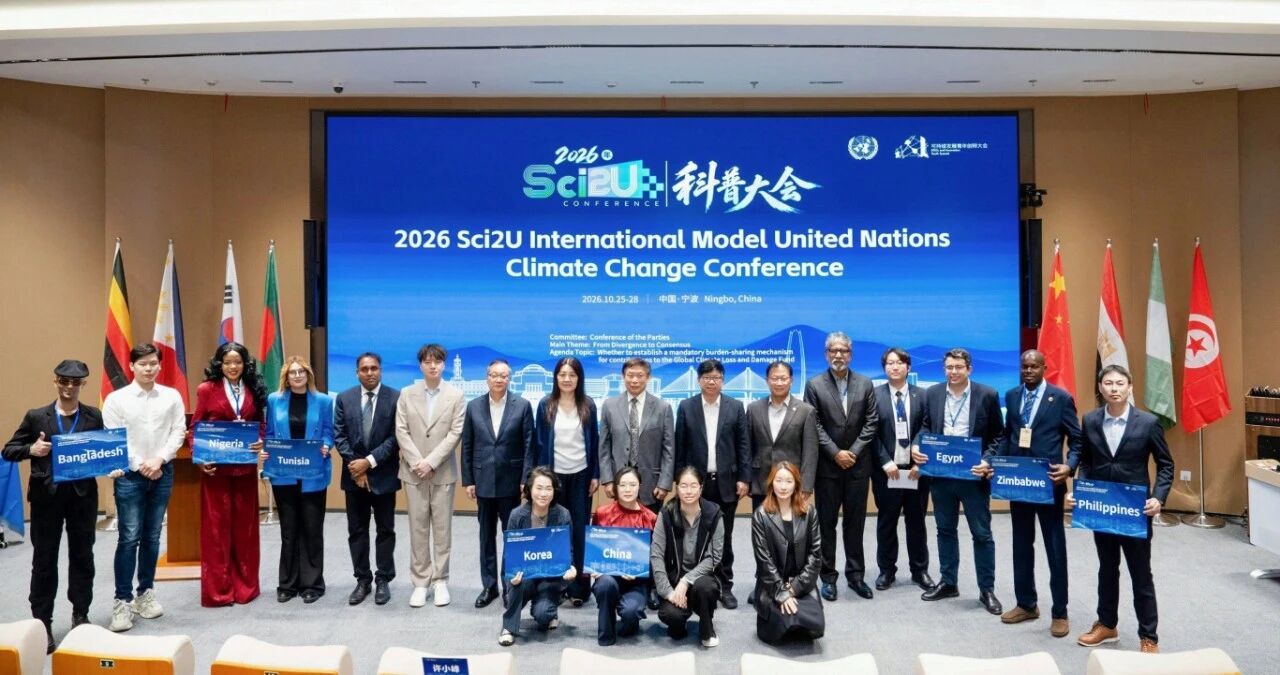
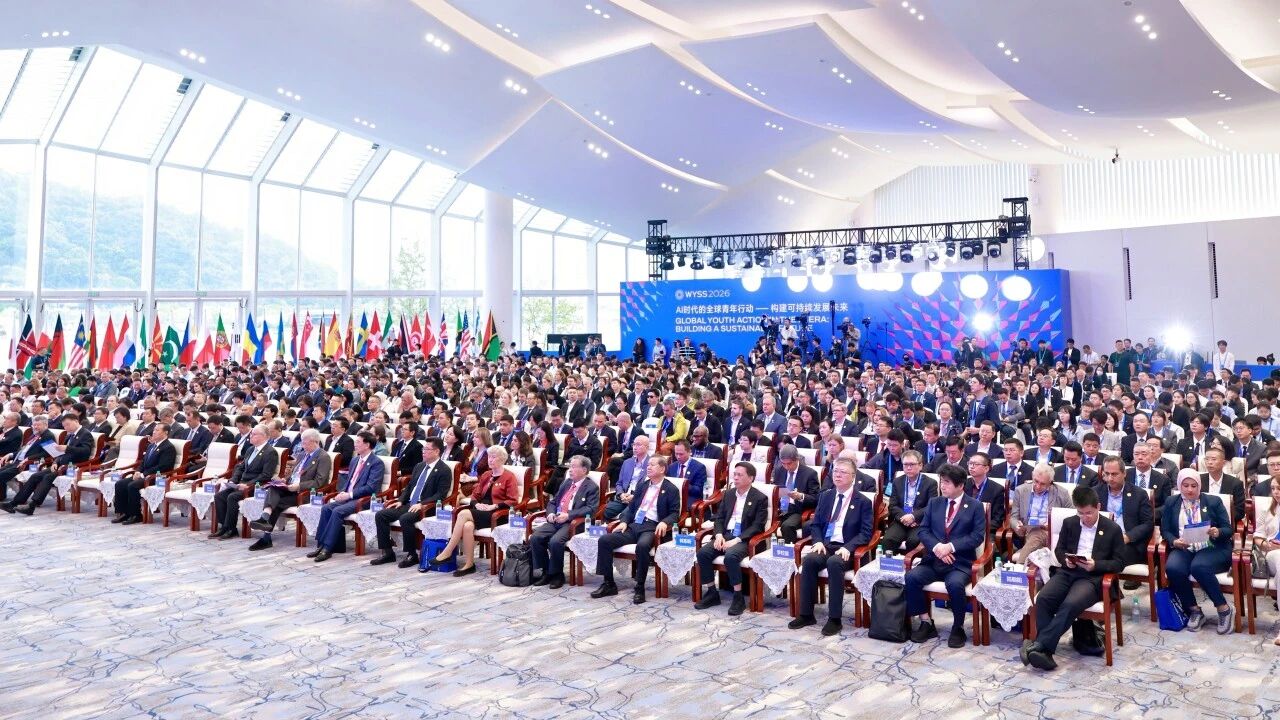
On October 28, three featured sessions of the 2026 Sci2U Conference and the 17th Asia-Pacific RCE Regional Meeting were held at the Eastern Institute of Technology, Ningbo (EIT). The event brought together young representatives from eight countries and regions, along with experts and scholars from China and abroad, to exchange views on climate governance, science communication and sustainable development.

The conference in session
Speaking at the opening of the International Model United Nations Climate Change Conference, Prof. Chunmiao Zheng, Vice President of EIT, said that tackling climate change requires closer cooperation across the international community, as well as advances in science and technology and the cultivation of high-caliber talent. As a new research university—one with "High-caliber foundation, Compact yet distinguished, Research oriented, Globally engaged"—EIT is committed to working at the frontiers of knowledge and in response to global challenges, and to advancing research and talent development in tandem in order to contribute to sustainable development. He encouraged the young delegates to deepen their understanding of the realities facing different countries, to conduct their discussions on the basis of scientific evidence, and to build understanding and consensus through dialogue.

Prof. Chunmiao Zheng delivers address
Dr. Xiaofeng Xu, President of the China Meteorological Service Association and former Deputy Director of the China Meteorological Administration, noted that climate adaptation is an indispensable part of the response to climate change, and that science is the common language of international climate negotiations. Faced with the complex challenges of a changing climate, the international community must strengthen scientific understanding and information sharing, and pursue dialogue and mutual trust on a solid scientific foundation. He emphasized that climate governance calls not only for shared goals but, more importantly, for concrete action and closer cooperation, so that scientific consensus can be translated into tangible results in the fight against climate change.

Dr. Xiaofeng Xu delivers address
Three sessions ran in parallel: the Model United Nations Climate Change Conference, the roadshow for the third cohort of science communication studios, and the meeting of the China Association for the Club of Rome.
Under the theme From Divergence to Consensus, the Model UN Climate Change Conference simulated negotiations on the burden-sharing mechanism for contributions to the global Loss and Damage Fund. Eight national delegations, representing South Asia, Southeast Asia, Northeast Asia, North Africa and sub-Saharan Africa, explored the diverse priorities and pathways for cooperation in global climate governance through statements, debate and consultation, and exchanged views on climate finance, data sharing, the green transition and other issues.
The roadshow for the third cohort of science popularization studios was co-hosted by the Zhejiang Provincial Federation for Science Popularization and EIT. Thirty shortlisted studios each gave a five-minute presentation showcasing their achievements and distinctive science popularization projects. Following expert review, 20 studios were selected to form the third cohort of science studios, in an effort to strengthen science communication and the development of distinctive science popularization programs.
The meeting of the China Association for the Club of Rome was held alongside the other sessions, bringing together committee members, experts and scholars to discuss science communication, climate action, public engagement and sustainable development. Prof. Shenglin Ben, Associate Vice President and Dean of the Shenzhou Business School, took part as a committee member.
The broader conference also included the SDGs and Innovation Youth Summit, the AI4Climate Global Youth Climate Solutions Challenge, and a Dinner.
The 2026 Sci2U Conference is jointly organized by the Zhejiang Provincial Federation for Science Popularization and the Zhejiang Science and Technology Exchange and Talent Service Center, together with Ningbo University, the Eastern Institute of Technology, Ningbo, the University of Nottingham Ningbo China and other institutions. Held in conjunction with the 17th Asia-Pacific RCE Regional Meeting, this year's conference takes Science Communication: Building Climate Consensus Together as its theme, exploring how science communication and education for sustainable development can serve climate action, green development and a sustainable future.
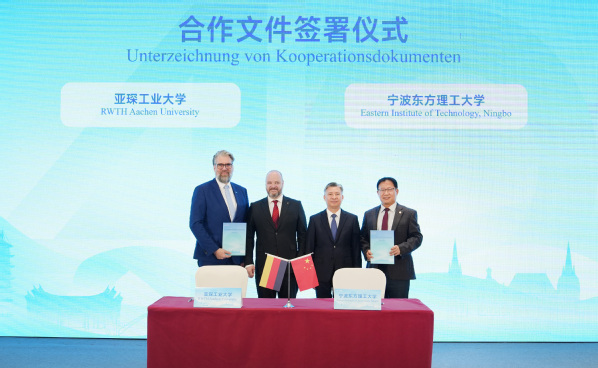
EIT actively recruits high-level talent, promotes bilingual instruction, and expands exchanges and cooperation with overseas universities, striving to build an open, diverse and integrated academic environment. The conference has further broadened the university's channels for dialogue and exchange with international organizations, universities at home and abroad, and experts from all walks of life. Going forward, EIT will continue to deepen international academic exchange and collaborative partnerships, and to drive the deeper integration of science communication, talent cultivation and sustainable development—contributing EIT's insight and strength to meeting global challenges and promoting exchanges and mutual learning among civilizations.