From the din of machinery that opened the First Industrial Revolution, to the gaslight and electric grid of the second, to the hyperconnected world of the information age, engineering and technology have been the driving force of human civilization. Today AI is reshaping engineering practice at a pace no earlier technology has matched, and how deeply the two can be integrated is now a strategic question for industrial competitiveness in the decade ahead.
On 14–15 November, the third AI for Engineering Conference and the Frontier Technology Lecture Series (Ningbo) were held at the Eastern Institute of Technology, Ningbo (EIT).
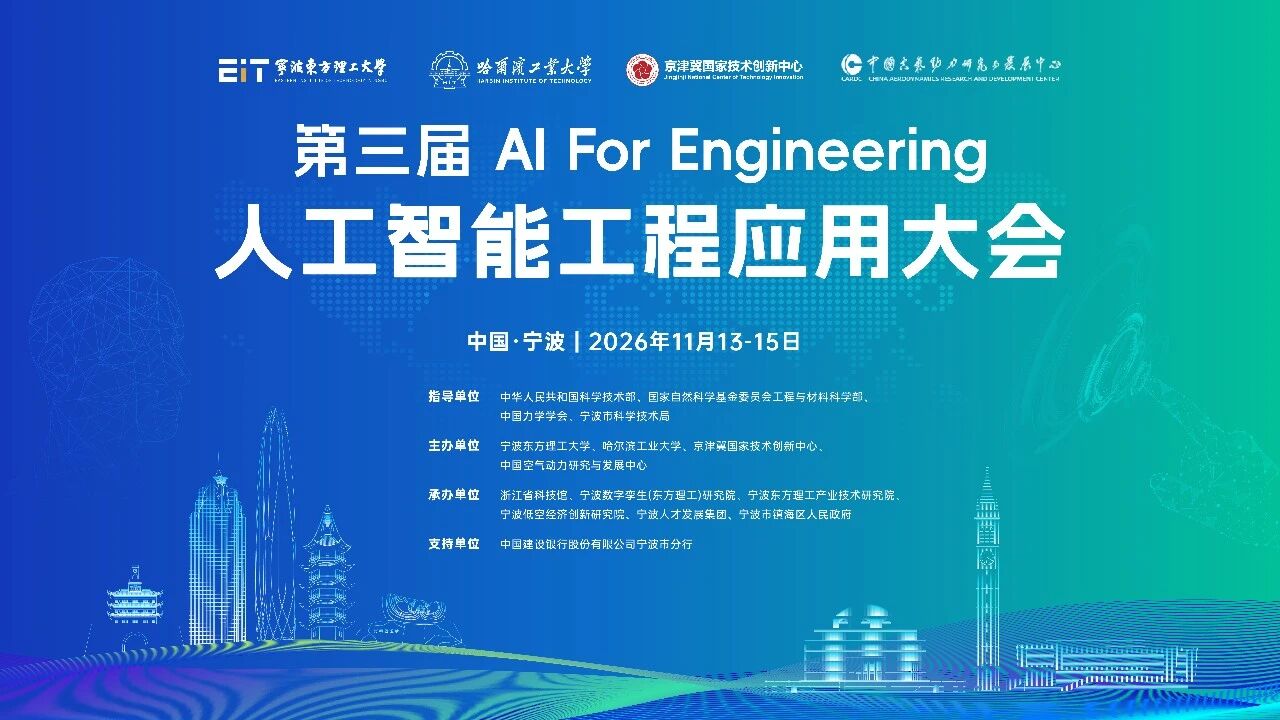
The conference was organized by EIT with Harbin Institute of Technology, the Jingjnji National Center of Technology Innovation and the China Aerodynamics Research and Development Center, with guidance from the Ministry of Science and Technology; the Department of Engineering and Materials Sciences at the National Natural Science Foundation of China; the Chinese Society of Theoretical and Applied Mechanics; and the Ningbo Municipal Science and Technology Bureau. Prof. Shiyi Chen, President of EIT and Member of Chinese Academy of Sciencesz, chaired the conference and presided over the opening ceremony. Prof. Hui Li and Prof. Weinan E, both Members of the Chinese Academy of Sciences, chaired the academic committee.
More than a dozen academicians and several hundred experts from universities, research institutes and industry held wide-ranging discussions across new industrialization, high-end equipment, embodied intelligence, smart manufacturing, new energy and new materials, integrated circuits and quantum technology. Sixteen plenary talks, eight thematic sessions and more than 150 invited talks drew over 800 participants.
Three Years of Conversation, and a Record of AI Reshaping Engineering
The conference was launched in Ningbo in 2024. The second edition was held in Harbin in 2025. This year it returned to EIT. Over three years the discussion has run from south to north and back again, reuniting on the East China Sea coast.
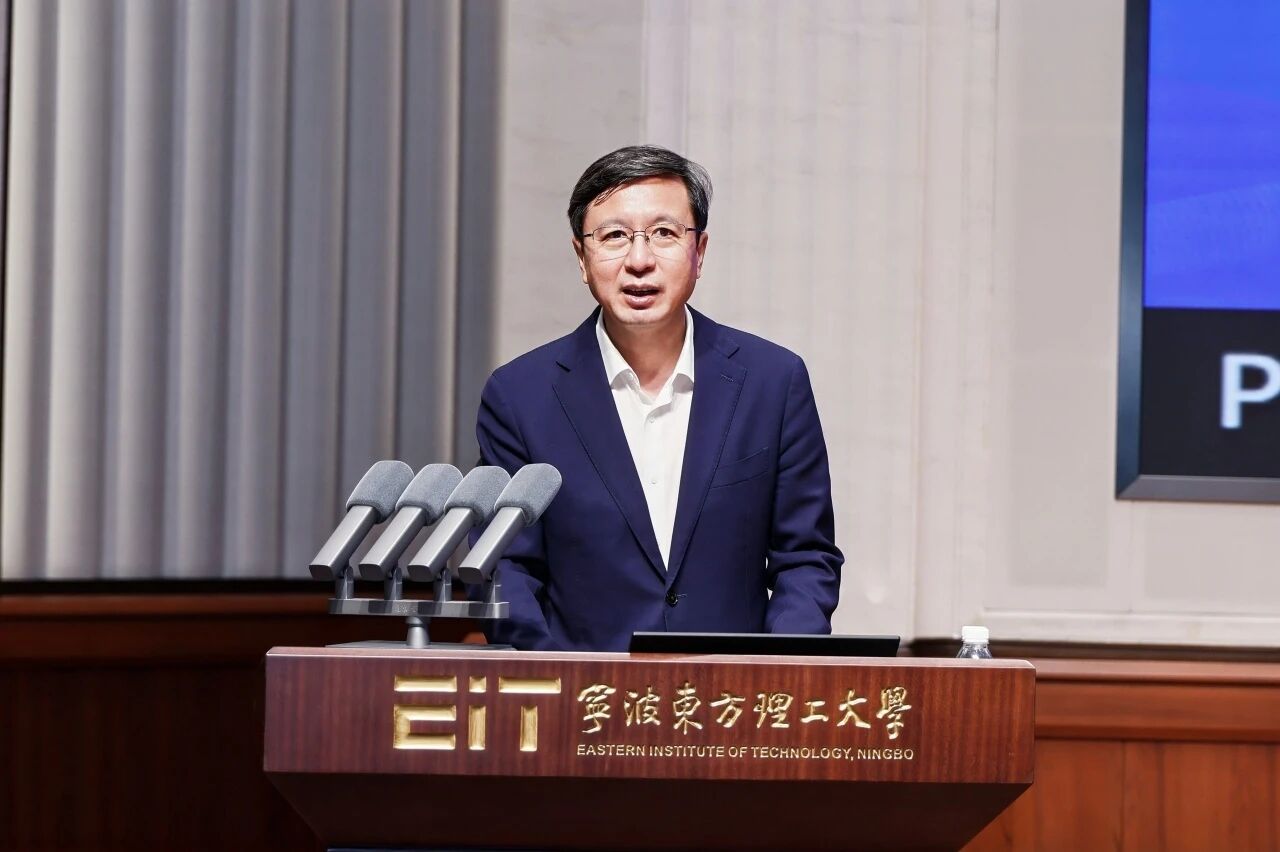
Prof. Jie Chen delivers address
Prof. Jie Chen, Vice President of the Chinese Academy of Engineering and a member of its Leading Party Members' Group, described three shifts that AI is bringing to engineering: a shift in the paradigm of engineering innovation, a shift in the industrial landscape, and a shift in the rules of international competition. "The essence of AI for Engineering is not AI assisting engineering," he said. "It is using AI to remake engineering's knowledge base, design methods, manufacturing processes and governance — a two-way exchange in which each field reinforces the other."
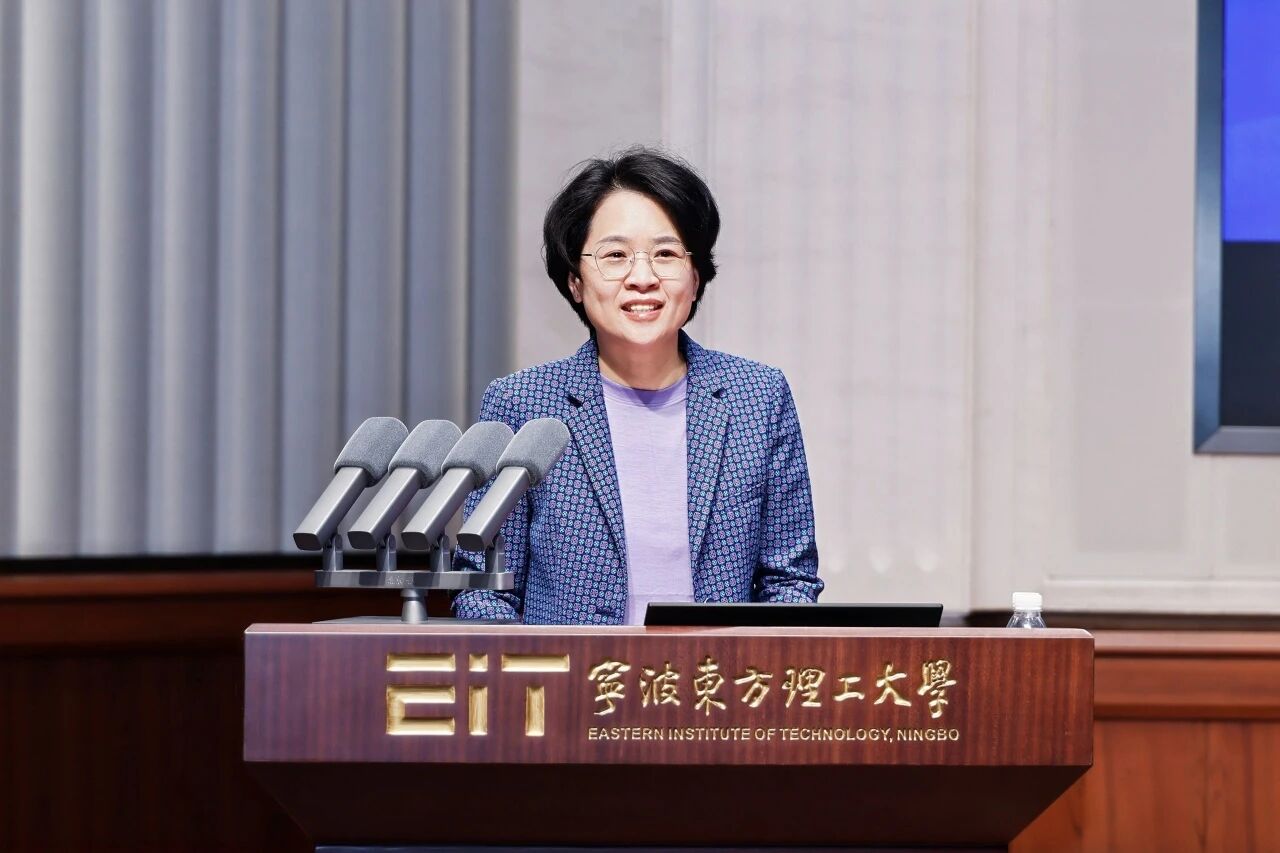
Ms. Zhili Ye delivers address
Ms. Zhili Ye, Vice Mayor of Ningbo, noted that Ningbo is one of China's major advanced manufacturing bases and the economic center of the southern Yangtze River Delta, with an industrial system that spans the full range of sectors and a highly competitive advanced manufacturing capability. As a new research university, EIT has built depth in AI, integrated circuits, intelligent manufacturing and other frontier interdisciplinary and advanced engineering fields, advancing in step with the city's industrial development; it has produced a body of high-quality original research and become a flagship platform for higher education and technological innovation in Ningbo.
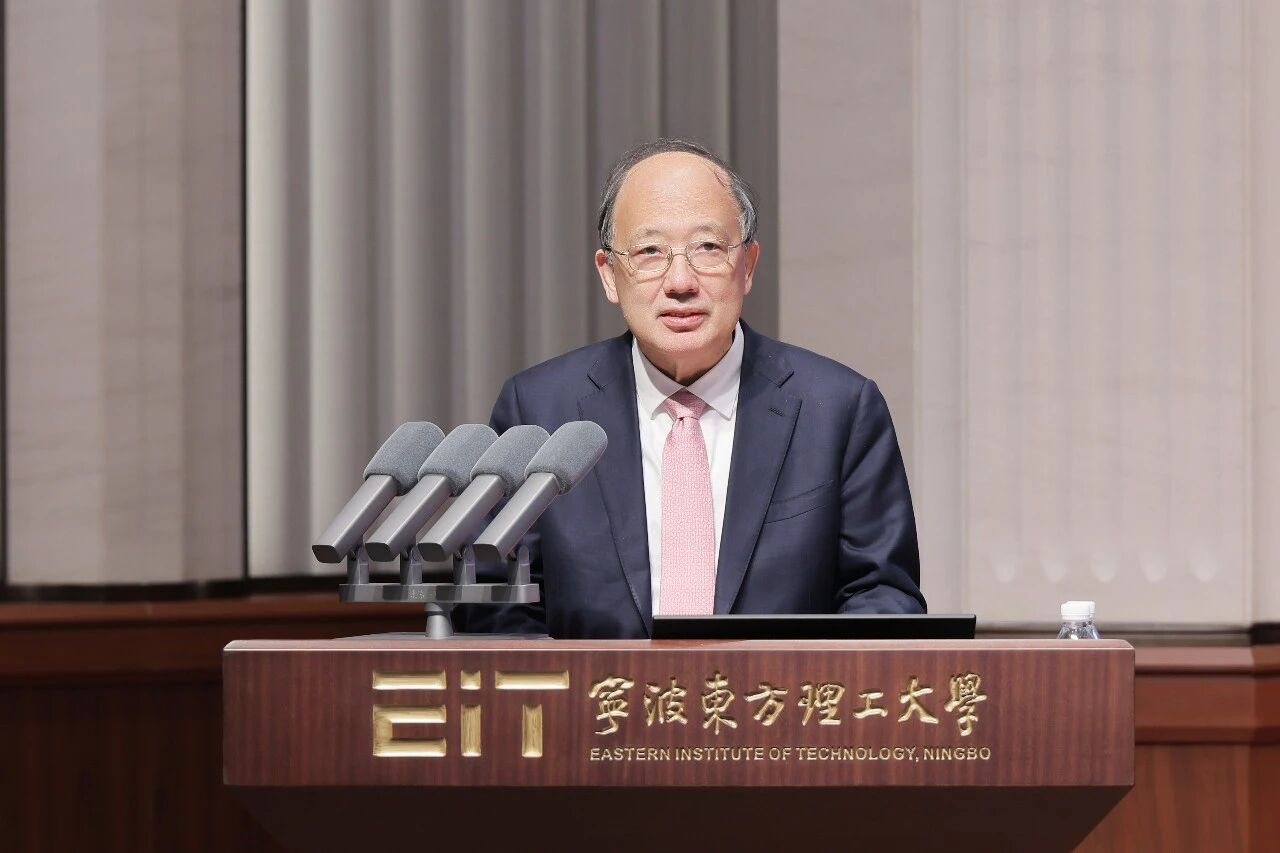
President Shiyi Chen delivers address
"Over three years the conference has grown from scratch into an open, stable platform for dialogue between AI and engineering science," President Shiyi Chen said in his remarks. AI itself has moved quickly in that time: large models keep iterating, while physical AI, digital twins and embodied intelligence are moving from the laboratory onto the factory floor, turning from tools that assist into engines that drive innovation. "What is changing is not only efficiency, but the way engineering science poses questions, tests hypotheses and organizes R&D."
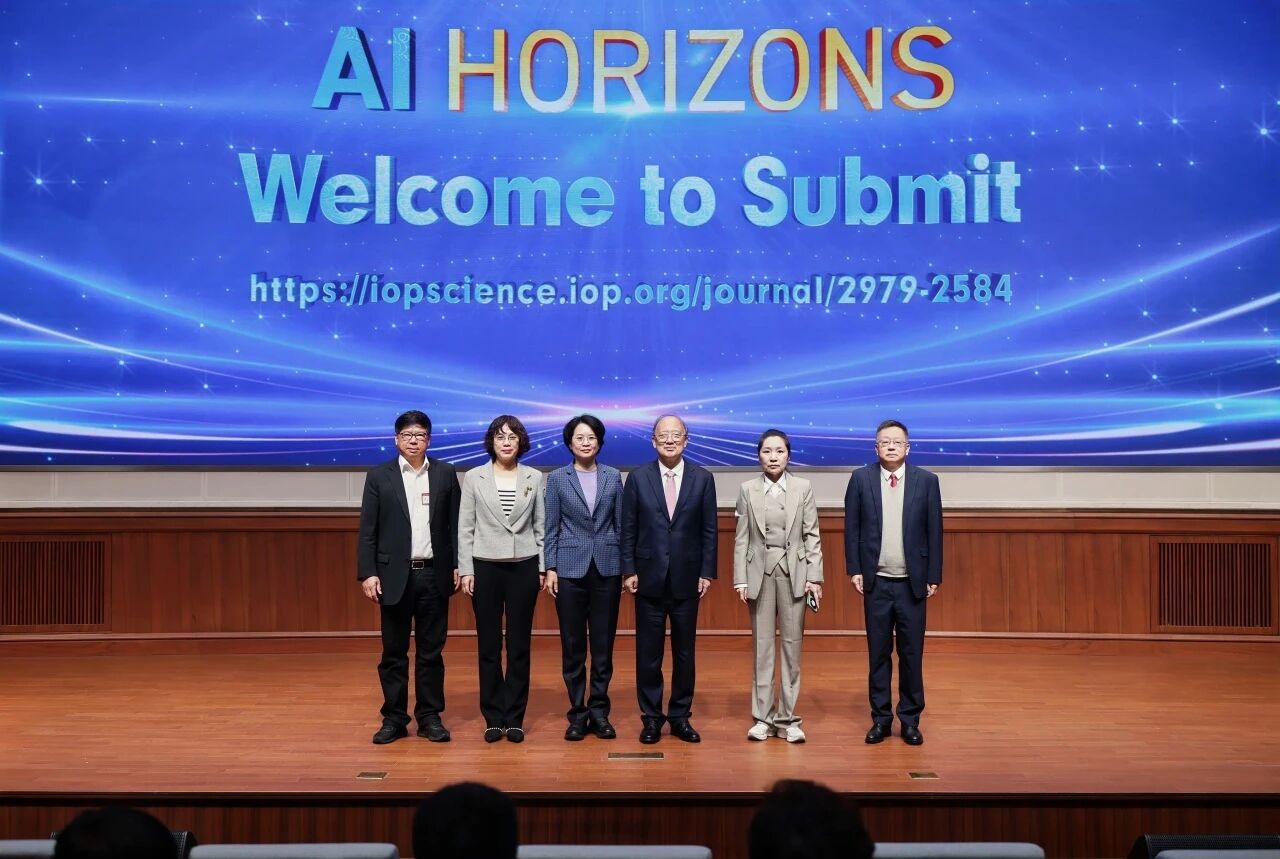
AI Horizons Launch Ceremony
At the opening ceremony, EIT held a launch ceremony for the journal AI Horizons. Co-founded by EIT, the Zhejiang Association for Science and Technology, the World Association of Young Scientists (WAYS) and IOP Publishing, the journal focuses on AI for Science and Engineering, spanning spatiotemporal intelligence, embodied intelligence and quantum intelligence. President Shiyi Chen is editor-in-chief, with an international editorial board providing academic guidance. The journal is published open access, with its editorial office based at EIT, and has been accepting submissions since 29 September 2026.
AI in Engineering Must Prove Itself in Real Systems
After the opening ceremony the discussion moved onto harder ground. The 16 plenary talks covered a lot of ground, but the question sharpened as the program went on: AI in engineering cannot stop at demonstrations and single-point optimization. It has to be validated in real systems.
The eight talks that day opened with supercomputing, then moved from the oceans to fusion, from mechanics to quantum and embodied intelligence.
Prof. Lixin Wu, Member of the Chinese Academy of Sciences and director of Laoshan Laboratory, presented kilometer-scale ocean and Earth system simulation built on a fusion of supercomputing, intelligent computing and quantum computing. Prof. Jiangang Li , Member of the Chinese Academy of Engineering and a research professor at the Plasma Physics Institute under the Chinese Academy of Sciences, focused on the "artificial sun", arguing that AI should accelerate the prediction and control of fusion plasmas. Prof. Xu Guo, Member of the Chinese Academy of Sciences and dean of the School of Mechanics and Aerospace Engineering at Dalian University of Technology, brought intelligent computational mechanics into next-generation CAE, making simulation both faster and more accurate. Prof. Kunde Yang, Member of the Chinese Academy of Sciences and director of the Ocean Institute at Northwestern Polytechnical University, took up ocean physical field modeling, using machine learning to close the gaps in observation and modeling that persist in the "deep-blue blind spots."
Prof. Jian Lu, Chair Professor at City University of Hong Kong, examined AI and additive manufacturing, shifting how material properties are established — from trial and error to computation. Prof. Zhengcheng Gu of The Chinese University of Hong Kong, brought AI into the quantum domain, using intelligence to tame the complexity and noise of quantum systems. Dr. Zhengyou Zhang, Chief Scientist at Tencent, named the real problem in embodied intelligence: no matter how large a model grows, it is still only knowledge without a body — and the perception–body–action loop has to be closed. Dr. Youjun Xiong, CEO of the Beijing Innovation Center of Humanoid Robotics, argued from industrial practice that humanoid robots offer a focused, concrete entry point into embodied intelligence.
The next day's eight talks opened with digital-intelligent mechanics, then ranged across mechanics, regional practice, network optimization, fusion, embodied intelligence and aeroengines.
Prof. Wei Yang, Member of the Chinese Academy of Sciences and professor at Zhejiang University, discussed digital-intelligent mechanics and its applications, proposing a framework in which physics, information and cognition interact. Prof. Ming Li, director of the Zhongyuan Institute of AI Industry Technology, presented AI for Henan as a regional practice. Prof. Zhiquan Luo, Foreign Member of the Chinese Academy of Engineering and vice president of The Chinese University of Hong Kong, Shenzhen, discussed AI-native wireless network modeling and optimization, proposing a deep fusion of statistical models and AI as a new paradigm for network optimization. Researcher Hongguang Yang, Chief Scientist at China National Nuclear Corporation, returned the conversation to fusion, asking how AI can crack the tritium problem that stands between fusion and commercialization.
Prof. Wenjun Zeng, Vice President of EIT, proposed world models as the substrate of embodied intelligence, so that machines can genuinely perceive, understand and interact with the physical world. Dr. Zhizheng Zhang, co-founder of Galbot, used the "Galbot Brain" model to lay out a path to deployment at scale. Prof. Weiwei Zhang of Northwestern Polytechnical University, discussed knowledge discovery in fluid physics and intelligent simulation, presenting intelligent turbulence models. Prof. Xuefeng of Xi'an Jiaotong University, focused on explainable intelligent diagnostics and safety assurance for aeroengines, proposing specialized intelligence built around one model per class of equipment.
The plenary sessions were chaired, respectively, by Prof. Hui Li, Member of the Chinese Academy of Sciences and professor at Harbin Institute of Technology; Prof. Dongxiao Zhang, Executive Vice President of EIT; Prof. Wenjun Zeng, Vice President of EIT; Prof. Wei Yang, Member of the Chinese Academy of Sciences and professor at Zhejiang University; and Researcher Hongguang Yang, Chief Scientist at China National Nuclear Corporation.
Turning Frontier Qestions into Engineering Problems: How AI Earns Trust
Once frontier questions are broken down into concrete engineering problems, the applause fades and the thinking continues. Eight thematic tracks and more than 130 talks took up a single thread: what still stands between AI that can compute and AI that can be trusted — and deployed.
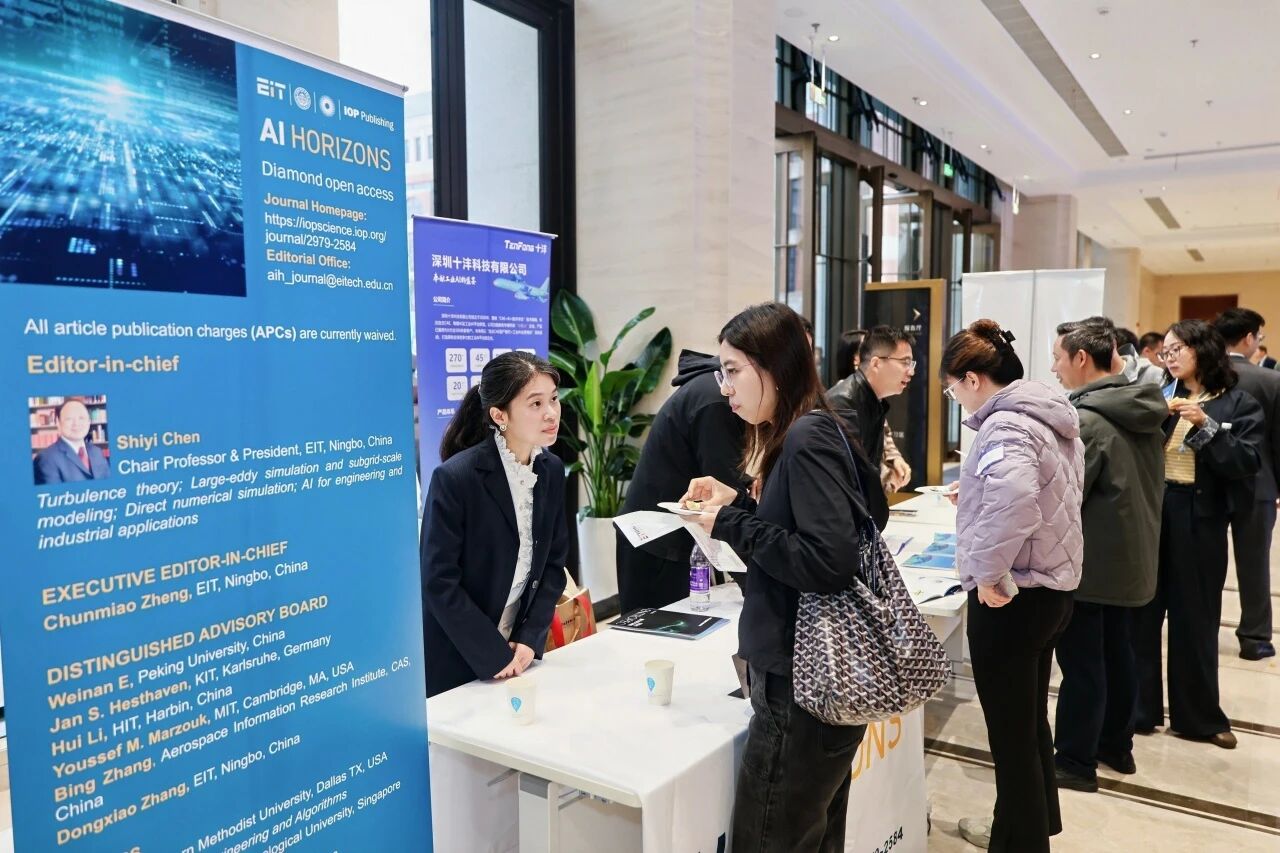
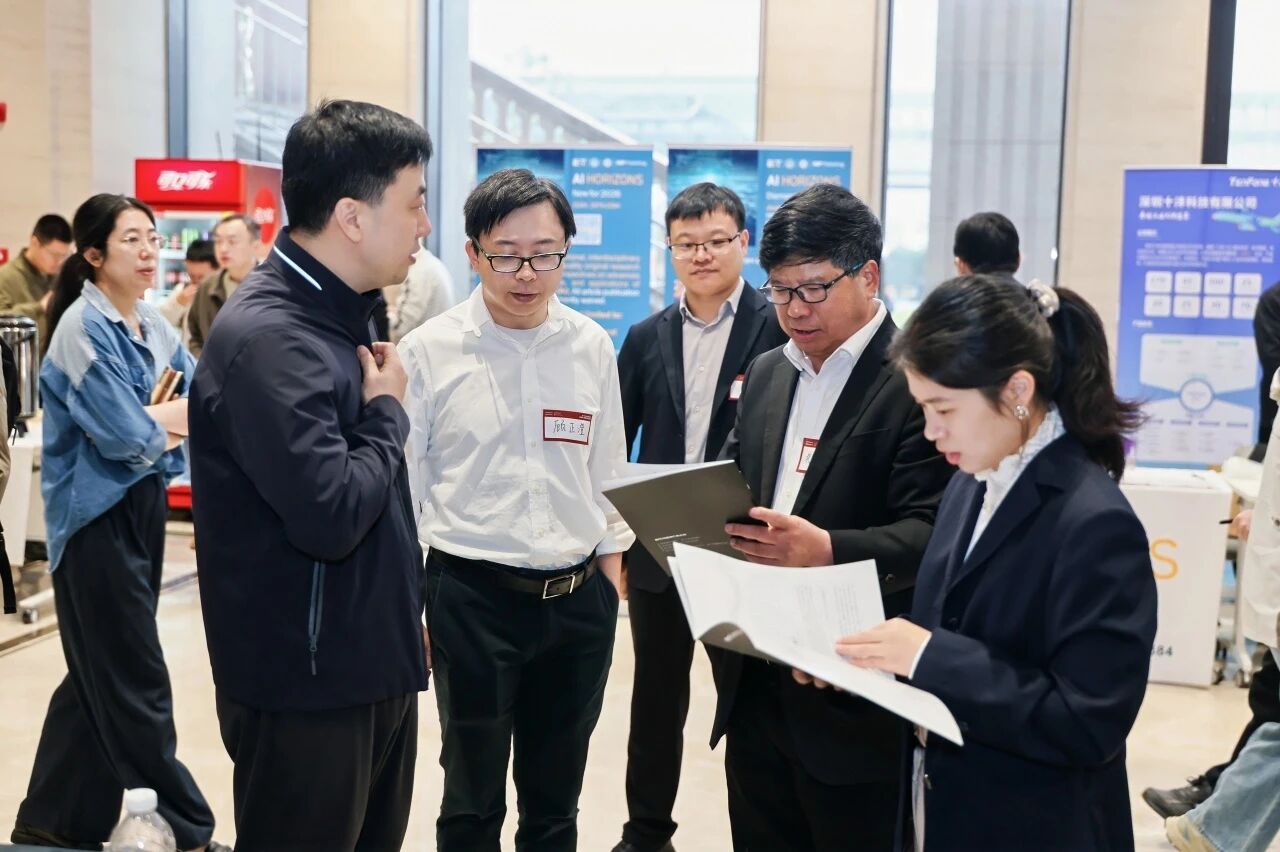
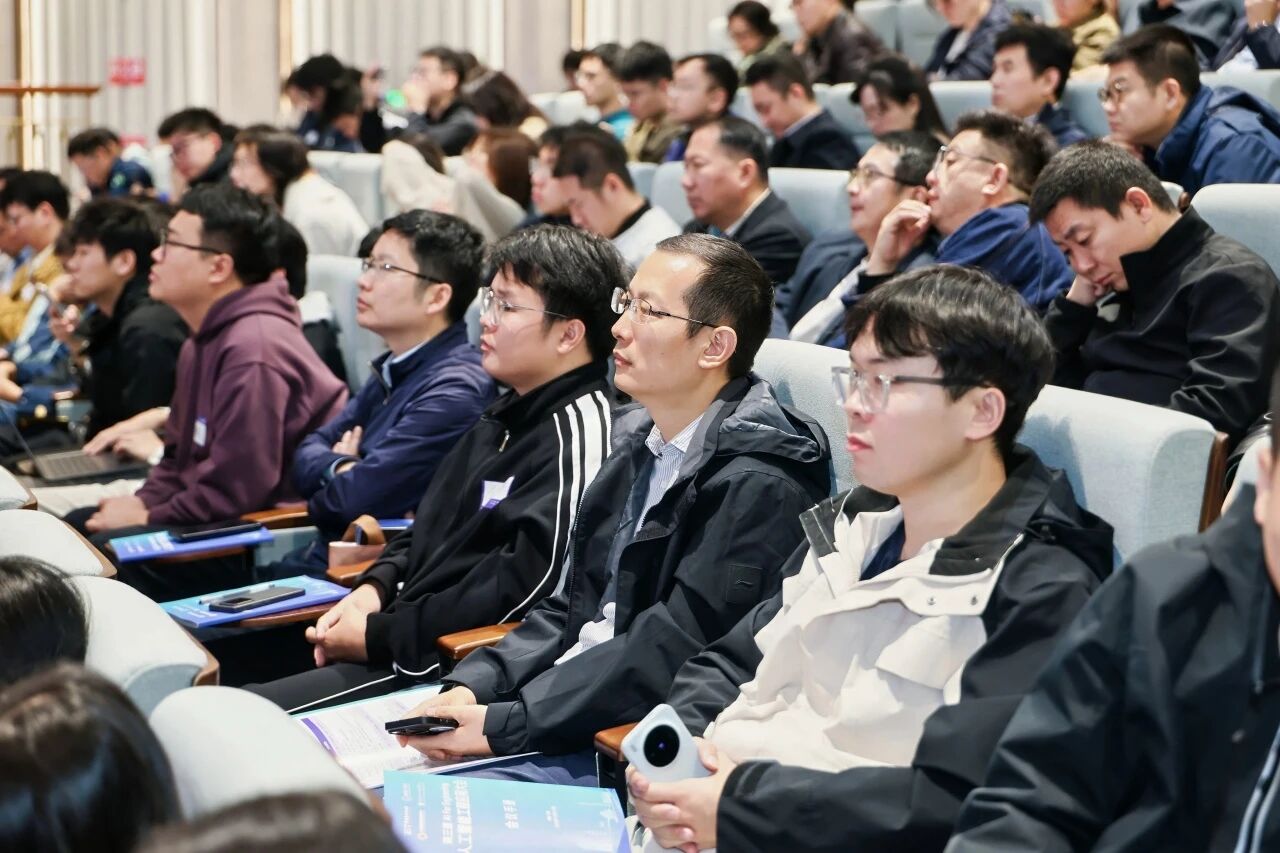
AI agents and embodied intelligence centered on whether systems can reliably return to the real world. As large models move into the physical world, whether agents can reshape hospitals and return to clinical practice emerged as a central question. In robotics, discussion moved from open-source ecosystems and questions of method to surgery and aerial operations, but the hard problem remained stability once a system enters a real environment.
Manufacturing, construction and integrated circuits came down to whether AI can scale. AI is reshaping pipeline network operations and entering simulation work in automotive R&D, with algorithms moving onto construction sites and bridges. On chips, the discussion ran from device fabrication to AI-assisted tape-out — one concerned with how systems run, the other with how chips are made.
Materials, mechanics and life sciences pushed the discussion toward fundamentals. Materials R&D is moving from trial and error to computational design, while simulation of high-speed trains and aircraft puts engineering software to the test.
Further in, scientific machine learning asked whether AI can enter the core of scientific discovery, while cancer vaccines and pathology foundation models brought the question back to the clinic.
The tracks converged on one point: once AI enters engineering, how is reliability established?
The conference gave no standard answer, but it pushed the questions further down. From supercomputing to quantum, from fusion to the clinic, hundreds of researchers confirmed one thing: for engineering, AI amounts to a fundamental reworking of how we understand the world and how we build it.
As host to that conversation, EIT stands at the meeting point of AI and engineering science. With its positioning as a “High-caliber foundation, Compact yet Distinguished, Research oriented, and Globally engaged” research university, an interdisciplinary academic ecosystem and a research agenda aligned with industry, it is poised to offer Chinese engineering education and industrial innovation a new model for the future.
The intelligent age of Chinese engineering has only just begun.