On September 9, the Thematic Forum on AI and Robotics: Development and Innovation convened in Ningbo. As a thematic forum of the 2026 China-CEEC Conference on Innovation Cooperation, it focused on international scientific and technological exchange and deep collaboration across industry, academia, and research institutions in AI and robotics, creating a professional, international, and pragmatic platform for exchange at the frontiers of science and technology between China and Central and Eastern European Countries.
Professor Dongxiao Zhang, Executive Vice President and Provost of the Eastern Institute of Technology, Ningbo (EIT) and Member of the U.S. National Academy of Engineering, and Professor Wenjun Zeng, Vice President of EIT, Executive Director of the Ningbo Institute of Digital Twin, and International Fellow of the Canadian Academy of Engineering, attended the forum. The forum was moderated by Professor Gang Xu, Chair Professor at EIT and Foreign Fellow of the Engineering Academy of Japan.
Looking Ahead to Bilateral Cooperation Opportunities
"AI and robotics technologies are advancing at an accelerating pace. China and Central and Eastern European countries have distinct strengths and strong complementarities in this field, and there is vast room for cooperation." As domestic and international guests gathered, Professor Gang Xu opened the forum with a warm and engaging introduction, and the event was officially underway.
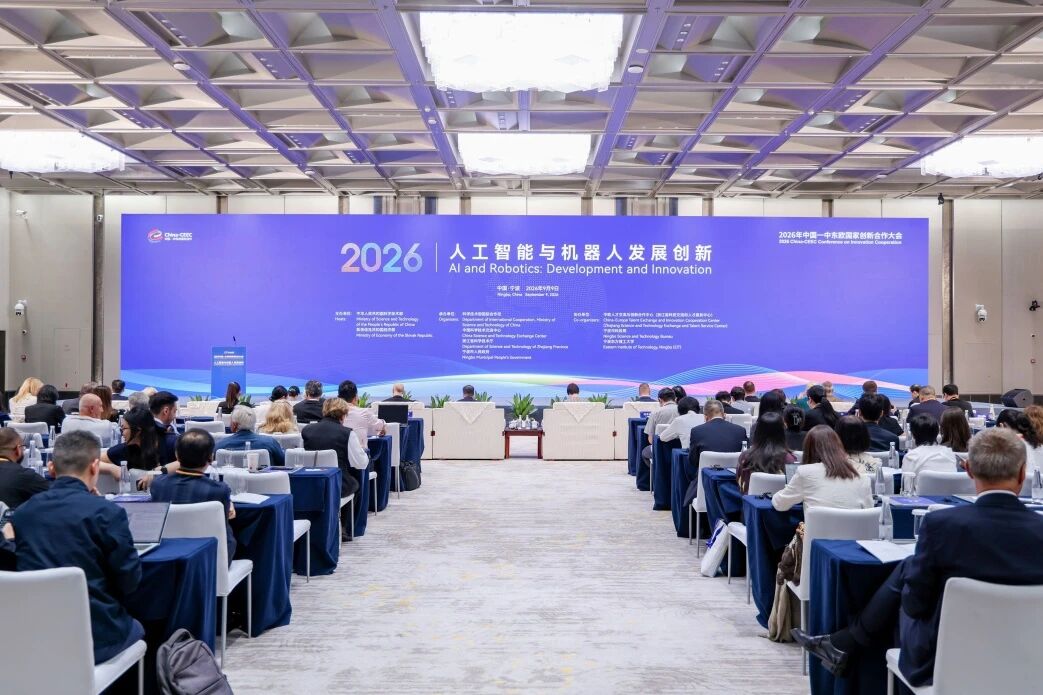
Forum Venue
The forum was hosted by the Ministry of Science and Technology of the People's Republic of China and the Ministry of Economy of the Slovak Republic, organized by the Department of Science and Technology of Zhejiang Province and the Ningbo Municipal People's Government, and co-organized by the Zhejiang Science and Technology Exchange and Talent Service Center (China-Europe Talent Exchange and Innovation Cooperation Center) and EIT.
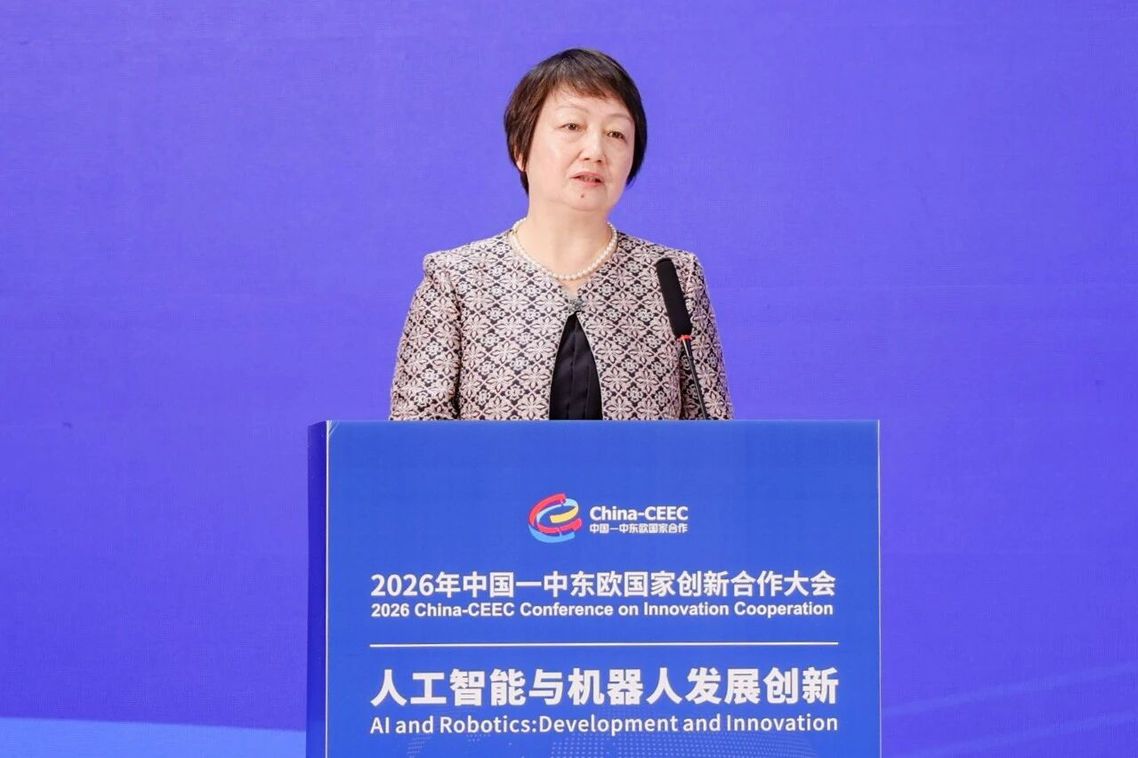
Address by Yan Wang
AI development is a global endeavor that depends on cooperation. In her remarks, Dr. Yan Wang, Director-General of the China Science and Technology Exchange Center, said that AI and robotics have become one of the most dynamic areas of cooperation between China and Central and Eastern European countries in science, technology, and innovation. She put forward three proposals: First, focus on frontier technologies and scale new heights in technology together. Second, build bridges and advance industry matchmaking. Third, cultivate talent and build a solid foundation for cooperation.
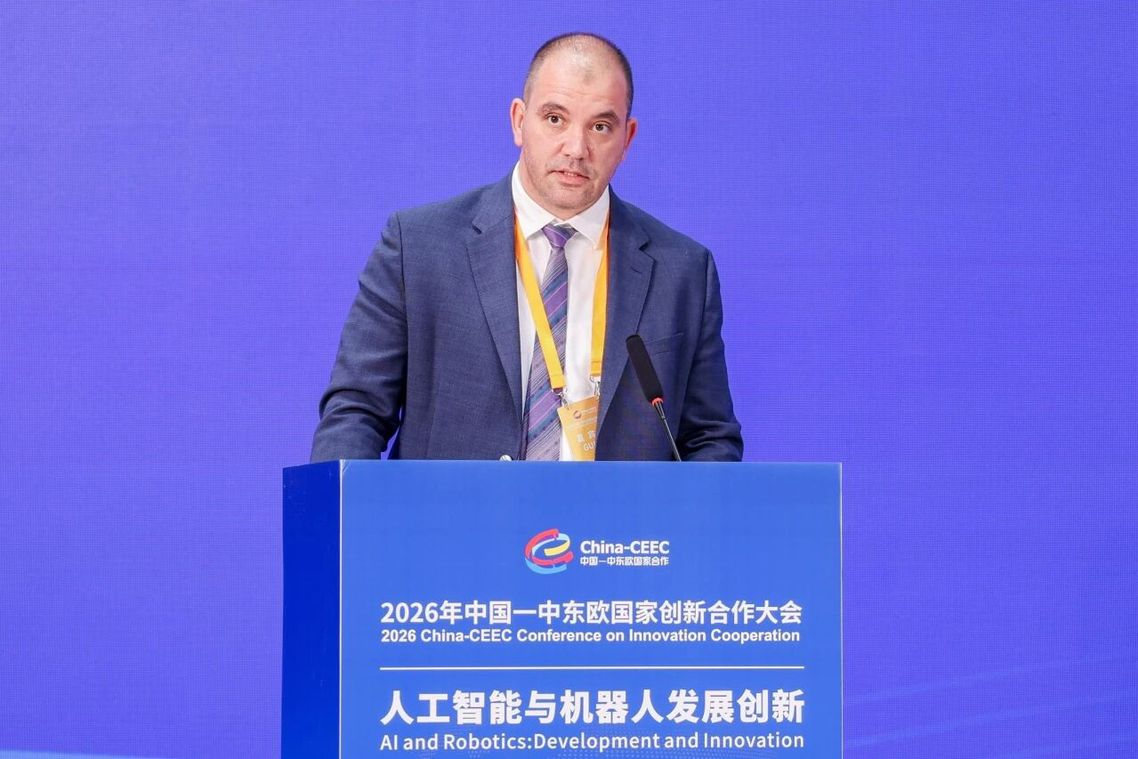
Address by Frane Šesnić
Frane Šesnić, Director of the Zagreb Innovation Centre in Croatia, who came from afar, put forward four ideas for deepening China-CEEC cooperation in innovation and entrepreneurship. He noted that both sides should continue to deepen collaboration on AI and robotics innovation, connect startups with industry resources, strengthen technology transfer and facilitate investment connections, and on that basis build long-term partnerships grounded in mutual trust.
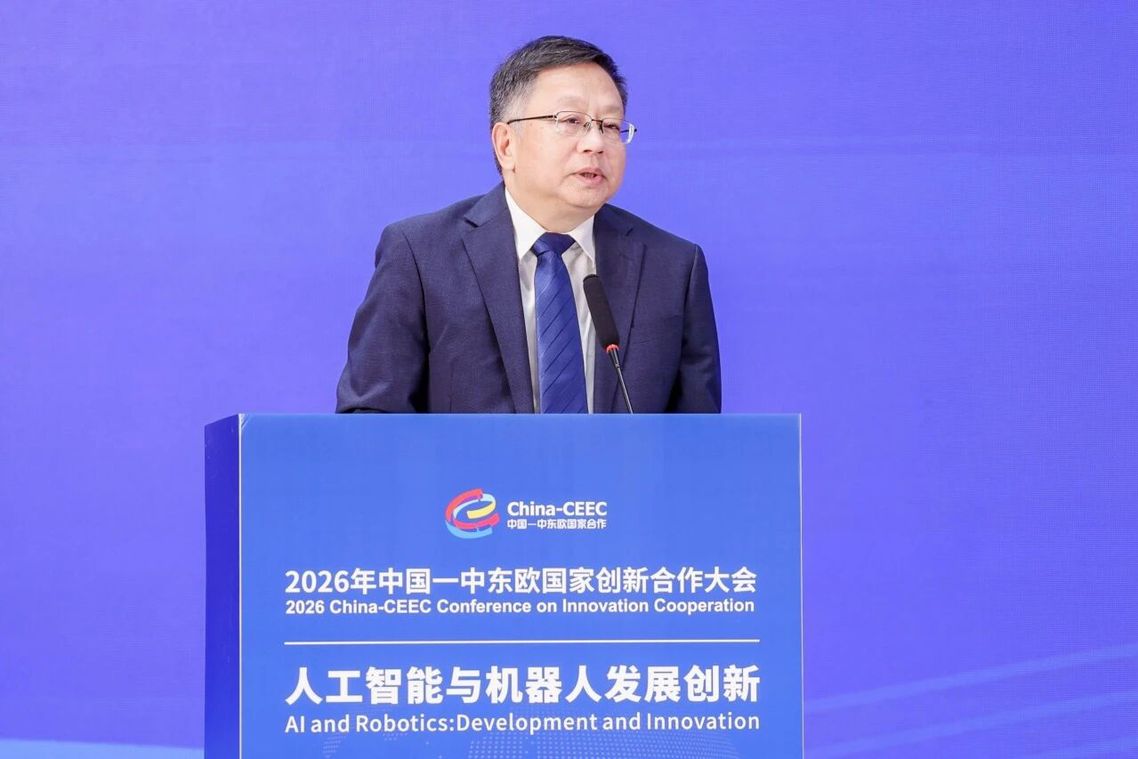
Address by Professor Dongxiao Zhang
Drawing on EIT's mission and research strengths, Professor Dongxiao Zhang described what EIT had achieved through exchange and cooperation with Central and Eastern European countries in AI and robotics. He expressed his hope that the two sides would work together to advance academic exchange, joint talent development, and collaboration across industry, academia, and research institutions that translates into real-world results, thereby contributing EIT's insights and strengths to a long-term mechanism for China-CEEC innovation cooperation and talent exchange.
Sharing Frontier Insights in Science and Innovation
During the Keynote session, six Chinese and Internation experts and scholars in AI and robotics took the stage in turn to share emerging trends and technological advances.
As the first speaker of the session, Professor Wenjun Zeng gave a talk titled "World Models: A Foundation for Future Embodied Intelligence," exploring how to build world models through the lens of disentangled representation and offering valuable insights into the foundations of embodied intelligence.
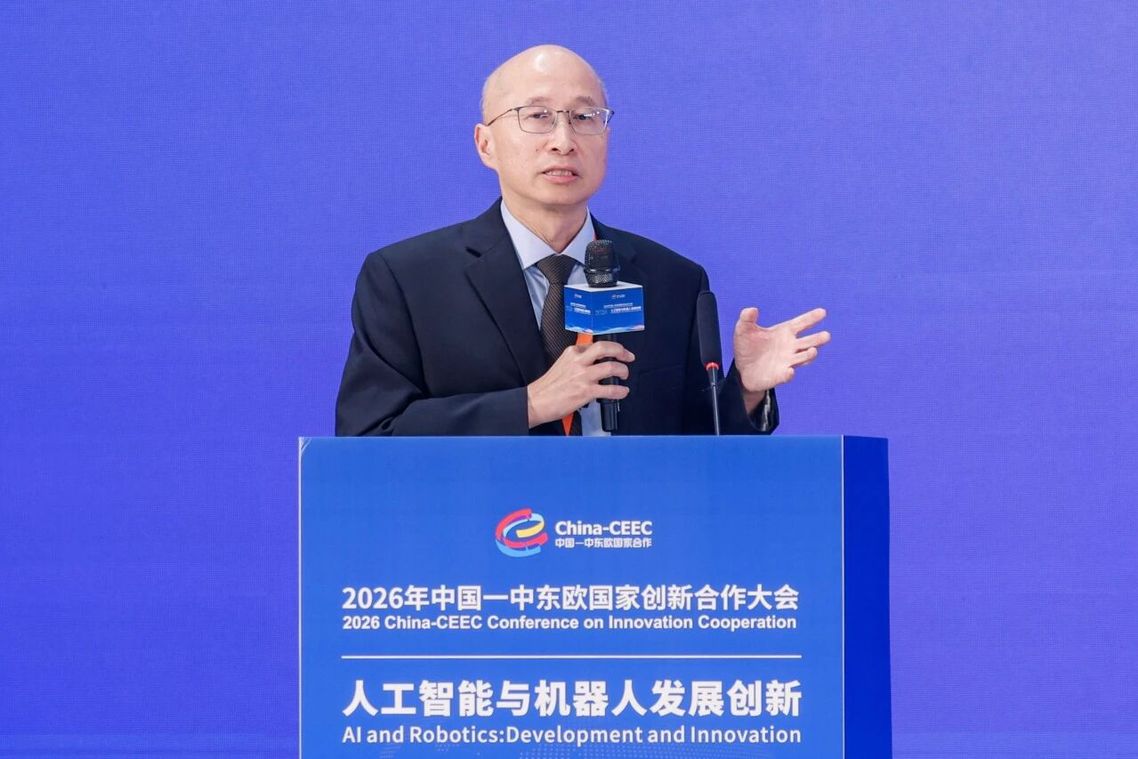
Professor Wenjun Zeng during keynote session
He noted that world models are becoming an increasingly solid foundation for the future development of embodied intelligence. Building a robust world model is the first step: a disentangled representation helps make world models physically plausible and interpretable. Putting the world model to effective use is the second step: disentangled representation learning can improve how AI agents learn within world models and help them capture task-relevant features.

Next, Professor Michal Petru, Vice Dean of the Faculty of Mechanical Engineering at the Technical University of Liberec, and Deputy Director of the Institute for Nanomaterials, Advanced Technologies and Innovation, gave a presentation titled "Artificial Intelligence and Machine Learning in autonomous modular systems for special multifunction operations."
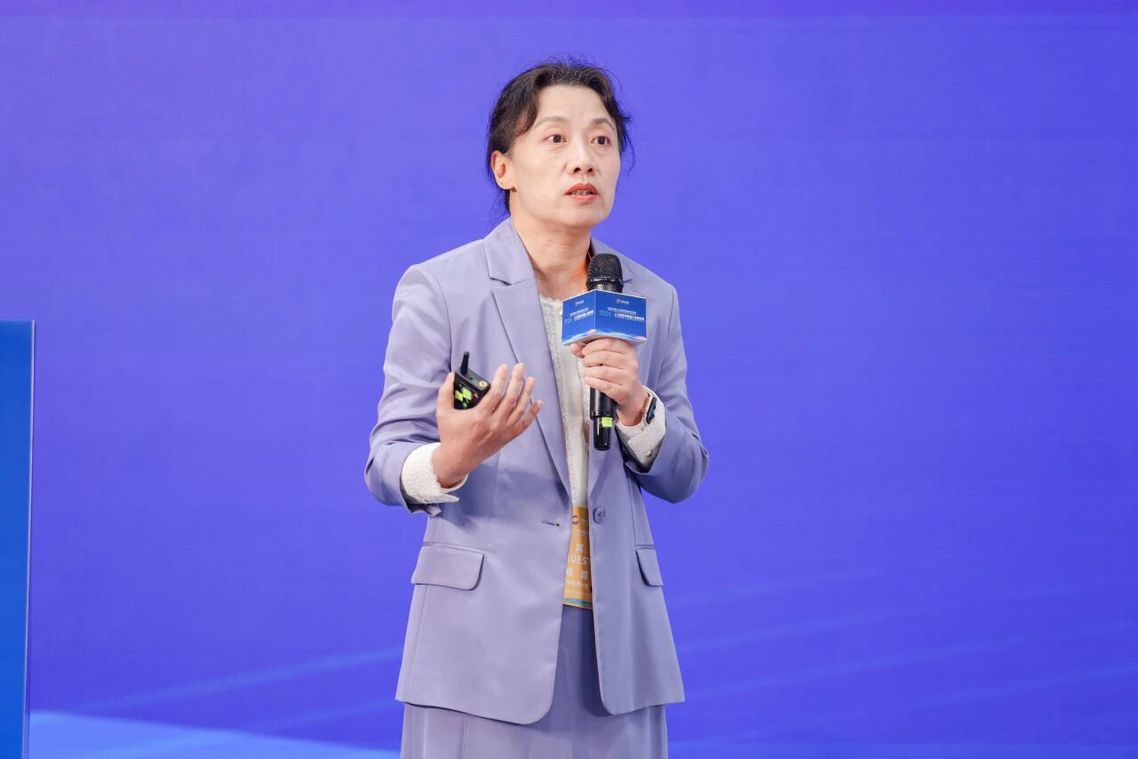
Professor Rong Xiong, General Manager and Chief Scientist of the Zhejiang Humanoid Robot Innovation Center, and Qiushi Distinguished Professor at Zhejiang University, delivered a speech titled "Embodiment as the Foundation, Ecosystem as the Path Forward: Enabling Humanoid Robots in Multiple Industries."
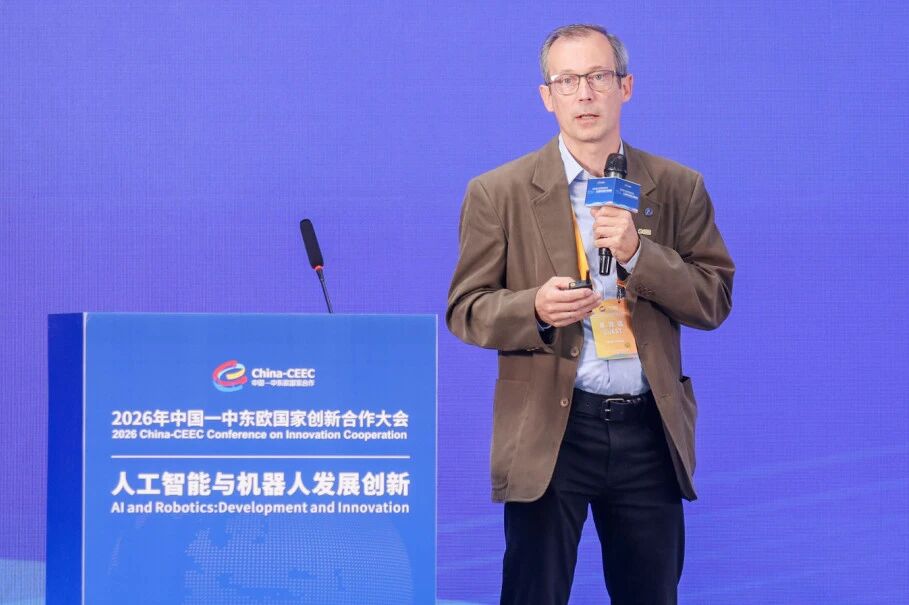
Professor Attila Vidacs,Vice President of the Hungarian Robotics Association and Associate Professor at Budapest University of Technology and Economics,gave a presentation titled "Research on Communications in Cloud Robotics."
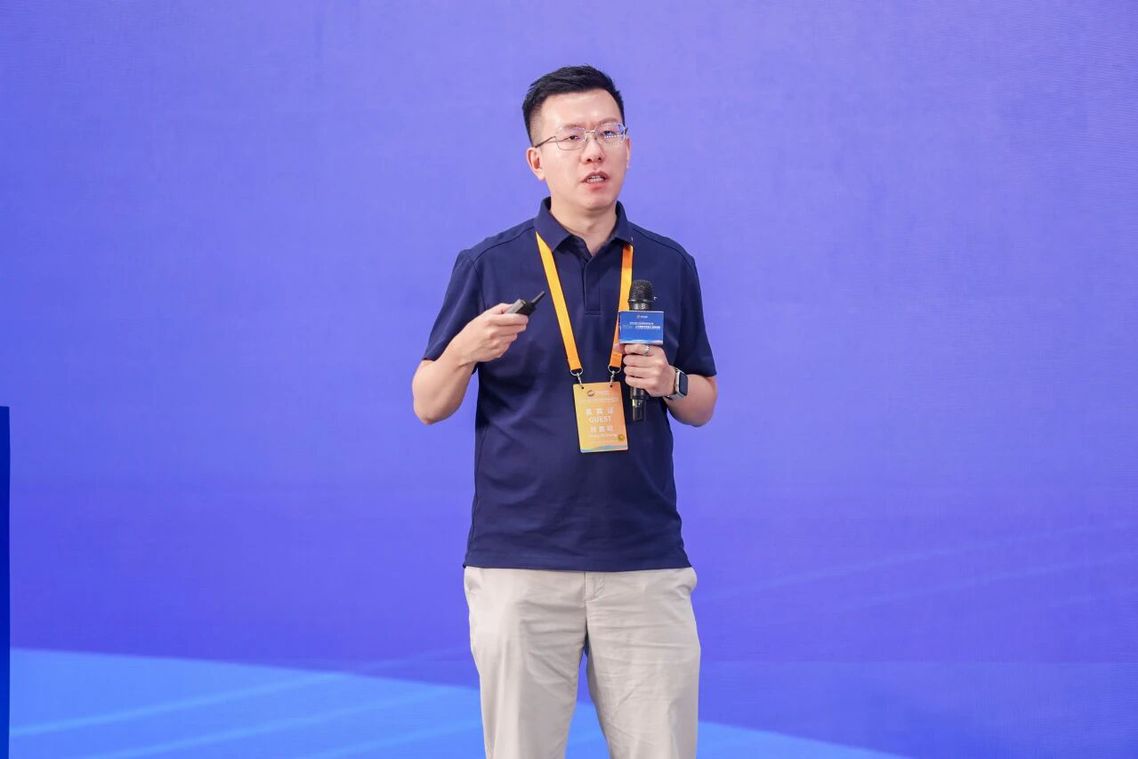
Dr. Zhizheng Zhang, Co-founder of Beijing Galbot Robotics Co., Ltd., shared his insights in a talk titled "Toward the Embodied ChatGPT Moment: A New Paradigm for Embodied World Models."
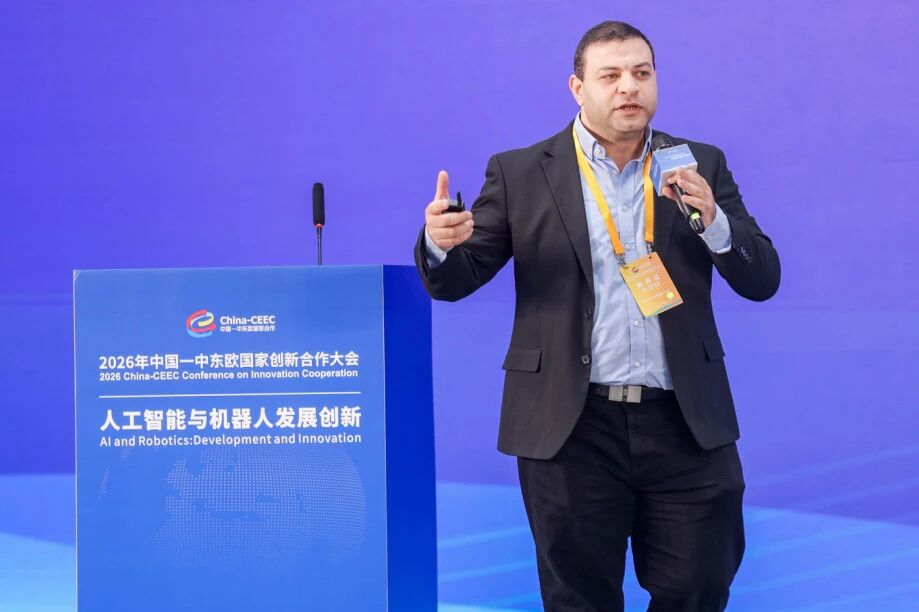
Professor Mohamed Eldessouki, Chairman of Digital Innovation Center, and Associate Professor at the Technical University of Liberec, gave a presentation titled "AI-Driven Digital Platforms: Enabling Smarter Infrastructure and Cleaner Offshore Operations."
This China-CEEC dialogue at the frontier sent a clear message: the long-term development of science and technology depends on cross-border exchange of ideas and practical collaboration. The AI and robotics field is full of opportunities, and cooperation and integration are the way forward.
Rooted in Ningbo and open to the world, EIT is mobilizing innovation resources and bringing together global expertise, fulfilling its responsibility as a new type of research university.
Amid the global wave of intelligent transformation, new chapters are being written in collaboration among industry, academia, and research institutions, as well as in joint talent cultivation.
The 2026 China-CEEC Conference on Innovation Cooperation is led by Ministry of Science and Technology of People's Republic of China and Ministry of Foreign Affairs of People’s Republic of China, jointly held with local governments and science and technology authorities of Central and Eastern European countries. It serves as an important institutional platform for bilateral collaboration in science, technology, and innovation, technology transfer, talent exchange, and industry matchmaking. Over the past decade, it has continued to promote the exchange of science and innovation resources and complementary strengths between China and Central and Eastern European countries.
This year's conference focuses on three frontier areas—AI and robotics, biotechnology, and green energy—and features three thematic forums designed to directly address the needs of Central and Eastern European countries in scientific and technological innovation and industrial upgrading.
As a research-intensive private university run by board of trustees, with a high level of internationalization and characterized by its principles of "High-caliber foundation, Compact yet distinguished, Research-oriented, and Globally engaged." — EIT has deep expertise in fields such as AI and robotics. It continues to push the boundaries of interdisciplinary research, develop world-class research platforms, and attract leading researchers from China and around the world. It has made significant advances in intelligent robotics, digital twins, large AI models, and AI applications in industry, and has a strong track record in international academic exchange and in innovation through collaboration among industry, academia, and research institutions.