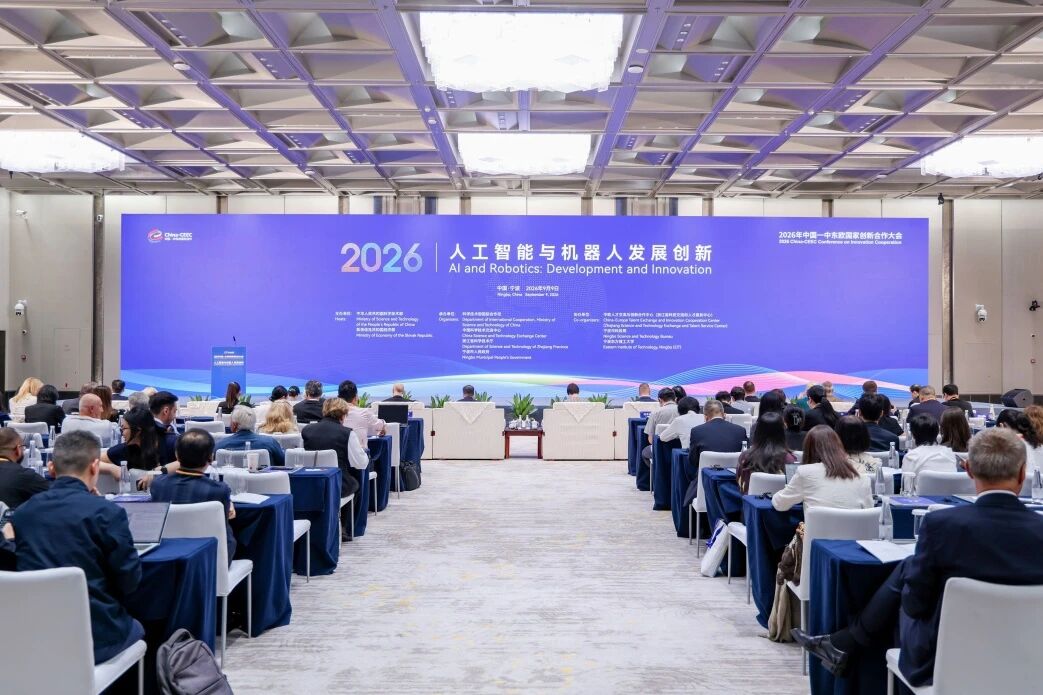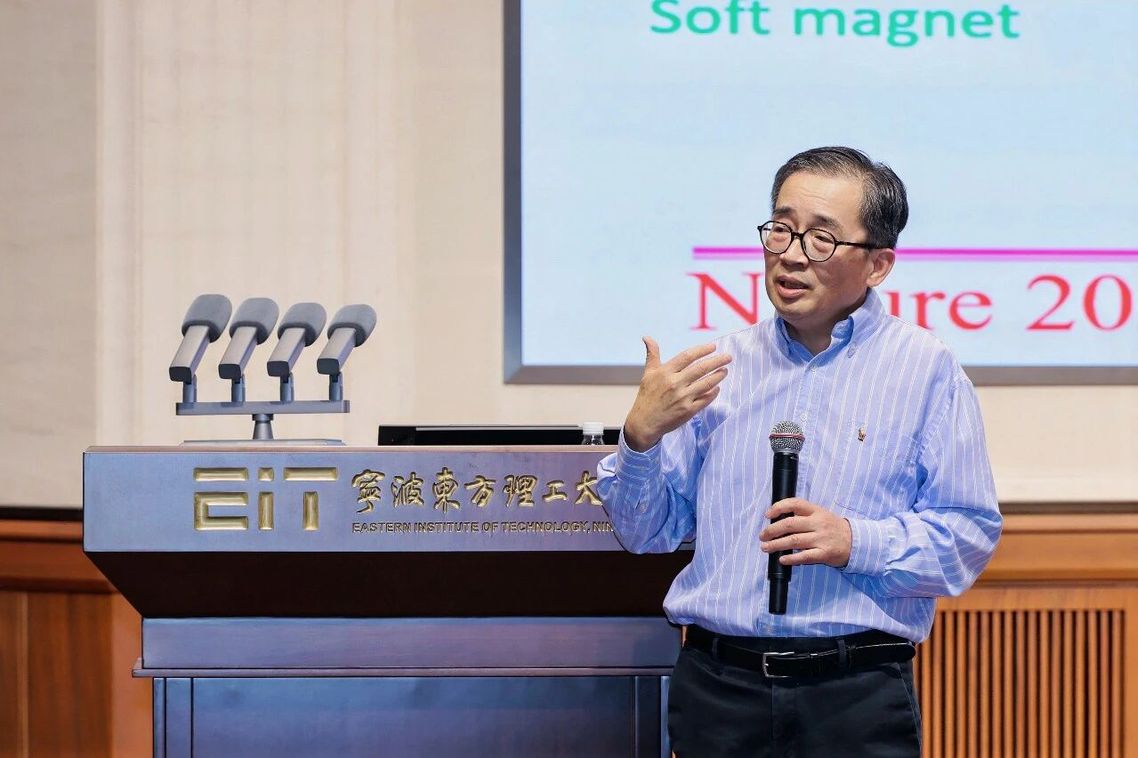
Recently, the First Data Storage Academic Symposium of the Eastern Institute of Technology, Ningbo (EIT) was held in Safewell Building at EIT. Themed "Intelligent Storage, Intelligent Computing, Intelligent Future," the symposium brought together Weimin Zheng, Professor in the Department of Computer Science and Technology at Tsinghua University and Member of the Chinese Academy of Engineering, and more than 30 leading experts and scholars from Huazhong University of Science and Technology, Shanghai Jiao Tong University, Zhejiang University, DapuStor, Ping An Technology, and other well-known universities and enterprises. They gathered by the Yong River for in-depth discussions on the frontiers of data storage. Professor Wenjun Zeng, Vice President of EIT, attended the symposium.
In his remarks, Professor Zeng noted that artificial intelligence is reshaping the global technological landscape at an unprecedented pace. From the outset of its planning and development, EIT has regarded achieving breakthroughs in critical technologies as part of its mission. Storage technology, at the intersection of artificial intelligence and integrated circuits, is therefore both a core underpinning of intelligent computing and an indispensable component of the university's disciplinary layout.
During the keynote session, Professor Zheng proposed that AI infrastructure has shifted from running models to producing intelligent tokens. He explained how a Prefill-Decode disaggregation architecture enables capacity, service-level objectives, and hardware deployment to be coordinated independently, and described its commercial deployment at a scale of 10,000 GPUs on the open-source Mooncake platform.
Professor Changsheng Xie at Huazhong University of Science and Technology and Deputy Director of the Wuhan National Laboratory for Optoelectronics, began with turning machine principles and abstracted large AI models as a "super implicit function paradigm." He analyzed the characteristics of data storage under this paradigm and its profound implications for the transformation of storage hierarchies and architectures.
Dr. Yafei Yang, Founder of Shenzhen DapuStor Corporation, focused on academia-industry collaboration and, drawing on the company's full-stack in-house development of enterprise SSDs, shared his insights into the technological evolution and commercialization of the storage industry in the AI era.
In addition, participating experts presented the latest advances in areas such as security defenses for high-density DRAM, reliability of CXL memory pools, compilation techniques integrating retrieval and inference, and data deduplication and management for heterogeneous memory.
During the free discussion session, experts engaged in in-depth exchanges on frontiers of the field and interdisciplinary collaboration. They reached consensus on a range of issues, from the engineering challenges of deploying computational storage and the new demands that large AI models place on storage systems to pathways for collaborative innovation between academia and industry.
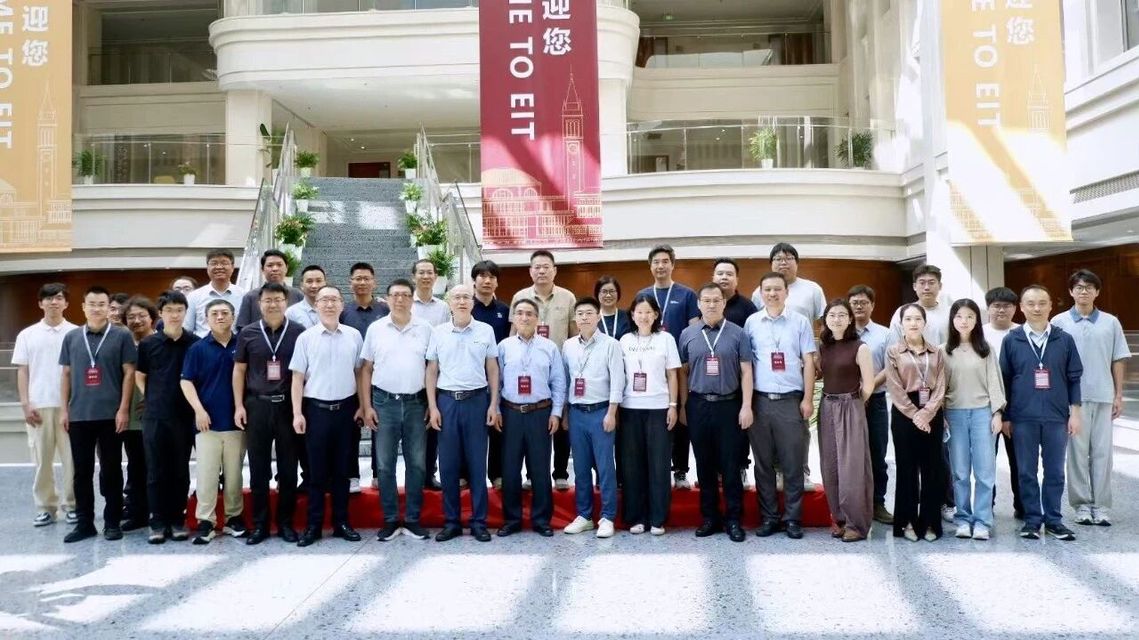
Group Photo
The symposium was hosted by the Laboratory of Data Storage and System Architecture, marking EIT's first academic symposium in the field of data storage. Building on this symposium, EIT will further deepen collaboration with top universities and leading companies in China, advance frontier research and talent development in data storage, and contribute EIT's expertise and strengths to the nation's high-level scientific and technological self-reliance and self-strengthening.