Organelles are the microscopic engines of life and a critical entry point for deciphering complex diseases and delivering precision diagnostics and therapeutics.
As precision medicine advances, medical research is moving progressively from the tissue and cellular levels to the organelle level.
The ability to precisely characterize organelle functional states and to achieve targeted regulation and intervention is critical for breakthroughs in the diagnosis and treatment of major diseases such as tumor, metabolic disorders, and neurodegenerative diseases. It remains one of the most challenging scientific questions at the cutting edge of global biomedicine today.
The 2026 International Conference on Organelle Diagnostics and Therapy (ODT 2026) was held on September 18–19 at the Eastern Institute of Technology, Ningbo (EIT). The conference was held under the theme "Organelle Therapy: Charting New Frontiers in Precision Medicine." It featured a main forum, an AI Virtual Cell Forum, and a Young Scientists Forum.
More than 200 experts and scholars from eight countries worldwide gathered on the banks of the Yong River and engaged in in-depth discussions on cutting-edge areas including organelle functional imaging and regulation, antimicrobial susceptibility testing and therapy, organoid modeling and intelligent analysis, and spatial multi-omics profiling and applications.
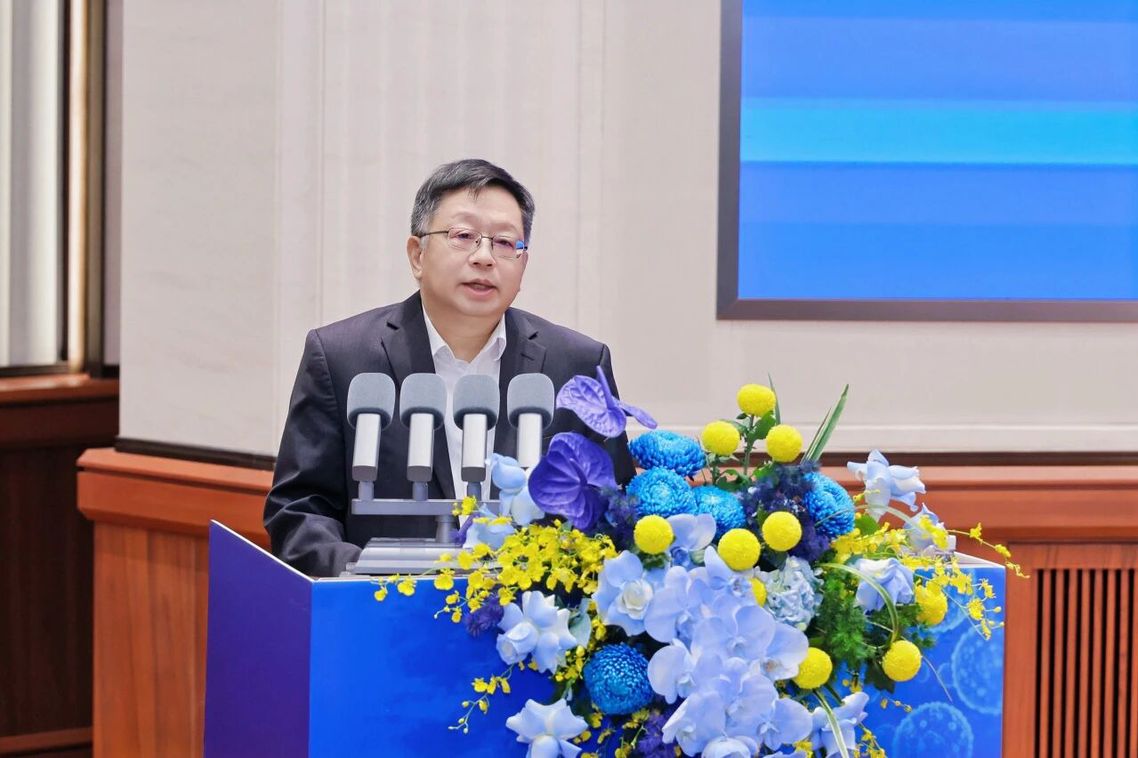
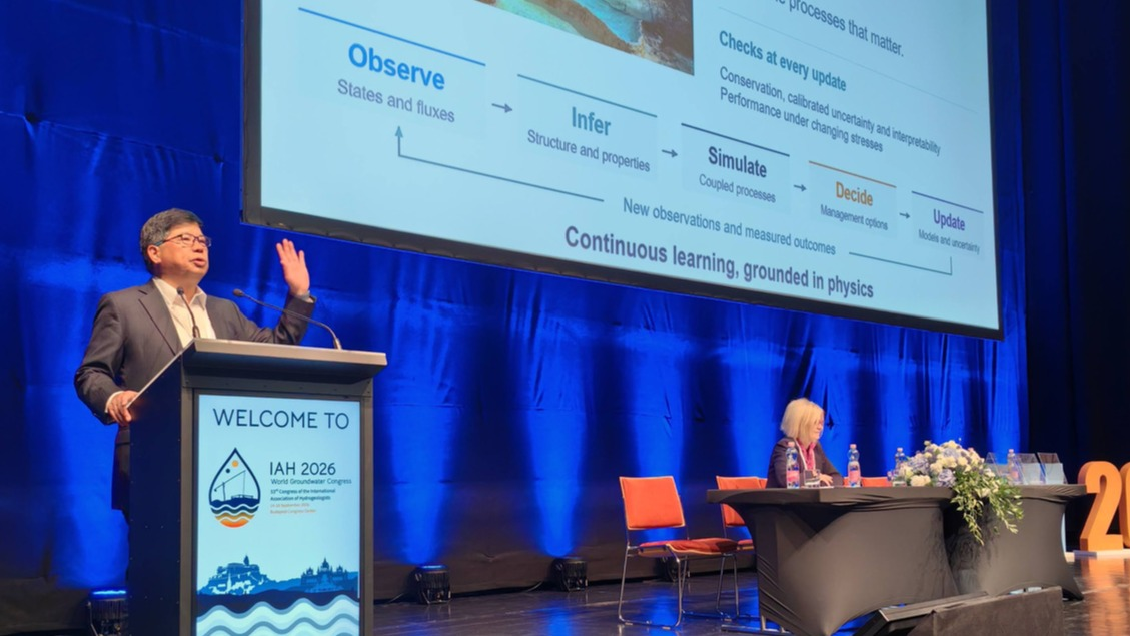
Address by Professor Dongxiao Zhang
At the opening ceremony, Professor Dongxiao Zhang, Executive Vice President of EIT and Member of the U.S. National Academy of Engineering, delivered address. He noted that, as a high-caliber, compact yet distinguished, research oriented, and globally engaged new type of research university, EIT has identified life sciences and health, along with medicine–engineering integration, as key strategic directions. It has attracted a cohort of high-caliber talent from China and abroad and established a number of high-level research platforms. Going forward, EIT will continue to build open and inclusive international exchange platforms, advance breakthroughs in precision diagnostic and therapeutic technologies and their translation, and jointly explore new pathways for frontier interdisciplinary breakthroughs and clinical translation.
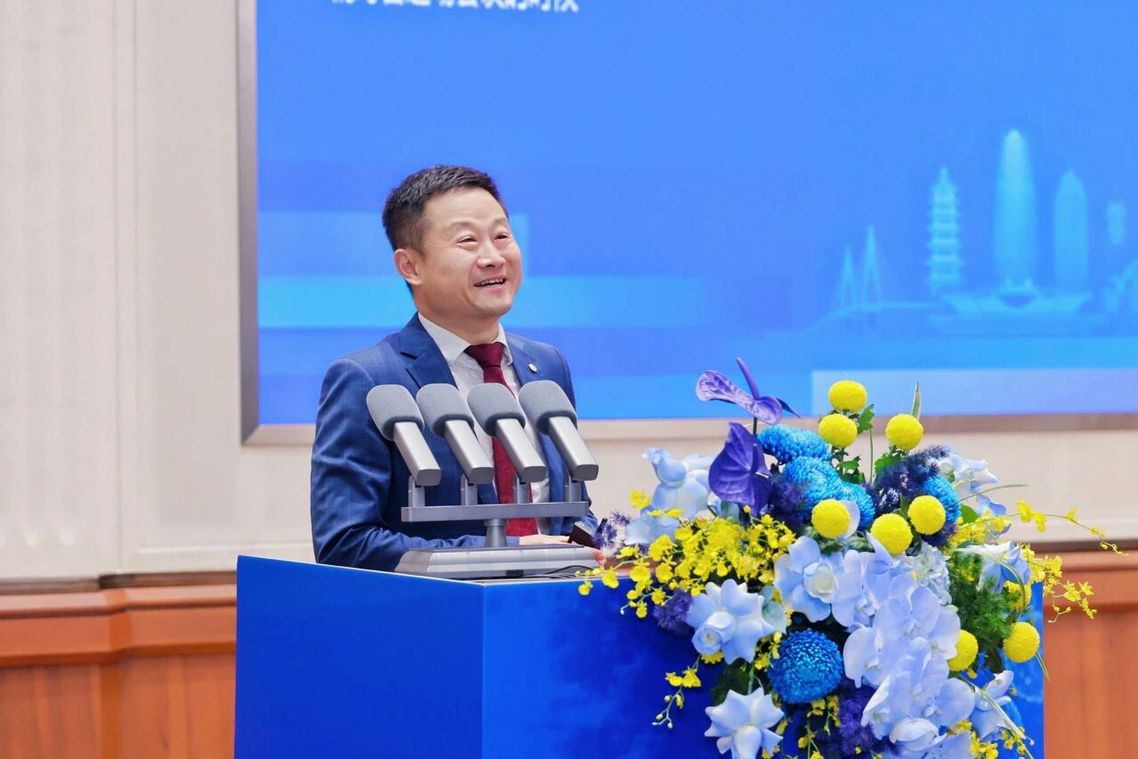
Address by Professor Dayong Jin
Professor Dayong Jin, Conference Chair, Chair Professor at EIT, and Fellow of the Australian Academy of Technology and Engineering, noted that the Zhejiang Provincial Engineering Research Center for Organelles Diagnostics and Therapy has consistently pursued world-class standards, closely integrated biomedicine, engineering, and information science, and made sustained advances in key areas such as organelle functional regulation and nanomedicine delivery, producing a series of landmark and original achievements. The center has always been driven by real-world clinical needs, actively collaborating with more than ten leading medical institutions in China to advance medicine–engineering integration and multicenter clinical validation. He expressed the hope that the conference would serve as a bridge for deeper collaboration with teams in China and abroad and for jointly shaping a new future for precision medicine.
It is reported that the Zhejiang Provincial Engineering Research Center for Organelle Diagnostics and Therapy was approved for establishment in 2024 by the Zhejiang Provincial Development and Reform Commission, with EIT as the lead institution, and Professor Dayong Jin serves as its director.
At the main forum, international experts—including Thomas Simmen, Professor at the University of Alberta, Canada; Sebastian Hiller, Professor at the University of Basel, Switzerland; Shigeru Yanagi, Professor at Gakushuin University, Japan; Stefan Schild, scholar from Austria; Felipe Cava, scholarfrom Sweden; and Daniel López, scholar from Spain—shared their latest findings on mitochondrial regulation and replacement therapy, organelle homeostasis and cell death mechanisms, and bacterial membrane microdomains and extracellular vesicles.
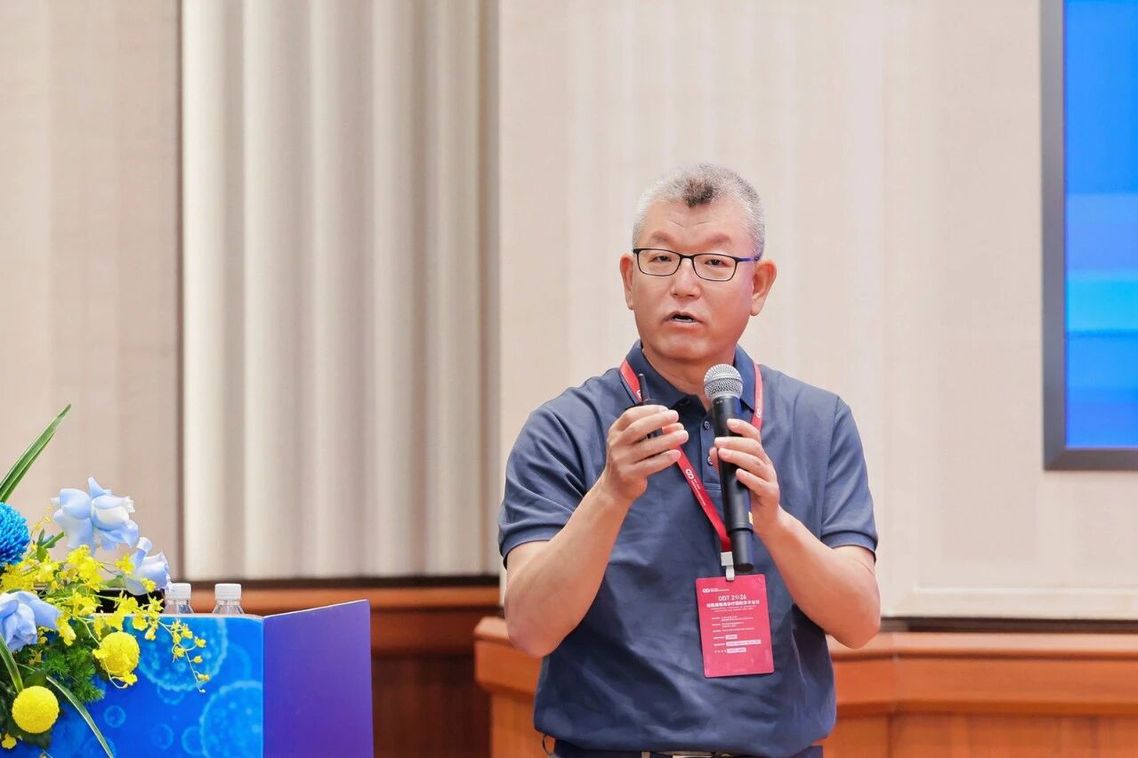
Presentation by Dr. Xing-Jie Liang
Dr. Xing-Jie Liang,Co-Chair of the conference and Member of the European Academy of Sciences, presented innovative advances in nanoparticle-mediated regulation of the lysosome–mitochondria interactome. In addition, scholars including Liang Ge, Associate Professor at Tsinghua University; Junjie Hu, Professor at the Institute of Biophysics, Chinese Academy of Sciences; Da Jia, Professor at Sichuan University; Yang Tian, Professor at East China Normal University; Boxun Lu, Professor at Fudan University; Jiangli Fan, Professor at Dalian University of Technology; Cunqi Ye, Principal Investigator at Zhejiang University; Jiaming Chen, Professor at Zhejiang University; and Dan Ye, Professor at Fudan University, presented systematic breakthroughs through multidisciplinary integration in areas such as unconventional protein secretion, super-resolution imaging probes, mechanisms of neurodegenerative diseases, and immunometabolism.
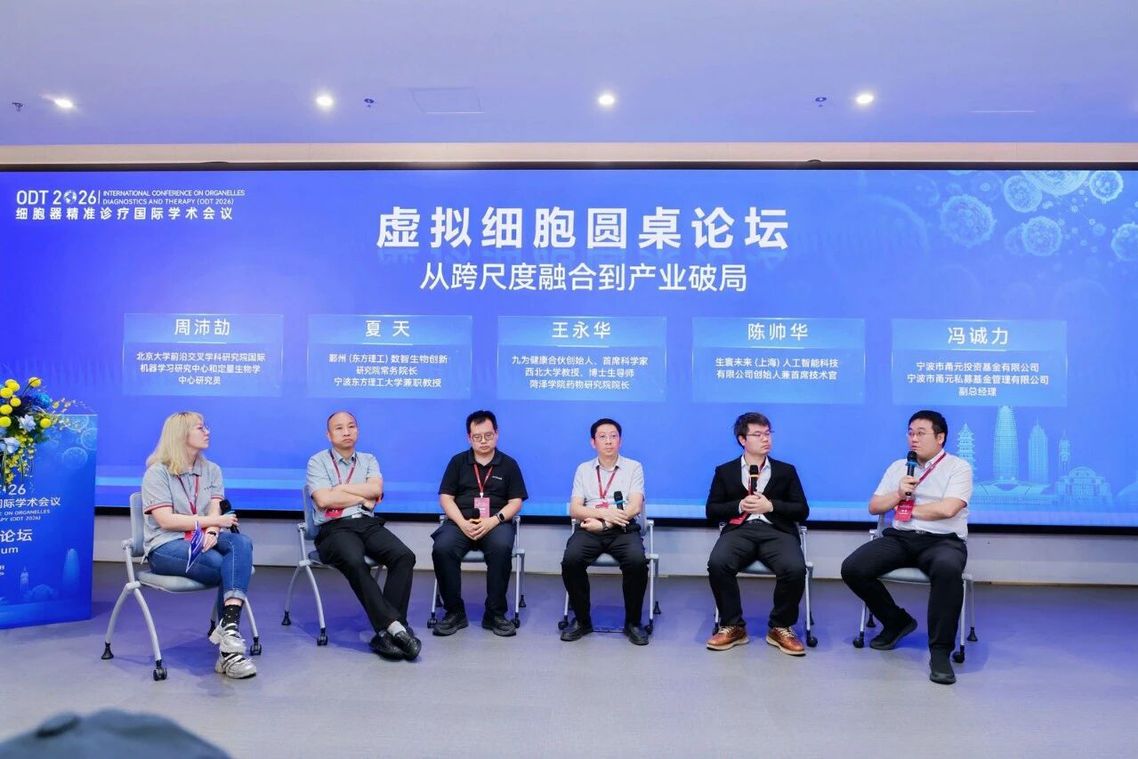
Roundtable on Virtual Cell
The conference also featured an AI Virtual Cell Forum and a Young Scientists Forum. The AI Virtual Cell Forum facilitated discussions on virtual cell development, dynamic virtual cell agents, deep learning-enhanced mitochondrial imaging, and multimodal data acquisition for organoids, and included project roadshows and a roundtable discussion on industry-investment. In addition, industry representatives discussed the translation of advanced instrumentation into applications in basic research and drug screening, focusing on technology platforms such as super-resolution microscopy with high spatiotemporal resolution, mitochondrial vesicle characterization, and high-content cell painting.
At the Young Scientists Forum, more than ten early-career scientists shared their latest breakthroughs and advances in cutting-edge interdisciplinary areas, including nanoprobes and bioimaging, precision oncology, targeted drug delivery, in vivo peptide self-assembly, neural electrical stimulation modulation, micro- and nanorobotic manipulation, extracellular vesicles and engineered living biotherapeutics, and the regulation of development by ancient retroviruses.
Participating experts agreed that the conference further integrated the full chain from basic research and technology development to clinical application and industrial investment, and established a high-caliber international platform for collaboration and exchange in organelle biology, an emerging interdisciplinary field. Going forward, EIT will continue to leverage high-level scientific and technological platforms such as the Zhejiang Provincial Engineering Research Center for Organelle Diagnostics and Therapy, pool global innovation resources, accelerate the translation and application of cutting-edge advances, and contribute to the advancement of precision medicine and the upgrading of the life and health industry.
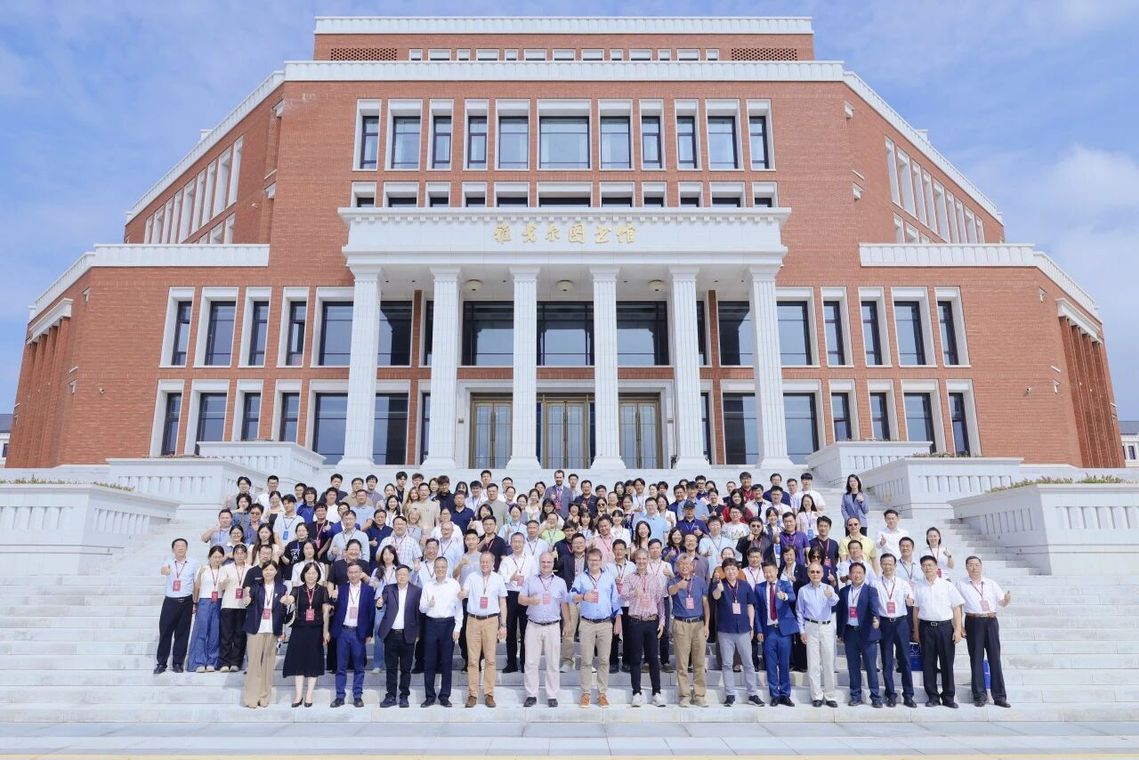
Group Photo
The conference was jointly hosted by EIT and the Zhejiang Provincial Engineering Research Center for Organelle Precision Diagnostics and Therapy, co-organized by the Ningbo Science and Technology Innovation Development Service Center and Ningbo No. 2 Hospital, and organized by Ningbo EIT Ditelligence Biotechnology Co., Ltd.
Among the attendees were leaders such as Jianjun Zheng, Party Secretary of Ningbo No. 2 Hospital, and Boding Wang, President of Ningbo No. 2 Hospital; Honghua Ye, President of Ningbo Medical Center Lihuili Hospital; Hongfei Weng, Party Secretary, Jiawei Zhou, Executive President, and Quanyong Yi, Vice President, of Ningbo Eye Hospital; and Tao Li, Party Secretary of Ningbo No. 6 Hospital, as well as representatives from the First Affiliated Hospital of Ningbo University and Ningbo Hospital of Integrated Traditional Chinese and Western Medicine. They attended the International Conference on Organelles Diagnostics and Therapy to explore new approaches to medicine–engineering integration and the clinical translation of cutting-edge diagnostic and therapeutic technologies.