Chlorine is one of the most important basic chemicals in the modern chemical industry, widely used in water treatment, disinfectant production, organic chemistry, pharmaceutical manufacturing, and many other fields. Currently, industrial chlorine production is realized primarily through chlor‑alkali electrolysis. However, the conventional chlorine evolution reaction (CER) still suffers from high energy consumption, insufficient noble metal utilization, and competition from the oxygen evolution side reaction, which hamper its further development toward higher efficiency and sustainability.
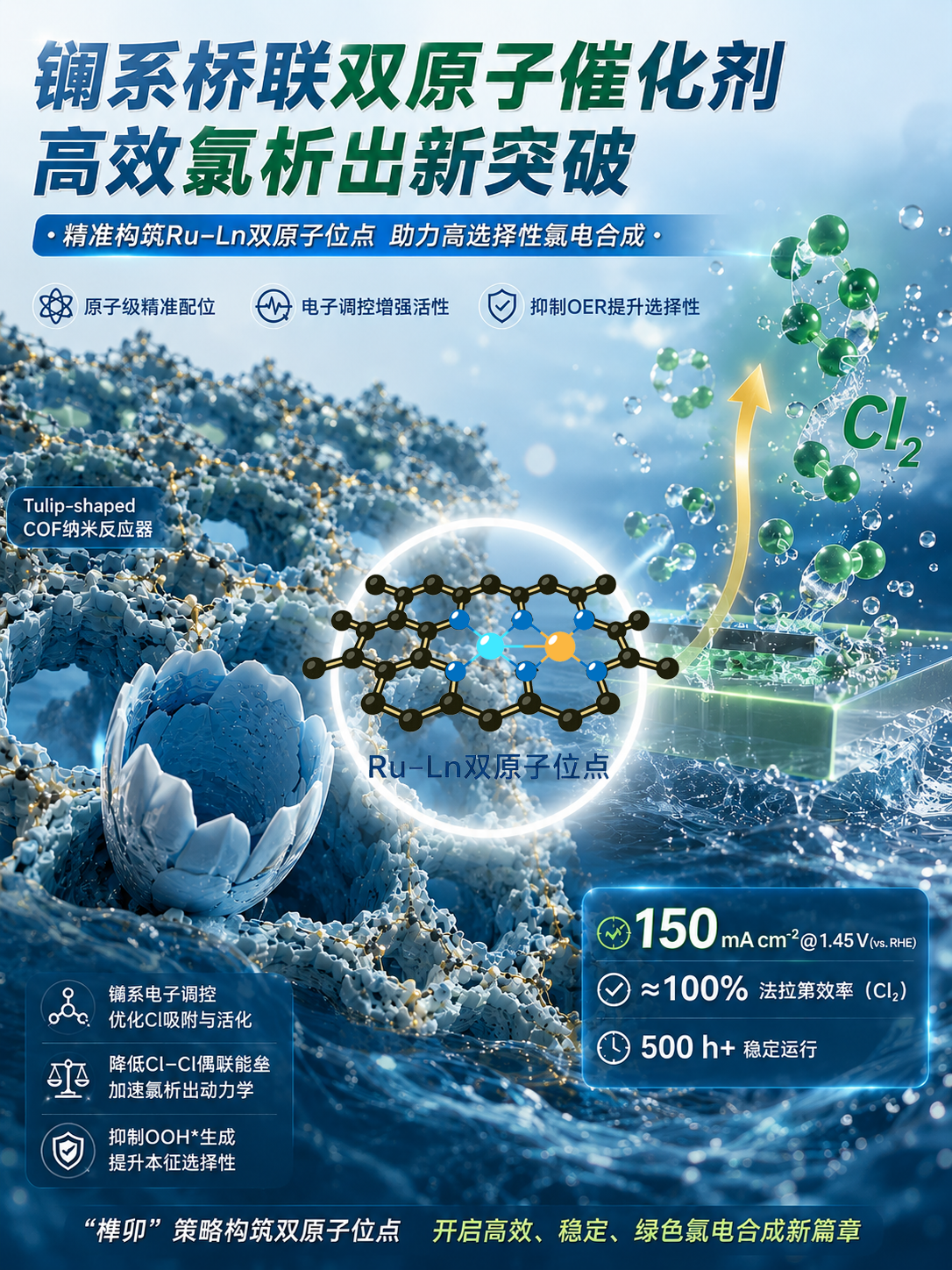
The team led by Chair Professor Zhangxing Chen, Foreign Member of the Chinese Academy of Engineering, and Assistant Professor Heng Zhao at the Eastern Institute of Technology, Ningbo (EIT), in collaboration with Professor Zhiguo Gu at Jiangnan University, Professor Sen Lin at Fuzhou University, and Associate Professor Yancai Yao at Shanghai Jiao Tong University, has made a major advance in the design of catalysts for efficient chlorine electrosynthesis. The research team proposed a “mortise‑and‑tenon” precise construction strategy that employs a tulip‑shaped covalent organic framework (Tu‑COF) as an atomic‑scale nanoreactor to successfully fabricate lanthanide‑bridged Ru–Ln dual‑atom catalysts. This work provides a new material design concept for highly efficient and selective chlorine electrosynthesis.
The findings were recently published in the international journal Advanced Materials.
"Locking" Dual Atoms with a "Mortise‑and‑Tenon" Structure to Overcome the Challenge of Precise Construction
Dual‑atom catalysts are considered an important bridge linking single‑atom catalysis and cluster catalysis. Compared with single‑atom sites, dual‑atom sites can modulate the electronic structure and intermediate adsorption behavior through the synergistic interaction of two metal atoms, thereby enhancing catalytic activity and selectivity. The challenge, however, is that keeping two different metal atoms "paired" without aggregation after high‑temperature pyrolysis is far from trivial. In particular, achieving atomically precise pairing between Ru and lanthanide metal atoms has long been a bottleneck in materials synthesis.
Drawing inspiration from the "mortise‑and‑tenon" wisdom of traditional Chinese woodwork, the team designed an ordered assembly strategy: first, a tulip‑shaped covalent organic framework (Tu‑COF) containing bipyridine coordination sites was constructed; then, a Ru complex was embedded into it, followed by the introduction of lanthanide ions such as La, Ce, and Pr, allowing Ru and the lanthanide atoms to be pre‑paired within the framework pores. After high‑temperature pyrolysis, the organic framework was converted into a carbon skeleton while the Ru–Ln dual‑atom sites were stably retained. In simple terms, the Tu‑COF serves as a pre‑designed "mortise," and the Ru complex and lanthanide ions act as "tenons" that fit precisely into it. This pre‑organized structure prevents the random migration of metal atoms during pyrolysis and instead confines them within a restricted space, forming stable heteronuclear dual‑atom sites.
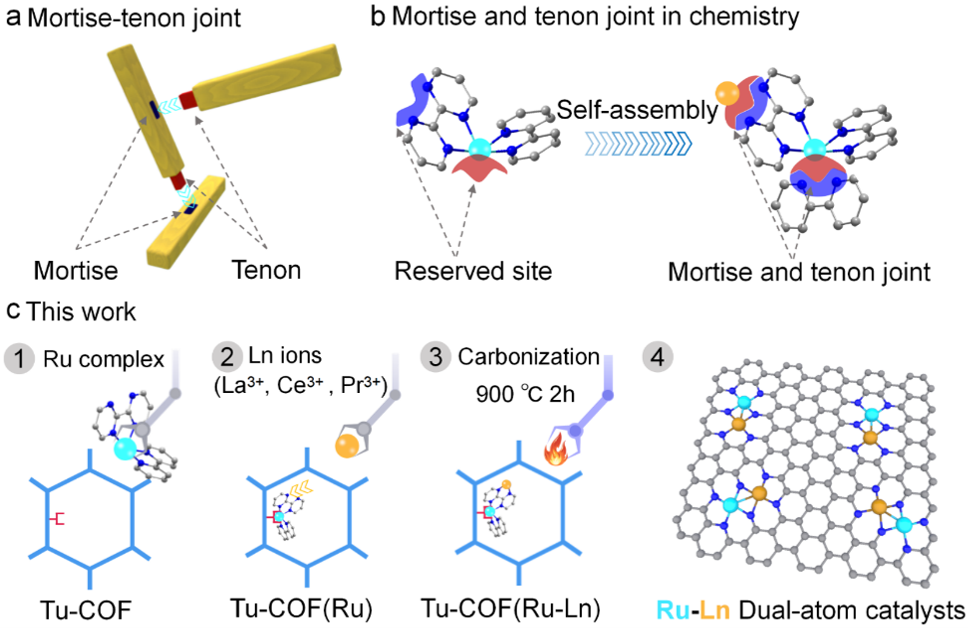
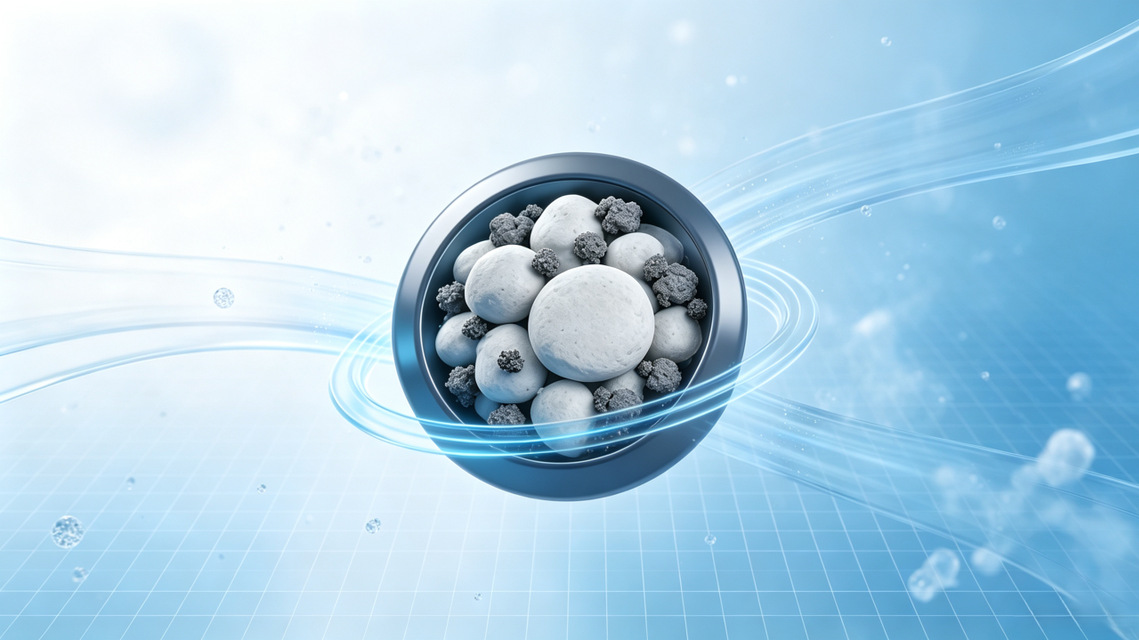
Catalyst synthesis route. Image provided by the research group
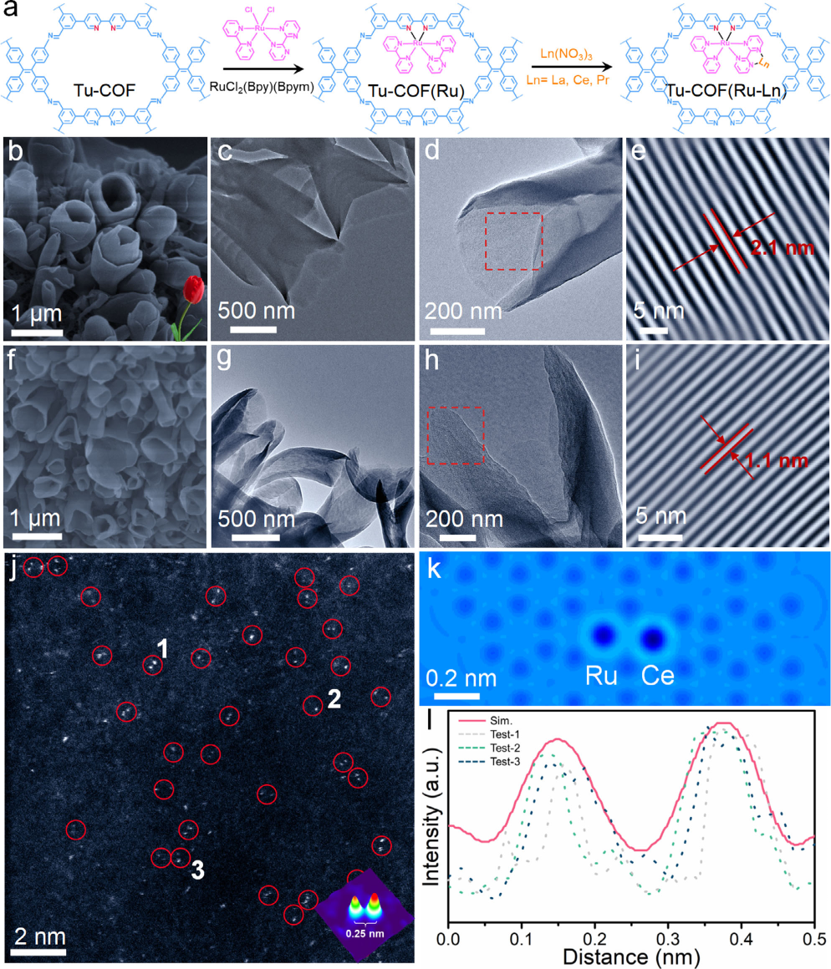
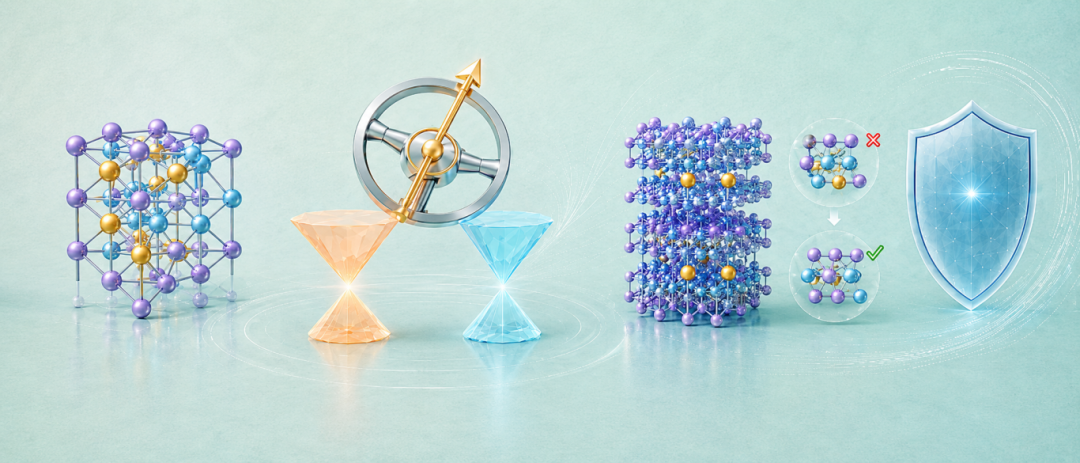
Catalyst structural characterization. Image provided by the research group
A "Lanthanide Bridge" Activates Ru Sites, Markedly Enhancing Chlorine Evolution Efficiency
Among the constructed Ru–La, Ru–Ce, and Ru–Pr dual‑atom catalysts, Ru–Ce exhibited the most outstanding chlorine evolution performance. Experimental results showed that in an acidic 1 M NaCl electrolyte, the Ru–Ce dual‑atom catalyst required only very low overpotentials to reach current densities of 10 and 100 mA cm⁻². More importantly, when Cl⁻ was absent from the system, the catalyst displayed almost no appreciable current response, indicating its high selectivity for the chlorine evolution reaction. In a flow electrolyzer, the Ru–Ce dual-atom catalyst likewise demonstrated performance advantages approaching practical application: it could operate stably for over 500 hours at a current density of 100 mA cm⁻², with a long‑term Faradaic efficiency exceeding 98%, showcasing outstanding activity, selectivity, and stability.
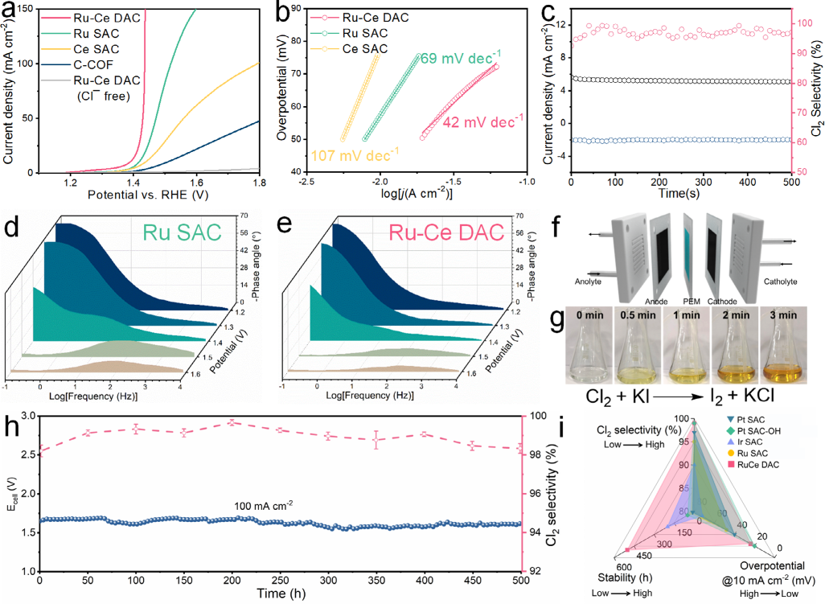
Chlorine evolution performance and long‑term stability of the Ru–Ce dual‑atom catalyst. Image provided by the research team.
Ce Is Not a "Bystander" but a Key Assistant in Modulating Ru
Why does the introduction of Ce significantly enhance the chlorine evolution performance of Ru sites? The research team revealed the key mechanism through in situ Raman characterization, electrochemical tests, and theoretical calculations. Traditional Ru single‑atom sites, although possessing strong catalytic activity, have a relatively rigid electronic structure that makes them susceptible to the adsorption of oxygen intermediates, which can trigger the oxygen evolution side reaction and lower chlorine selectivity. In the Ru–Ce dual‑atom structure, the Ce atom is not simply a structural stabilizer. Instead, it serves as both an "electronic modulator" and a "chloride ion capturer" adjacent to the Ru site. It was found that Ce enhances the enrichment and adsorption of Cl⁻ at the interface, promoting the formation of the truly active RuCeCl–N₆ structure. Within this structure, Ce modulates the d‑band structure and charge distribution of the Ru center, making the adsorption of Cl species sufficiently strong to facilitate chloride activation, yet not so strong as to hinder product desorption. Theoretical calculations further demonstrated that the RuCeCl–N₆ site lowers the energy barrier for Cl–Cl coupling to form Cl₂, while simultaneously raising the energy required to form the OOH* intermediate, thereby fundamentally suppressing the oxygen evolution reaction. Consequently, the Ru–Ce dual‑atom structure achieves dual regulation—promoting chlorine evolution and inhibiting oxygen evolution.
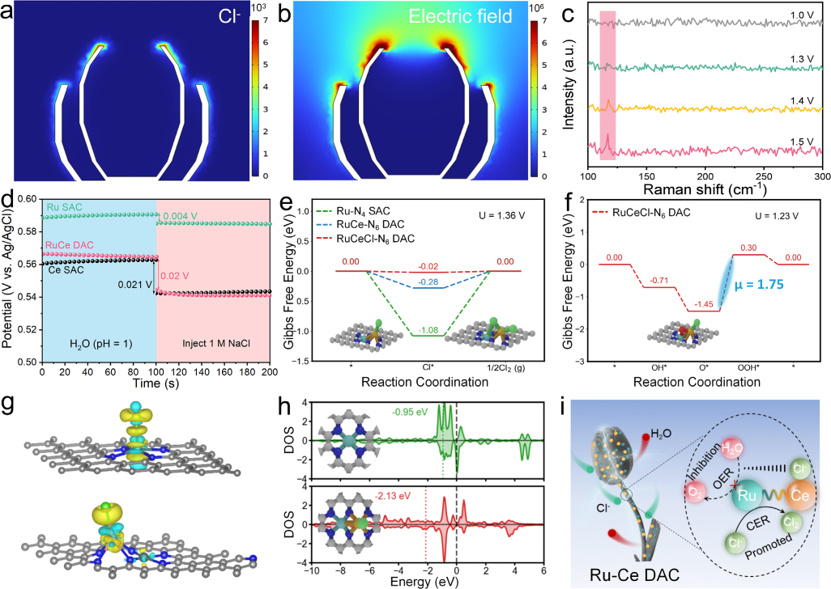
In situ characterization and theoretical calculations reveal the chlorine evolution mechanism of the Ru–Ce dual‑atom catalyst. Image provided by the research team
This study presents a "mortise‑and‑tenon" dual‑atom catalyst construction strategy based on the pre‑organization of a covalent organic framework, enabling the precise pairing of Ru and lanthanideatoms and proving that lanthanide elements can effectively modulate the electronic structure and reaction pathway of Ru sites. The work not only provides a new catalyst system for efficient and highly selective chlorine electrosynthesis, but also offers crucial insights for the precise design of heteronuclear dual‑atom catalysts, atom‑level lanthanide modulation, and COF‑derived catalytic materials.
Wenda Zhang, postdoctoral researcher at EIT; Lulu Chen, postdoctoral researcher at Fuzhou University; Yongbiao Mu, Ph.D. student at the Southern University of Science and Technology; and Han Zhao, Ph.D. student at the University of Zurich are the first authors of the paper. Assistant Professor Heng Zhao, Associate Professor Yancai Yao, Professor Sen Lin, Professor Zhiguo Gu, and Professor Zhangxing Chen are the co‑corresponding authors.