Xueliang Sun, Chair Professor at Eastern Institute of Technology, Ningbo and Foreign Member of the Chinese Academy of Engineering, Changhong Wang, Assistant Professor, and their team, in collaboration with Liwei Chen, Professor at Shanghai Jiao Tong University, proposed a dual-solvent slurry preparation strategy based on supramolecular assembly and fabricated ultra-low binder content bilayer electrolyte films (LLBFs) with a room-temperature ionic conductivity of 1.26 mS/cm. Using this innovative process, the team successfully developed for the first time a multilayer stacked ampere-hour-level halide all-solid-state pouch cell (NCM88|LLBF|μ-Si). At 30 °C and 0.2 C, the cell delivered a capacity of 1.45 Ah and exhibited a capacity retention of 95.1% after 100 cycles.
These findings were recently published in the internationally authoritative journal Advanced Materials.
Halide solid electrolytes possess high ionic conductivity and excellent cathode compatibility, making them a highly promising all-solid-state battery system. However, halide wet film fabrication and cell manufacturing technologies compatible with mass-production equipment and processes have long remained elusive, constituting one of the key bottlenecks restricting their practical application.
On the one hand, halide electrolytes are extremely sensitive to solvents, and the solvent-induced electrolyte failure mechanism remains unclear. On the other hand, electrolyte film prepared by conventional wet processes contain binder contents as high as 2–5 wt%. Since binders are typically ionically insulating materials, they directly impede ion transport and significantly degrade battery performance.
Core Innovations
Using XPS, solid-state NMR, and other techniques, the team elucidated the interactions between non-polar/low-polar solvents such as toluene, cyclohexane, and decane and the halide electrolyte Li₃InCl₆. They found that the solvents induce the precipitation of InCl₃ on the Li₃InCl₆ surface, blocking lithium-ion transport pathways and causing ionic conductivity decay.
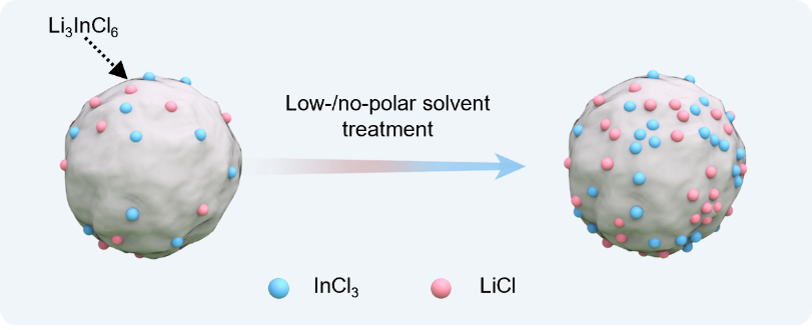
Supramolecular assembly mechanism in the dual-solvent system. Image provided by the research group
Conventional approaches reduce binder content merely by diluting the binder solution or increasing the slurry solids content, leaving limited tuning space and inherent limitations that are difficult to overcome. The team used methylcyclohexane–decane as the solvent and the multiblock copolymer SEEPS as the binder. By exploiting the different solvating abilities of the two solvents toward different SEEPS segments, they induced controlled supramolecular aggregation of polystyrene segments through π–π interactions, thereby precisely regulating the rheological properties of the binder stock solution and slurry. This route enabled the preparation of solid-state electrolyte films with ultra-low binder content and offers application potential for scalable mass production and engineering deployment.
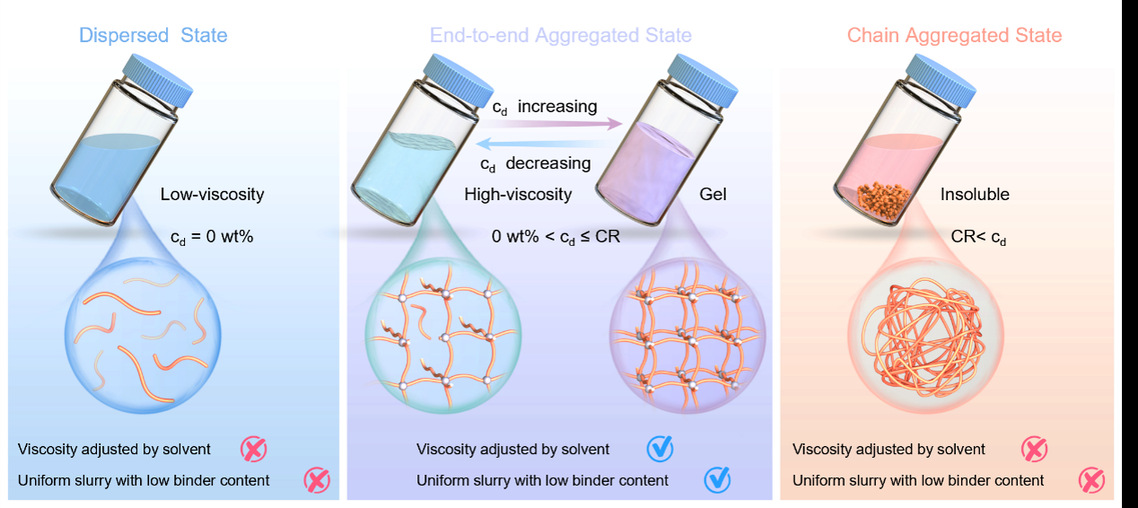
Supramolecular assembly mechanism in the dual-solvent system. Image provided by the research group
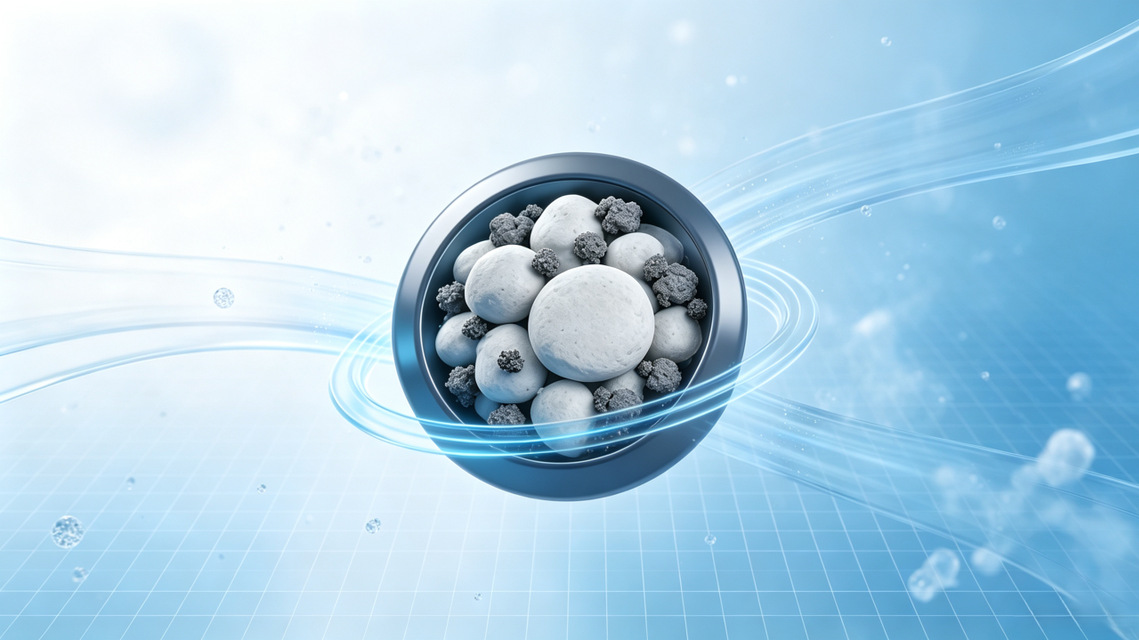
Leveraging this innovative method, the team further assembled a multilayer stacked ampere-hour-level halide all-solid-state pouch cell. With a nominal capacity of 1.8 Ah, the halide all-solid-state pouch cell delivered a discharge capacity of 1.45 Ah at 30 °C and 0.2 C, with a capacity retention of 95.1% after 100 cycles. This is the halide all-solid-state pouch cell with the largest capacity and the largest number of stacked layers reported in the literature, and also the first halide all-solid-state pouch cell fabricated by wet processing.
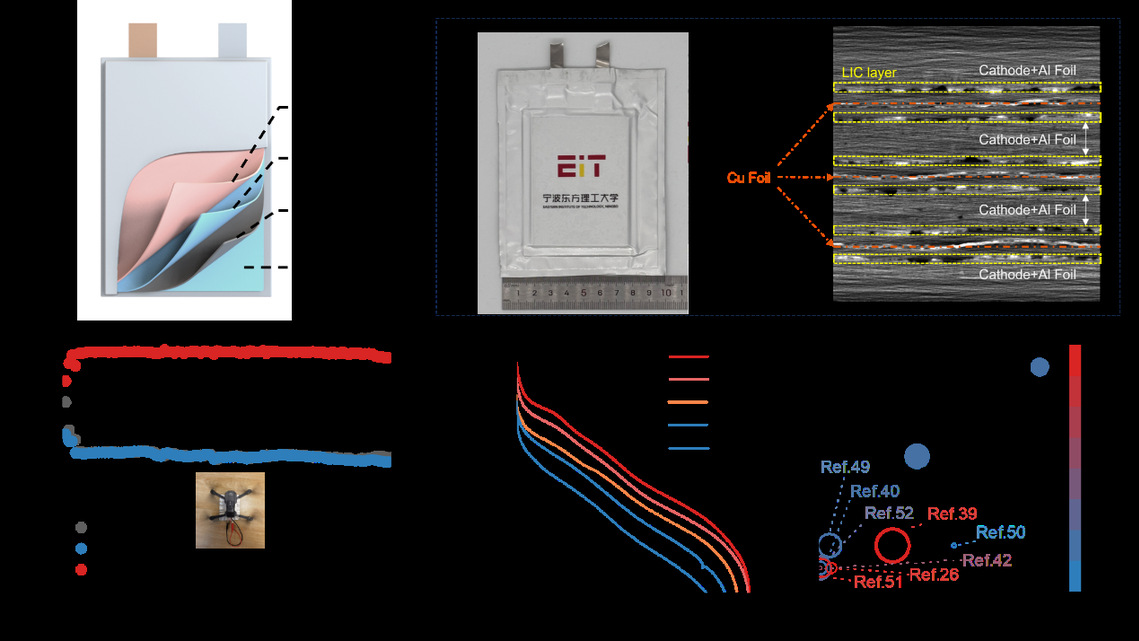
Ampere-hour halide all-solid-state pouch cell. Image provided by the research group
This work bridges the processing gap from laboratory-scale halide solid electrolyte technology to commercial ampere-hour pouch batteries, providing a viable technical pathway for the scalable mass production and commercial deployment of halide all-solid-state batteries.
The Eastern Institute of Technology, Ningbo is the first institution of this work. Shutao Zhang, Ph.D student collaboratively trained by EIT and Shanghai Jiao Tong University, and Jiamin Fu, Associate Professor at EIT, are co-first authors of the paper.