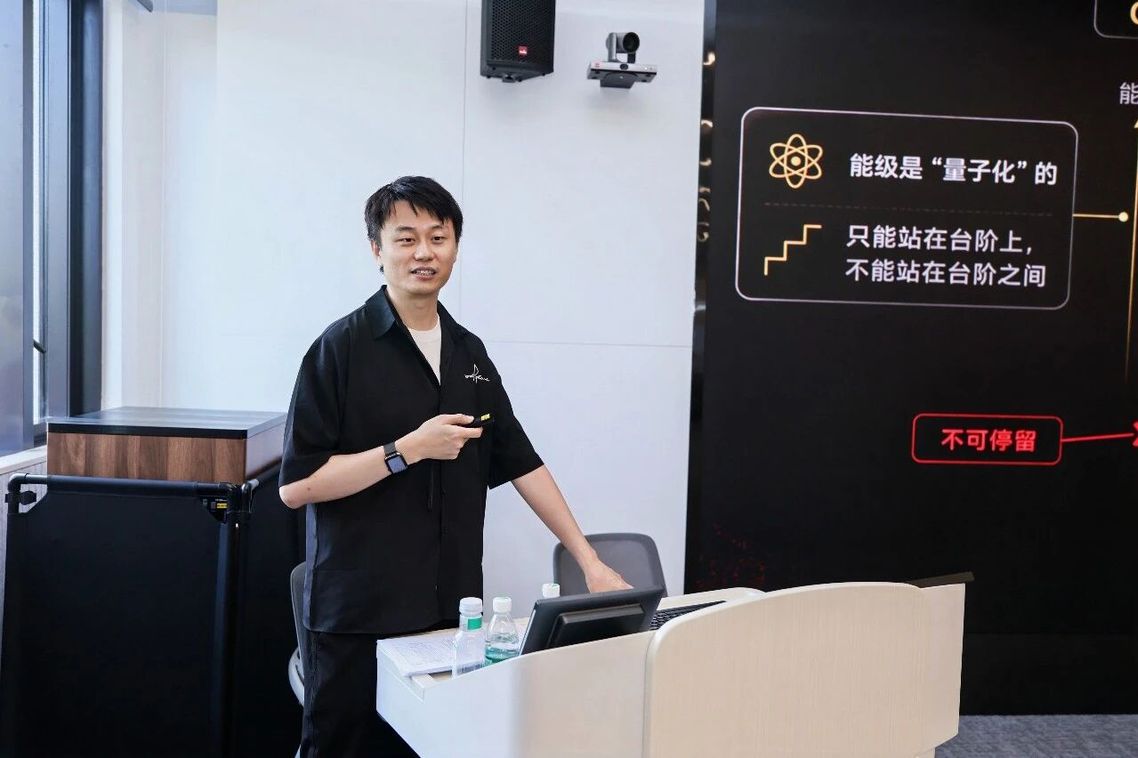
Not long ago, at the Spring 2026 Graduate Academic Day of the School of Physics and Astronomy at Shanghai Jiao Tong University (SJTU), Xunkai Duan, a Ph.D. student from the Eastern Institute of Technology (EIT), Ningbo, reaped a rich harvest: a valuable experience of presenting on stage, a certificate of the First Prize for Outstanding Academic Report, and a truly meaningful picture of a lifetime.
"An academic report in any field needs a representative piece of work to enhance the speaker's credibility and appeal. Our team's original achievement on ‘multiferroic altermagnets’ was precisely the source of my confidence and conviction in the report," said Xunkai Duan.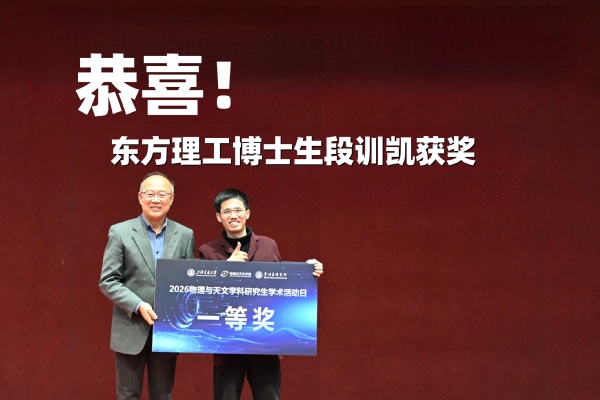
6:1000+
Around 5 p.m. that day, Professor Tong Zhou, Associate Professor at the School of Physics, EIT, received a WeChat message from a professor at SJTU, praising the outstanding performance of Xunkai Duan, Professor Tong Zhou's student, during the academic report session. The message also included a photo of Xunkai Duan throwing his arms up in the air while speaking.
"Xunkai Duan was trying to demonstrate the working principle of an antiferroelectric altermagnet. His passion was probably one of the key factors that impressed the teachers and students in the audience," Professor Tong Zhou explained.
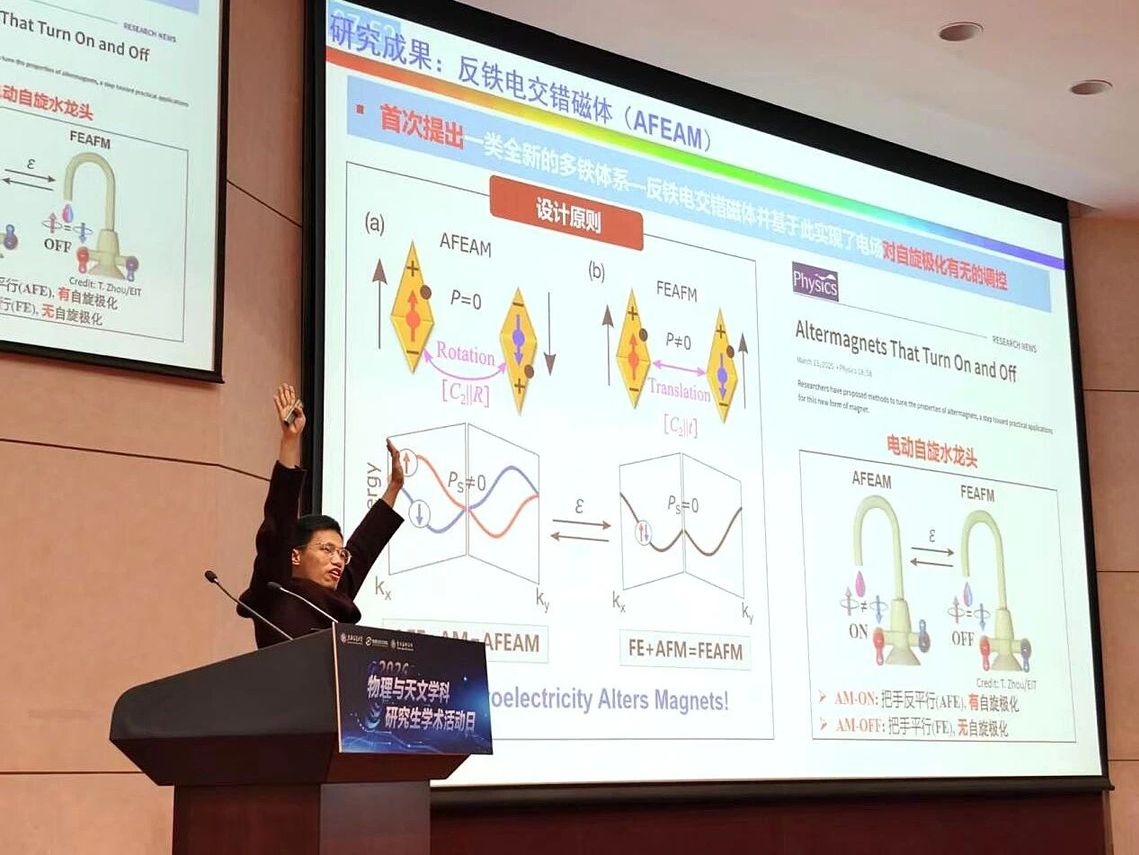
A shot of Xunkai Duan delivering his academic report
The event took place in Lecture Hall 100, Chen Ruiqiu Building, SJTU. In the academic report session, six Ph.D. students were on stage, facing an audience of over 500 faculty and students from various research fields.
Just getting on stage was already a remarkable achievement. The six students were selected from more than a thousand Ph.D. students. Xunkai Duan presented his most significant work—an academic report on multiferroic altermagnets—and eventually won the only first prize of the day. This achievement is based on a paper for which he is the first author and Professor Tong Zhou is the corresponding supervisor.
The concept of antiferroelectric altermagnet that appeared repeatedly in his report originates from the first representative work of the "DREAM" trilogy proposed by Professor Tong Zhou's team—Design and Realize Electric Altermagnets. The core findings have repeatedly received praise from experts including academicians (both domestic and international) and founding figures of the field, and were selected for the Collection of the Year 2025 in Physical Review Letters (PRL), a premier international physics journal.
"Late Bloomer" Xunkai Duan
As a first-year Ph.D. student, Xunkai Duan published a first-author paper in PRL — a point of great pride for him. But his journey has been far from smooth. After graduating with a bachelor's degree, he taught middle school physics for a while. Though driven by a desire to return to academic research, he had to withdraw from a doctoral program for personal reasons.
It was not until 2023, when he joined Professor Tong Zhou's research group as a research assistant, and later became a jointly supervised Ph.D. student between SJTU and EIT, that Xunkai Duan's journey in Physics finally seemed to get on track.
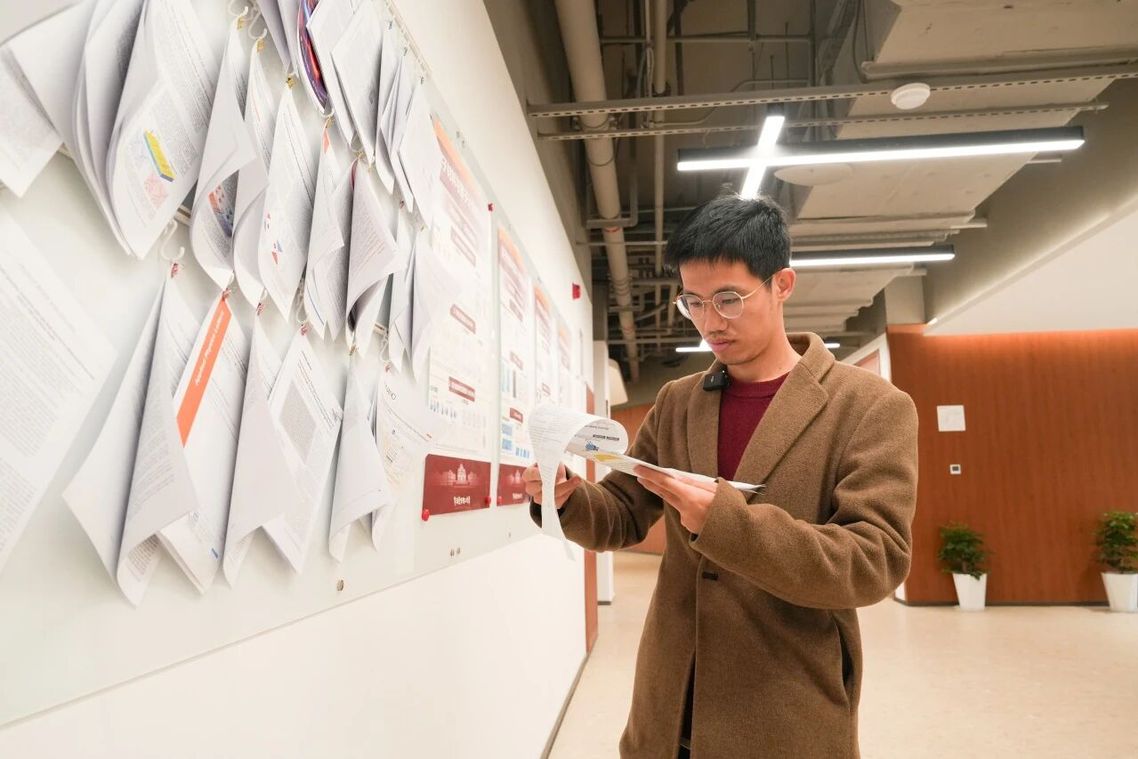
Xunkai Duan's academic life at EIT
In September 2023, under Professor Tong Zhou's guidance, Xunkai Duan began exploring "how to realize magnetoelectric coupling in altermagnets and achieve electric-field control of their magnetism and spin".
Through a combination of symmetry analysis, tight-binding modeling, and first-principles calculations, the researchers combined antiferroelectricity with altermagnetism, not only introducing the new concept of an antiferroelectric altermagnet (AFEAM) but also identifying specific material candidates that realize it. The findings were published in Physical Review Letters in March 2025, received an Editor's Suggestion, and were featured in the journal's annual collection of highlighted papers. The work was also highlighted in Physics magazine (published by the American Physical Society), the news website Phys.org, and Scientific American.
Professor Tong Zhou commented on Xunkai Duan: "He possesses immense potential and resilience. His meticulous academic attitude is key to his achievements in different environments and fields."
Duan's Mentor
At the end of his presentation slides, Xunkai Duan noted that much of his work originated from coupling existing research foundations with his supervisor's research direction.
"Professor Zhou provided me with the idea and the ‘key'. I used that ‘key’ to continuously explore the academic outcomes and insights I wanted to gain," Xunkai Duan said. In his view, finding a supervisor whose research direction aligns with one's own may not be too difficult, but finding a good mentor who values talent and excels at guiding is rare.
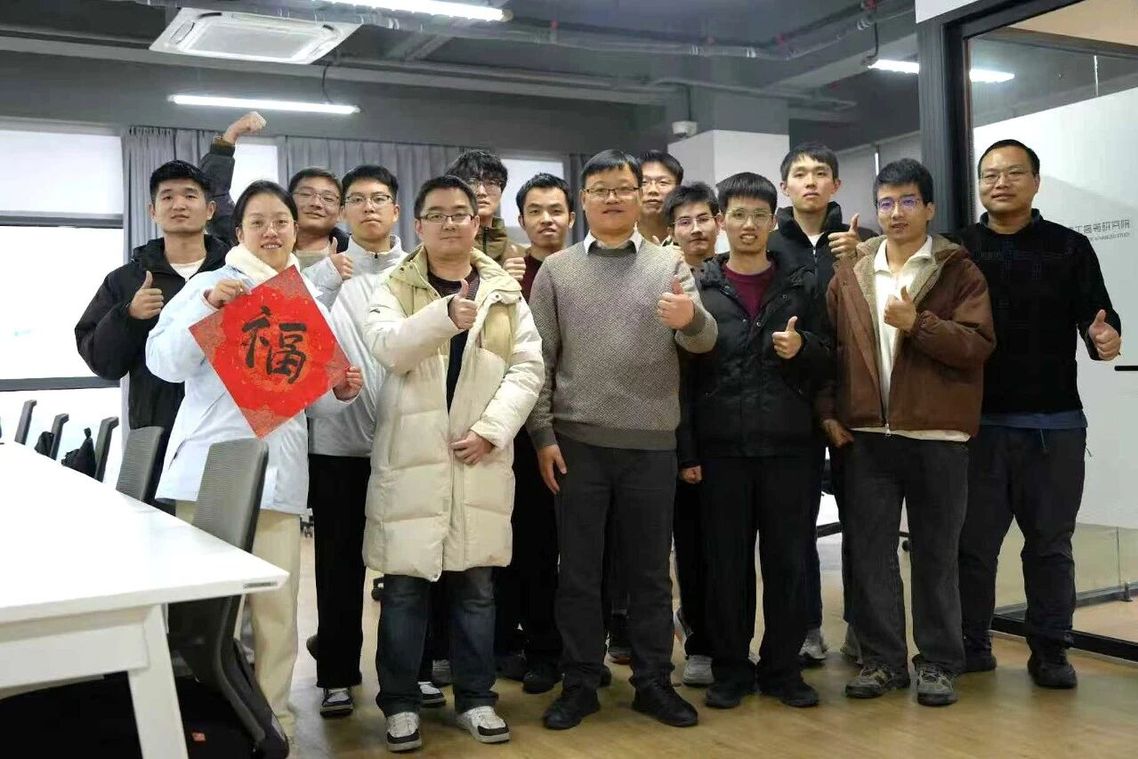
Professor Tong Zhou's research group
"Professor Zhou tailors his mentorship to each student and has a keen scientific intuition," Xunkai Duan said. "For the key result of our first PRL paper, I initially thought it was a calculation error and mentioned my suspicion during a group meeting. But Professor Zhou immediately realized something was off. Through deeper investigation, we eventually uncovered the underlying physics."
Beyond scientific mentorship, Professor Tong Zhou also fosters a comfortable working atmosphere and lifestyle. "I really like the vibe of our group. We share common interests and each has unique strengths," Xunkai Duan said.
Early on when he was building his group, Professor Tong Zhou set a tone of collaboration: "My students and I are a team. We work together on a common goal, just with different roles. The most important thing a supervisor can do is to recognize each student's strengths and weaknesses and help them find a path that suits them. I want my students to feel free to ‘bother’ me. My greatest success is helping them succeed," he said.
This research environment—where supervisors teach according to students' aptitudes and share resources—has provided solid support for Xunkai Duan's growth.
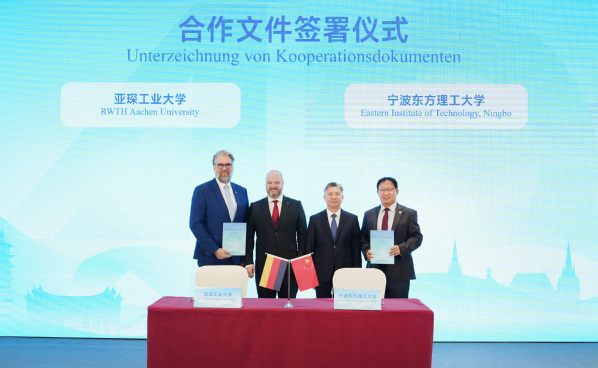
EIT adopts a joint-training model, with agreements signed with top-tier universities at home and abroad, including SJTU, University of Science and Technology of China, The Hong Kong Polytechnic University, and the University of Warwick, sharing supervisory resources, research platforms, and curricula.
To date, EIT has enrolled over 400 Ph.D. students, more than 80% of whom hold master's degrees from "Double First-Class" initiative universities in China or overseas institutions ranked in the top 200 of the QS World University Rankings. EIT plans to further expand its joint-training programs, focusing on national strategic areas such as integrated circuits and intelligent manufacturing.