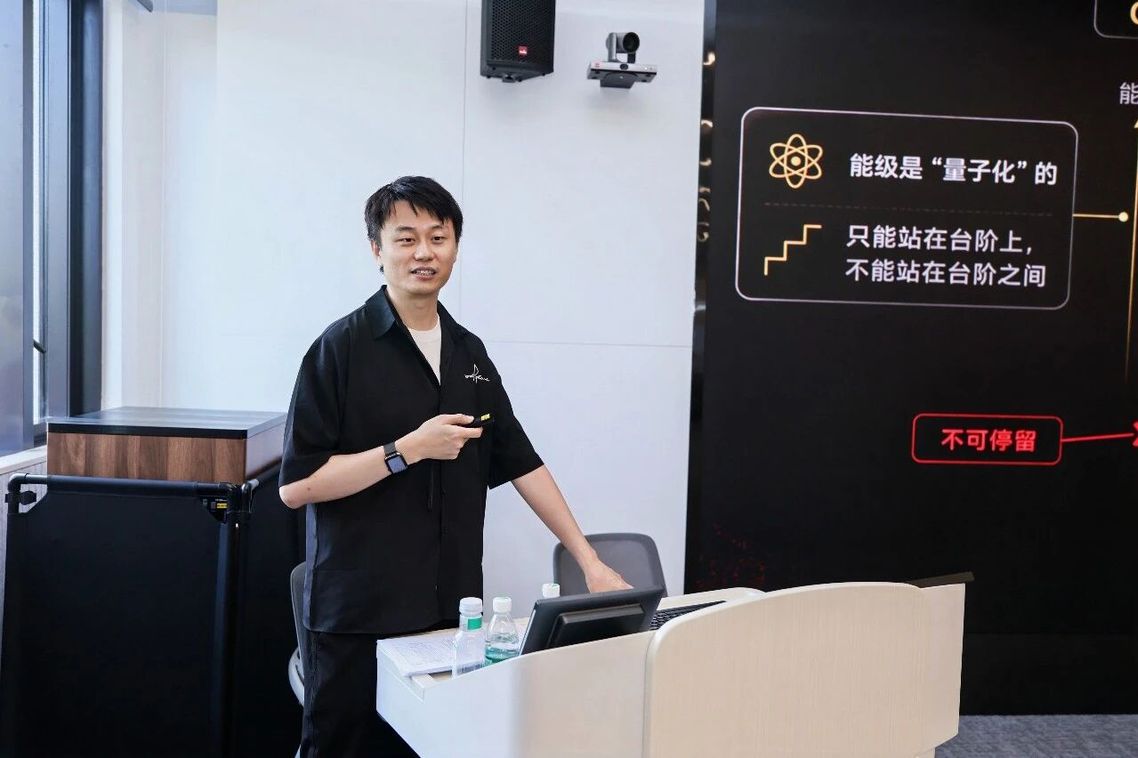
The greatness of a university lies not only in its facilities but also in its masters. The greatness of the EIT Lecture Series lies in its assembly of distinguished experts, its profound and far-reaching topics, its expansive vision, and its commitment to truth-seeking and action.
In the AI era, EIT is dedicated to cultivating "scientists with an entrepreneurial spirit" and "entrepreneurs with scientific acumen". Guided by the principles of openness and excellence, we invite world-renowned scientists and outstanding entrepreneurs to engage in a dialogue on wisdom, the future, and human progress.
For its inaugural lecture, we are honored to host Dr. Richard Chang, the founding figure of China's semiconductor industry. With a lifelong dedication to chip manufacturing and unwavering courage in founding multiple ventures, he shared his journey of steadfast commitment to the development of the semiconductor industry.
Knowledge has no borders. Wisdom finds its voice. Seek your path here, and we will journey far—together.
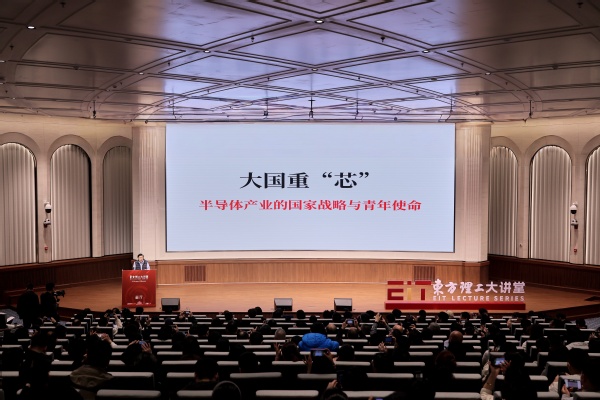
The global chip industry has long been captivated by the legendary story of Dr. Richard Chang, founder of Semiconductor Manufacturing International Corporation (SMIC). At age 52, he gave up billions in stock options and built a state-of-the-art chip fab in just 13 months. He has built and managed over 20 integrated circuit fabs worldwide, donated schools to Guizhou, established plants in Pudong… He is the pioneer who illuminated China's semiconductor industry, hailed as the founding figure of the nation's semiconductor industry.
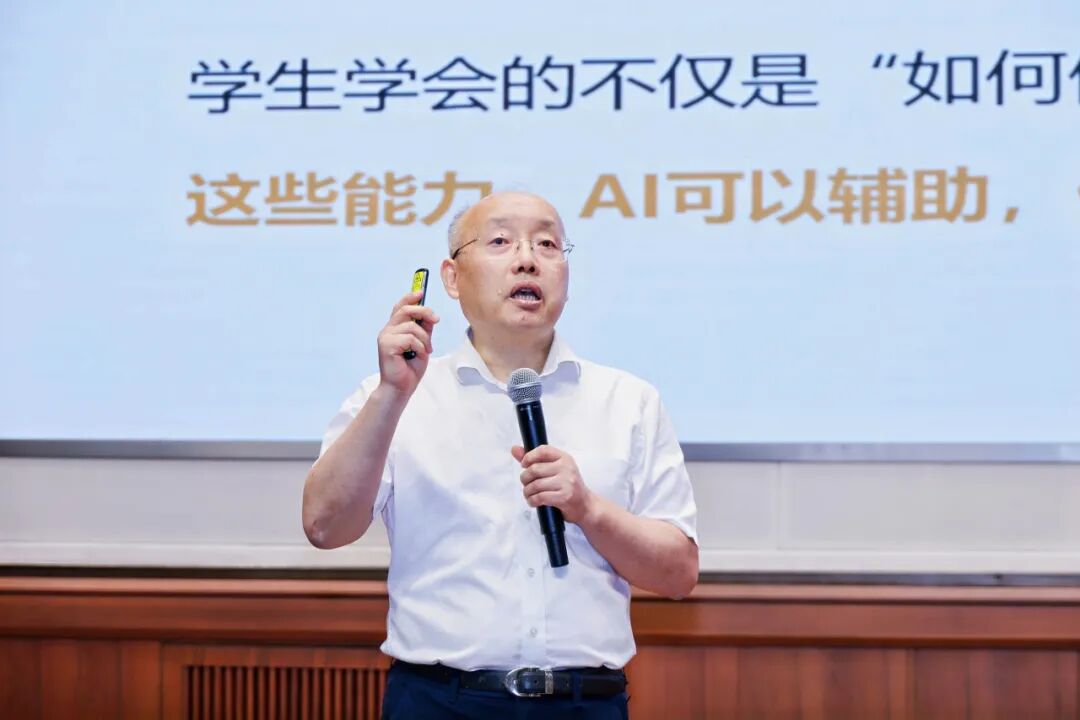
On April 3, a drizzly spring day, Dr. Richard Chang delivered the inaugural lecture of the EIT Lecture Series, titled "Great Power Great Chip: National Strategy and the Youth Mission in the Semiconductor Indsutry", sharing his insights on the development of the semiconductor industry and talent cultivation.
As Professor Shiyi Chen, President of EIT and Member of the Chinese Academy of Sciences, noted in his address, the institute's goal is to cultivate "scientists with an entrepreneurial spirit" and "entrepreneurs with scientific literacy" in the AI era. Dr. Richard Chang, who embodies both scientific rigor and industrial passion, is a distinguished guest for the EIT Lecture Series and a role model for young students.
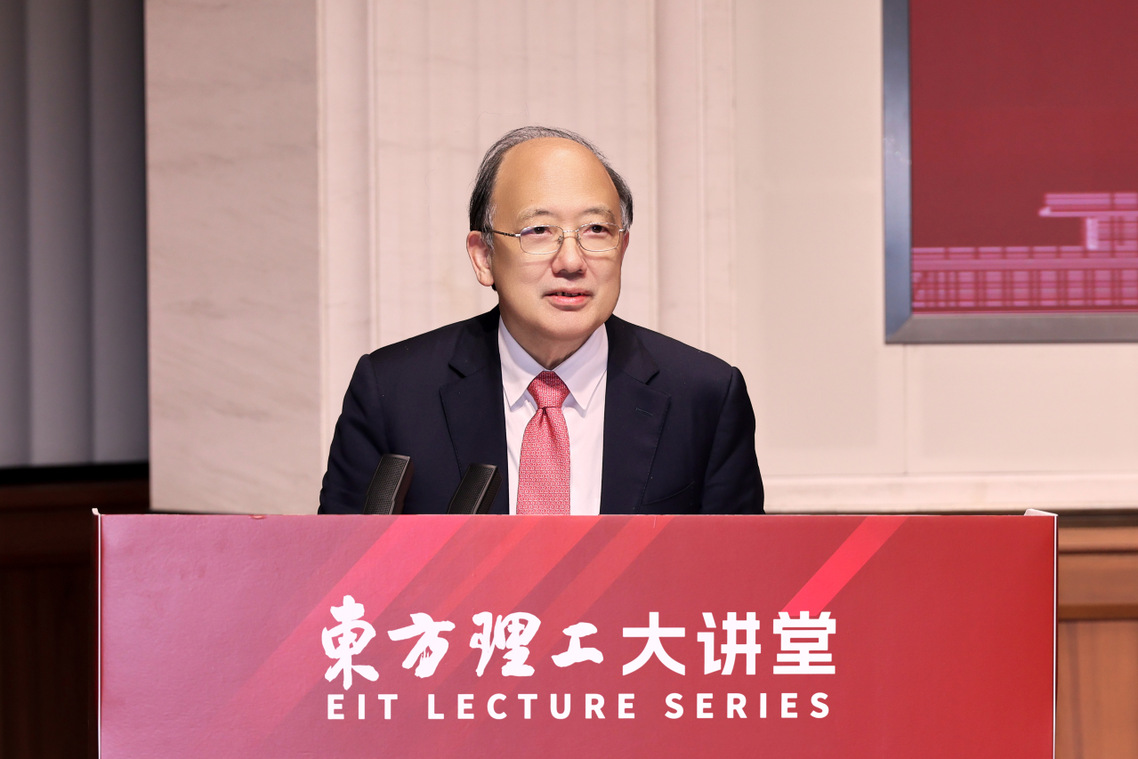
President Shiyi Chen delivering his address
The lecture was hosted by Professor Chunmiao Zheng, Vice President of EIT, and organized by the Office of Global Engagement.
On stage, Dr. Richard Chang, wearing a navy blue vest over a sky-blue shirt and black-rimmed glasses, spoke in a gentle, measured tone.
Even at 78, Dr. Richard Chang remains active in academia and industry—not retired to fishing or gardening. He serves as a professor at several universities and an industrial planning advisor to multiple provinces, traveling monthly to guide industrial development across regions.
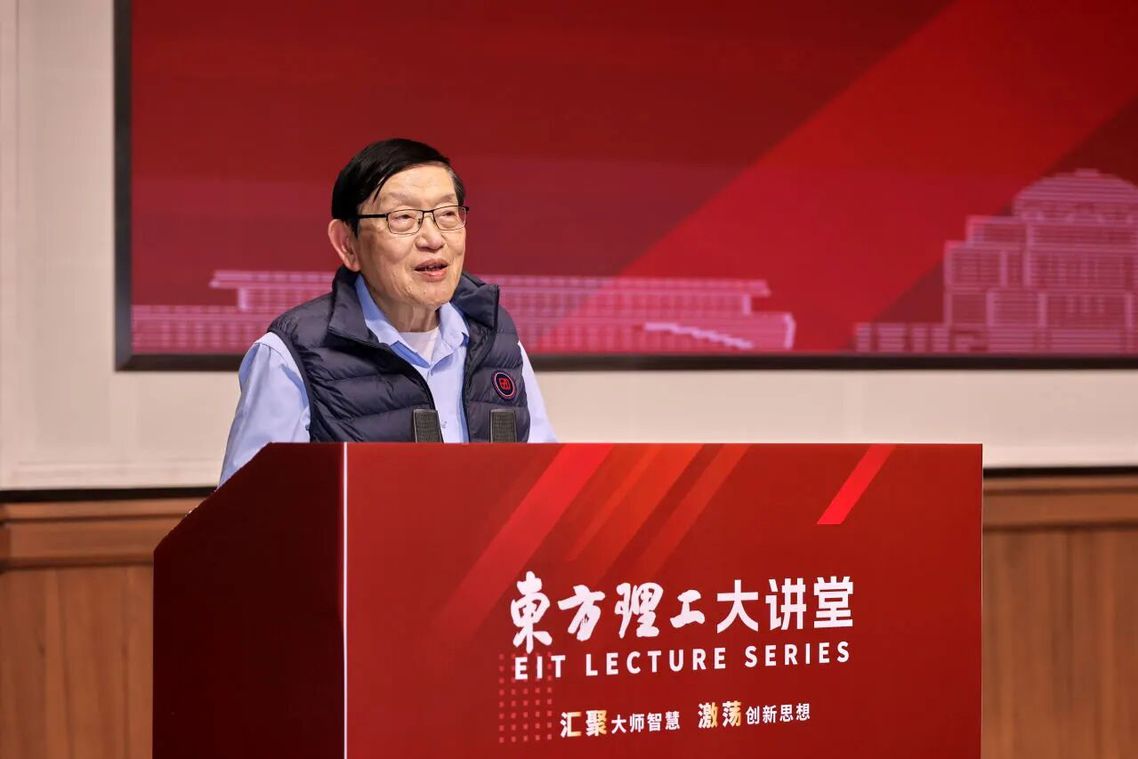
Dr. Richard Chang at the lecture
His devotion to the semiconductor industry was evident in his presentation slides. Rather than recounting his own achievements, he traced the history of semiconductors, explaining the evolution of the industry and the contributions of its pioneers.
He walked the audience through key milestones: the birth of fourth-generation semiconductors, integrated circuits, LCD displays, and reflective projectors; breakthroughs in floating-gate and non-volatile memory that allow digital signals to persist after applied voltage is removed; the emergence of FinFET (fin field-effect transistors); and the invention of immersion lithography.
Each milestone, he noted, was supported by remarkable individuals. Great people are unique, Dr. Richard Chang remarked. He shared colorful anecdotes: Jack Kilby, the Nobel laureate in physics, was called a gentle giant by his assistants and friends; George Heilmeier, inventor of LCD technology, regularly invited about 20 engineers to Friday lunch…
"Should young people pursue a career in semiconductors?"
"I encourage you to consider this path. It is demanding, but the rewards are worthwhile."
Dr. Richard Chang noted a concerning trend: according to the "China Integrated Circuit Industry Talent White Paper", the country faces a shortage of up to 300,000 professionals.
Many young people hesitate due to the long training hours, hard work, and slow entry to independent practice. When asked how long it takes to train a qualified chip engineer, he answered that it typically requires completing a full product cycle: Five years for basic competence, and possibly ten years for mastery. With AI acceleration, this timeline may shorten in the future.
He listed reasons to choose the semiconductor field: return on investment, market competitiveness, national contribution, and high returns from public listings. He encouraged young people to broaden their perspectives—semiconductors require talents in IC design, device physics, automation, finance, marketing, and more—almost all disciplines.
How to attract, cultivate, and retain talent in the semiconductor industry? Dr. Richard Chang's formula: a sense of achievement, continuous learning opportunities, promotion pathways, competitive total compensation, and a pleasant work environment. He turned the question to the audience: "Which matters most to you?"
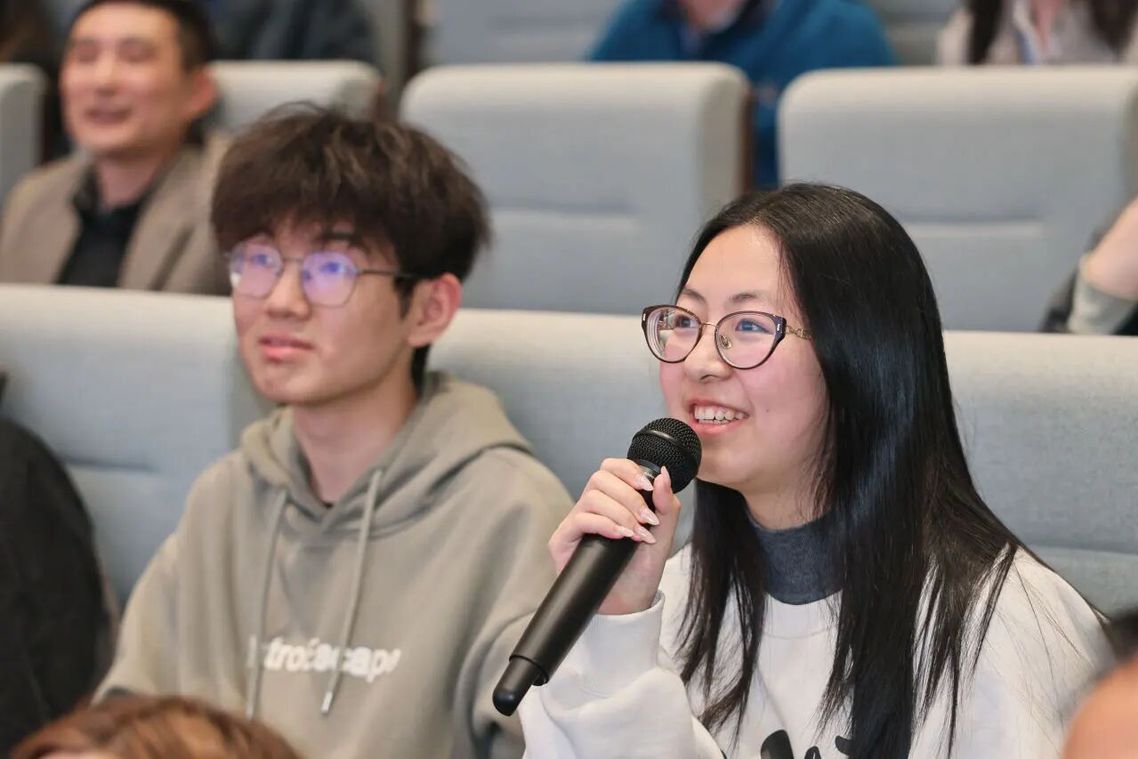
Audience interaction
One chose "competitive total compensation"; another, "pleasant work environment". Dr. Richard Chang smiled and said that joining a team and sharing in its success and glory is even more valuable. As in his overseas experience: "Teamwork, doing something great together—that is truly commendable."
"Where the country has a gap, I will fill it."
"Don't dismiss a good idea outright."
Throughout the lecture, Dr. Richard Chang’s aphorisms drew rounds of applause.
As the lecture concluded, Dr. Richard Chang received the EIT Lecture Series certificate from President Shiyi Chen.
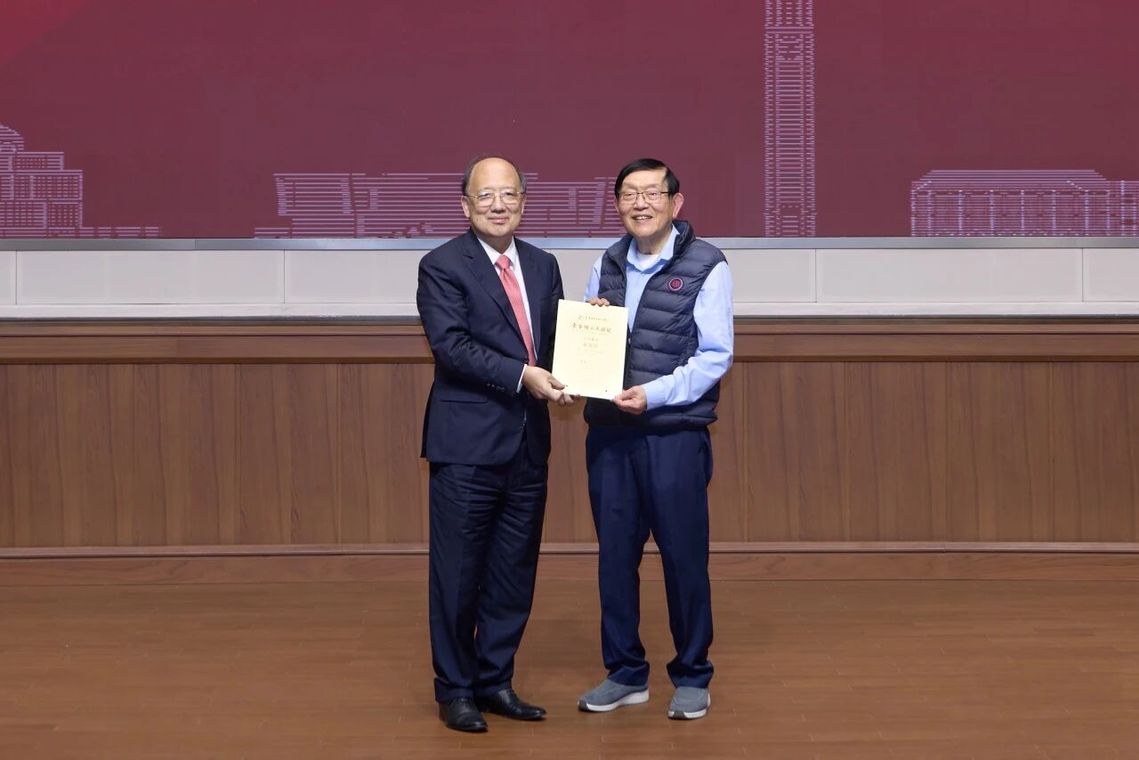
Shiyi Chen (left) presenting the certificate to Dr. Richard Chang (right)
After students crowded around Dr. Richard Chang for autographs, we asked him a question relevant to EIT: How should a new type of research university like EIT train students in semiconductor engineering? He gave a thoughtful answer.
"New research universities must educate students who value both theory and practice." He recalled his own "secret base" as a youth—a basement in an electrical engineering building that housed a production line where he could actually operate the machines, as exciting as a boy touching a gun or cannon for the first time.
As a new type research university, EIT has from its inception committed to building an ecosystem that integrates research and education, and industry and academia, embedding national strategy into the entire talent cultivation process. The EIT Lecture Series embodies this philosophy.
"The most important thing is to get hands-on!" Dr. Richard Chang affirmed before the interview ended.
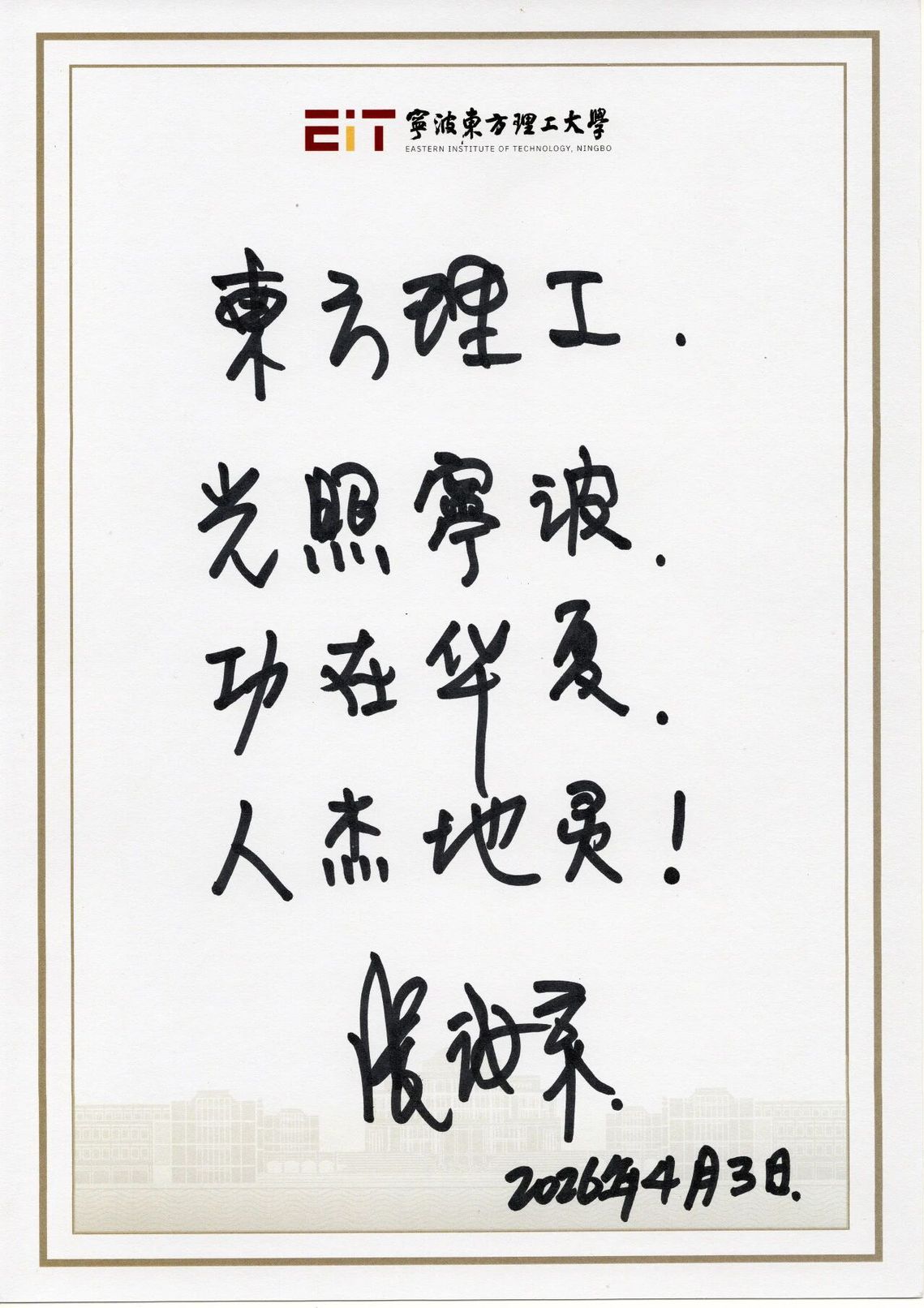
Keynote Speaker
Dr. Richard Chang
A benchmark figure in the global semiconductor industry. With over 40 years of experience in chip R&D, manufacturing, and fab construction worldwide, he has built and managed more than 20 IC fabs globally. In 2000, he founded SMIC, built China's first 12-inch wafer fab, and led the company to dual listing. Subsequently, he founded Zing Semiconductor and SiEn (Qingdao) Integrated Circuits, overcoming key national technical challenges such as large-diameter silicon wafers. He has long been deeply engaged in industrial development and talent cultivation.