On April 26, a gentle breeze brushed along the banks of the Yong River.
The inaugural public open day of the Eastern Institute of Technology, Ningbo (EIT) arrived as scheduled.
Nearly ten thousand students, parents, and people from all walks of life, carrying their long-held curiosity and expectations, walked into EIT and measured every corner of this new research university with their own footsteps.
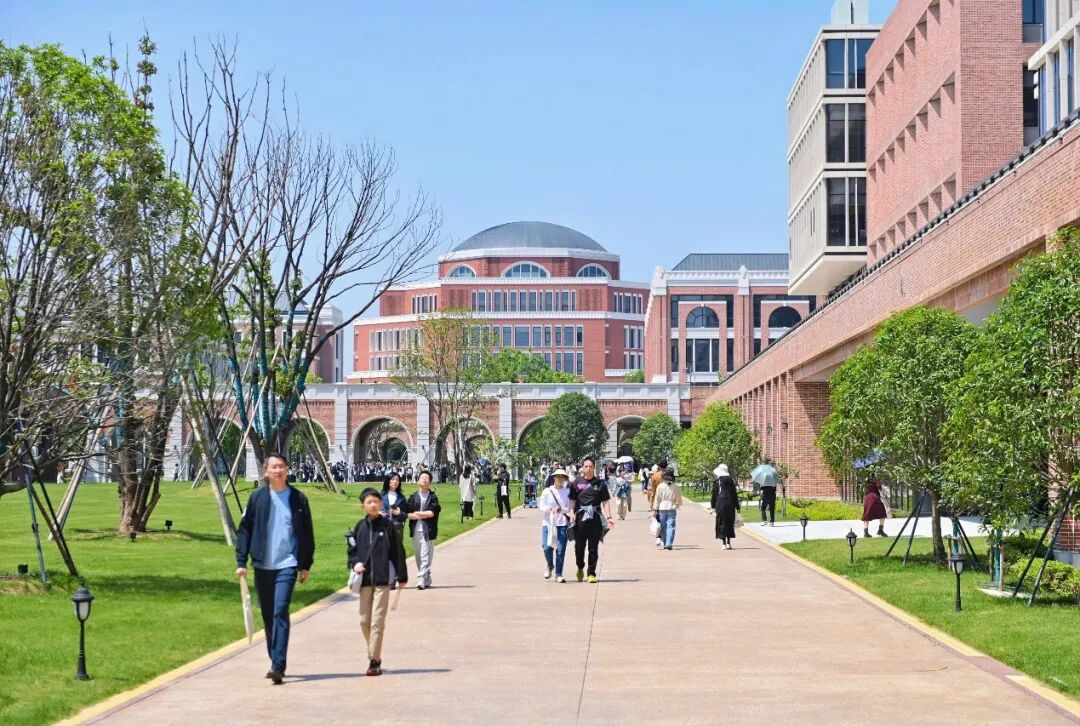
EIT open day
Hands raised high, thinking about the future
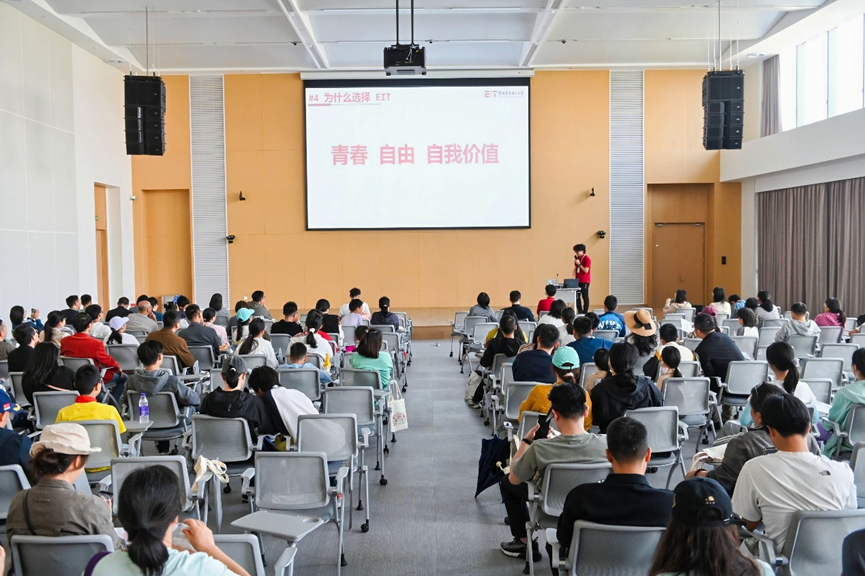
Shortly after 9 a.m., the lecture hall at Youngor Library was packed to capacity. Parents and students filled the back rows and lined the aisles.
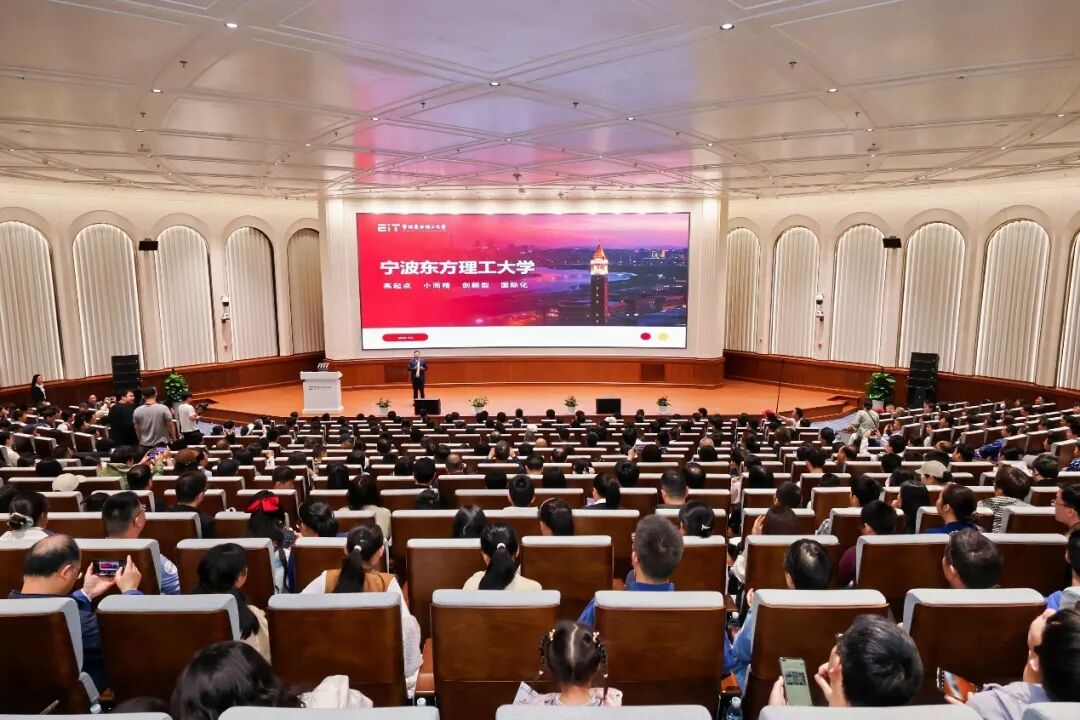
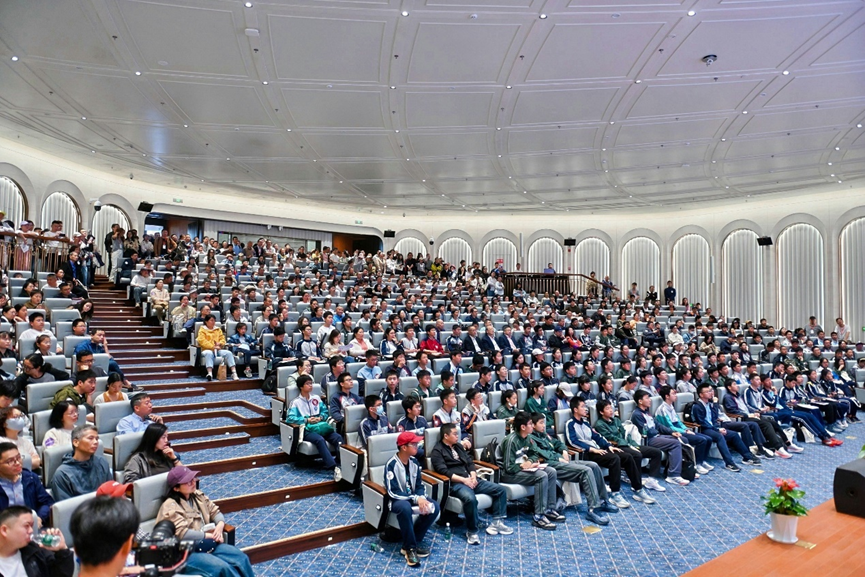
Info session scene
Professor Shiyi Chen, President of EIT; Mr. Bo Jin, Party Committee Secretary of EIT; Professor Dongxiao Zhang, Executive Vice President and Provost of EIT; and Professor Wenjun Zeng, Vice President of EIT attended the information session. Professor Dongxiao Zhang delivered the welcoming address. He thanked all those who have long supported EIT's growth and invited them to discover and appreciate the distinctive character of the institute.
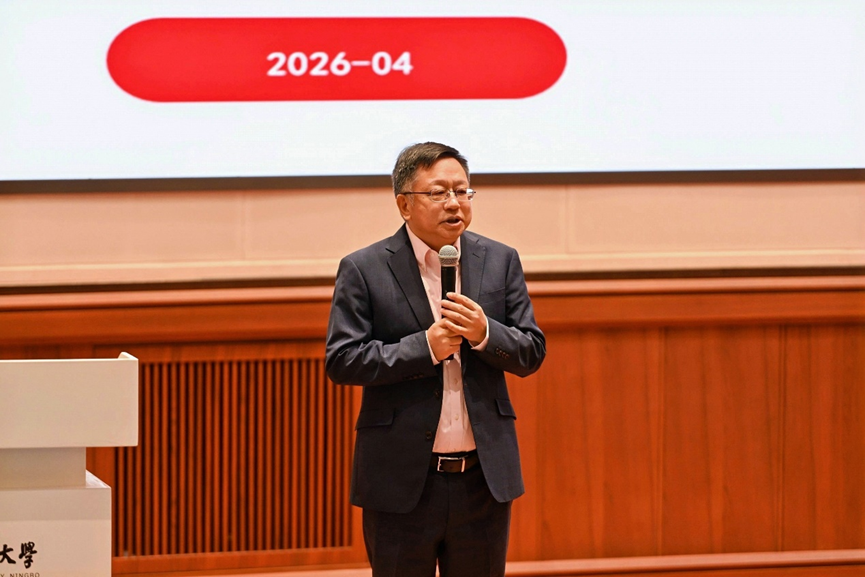
Address by Professor Dongxiao Zhang
Professor Zhongchao Tan, Assistant President and Director for Academic Affairs, gave a clear, accessible presentation that outlined the institute's guiding principles: "High-Caliber Foundation, Compact yet Distinguished, Research Oriented, and Globally Engaged." He detailed EIT's academic features, disciplinary structure, faculty strength, and educational philosophy. At EIT, he explained, students are not merely equipped with cutting-edge knowledge; they are cultivated as exceptional innovators with a robust academic foundation, creative prowess, a profound sense of social responsibility, and a global perspective.
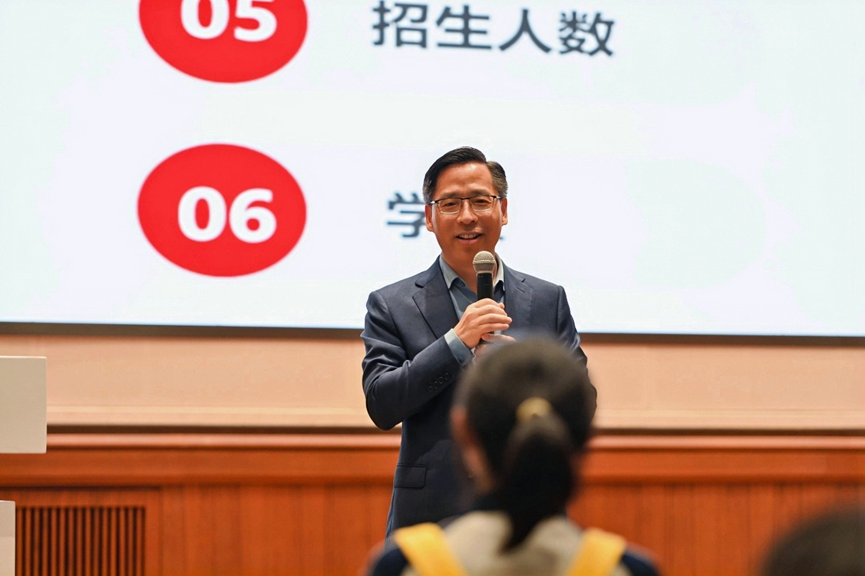
Professor Zhongchao Tan introducing EIT
The real highlight came during the question-and-answer session. After the presentation, hands shot up across the audience — a sign of careful deliberation about the future.
“What career opportunities will be available to graduates?”
“Will EIT enroll students from outside Zhejiang Province this year?”
“Will academicians actually teach undergraduate courses in person?”
In response, the institute provided detailed answers, explaining the residential college system, the mentorship system, and the flexible pathways for choosing a major, helping parents and students see their future paths more clearly.
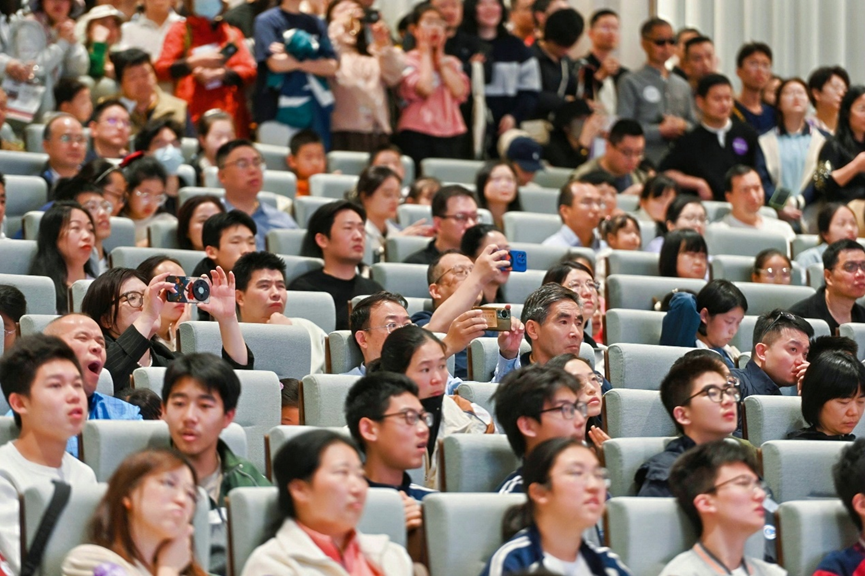
Info session scene
Top Minds, Inquisitive Visitors – The Day's Most Intense Intellectual Exchange
Leaving the library lecture hall, the "Counsultation session with academicians and professors" session in the Academic and Administration Building became the day's focal point — where ideas collided most intensely.
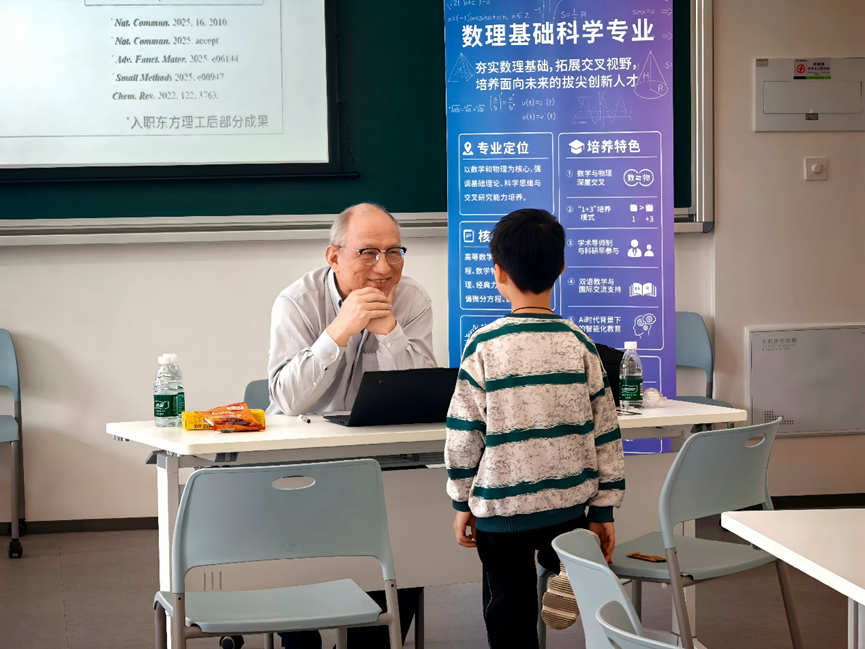
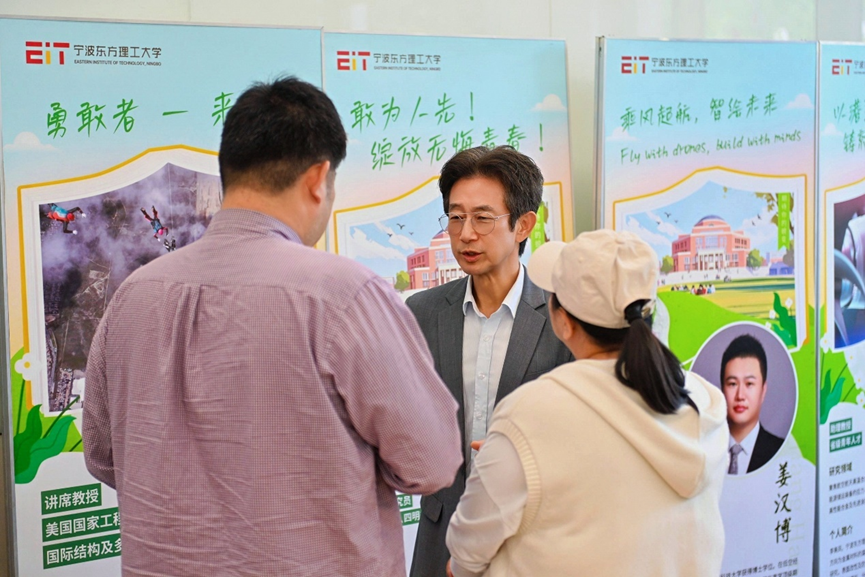
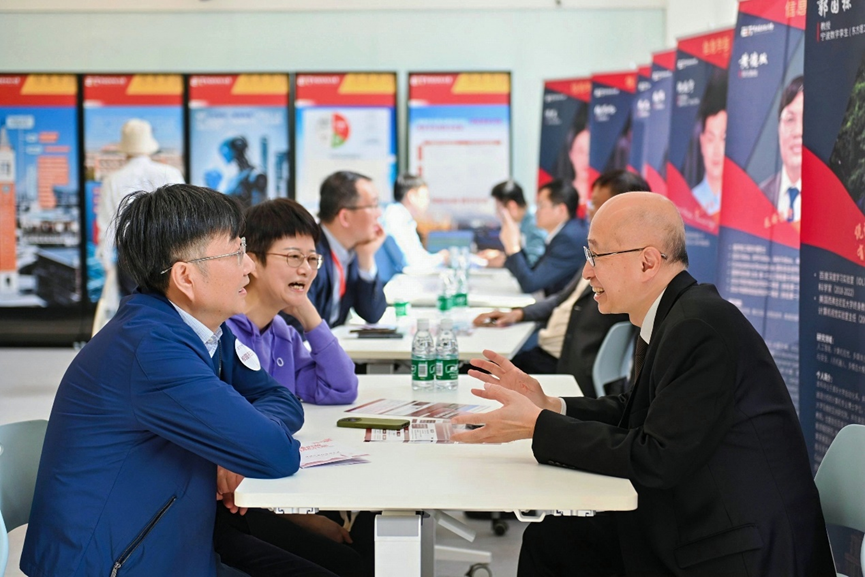
Counsultation session with academicians and professors
Here, students and parents discovered that the patient listeners and meticulous respondents sitting across from them were scholars who have published groundbreaking work in journals such as Nature and Science — and who serve as everyday teaching and research at EIT.
Among the visitors, two young elementary school students were drawn to the atmosphere. Seeing their bright, curious eyes, Dr. Fukeng Huang, Associate Professor in the College of Science, bent down, wrote a series of numbers on a piece of white paper, and patiently revealed the beauty of prime numbers. In that moment, curiosity and wisdom met.
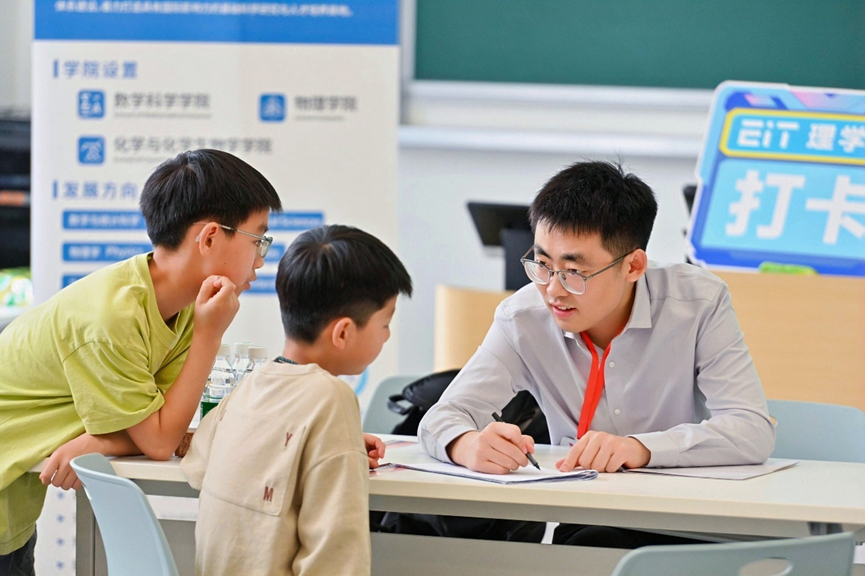
Dr. Fukeng Huang explaining the beauty of prime numbers to elementary school students
In the lobby of the Teaching and Laboratory Building, the three colleges — Science, Engineering, and Information Science and Technology — set up information booths.
"What is the difference between artificial intelligence and electronic science and technology?"
"Where will materials science be applied in the future?"
"How demanding is the first-year curriculum in terms of math and science fundamentals?"
Professors and upper-year students stepped out of lecture halls and laboratories. Using cutting-edge research examples and vivid analogies, they answered visitors' questions and clearly illustrated EIT's disciplinary strengths and distinctive approach.
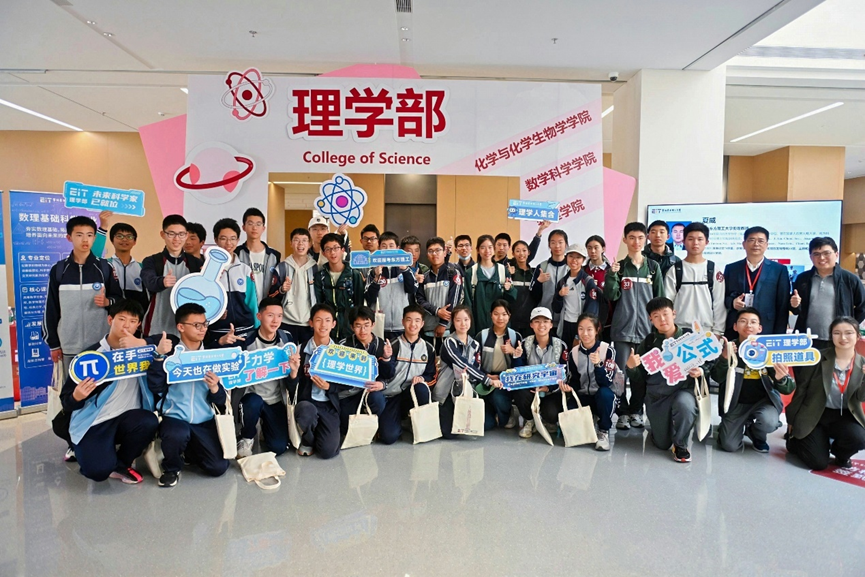
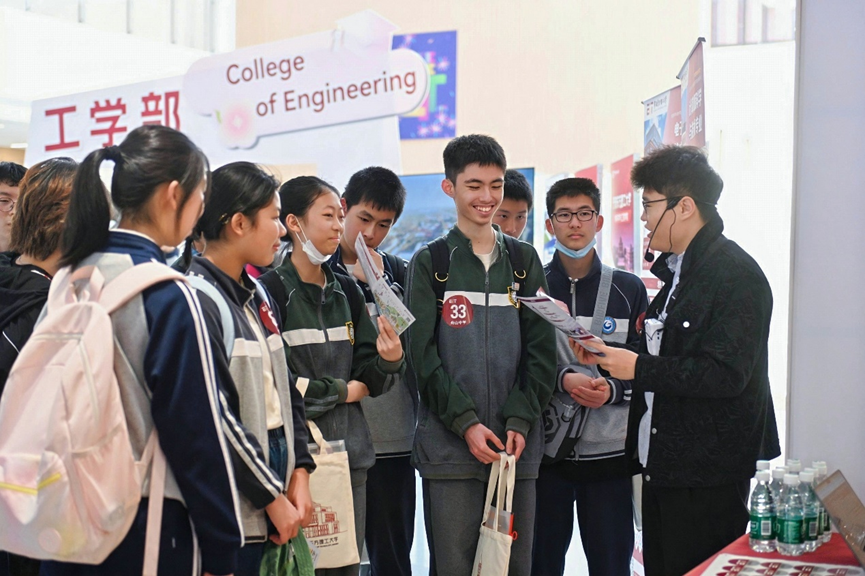
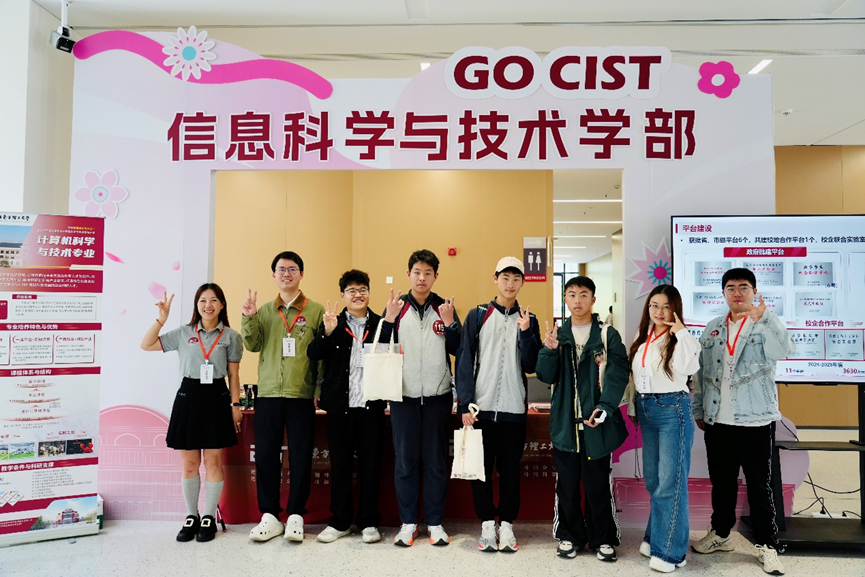
Booths of the three colleges
"I used to think academicians only appeared in the news or in top journals," said Li, a high school sophomore buzzing with excitement after his consultation. "But the professor told me that if I get in, an academician might actually teach my first-year class. At that moment, I felt science had never been closer to me."
Up Close with Robots and Drones – Quietly Planting Seeds of Science
EIT's appeal lies not only in the depth of its ideas, but also in its ability to turn cutting‑edge technology into something tangible and real.
Outside Room 110 of the Teaching Laboratory Building, a long line snaked to the main entrance, while inside, bursts of exclamation broke out from time to time. Two undergraduate students took turns controlling a robot via a tablet — making it "run," "kick a ball," and "shoot." In another hall, a nimble robot dog that could move, jump, and roll over drew a crowd of enthusiastic visitors, who raised questions and interacted with it.
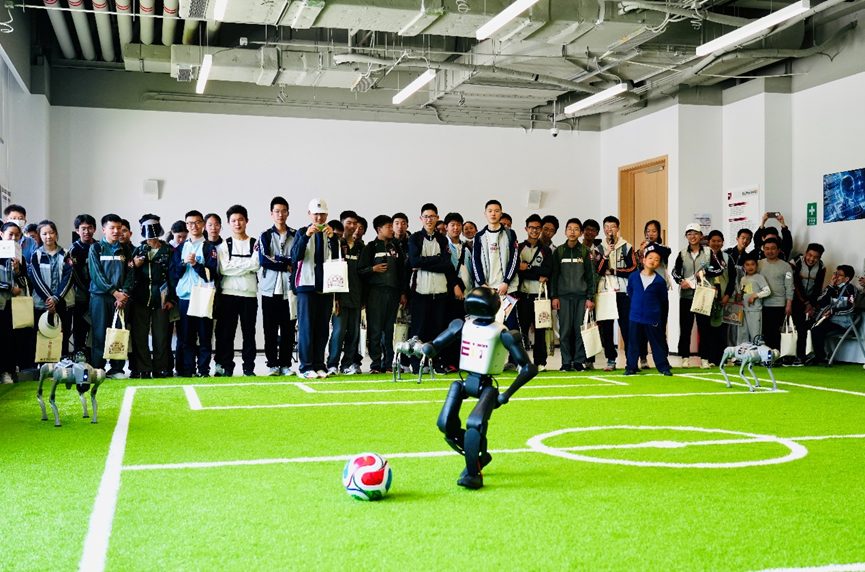
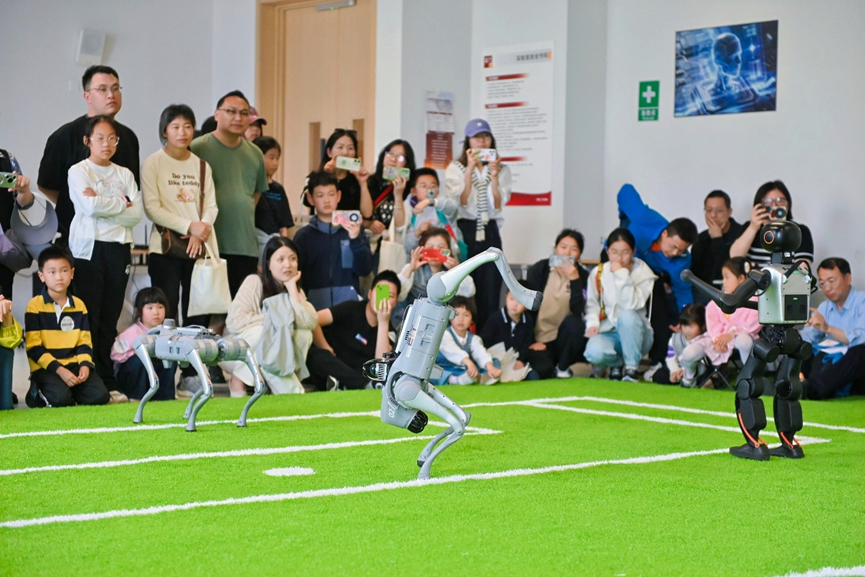
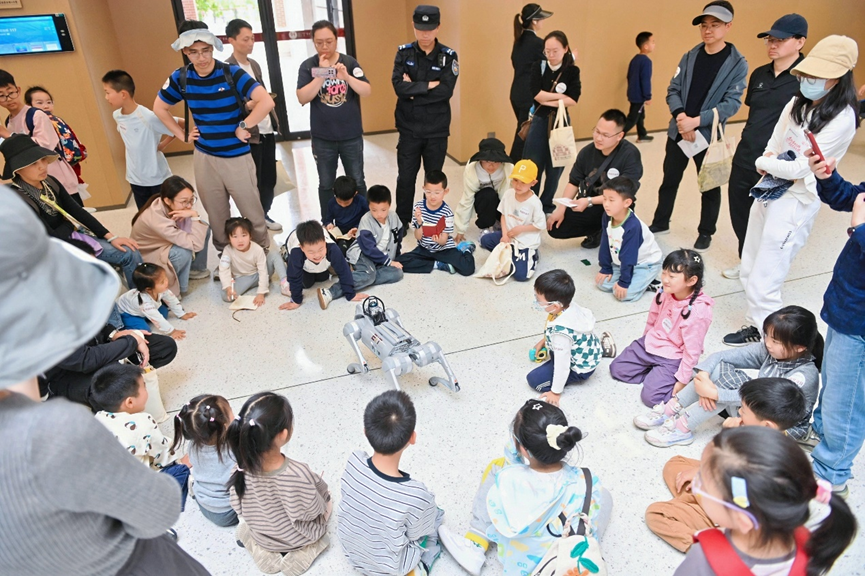
Robot and robot dog interaction zone
Nearby, in the lobby of the Zheng Jian and Gong Lihong Building, the Low‑Altitude Economy exhibition brought the future city into view. Arrays of industry‑development drones stood in neat formation, while a simulation and training system displayed virtual aircraft navigating through digital twins of urban buildings. A large screen broadcast a live aerial view of the campus, offering visitors a birds‑eye perspective of the beautiful grounds.
Often, the seeds of science are quietly planted through such direct, hands‑on interaction.
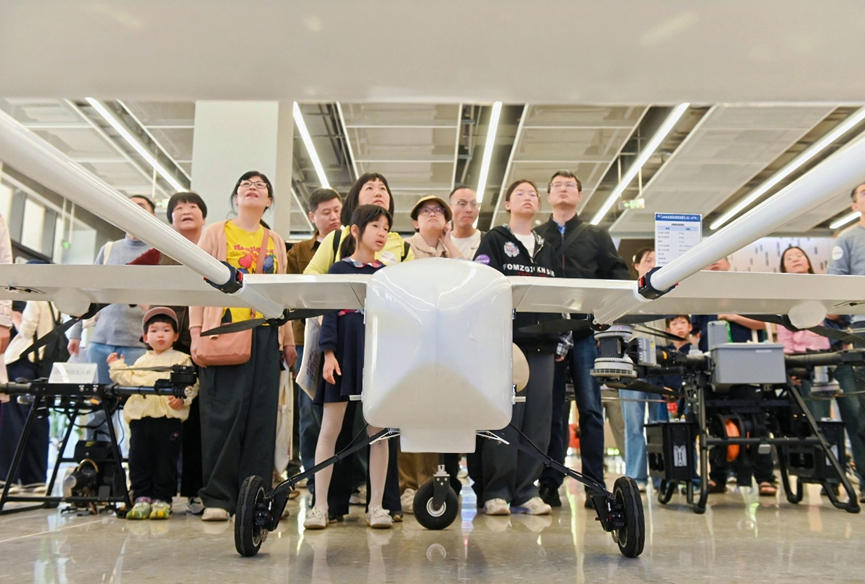
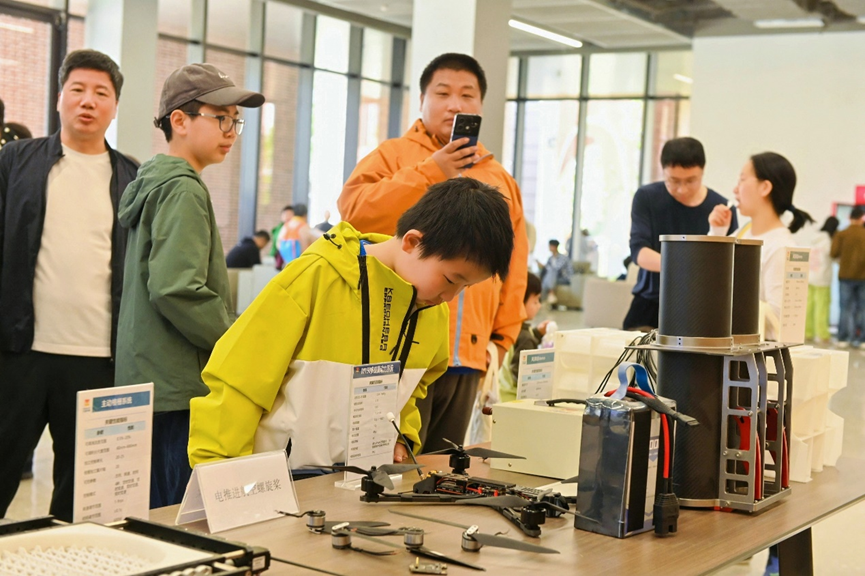
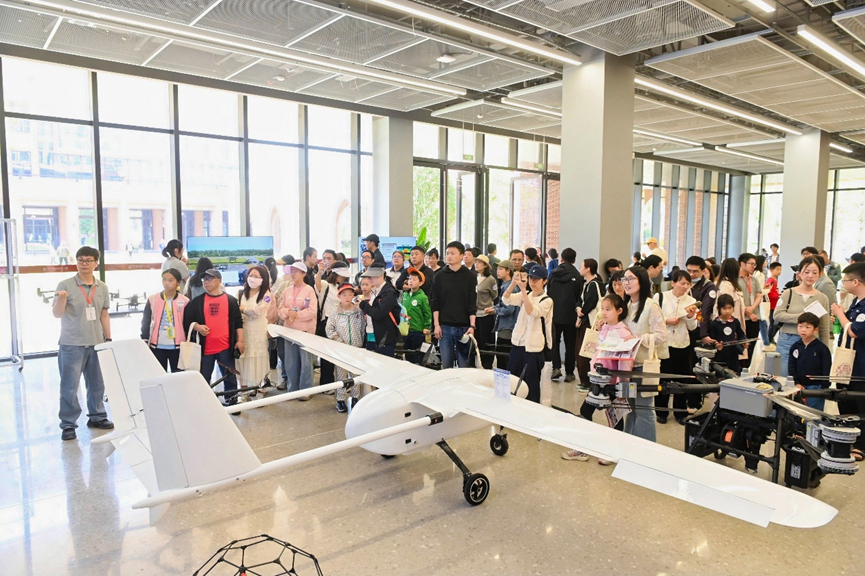
Low‑Altitude Economy exhibition zone
Sports and the Arts – Youth in a Thousand Ways
Beneath its science and technology, EIT is infused with the humanities and a vibrant energy.
At the Student Center, an experience‑sharing session featured upper‑year students recounting how their mentors had personally guided them into the laboratory, as well as light‑hearted stories of forming clubs within the residential college system. At the club fair, a band's drumbeats and gentle melodies intertwined, showcasing a lively campus culture beyond academics.
Experience-sharing session from upper-year students
Inside the gym, fencing tryouts proved surprisingly popular. With professional coaches on hand, many beginners experienced fencing for the first time. Outside, the crisp sound of pickleball paddles striking balls rang out continuously. Behind those sweaty figures lay EIT's earnest commitment to "one hour of exercise per day." Here, sports are not just about physical fitness; they are a "required course" for building resilience and teamwork.
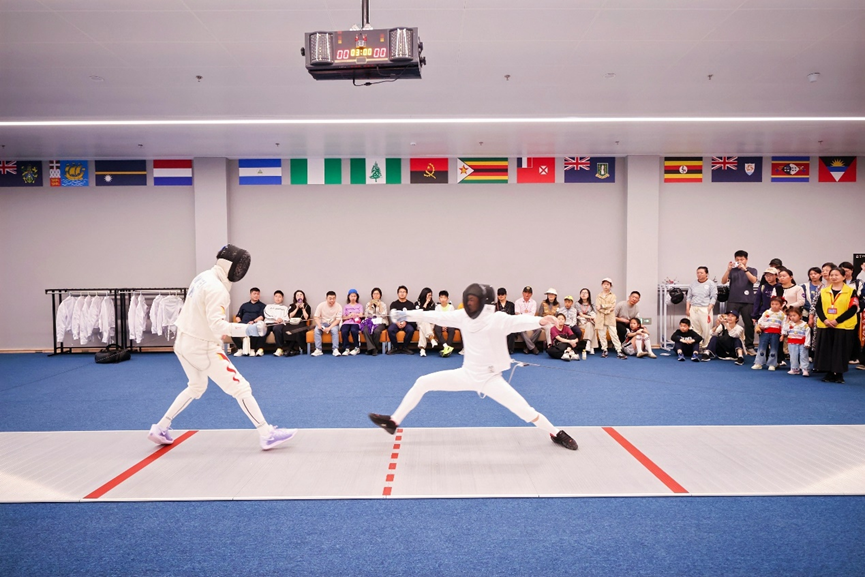
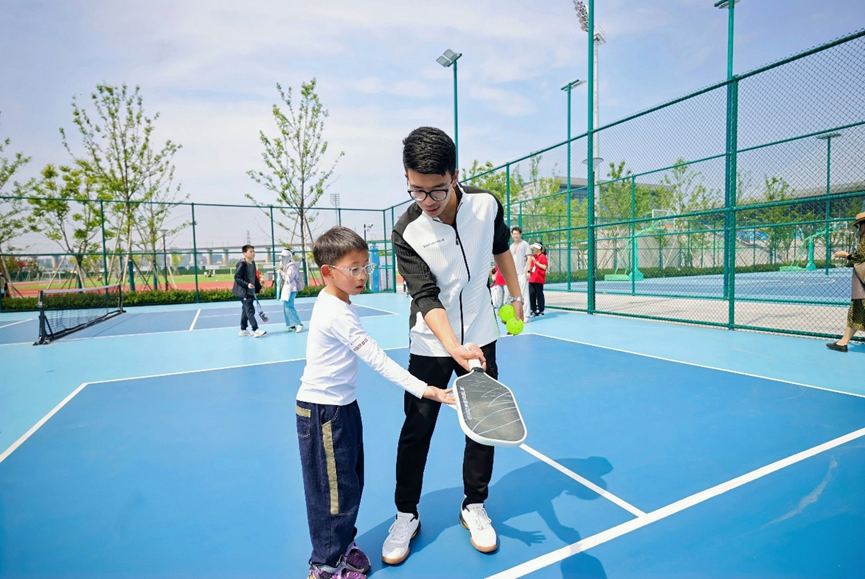
Fencing and pickleball tryouts
Following campus tour groups, visitors walked into the student dormitories, where the residential college system became tangible. Here, living and learning blend into each other. Students from different majors interact and exchange ideas, together creating an entirely new campus ecology. Curious high schoolers saw, beyond examination papers, the thousand possible faces of youth.
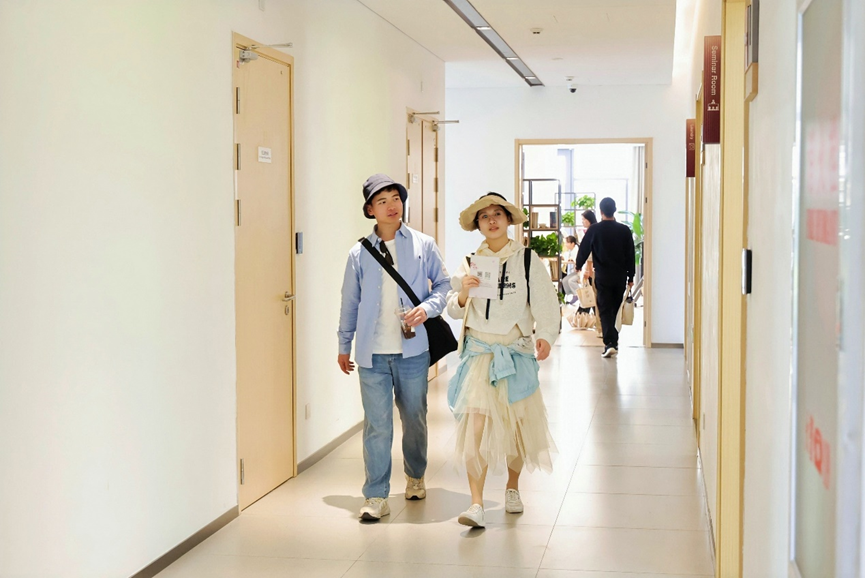
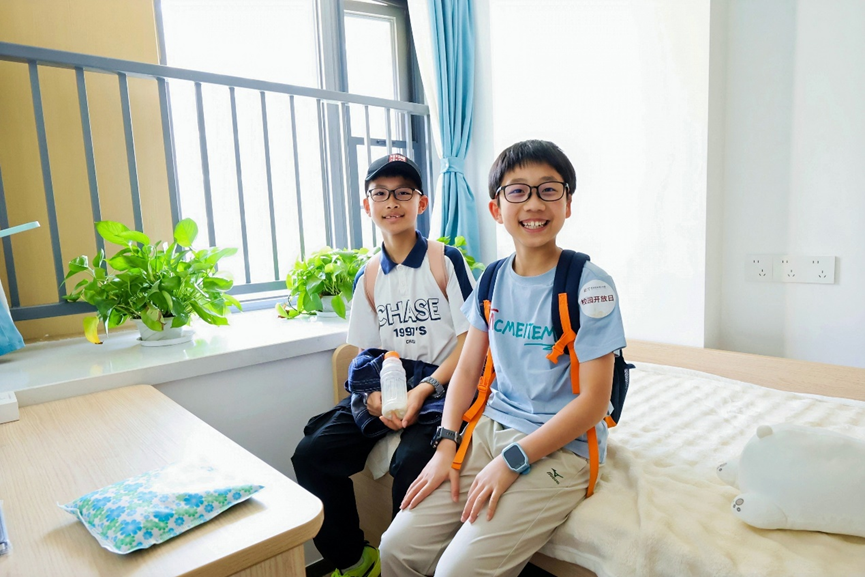
Residential college visit
As the bustling crowd gradually dispersed, the numbers told the story:
3,671 families registered
Nearly 10,000 visitors on campus
In this carefully planned first look, EIT presented a vivid picture of itself to every visitor — through candid academic exchanges, state‑of‑the‑art research facilities, and vibrant campus life.
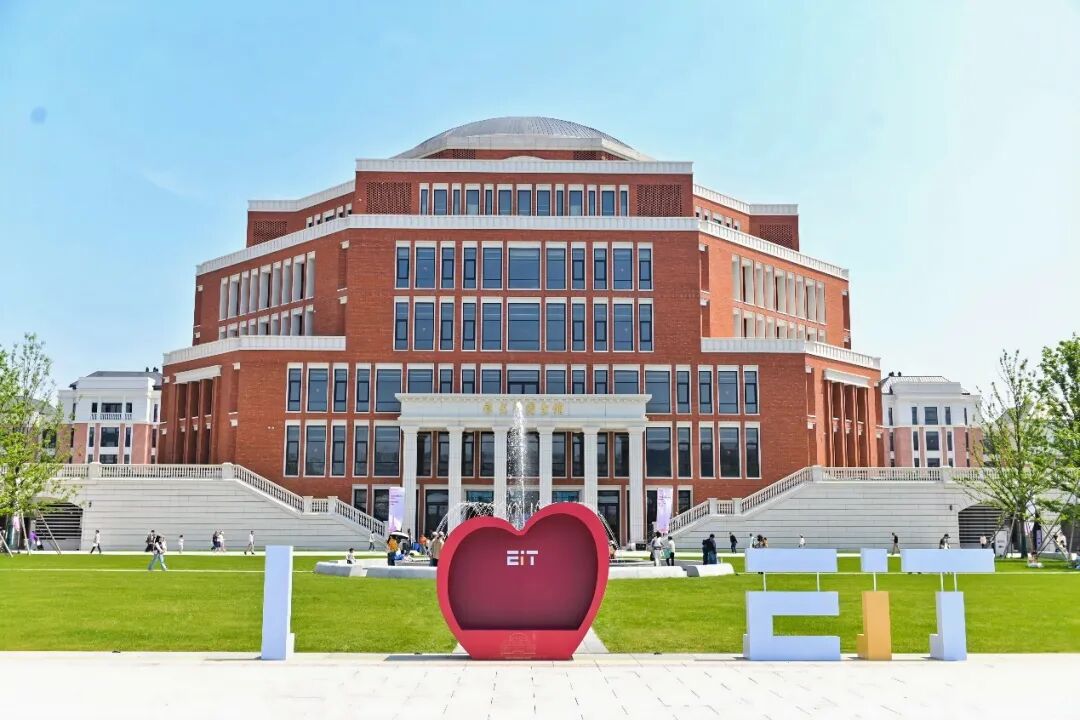
Thank you to everyone who stepped into EIT that day. May all the seeds of science and the future planted this spring bear the fruit of relentless inquiry in the September breeze.
EIT looks forward to seeing you again soon.