Invisible Groundwater, Visible Scientific Dialogue
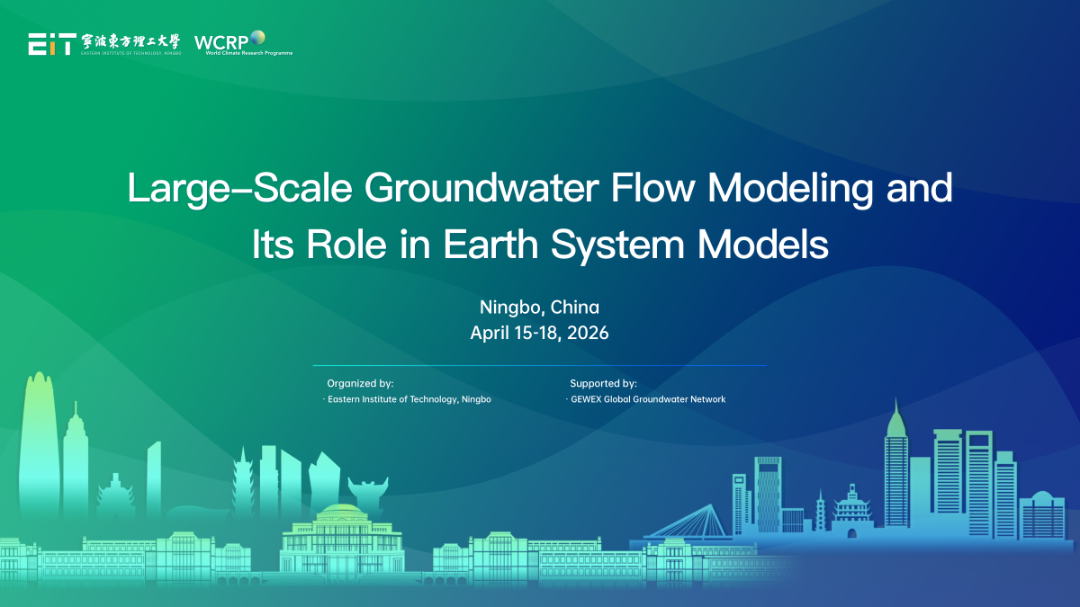
An international high-level symposium on "Large-Scale Groundwater Flow Modeling and Its Role in Earth System Models" was recently held successfully at the Eastern Institute of Technology, Ningbo (EIT). The symposium was hosted by EIT and received support from the Global Groundwater Network (GGN) of the Global Energy and Water Exchanges (GEWEX).
Leading experts from around the world in hydrology, environmental science, and Earth system science gathered at EIT to engage in in-depth discussions on the critical role of groundwater processes in Earth system models and related frontier scientific questions.
Professor Chunmiao Zheng, Vice President of EIT, chaired the symposium and delivered opening remarks. He noted that holding this symposium in Ningbo—a city whose character is shaped by water—carries special significance. As a new type of research university defined by its "High-Caliber Foundation, Compact yet Distinguished, Research Oriented, and Globally Engaged" principle, EIT demonstrated, through this high-level symposium, its proactive commitment to building an international academic exchange platform and catalyzing breakthroughs on key scientific questions in Earth system science and sustainability.
The symposium focused on international research frontiers, centering on the latest advances in large-scale groundwater flow modeling, numerical representation methods for groundwater–surface water interactions, and the coupling mechanisms between groundwater processes, land surface processes, and the climate system. Important research directions such as multi-scale data fusion and parameterization methods were also addressed, along with the application prospects of emerging technologies—including data assimilation and high-performance computing—in groundwater modeling.
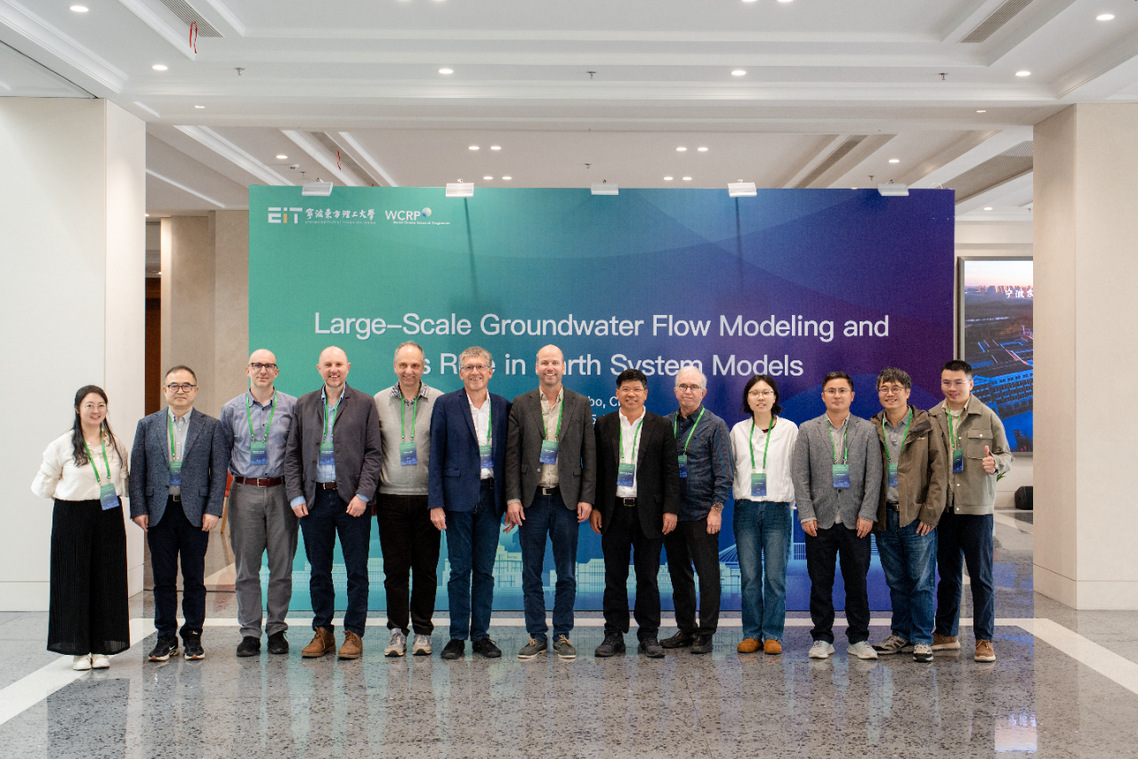
Participating experts
A number of internationally renowned scholars delivered invited talks. Professor Stefan Kollet of Forschungszentrum Jülich, Germany, elucidated the redefined role of groundwater in Earth system models from a global perspective. Professor Qiuhong Tang of Tsinghua University analyzed pathways to improve the representation of groundwater processes in Earth system models. Professor Ling Li of Westlake University discussed the critical role of groundwater in coastal zone systems in the context of climate change. Professor Graham Fogg of the University of California, Davis, explored the use of regional models in the evaluation of continental-scale models. Professor Okke Batelaan of Flinders University, Australia, examined the impact of hydrogeological conceptual uncertainty on simulation outcomes. Professor Steffen Birk of the University of Graz, Austria, provided an in-depth analysis of the intrinsic linkages among water-table fluctuations, soil water flux, and agricultural irrigation.
Dr. Alan Macdonald, a researcher at the British Geological Survey, shared technical and practical experiences in large-scale groundwater flow modeling, drawing on case studies of groundwater models from Africa and South Asia. Professor Xiaodong Zeng of the Institute of Atmospheric Physics, Chinese Academy of Sciences, presented the development of the CAS-ESM Earth system model and its application in global climate and environmental simulations. Professor Zhenzhong Zeng of the Southern University of Science and Technology highlighted deficiencies in how current Earth system models represent ecohydrological processes and stressed the necessity and urgency of adequately representing groundwater processes in these models. Other participating experts also shared their latest research findings on groundwater observation, model development, and Earth system simulation.
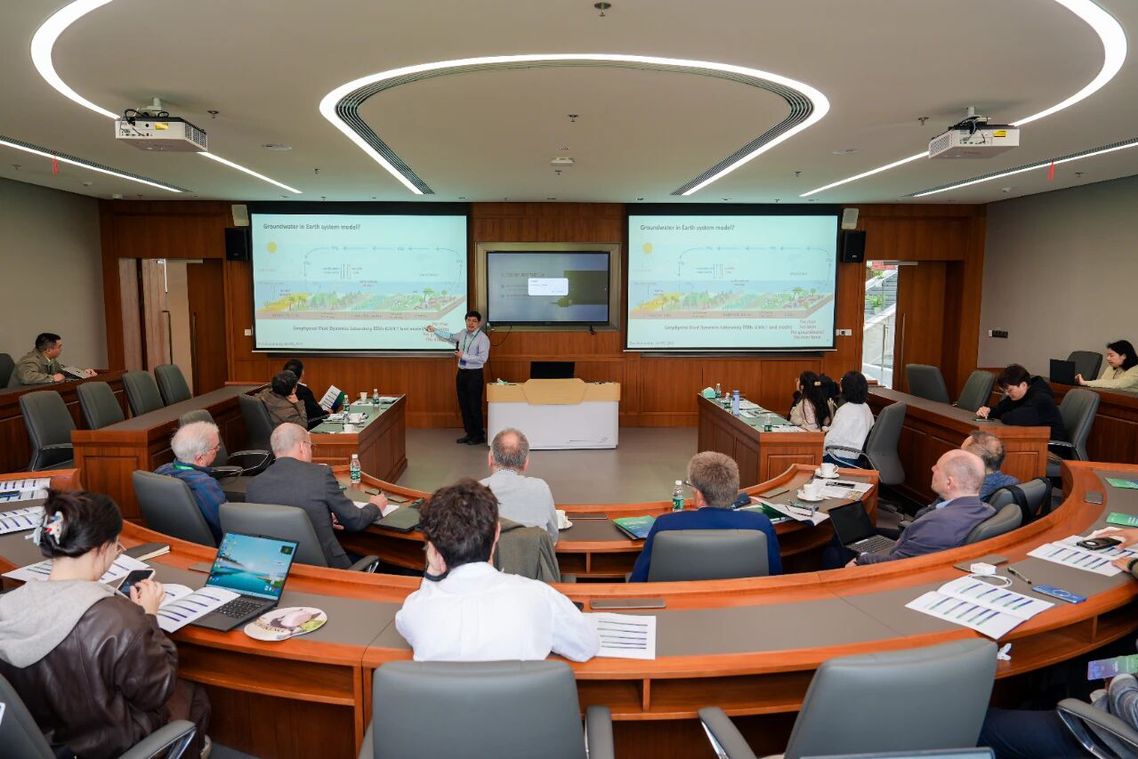
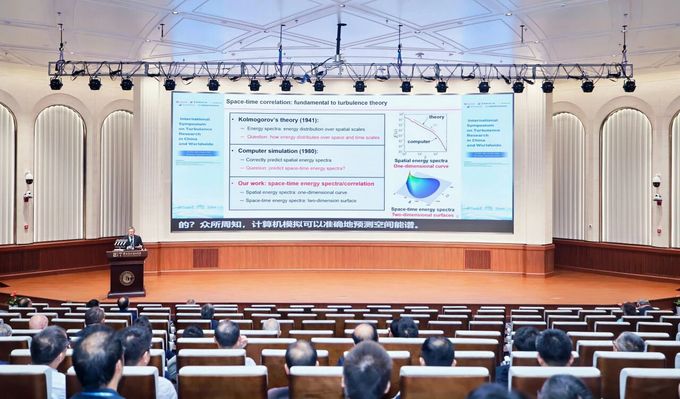
Symposium presentations
The participating experts reached a consensus that groundwater is a critical nexus linking the Earth's water cycle, ecosystems, and climate system. However, the representation of groundwater processes in current mainstream Earth system models remains inadequate, and the coupling accuracy needs to be improved. Strengthening multi-scale groundwater modeling and interdisciplinary integration research, and promoting the synergistic development of hydrology, atmospheric science, and Earth system science, are of great scientific significance and practical value for enhancing climate change prediction capabilities and supporting the sustainable management of global water resources.
This symposium will provide new scientific insights for global groundwater process modeling and Earth system model optimization, and will lay a solid foundation for advancing medium- and long-term international joint research initiatives and collaborative agendas.
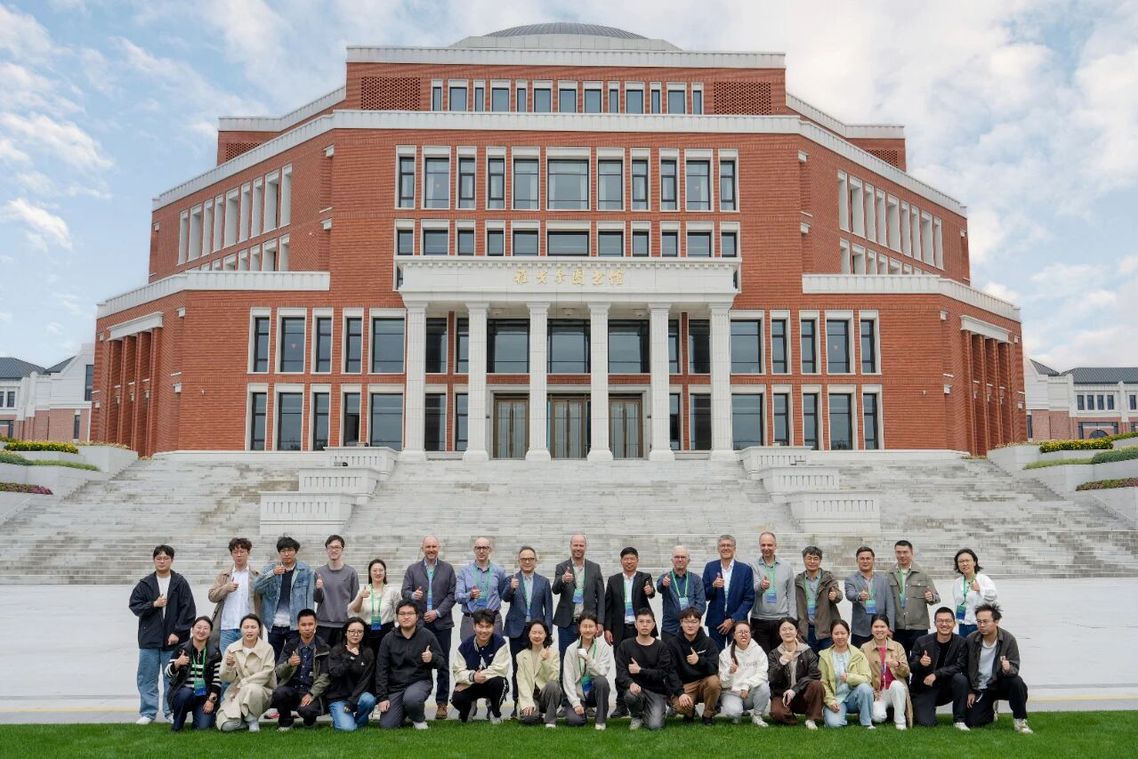
All participants