Recently, the Times Higher Education (THE) Asia Universities Summit 2026 was held in Hong Kong, China. Professor Shiyi Chen, President of the Eastern Institute of Technology, Ningbo (EIT) and Member of the Chinese Academy of Sciences, was invited to attend the summit. He attended the presidents' closed-door roundtable themed "Shaping next-generation cities," engaging in in-depth discussions with international university leaders.
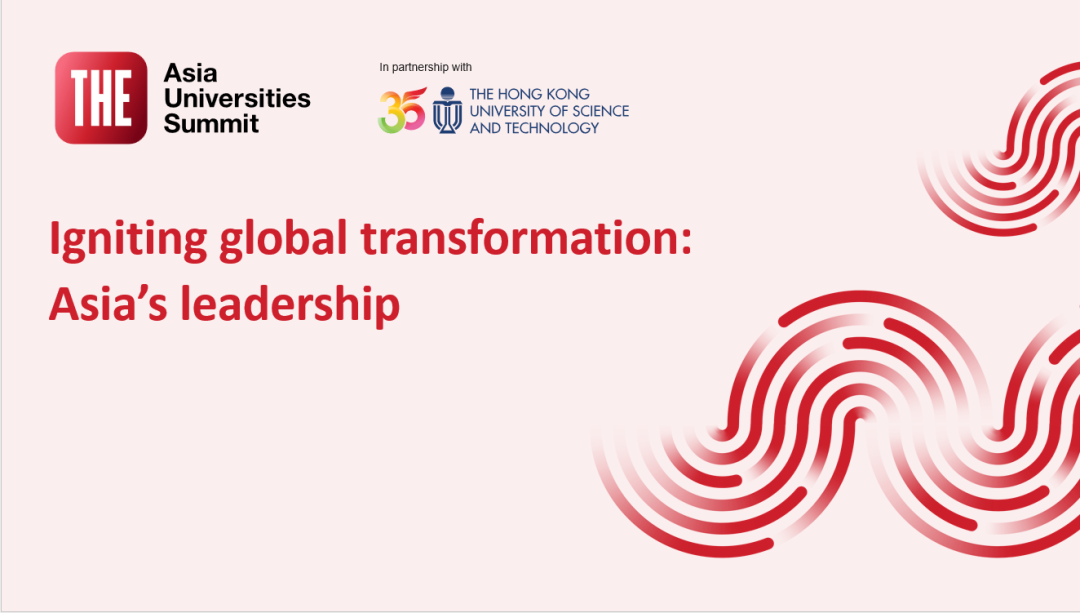
Co-hosted by THE and the Hong Kong University of Science and Technology (HKUST), this year's summit carried the theme "Igniting global transformation: Asia's leadership." The event brought together over 600 delegates from more than 200 universities and institutions worldwide, including many renowned university presidents and key figures in higher education.
During the roundtable, President Shiyi Chen shared EIT's explorations and practices on "the two-way empowerment between university and city." He noted that universities are increasingly integrating into urban innovation systems, becoming key engines driving technological progress and industrial development, and forming deep synergies with cities in areas such as scientific innovation, industrial upgrading, and talent cultivation.
President Shiyi Chen articulated a path of "high alignment" between university and urban development: EIT adheres to the principle of being a "High-Caliber Foundation, Compact yet Distinguished, Research Oriented, and Globally Engaged" institution. The institute focuses on fundamental research and cutting-edge interdisciplinary fields, continuously strengthening its capacity for original innovation. At the same time, Ningbo's solid industrial base and open, inclusive urban environment provide robust support for the translation of research outcomes and global collaboration. The deep alignment between EIT and Ningbo in terms of development goals and innovation needs has given rise to a positive, synergistic pattern of mutual progress.
It is reported that EIT, through the development of high-level research platforms, international talent recruitment, and innovative mechanisms for university-local government collaboration, is actively exploring an integrated pathway of "driving urban innovation through the university and empowering university development through the city." This offers a valuable model for the synergistic development of new-type research universities and their host cities.
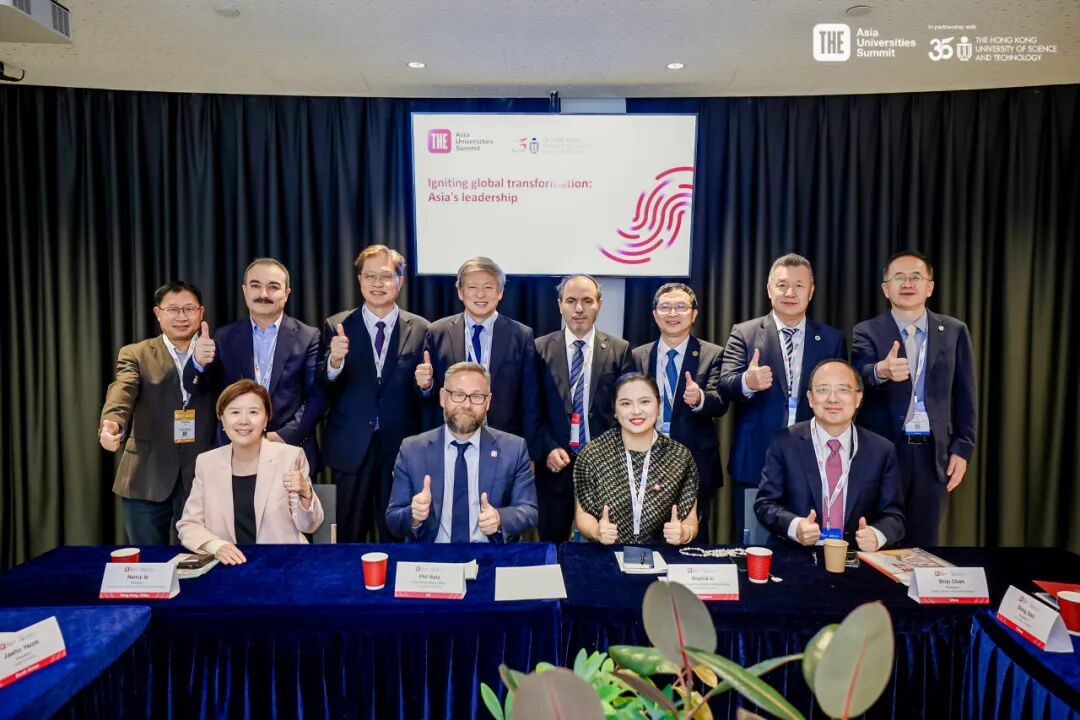
Group photo
During the summit, President Shiyi Chen held a productive discussion with Professor Nancy Y. Ip, President of HKUST, on the development of high-level universities and their future trajectories. They engaged in constructive discussions on several topics, including institutional strategies, pathways to internationalization, strategies for enhancing global impact, and the structuring and distinctive development of academic disciplines. They reached a positive consensus on expanding mutual learning and deepening collaborative opportunities, expressing a shared vision to strengthen communication and coordination and to promote joint development. Professor Chuanwu Xi, Vice Provost for Global Engagement of EIT, also attended the meeting.
Openness is a distinctive hallmark of educational modernization, and international influence is a defining attribute of a world-class new-type research university. EIT remains firmly committed to a global orientation in its operations, deepening exchanges and cooperation with world-leading universities, research institutions, and international organizations, and striving to create a high-level, open global presence.