On July 28, the signing ceremony for the cooperation agreement on a Doctor of Engineering programme between the Graduate School of the Eastern Institute of Technology, Ningbo (EIT) and the Department of Systems Engineering at City University of Hong Kong (CityUHK) was held at EIT.
Under the agreement, the Entrepreneur Tech Innovation Doctorate Program at the Graduate School of EIT and the Doctor of Engineering programme in the Department of Systems Engineering at CityUHK will operate independently while maintaining close coordination. Students who enroll in EIT's Entrepreneur Tech Innovation Doctorate Program will be awarded a Doctor of Engineering degree by CityUHK upon meeting the graduation requirements.
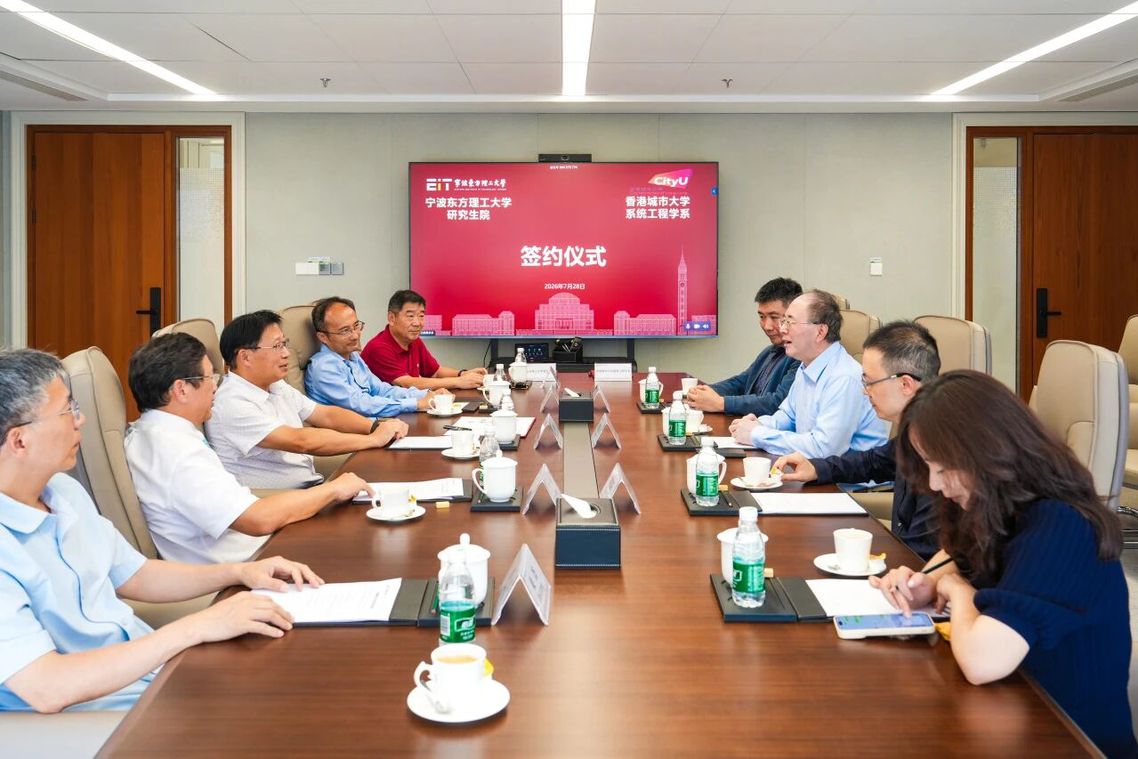
The Signing Ceremony
Professor Jingshan Li, Head of the Department of Systems Engineering at CityUHK, led a delegation to EIT. Professor Chuanwu Xi, Vice Provost for Global Engagment of EIT, and Professor Ping Wang, Deputy Dean of the Graduate School of EIT, together with other relevant colleagues, attended the ceremony. The event was presided over by Professor Chuanwu Xi.

Address by Professor Jingshan Li
Professor Jingshan Li introduced CityUHK's strong engineering heritage, the strengths of its Department of Systems Engineering, and its well-developed Chinese-medium Doctor of Engineering programme. He expressed strong expectations for the collaboration and hoped that this collaborative Ph.D programme would serve as a bridge to advance diverse cooperation between the two institutions, including faculty exchanges and joint research initiatives.
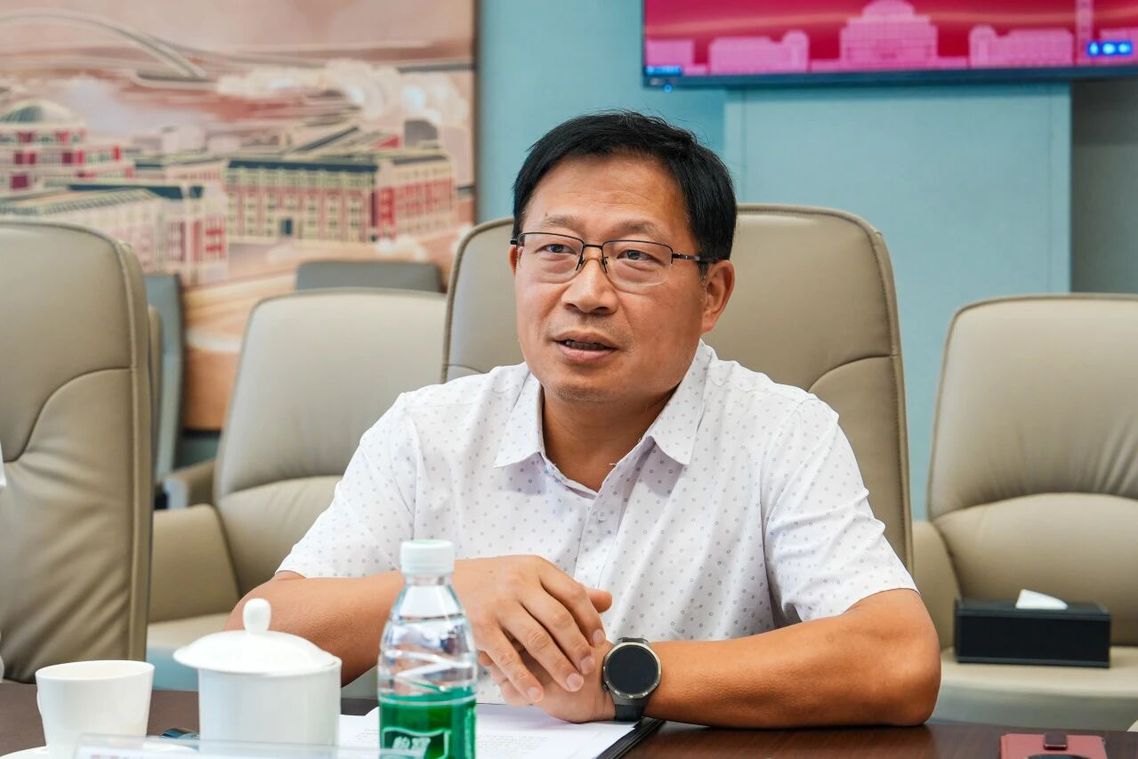
Address by Professor Chuanwu Xi
Professor Chuanwu Xi introduced EIT's institutional positioning, its strategic layout of six major disciplines, and its achievements in industry–education integration. He noted that this cooperation opens an international advanced-study pathway for senior industry executives. By leveraging Ningbo's strong industrial base and Hong Kong's global education platform, the programme aims to cultivate leading scientific and technological innovators who combine hands-on industrial experience, a forward-looking perspective on cutting-edge technologies, and rigorous research capability, thereby supporting the high-end and intelligent transformation of the regional manufacturing industry.
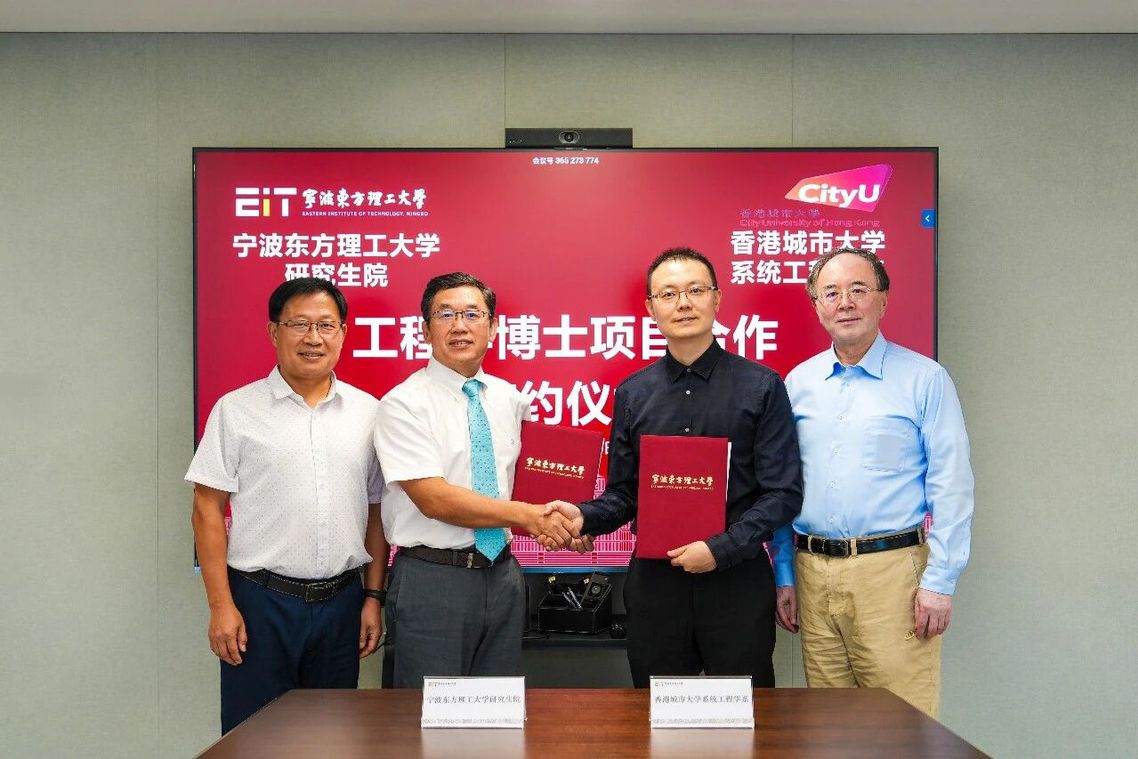
The Signing Ceremony
Professor Ping Wang, Deputy Dean of the Graduate School of EIT, and Professor Siyang Gao, Associate Head of the Department of Systems Engineering at CityUHK, signed the cooperation agreement on behalf of their respective institutions. Professor Jingshan Li and Professor Chuanwu Xi witnessed the signing.
According to the cooperation agreement, students admitted to EIT's Entrepreneur Tech Innovation Doctorate Program who pass the admission interview conducted by the Department of Systems Engineering at CityUHK will be eligible to enroll in the Doctor of Engineering programme at CityUHK. The training will be divided into two stages: students first complete industry-oriented modular courses in Ningbo, and then proceed to Hong Kong to take doctoral courses and complete their degree research. Upon earning all required credits and meeting the graduation standards, they will be awarded a Doctor of Engineering degree by City University of Hong Kong. The programme will enroll five successive cohorts beginning in the 2026/27 academic year.
Following the signing ceremony, the two sides held in-depth discussions on programme admissions and operations, cross-institutional faculty collaboration, and long-term research cooperation.
This collaboration draws on the distinctive resources of Ningbo and Hong Kong, leveraging their complementary strengths and shared educational goals. Ningbo, one of China's leading cities in manufacturing "single-category champion" enterprises, hosts a broad array of advanced manufacturing industries and a substantial pool of senior industry executives and technical leaders. The Graduate School of EIT offers a two-year Entrepreneur Tech Innovation Doctorate Program whose modular curriculum is built around four pillars—industrial frontiers, science and innovation strategy, innovative enterprises, and engineering management—providing local industry professionals with a structured pathway for advanced study. Meanwhile, the Department of Systems Engineering at CityUHK, leveraging Hong Kong's position as an international innovation and technology hub, has developed a well-established Doctor of Engineering programme tailored to industry managers. The two universities share closely aligned goals in talent development.
This signing is an important step for EIT in deepening Ningbo–Hong Kong collaboration in high-level talent development and advancing its internationalization efforts. Going forward, the university will continue to strengthen educational and research collaboration with leading universities and departments in Hong Kong, develop a model for cross-regional engineering talent cultivation based on local industrial strengths, and provide a steady supply of outstanding innovative talent for the high-quality development of hard-tech industries.