From the age-old practice of chicken feathers for sugar to the cluster-based block economy, from specialized wholesale markets to modern industrial clusters, and from manufacturing to intelligent manufacturing and ultimately to creating intelligence, Zhejiang's private economy has gone from strength to strength through successive waves of industrial transformation. In 2025, a total of 107 enterprises from the province made the list of China's Top 500 Private Enterprises, placing Zhejiang first in the country for the 27th consecutive year.
How have the Zheshang—Zhejiang's merchants and entrepreneurs—managed to break through repeatedly and retain their vitality as the times have changed? And what lessons can their development experience offer for university reform in the era of artificial intelligence?
On the afternoon of October 15, the fourth session of the EIT Lecture Series (Entrepreneurs Edition) was held as scheduled. Guohui Zhou, President of the Zhejiang Provincial Federation for Science Popularization, President of the Zheshang Development Research Institute, and Specially Appointed Expert of the China Industry-University-Research Institute Collaboration Association (CIUR), delivered a keynote address titled Reflections on the "Reflections on Zheshang and Zheshang Studies: University Reform in the AI Era."
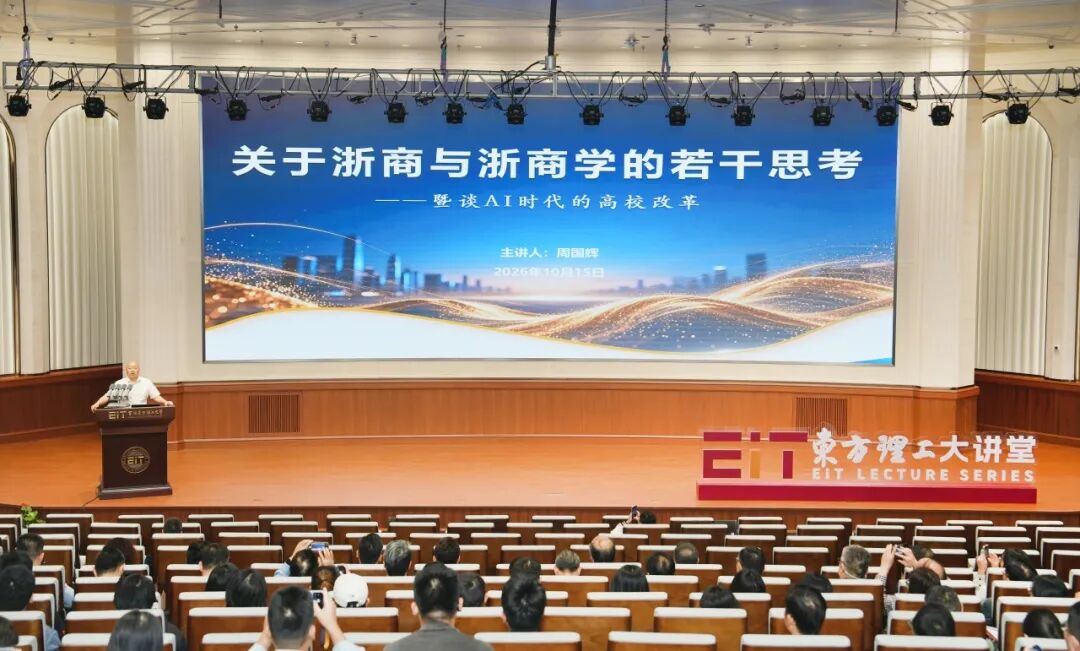
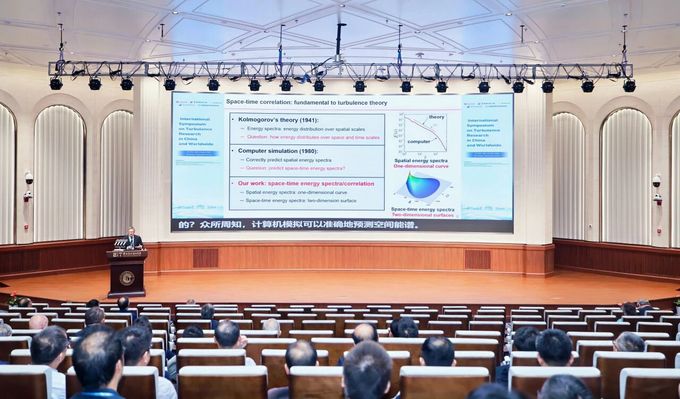
At the lecture venue
Grounded in the soil of Zhejiang's commercial civilization, the lecture retraced the thousand-year lineage of the Zheshang, confronted the challenges posed by the wave of artificial intelligence, and offered a panoramic reflection on the construction of a homegrown business scholarship and the transformation of higher education in the AI era.
Carrying Forward the Zheshang Spirit and Advancing Industry-Education Integration
"Chairman Guohui is a native of Ningbo, and a firsthand witness, practitioner, and observer of Zhejiang's advances in science and technology, innovation, and the private economy," said Prof. Shiyi Chen, President of the Eastern Institute of Technology, Ningbo (EIT), and Member of the Chinese Academy of Sciences, in his remarks, extending a warm welcome and thanks to Zhou.
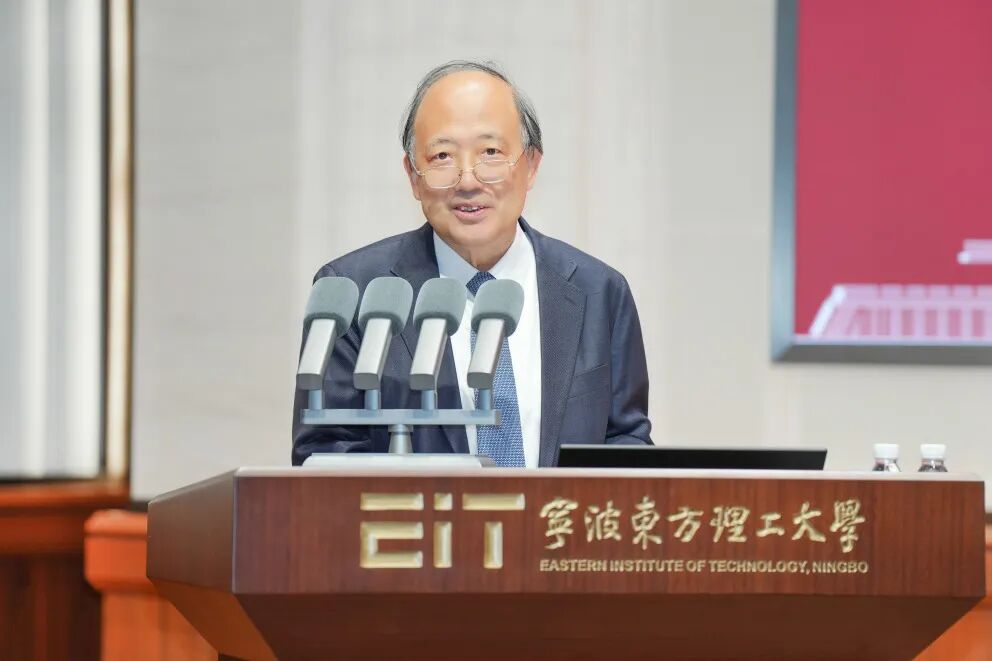
Remarks by President Shiyi Chen
President Chen noted that EIT is a research-intensive private university run by board of trustees. EIT is committed to cultivating, in the AI era, "scientists with an entrepreneurial mindset" and "entrepreneurs grounded in scientific rigor". Zhou has actively championed the innovative vision of building a high-quality scientist-plus-entrepreneur community—an idea that resonates closely with EIT's talent-cultivation mission.
"Cracking the cultural code behind the Zheshang will also help our faculty and students understand industry-education integration and seize the opportunities of the AI era." This was both the central theme of the lecture and a vivid reflection of the Institute's close attention to aligning with industrial needs and empowering local innovation.
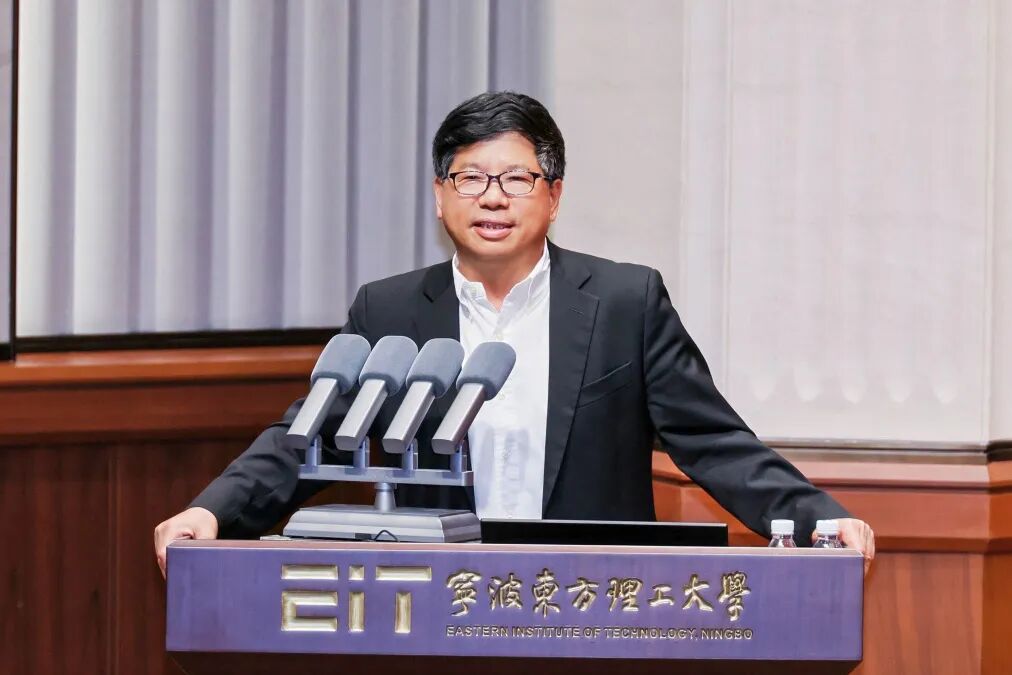
Prof. Chunmiao Zheng hosting the lecture
The lecture was hosted by Prof. Chunmiao Zheng, Vice President and Chair Professor of EIT, and organized by the Office of Global Engagement.
Zheshang Studies: Culture as the Soul, Business as the Substance
Opening his report, Zhou went straight to the entirely new proposition of Zheshang Studies. He argued that the Zheshang are one of the most representative communities of private entrepreneurs to emerge over the more than four decades of reform and opening up, and that Zheshang Studies is a homegrown, comprehensive body of business knowledge now taking shape—China's first independent endeavor in business scholarship focused on a contemporary regional community of private entrepreneurs.
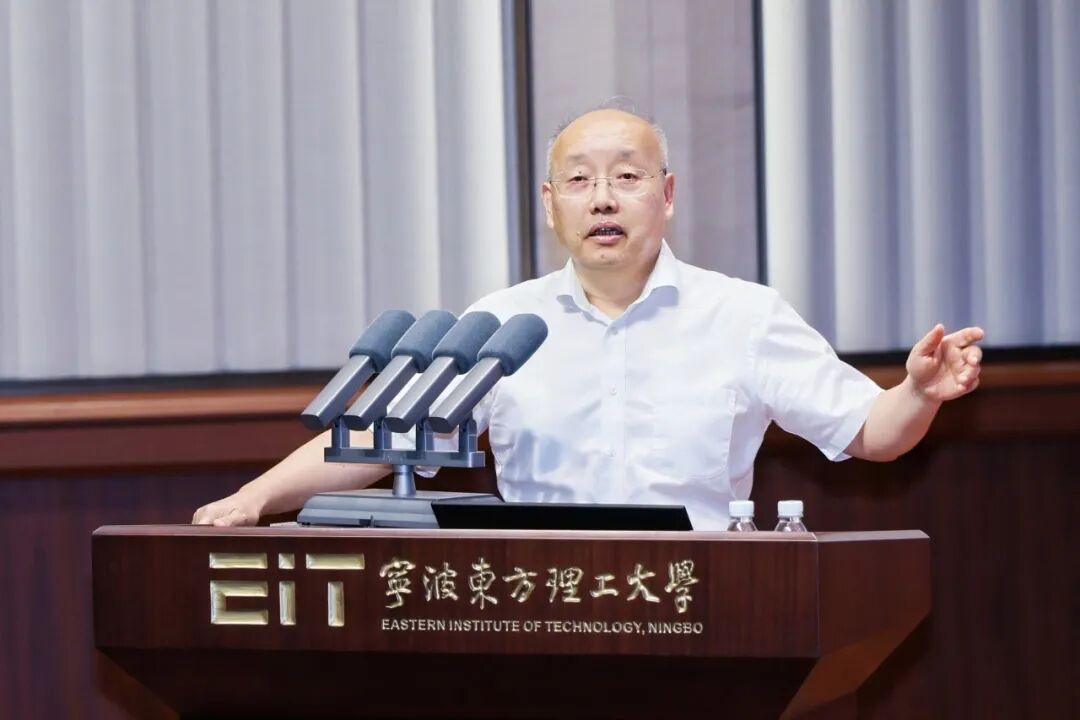
Guohui Zhou at the lecture
"The Zheshang are not merely an economic concept; they are, above all, a cultural concept."
For Zhou, the Zheshang's business wisdom is a living example of the Eastern way of doing business. Drawing on the distinctive spatial logic of the sweet potato economy, Zhejiang entrepreneurs at home and abroad spread their vines outward while feeding their roots back home, creating a two-way, mutually reinforcing flow between the local and the global.
To build Zheshang Studies is to distill homegrown theory from the wealth of real-world business practices across Zhejiang, break the Western monopoly on business discourse, and develop a paradigm of commercial civilization with Chinese characteristics.
University Reform in the AI Era
Turning to higher education as the AI wave sweeps through it, Zhou posed two defining questions for our era. As AI makes knowledge readily available to everyone, universities face both a crisis of value and a crisis of capability: when knowledge can be acquired so quickly and easily, what makes the university irreplaceable? And if graduates can only do the work that AI is capable of doing, where will their core competitiveness lie?
"University reform in the AI era is by no means simply a matter of adding an AI course. It requires a full-scale redesign of educational goals, curricula, teaching methods, and assessment systems."
Zhou proposed that curricula should place greater emphasis on general education and higher-order learning and be continually updated, with classroom time shifting toward critical discussion and hands-on, project-based work. Teachers, in turn, must evolve from porters of knowledge into intellectual guides and catalysts for inquiry, embracing a new model of human–AI co-learning.
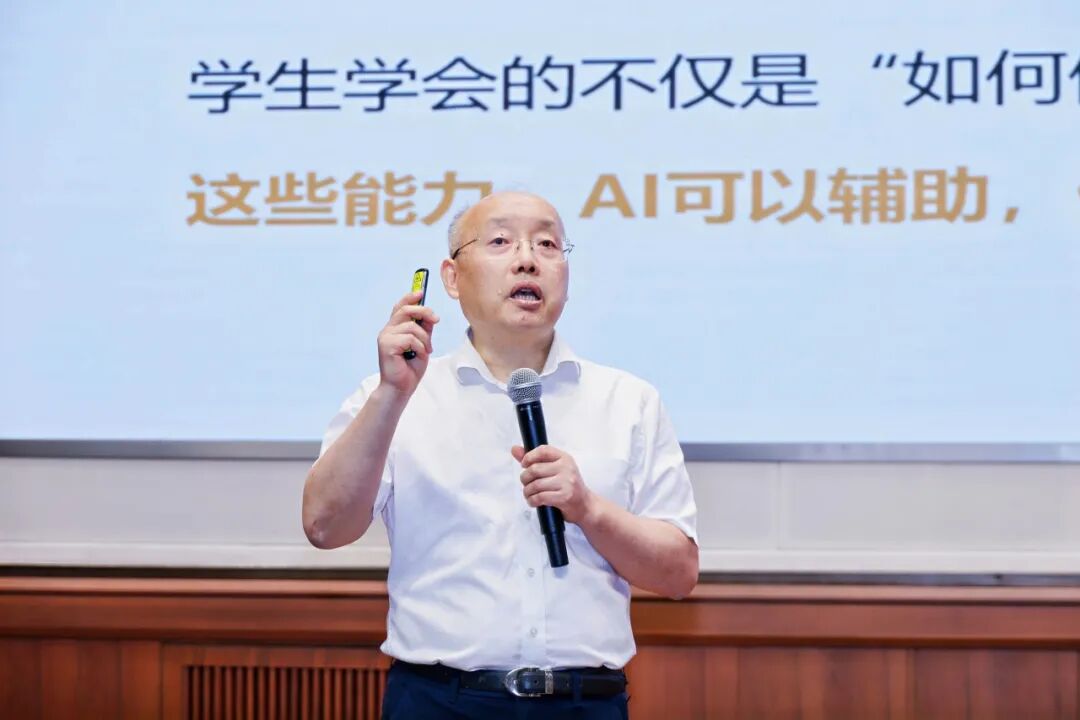
Guohui Zhou at the lecture
"What students must learn is not only how to do things, but how to conduct themselves, how to think, and how to create. These are capacities that AI can assist with but can never replace."
"EIT itself is a living embodiment of where the Zheshang spirit, industrial transformation, scientific and technological innovation, and institutional innovation converge," Zhou concluded. He suggested that the university draw strength from the Zheshang ethos of pragmatism, innovation, and openness, experiment with building an AI-native university, and turn the campus into a training ground for thinking, a space for values formation, and an incubator for innovation—thereby forging a distinctive path of its own.
Exchange and Inspiration
"What differences are there between the new generation of Zheshang and the older generation?" "What new opportunities and challenges do the Zheshang face in taking their businesses overseas?"
Faculty and students in attendance asked questions enthusiastically, and Zhou answered with rich examples drawn from Zhejiang's private economy, in a lively session of intellectual exchange.
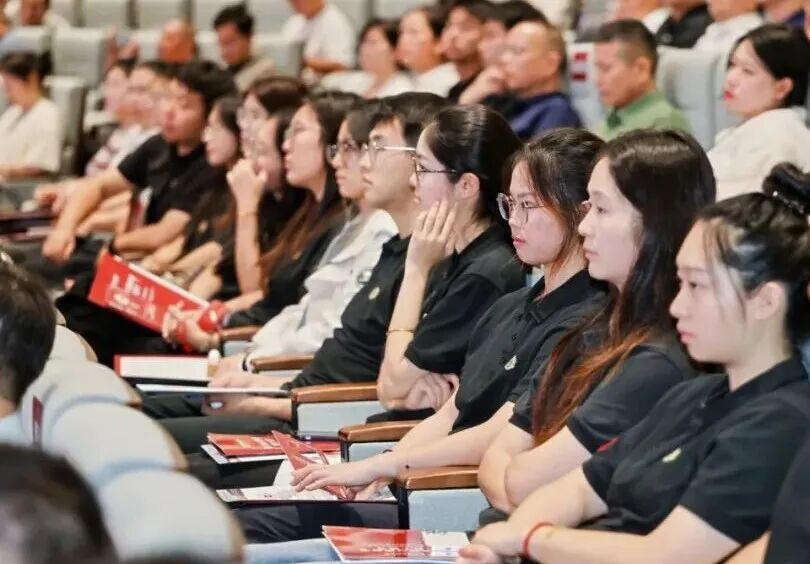
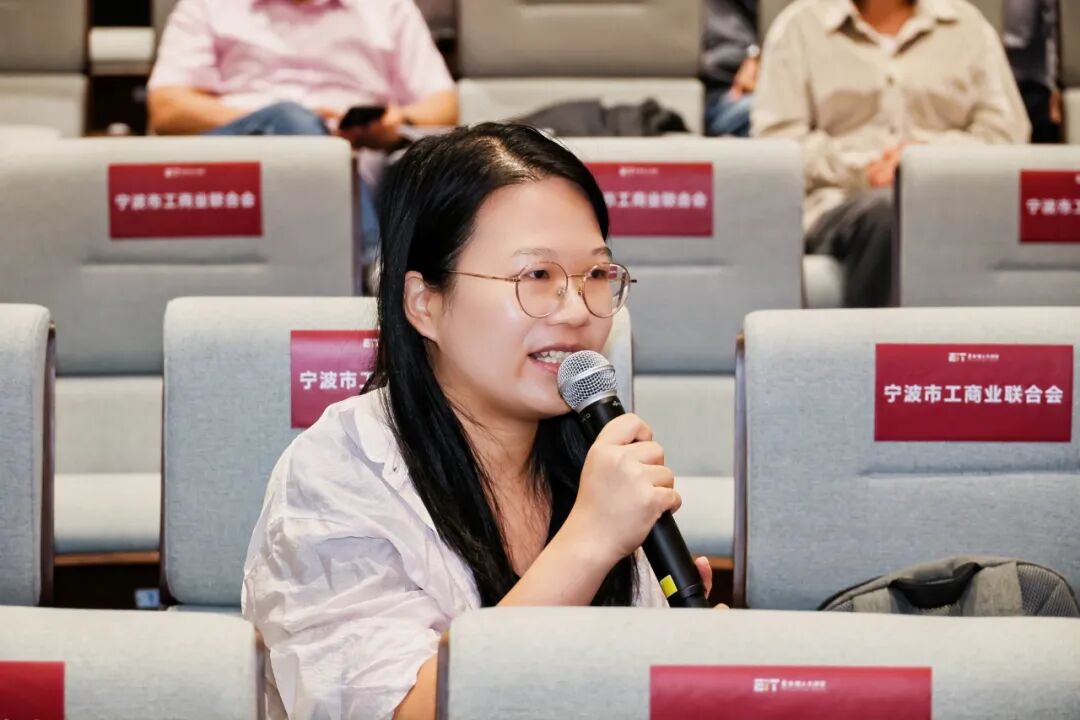
Q&A Session
Speaking on the internationalization path of the Zheshang, Zhou noted:
"Economic globalization is an inevitable trend, and the Zheshang should actively go global—not only by exporting products, but by building brands and taking their management models overseas."
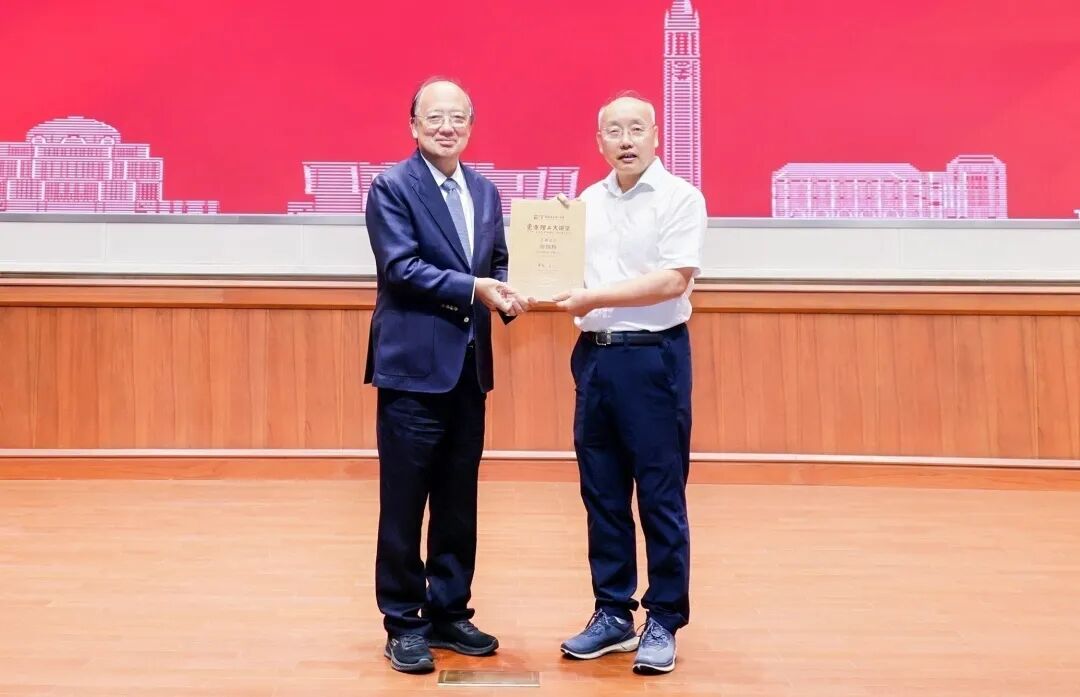
President Shiyi Chen (left) presenting a certificate to Guohui Zhou(right)
At the close of the lecture, President Chen presented Zhou with a commemorative certificate as a guest speaker of the EIT Lecture Series. On one side stood a university president deeply immersed in building a university; on the other, a distinguished scholar of his hometown who has long observed Zhejiang's development. Their exchange was at once a retrospective look at the commercial civilization of the Zheshang and a shared inquiry into the way forward for higher education in a time of profound change.