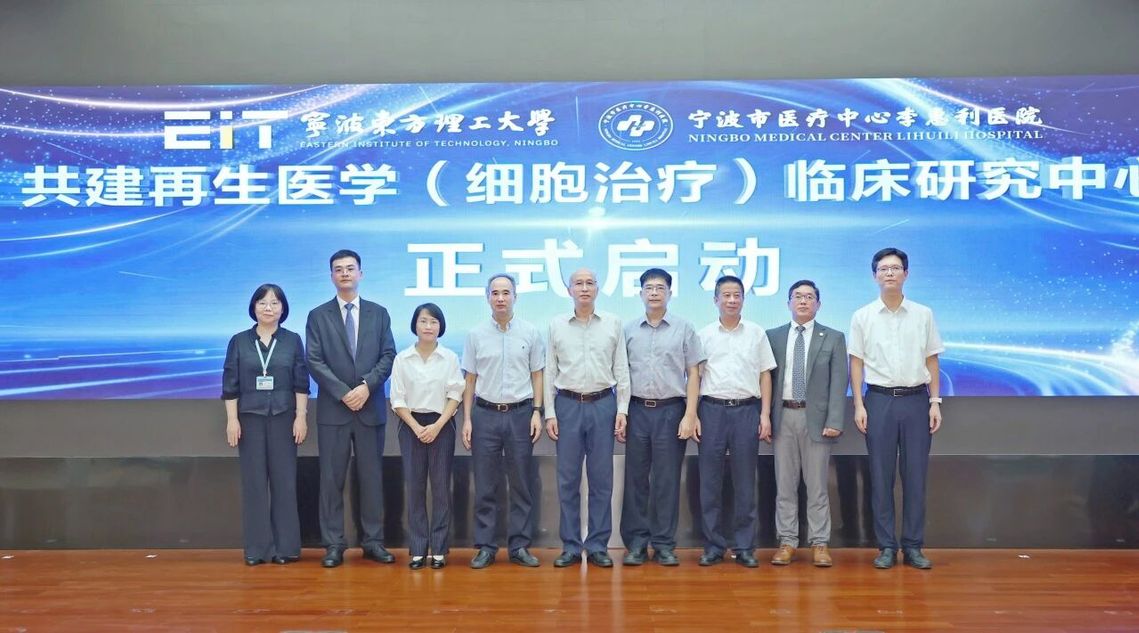
Now that AI can retrieve vast stores of information in an instant, and anyone, anywhere, can use AI to acquire a university-level education, a series of fundamental questions confronts education: What is the core value of a university? What should we teach? What should students learn? And in what manner should we cultivate people?
EIT's inaugural Teaching Conference was organized around four themes—education reform in the AI age, practice-based teaching, the fostering of global competence, and whole-person education through the residential college system. Across these themes, the conference showcases the highlights and insights of EIT's teaching reform, joining a shared exploration of how to nurture future-oriented, top-tier innovative talent and how education might look in the years ahead.
EIT came into being almost in step with the era of large AI models. ChatGPT was released in late November 2022 and, within fewer than four years, has profoundly transformed the world. Just one month later, on December 29, the groundbreaking ceremony for EIT's permanent campus was held. From the day of its founding, this new type of research university has been bound up with this technological transformation.
As early as the planning stage, AI was incorporated into the university's top-level design, serving as the common foundation for both its disciplinary layout and its talent cultivation. In June 2025, the university was approved to admit undergraduate students; when its first cohort of undergraduates enrolled in September, a general-education course on artificial intelligence was offered to all freshmen, turning the top-level design into a delivered curriculum. At the same time, a growing number of faculty across different majors and courses have been proactively pursuing reform practices in AI-assisted instruction, inquiry-based learning, and course assessment.
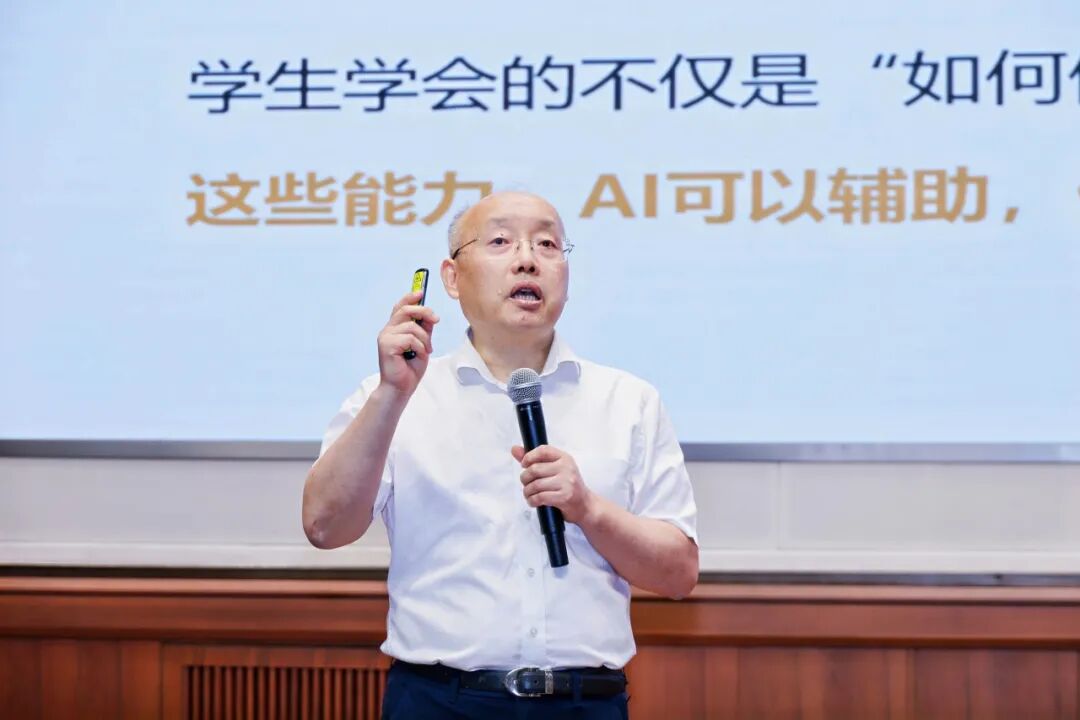
At the Teaching Conference, Prof. Shiyi Chen, President of EIT and Member of the Chinese Academy of Sciences, called for advancing AI-driven education and teaching reform and AI+ talent cultivation in a coordinated way—from the strategic height of exploring a new model of university operation and optimizing the layout of emerging disciplines and majors—and for marshalling the effort of the entire university to carry out this strategic mission.
Course Pilots: Making AI a Classmate That Can Be Seen and Questioned
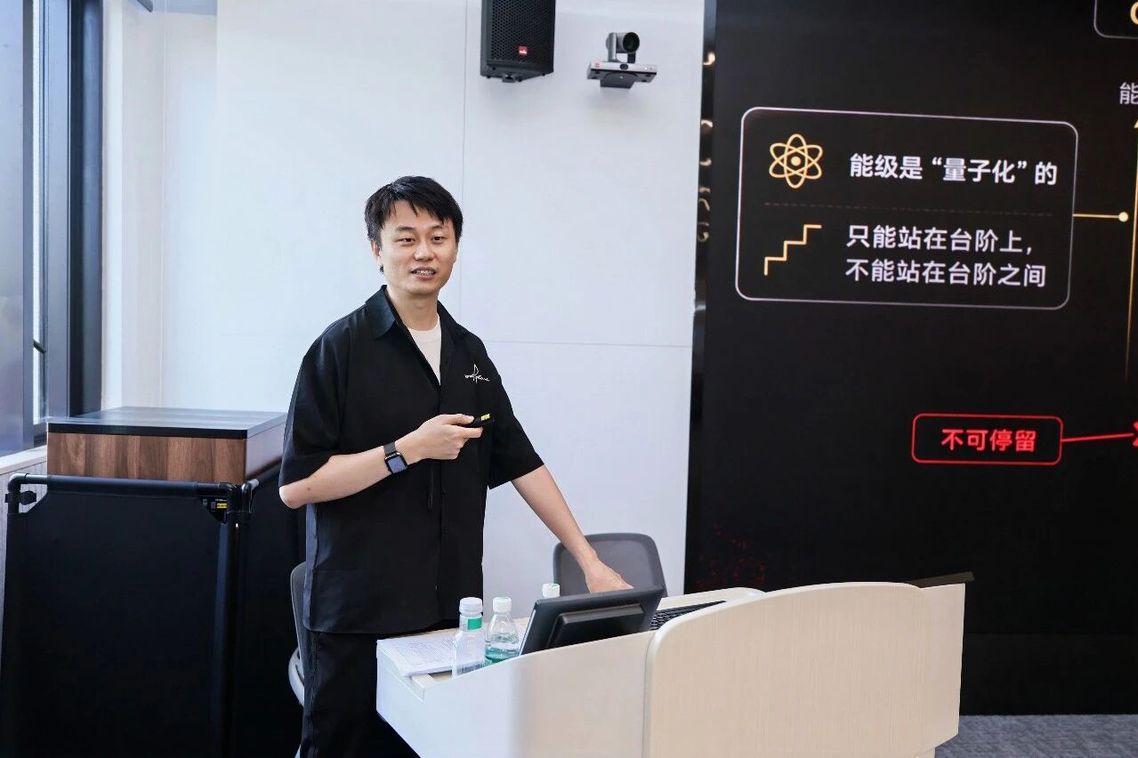
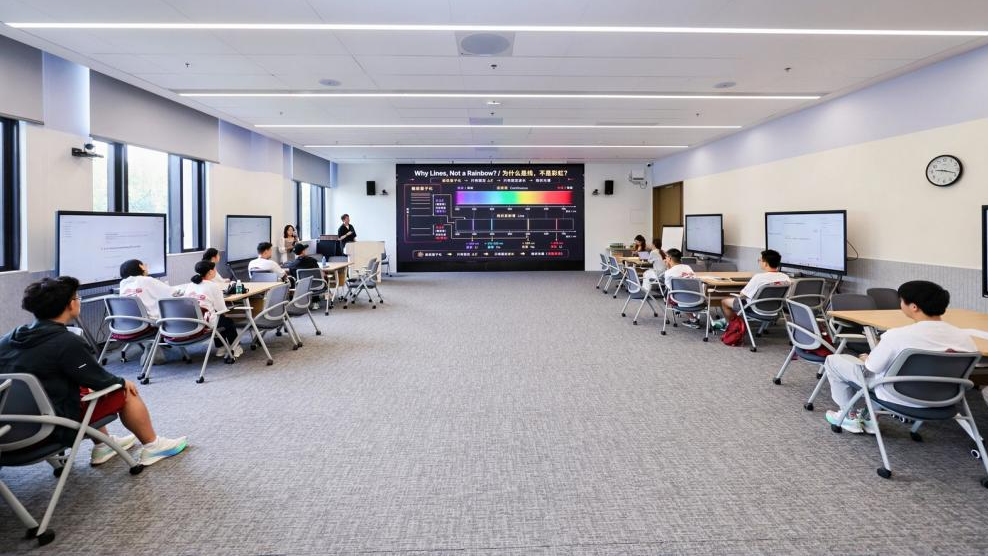
Prof. Chen Zhu teaches in a redesigned AI-enabled classroom
In Room 104 of the Teaching & Laboratory Building, the desks and chairs are arranged into ten groups. Prof. Chen Zhu, an associate professor in the College of Science, can switch any group's screen onto the main display with a single keystroke, or simultaneously show different groups' questions and answers to the same problem. How students ask questions, how they follow up, at which point AI errs, and how an erroneous conclusion is corrected step by step—all of this is visible to the entire class, to be compared and discussed. Here, AI is no longer an answer-key machine that simply dispenses solutions; it has become a discussion partner that can be questioned and rebutted, and one that makes mistakes.
In the spring 2026 semester, Prof. Zhu launched a pilot in the University Chemistry course, gradually refining a teaching sequence: the instructor presents the framework—students investigate with AI—group presentations—instructor correction—post-class review.
In Prof. Zhu's view, what matters most when students use AI to learn chemistry is the ability to ask questions, to be skeptical, and to verify. He encourages students to treat AI's responses as material requiring validation: ask the same question again on a different model, and check the conclusion against the textbook. Some students even return to their books after class to verify what was covered in the lecture. The practice is also extending into laboratory courses. Prof. Zhu is exploring combining AI with an automated pipetting workstation: students describe in Mandarin what solution they want to prepare, and the machine performs the pipetting. Whether their instructions are precise and their thinking clear is reflected directly in the experimental results.
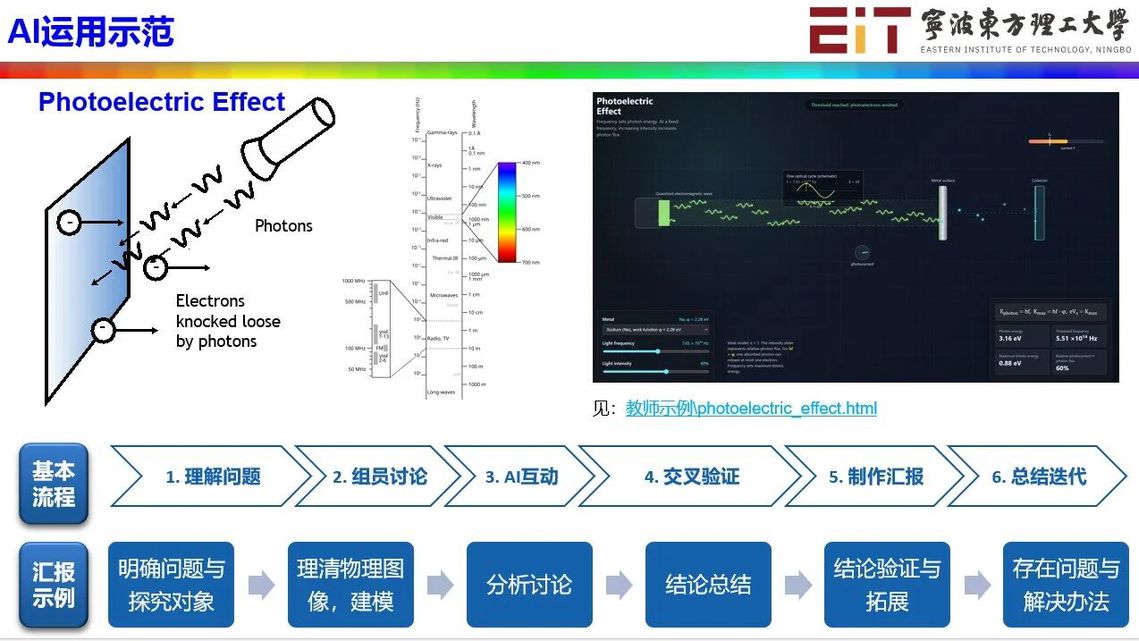
AI-generated simulated experiments
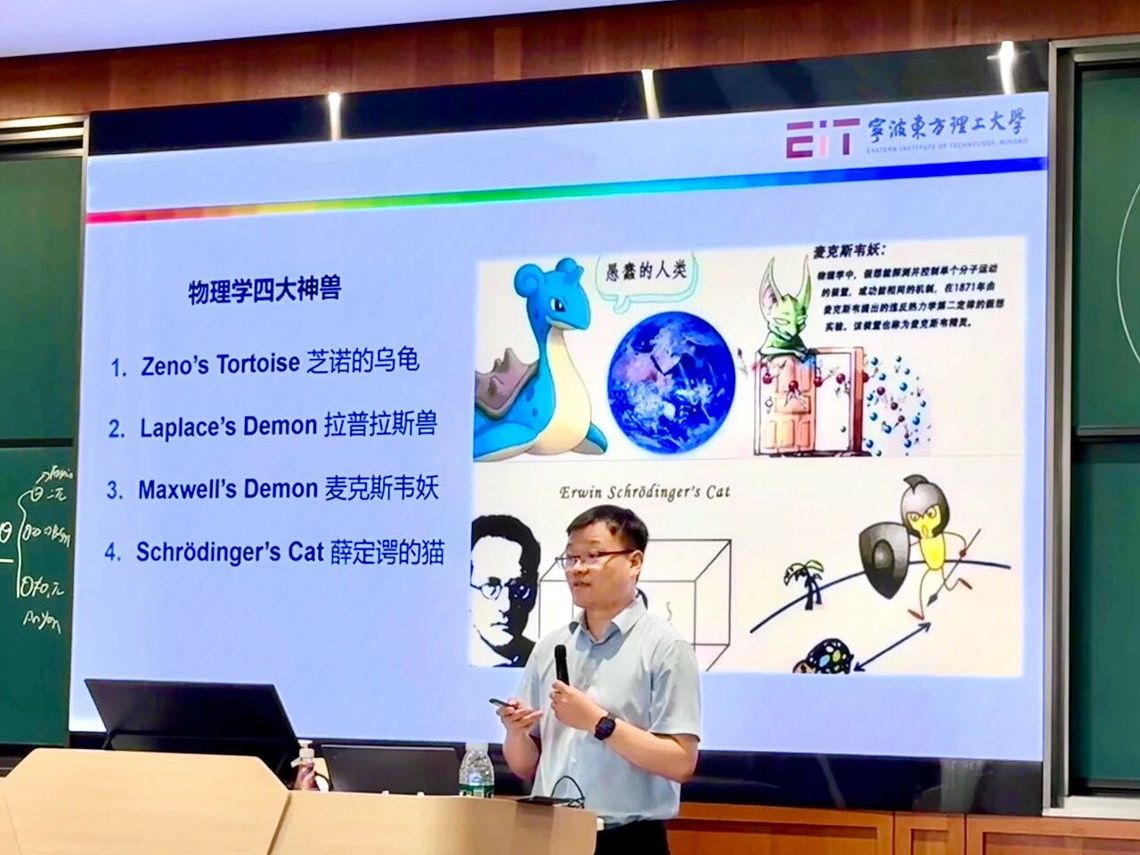
AI-assisted classroom warm-up
Prof. Tong Zhou, an associate professor in the College of Science, has turned AI into a laboratory inside the computer. Physics experiments are costly and often constrained by conditions, so he has AI generate simulated experiments, bringing expensive or difficult-to-reproduce phenomena onto the screen and making abstract physical concepts visual and intuitive.
Afterward, through cross-group peer questioning, discussion, and instructor feedback, students learn not only to use AI to acquire knowledge but, more importantly, to command AI—to understand, analyze, and judge what it generates—thereby cultivating independent thinking and critical-reasoning skills.
After several rounds of classroom practice, change has emerged little by little. Students who initially accepted AI's answers wholesale have come to actively challenge its conclusions, verify physical conditions, and use visualization to confirm and explain physical phenomena. Their presentations have become clearer each time, and their skills in using AI, teamwork, and reflective review have been forged repeatedly throughout the process. In the students' own words, they no longer merely ask AI for an answer; they have learned to take AI along in the pursuit of questions.
General Education: Familiarizing Students with the Underlying Logic of AI, not Merely Using AI
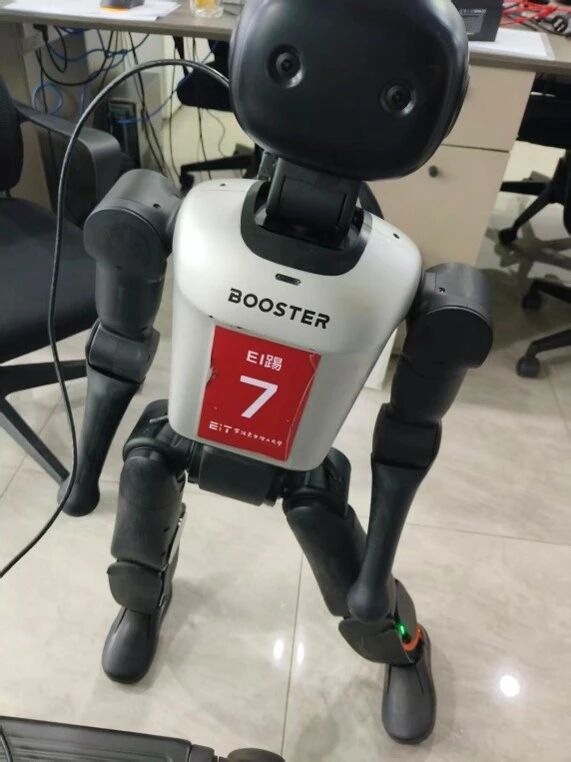
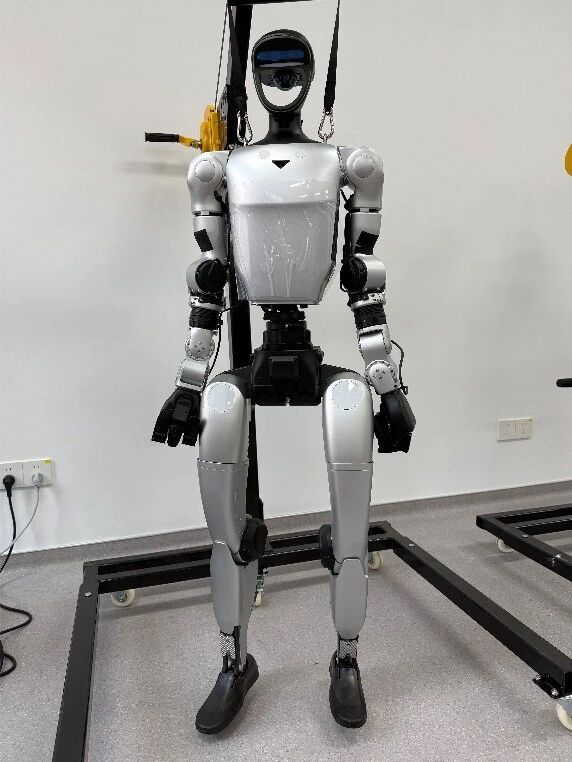
A robot with an AI agent
In the course Academic and Career Planning for University Students in the Age of AI, Prof. Bing Han, an associate professor in the College of Engineering, brings along a special teaching assistant—a robot carrying a little backpack computing box. What are the productive forces and relations of production in the AI age? What challenges do those relations face? What exactly is the approaching world of embodied robots like, and can students experience it ahead of time? The answers in this course are not found in a textbook; they reside in this robot, which can walk, speak, and respond.
To lower the threshold for understanding the underlying logic of AI, Prof. Han will also introduce hardware such as the Hakimi Manbo robotic dog into the classroom as entry-level hardware for undergraduate AI education. Its significance lies in ensuring that AI is no longer a black box beyond reach: even undergraduates and master's students can personally take apart, debug, and train an intelligent agent, transforming themselves from people who use AI into people who understand the underlying logic of AI—a distinctive feature of undergraduate education at EIT.
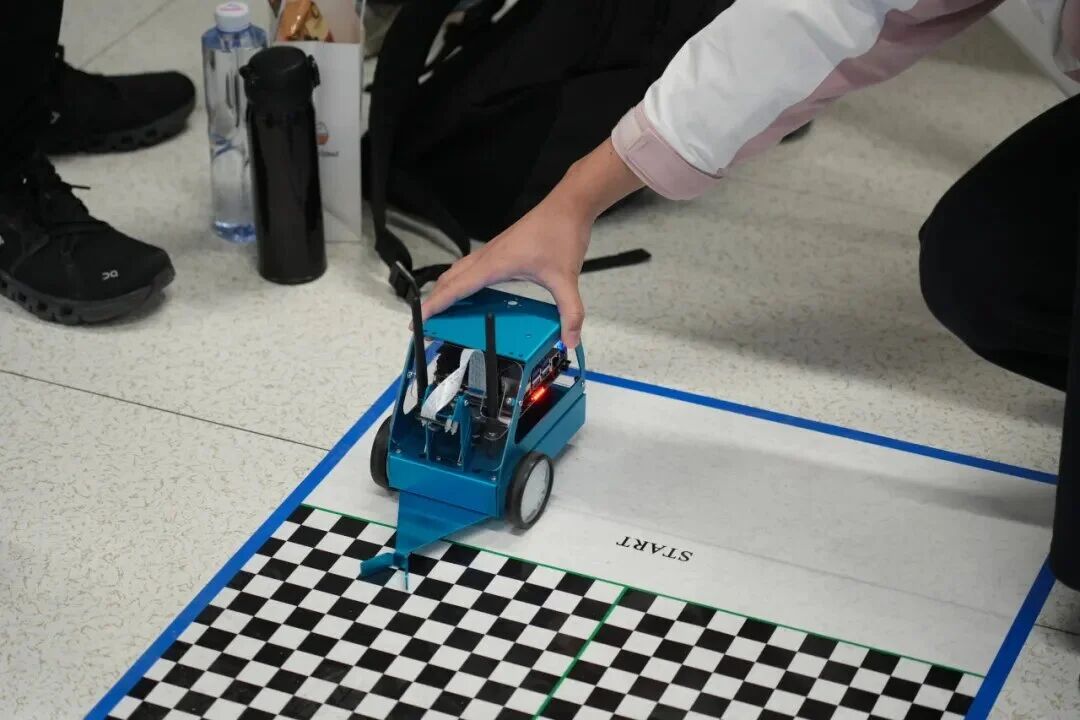
AI-driven embedded GPUs enabling intelligent obstacle avoidance
In the AI general-education workshop, the university joins with industry partners to help students understand the core logic and application scenarios of artificial intelligence. Students program a smart car equipped with an embedded GPU so that it can autonomously recognize obstacles and nimbly steer around them. Complex theory is broken down into hands-on modules that can be touched and debugged repeatedly. With every round of testing the car, tuning its parameters, and reworking the code, students push the boundaries of what they know a little further.
Future Learning: From the Classroom to the Real World—Discovering Principles Through Real Problems
If foundational and general-education courses are reinventing learning within the classroom, the duty of EIT's Future Learning Center is to take learning beyond it and into real-world settings. The pairing of real-world tasks with AI-assisted learning is sharply accelerating how students develop.
"What it changes is not what students can do, but the order in which skills are built," said Prof. Jie Liang, Deputy Head of the Office of Academic Affairs and Chair Professor in the College of Information Science and Technology. "Students first work on real systems; then, starting from real problems, they go back to learn the underlying principles and master the tools."
When EIT's first cohort of undergraduates spent the summer of 2026 interning at partner companies, they soon found that every ambition led back to a more fundamental skill. One student set out to build an AI agent, only to discover that they first had to learn Dify; to use Dify, they had to learn Docker; and to use Docker, they had to master Linux. The path looked daunting at first, but with AI's help, the students got up to speed quickly and went on to solve real problems. After just eight weeks, some freshmen were providing technical support to engineers and troubleshooting issues on their own—progress so rapid that even they could barely believe it.
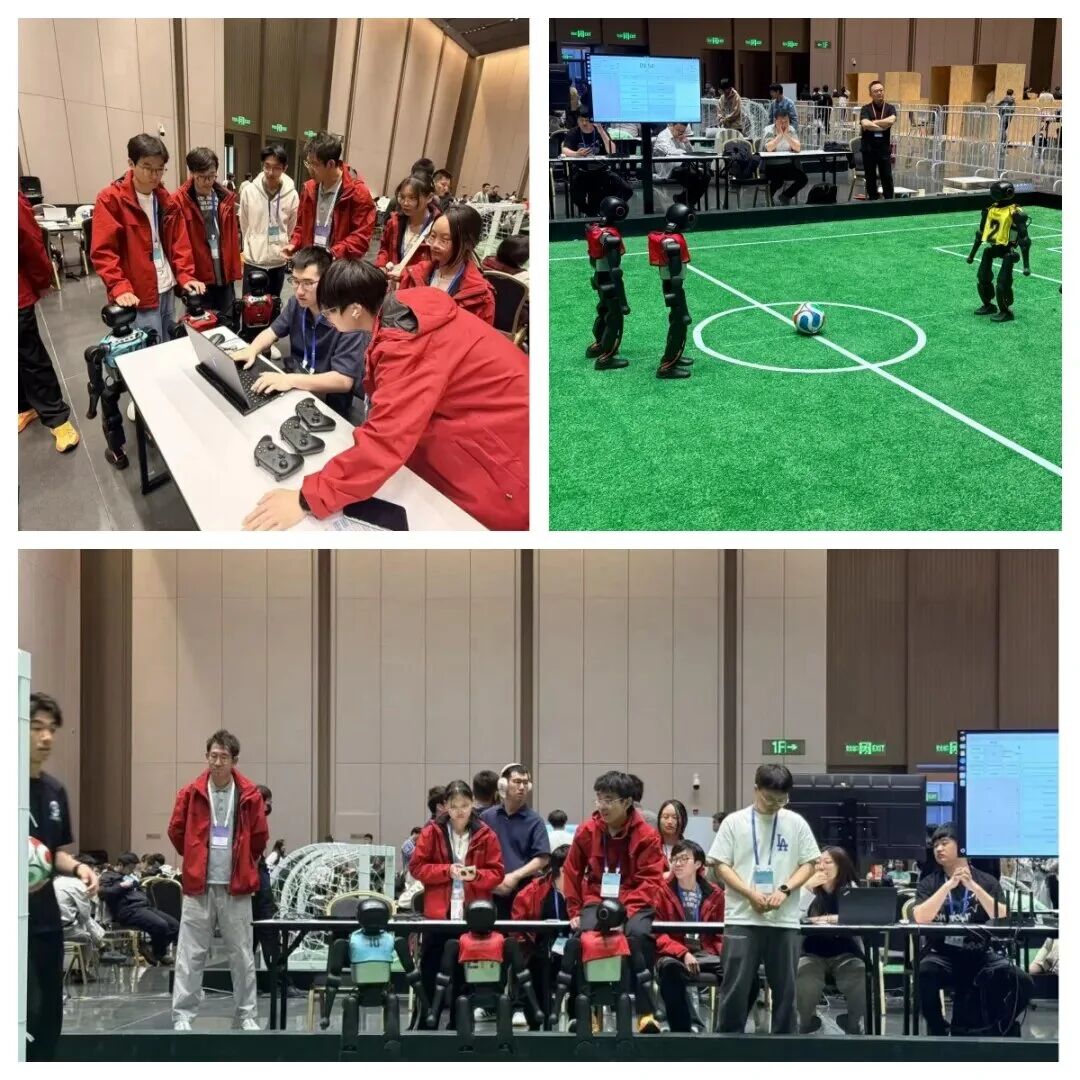 The EI Kick robotics team at the 2026 RoboCup China Open
In addition to its 33 summer internship partner companies, EIT has opened many of its campus spaces to students, including the 550-square-meter Robotics and Artificial Intelligence Studio and every PI's lab. For students, these are not merely internship sites or high-end computer labs; they are places to encounter how the real world works—places where an idea can be turned into a prototype at any moment and then put to the test in actual competitions.
In May 2026, ten EIT freshmen formed the EI Kick robotics team. Using AI to search the literature and write code, they took their robot from EIT's Robotics and Artificial Intelligence Studio all the way to the 2026 RoboCup China Open. As the only freshman team at the competition, they beat teams from a number of prestigious universities and finished among the top six—a result to be proud of.
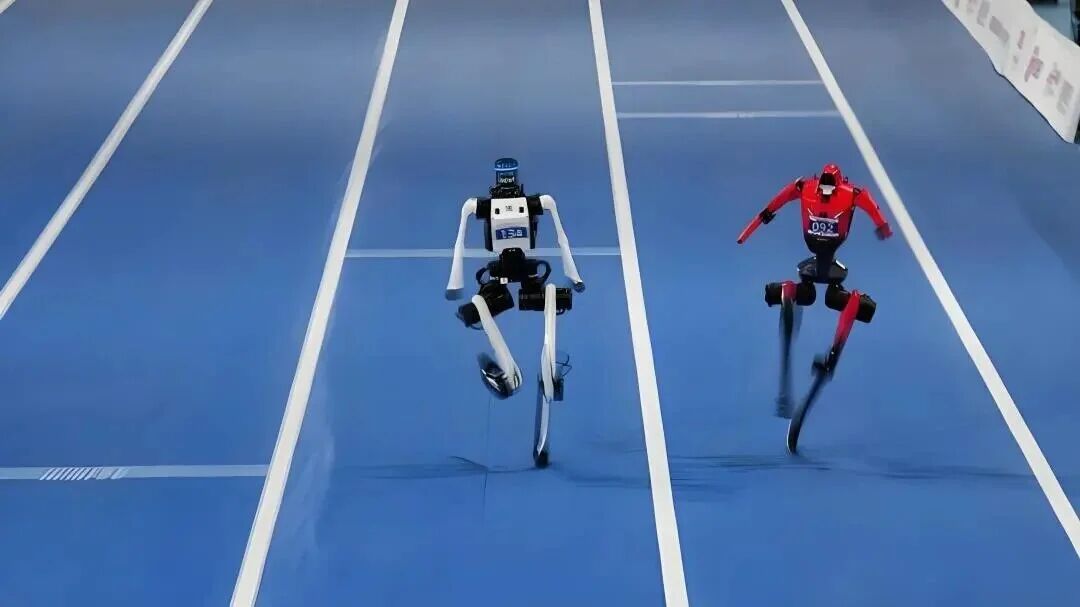
The Tiangong-Jingfong robot (left) at the 2nd World Humanoid Robot Games
Separately, at the 2nd World Humanoid Robot Games in August 2026, Rongpeng Cui, a doctoral student collaboratively trained by Shanghai Jiao Tong University and EIT, piloted the Tiangong–Jingfong robot to a 9.34-second finish in the 100-meter dash—eclipsing the human record set by Usain Bolt. His interdisciplinary research on robot dynamics algorithms and locomotion control has pushed the running speed of bipedal robots to new limits.
The More Powerful AI Becomes, the More Important Those Who Master It
The direction of this transformation came into focus amid the lively discussions at the Teaching Conference. The university's three colleges arrived at a shared framework. Five irreplaceable abilities are to be prioritized: questioning, thinking, judging, verifying, and creating. Four dimensions of cultivation are to be rebuilt: goals, curricula, teaching methods, and assessment. Faculty are to lead the way, with teachers continually strengthening their AI proficiency and instructional design skills. And on the risk side, the university will guard against students becoming overreliant on AI at the expense of their ability to think for themselves.
All of these efforts ultimately point to one simple principle: learn to think first, and then learn to use AI. Knowledge is now just a query away, so what students know can no longer be a university's greatest selling point. But the university can—and must—answer the question set before it at its founding: how to educate the people an age of AI cannot replace.