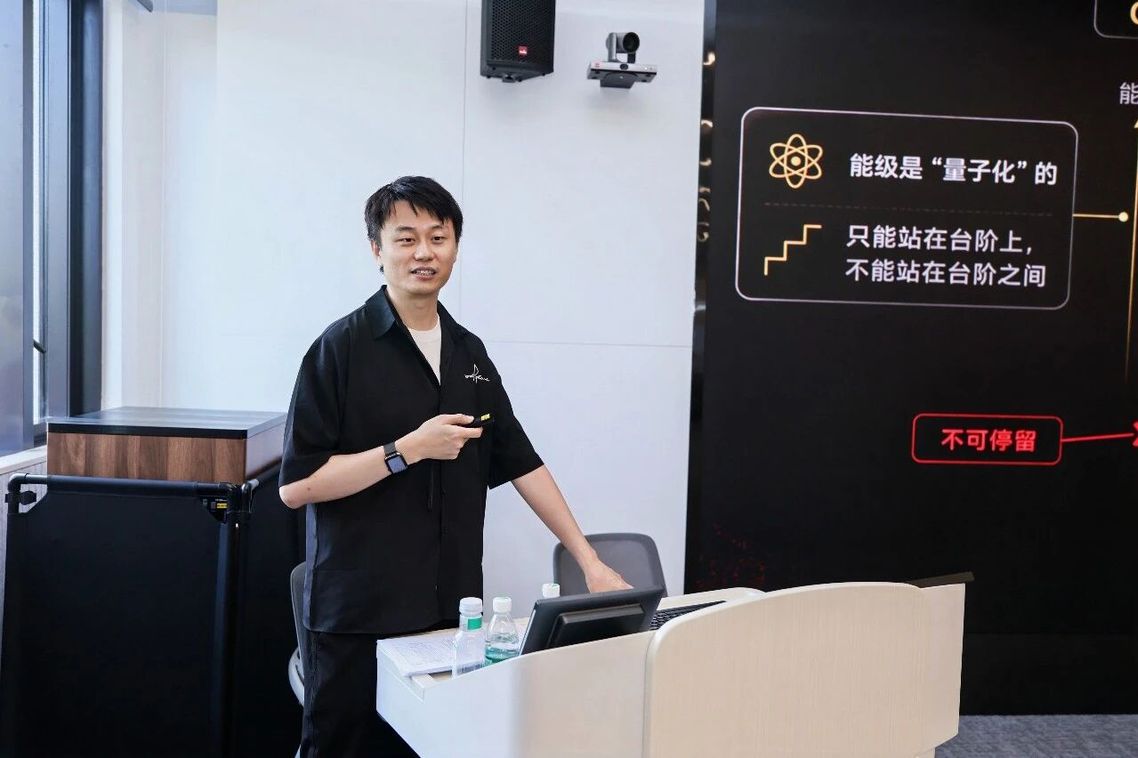
In the midsummer of 2026, the Eastern Institute of Technology, Ningbo (EIT) welcomed the first cohort of collaboratively trained doctoral graduates. Doctoral students are a vital force in the national innovation system and an important marker of EIT's ambition to build a new-type research university to high standards from the very beginning
After four years of intensive training, these students—who experienced EIT's journey from 0 to 1 alongside the university—have delivered a distinctive first chapter. The end of one journey of discovery is also the starting point of another. This series will focus on the destinations and growth of EIT's first cohort of doctoral graduates. Some are heading to the front lines of national strategy and industry, ready to take on major responsibilities; others are heading to leading universities at home and abroad to continue exploring the deeper waters of academia.
They are the first sparks EIT has sent into the world, and the most vivid footnotes to the story of a new-type research university.
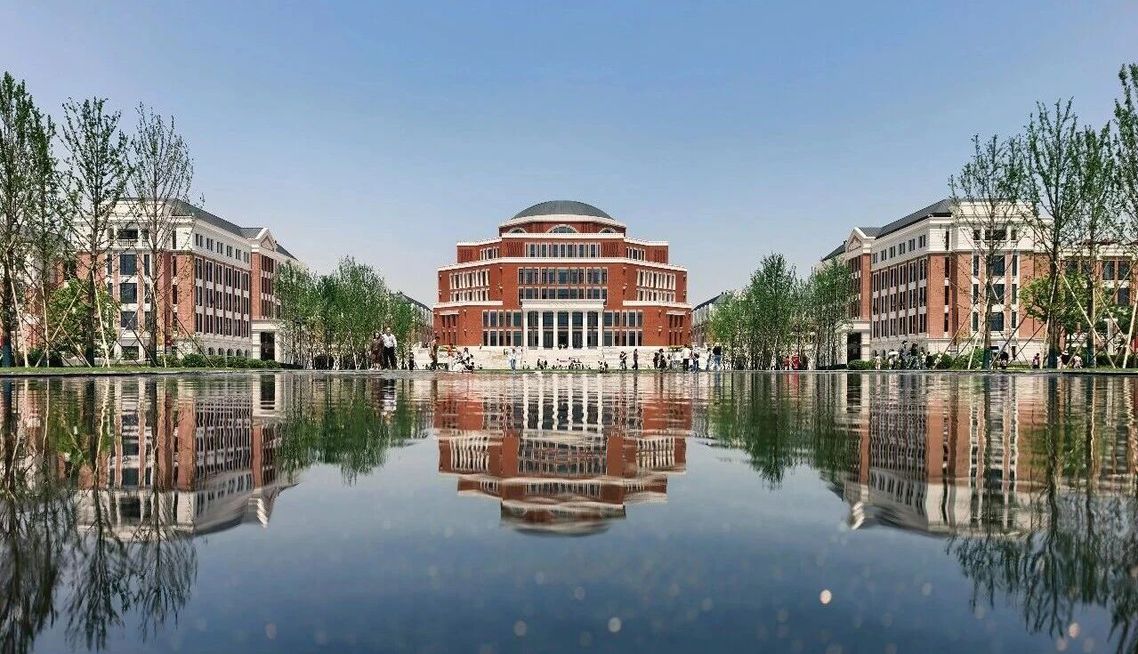
What does it mean to earn a doctorate?
For EIT's first cohort of collaboratively trained doctoral graduates, earning a doctorate marks a shift from answering questions to posing them. Now, in new roles as associate professors, researchers, engineers, and more, they are stepping onto the front lines of real-world innovation—from national laboratories tackling critical bottleneck problems, to leading technology platforms addressing industry pain points, to university lectures where they pass on what they have learned.
Today, let us meet these pioneers heading to the front lines and hear their stories with EIT.
Liang Xu: Digging Deep with Perseverance to Help AI Better Understand People
Ph.D research focus: Human-centered motion and interaction generation
Next stop: Beijing Zhongguancun Academy, Research Fellow and Doctoral Supervisor
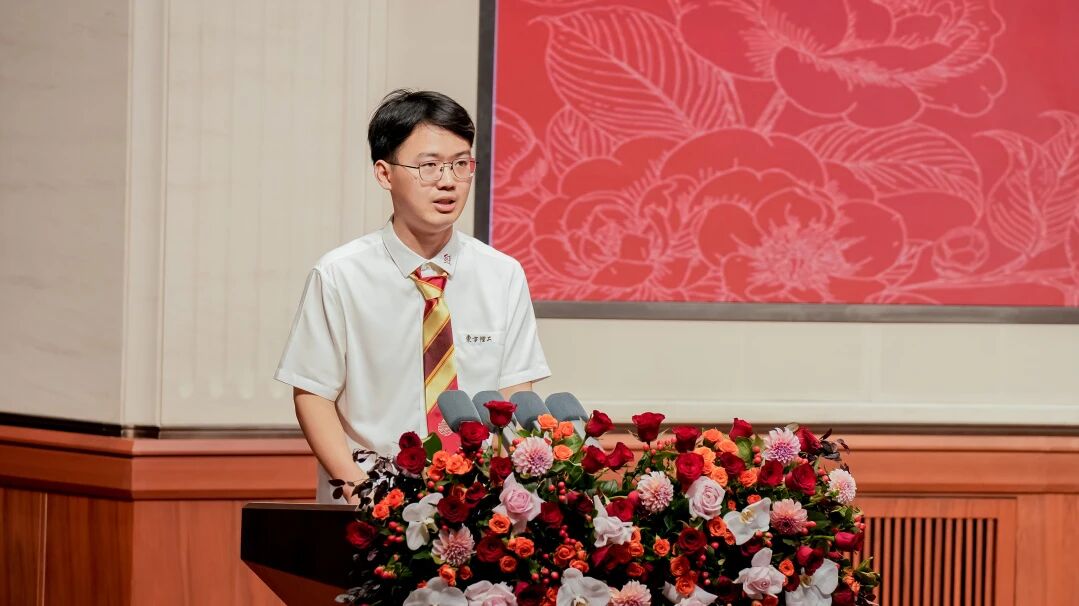
"My work is to teach AI to understand and generate natural, realistic human motion and interaction."
Liang Xu's doctoral research focused on the perception, understanding, and generation of human-centered motion and interaction.
His path to EIT began with his trust in Professor Wenjun Zeng, Vice President of EIT and International Fellow of the Canadian Academy of Engineering, and his decision to pursue doctoral research under him. As someone who experienced EIT's founding, As someone who experienced EI's founding firsthand, Liang Xu watched the university take shape from the ground up. In turn, EIT gave him the strong support he needed to focus fully on pushing the boundaries of his research.
Perseverance, a pioneering spirit, and steadfast dedication—this is how Liang Xu sums up his doctoral journey. When he learned he had received the National Scholarship for Doctoral Students, he felt that all his earlier persistence had paid off. "It is more than an honor; it is a kind of culminating recognition for the years I spent polishing my work day and night and wrestling with experiments. It made everything feel worthwhile."
Liang Xu has now joined Beijing Zhongguancun Academy as a research fellow, where he continues to work on human-centered vision and interaction problems. He hopes to expand into interdisciplinary areas such as embodied intelligence and medical rehabilitation, and to see his research make a tangible difference in people's lives.
"Keep your inner peace. Don't blindly chase short-term trends. Instead, steadily build your own technical depth," Liang Xu says. "In the end, time rewards those who are willing to focus deeply, dig in, and persevere."
Lishu Duan: Going Deep: Listening to the Sounds of the Ocean
Ph.D research focus: Computational acoustics and fluid-structure interaction
Next stop: Hanjiang Laboratory, Assistant Research Fellow
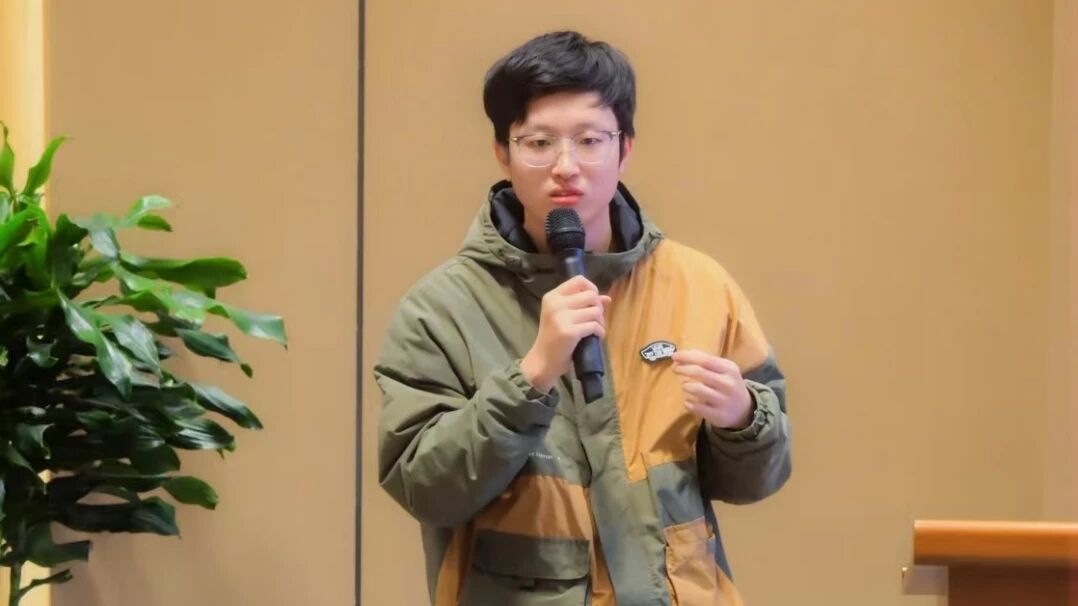
Lishu Duan's doctoral years unfolded alongside EIT's rapid growth. As a member of the first cohort of collaboratively trained doctoral students, he experienced the university's evolution from its early construction phase to its steady improvement. Over the same period, he completed his own transformation from a student who simply "finished tasks" to a researcher capable of "posing questions."
"At first, I focused mostly on whether the code would run. As my research deepened, I began to think about where existing methods could be improved and what new contribution my work could make."
That shift, he says, was the most important growth of his doctoral years.
His research focuses on sound propagation and scattering in complex flow environments, providing a theoretical basis for more accurately understanding and predicting the acoustic and noise characteristics of aircraft and ships in real flow conditions. After graduation, he joined Hanjiang Laboratory to continue basic research in acoustics and underwater acoustics.
"Joining a national-level research institution means having the opportunity to work more directly on major scientific problems that the country urgently needs to solve," Lishu Duan says. "It is both an opportunity and a responsibility."
From the coast of the East China Sea to the banks of the Yangtze River, the geography has changed, but his commitment to serving national strategic needs through research remains the same.
Qinglong Cao: Moving Forward with the AI for Science
Ph.D Research Focus: Knowledge- and data-driven artificial intelligence
Next stop: Shanghai Artificial Intelligence Laboratory, Young Research Fellow
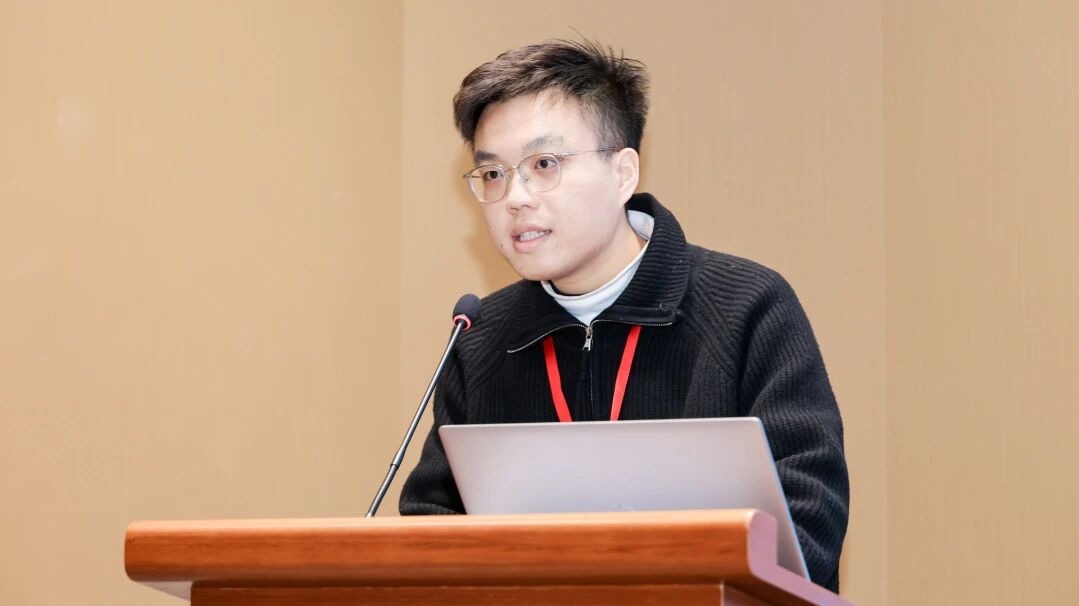
"I'm someone who is willing to be the first to try something new."
Asked why he chose EIT when it was still in the preparatory stage, Qinglong Cao answers without hesitation. That consistent spirit of exploration has defined his doctoral journey.
His research area—AI for Science—is itself a frontier interdisciplinary field. It aims to integrate human knowledge into AI models to address challenges such as scarce samples and high costs in scientific research.
He was selected for Doctoral Student Special Program of the Young Science and Technology Talents Cultivation Project initiated by the China Association for Science and Technology, received the National Scholarship for Doctoral Students, and attended academic conferences in more than five countries in a single year. These experiences allowed him to engage regularly with leading scholars worldwide and keep a sharp eye on the technological frontier.
During his doctoral studies, Qinglong Cao witnessed the explosive growth of artificial intelligence firsthand. New technologies and paradigms kept emerging, sharpening his ability to learn quickly and adapt to change, and further strengthening his commitment to his research direction.
After graduation, he will join the Shanghai Artificial Intelligence Laboratory as a young research fellow, continuing to work in AI for Science. His goal is to help AI evolve from a "supportive research tool" into an "intelligent research partner" capable of discovering new knowledge.
Xu'an Gong: A Teacher Who Reaches for the Stars While Keeping His Feet on the Ground
Ph.D research focus: Biomimetic flow control
Next stop: Jimei University, Associate Professor
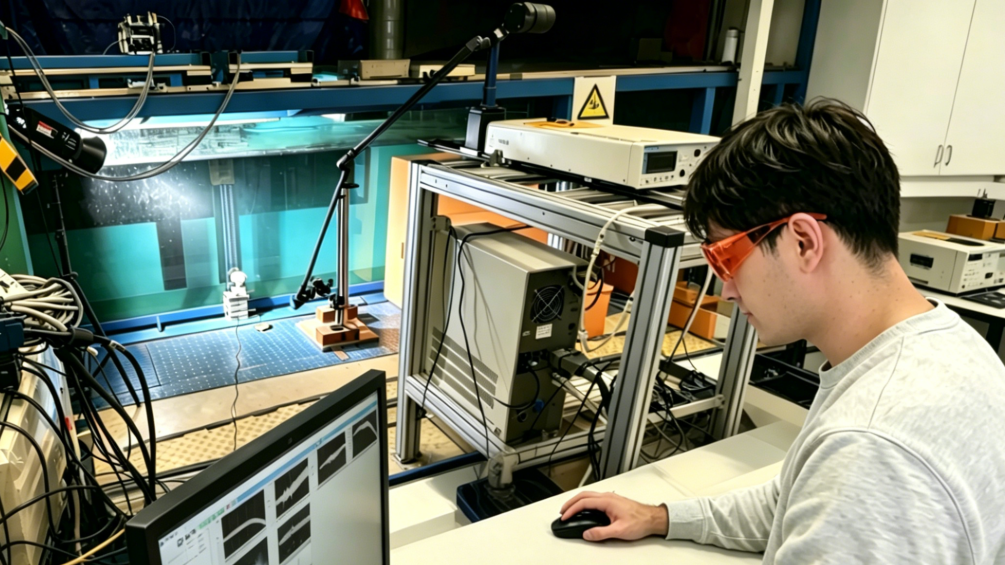
"Inspired by the covert feathers of birds, we designed a flexible, serrated flow-control structure and installed it on wind turbine blades to improve power output and operational stability."
When talking about his research, Xu'an Gong describes it vividly. He studied under Professor Shiyi Chen, President of EIT and Member of the Chinese Academy of Sciences, diving into the frontiers of fluid mechanics. The experience of "preparing for months, repeatedly adjusting experimental parameters until finally capturing the critical conditions for mode transition" gave him a deep appreciation of both the pain and the joy of research.
At EIT, he not only built a solid theoretical foundation but also learned how to distill valuable scientific questions from industry needs.
Now, he has chosen to join the faculty at Jimei University.
The new role carries a dual responsibility: as a mentor, he hopes to guide students toward research questions they truly love; as a fellow traveler, he hopes to support and encourage them when they encounter difficulties and setbacks.
In the future, he will continue his basic research, stay closely connected to industry needs, and deepen his work in biomimetic flow control, helping it move from the laboratory into complex and dynamic marine environments.
"Research is a long journey, and without curiosity about the unknown, it is hard to keep going," he says.
Xu'an Gong says, "My wish is to become a teacher who reaches for the stars while keeping feet on the ground."
Wenyao Zhang: From Finishing Tasks to Defining Problems
Ph.D research focus: Embodied intelligence
Nest Stop: Tencent, Researcher
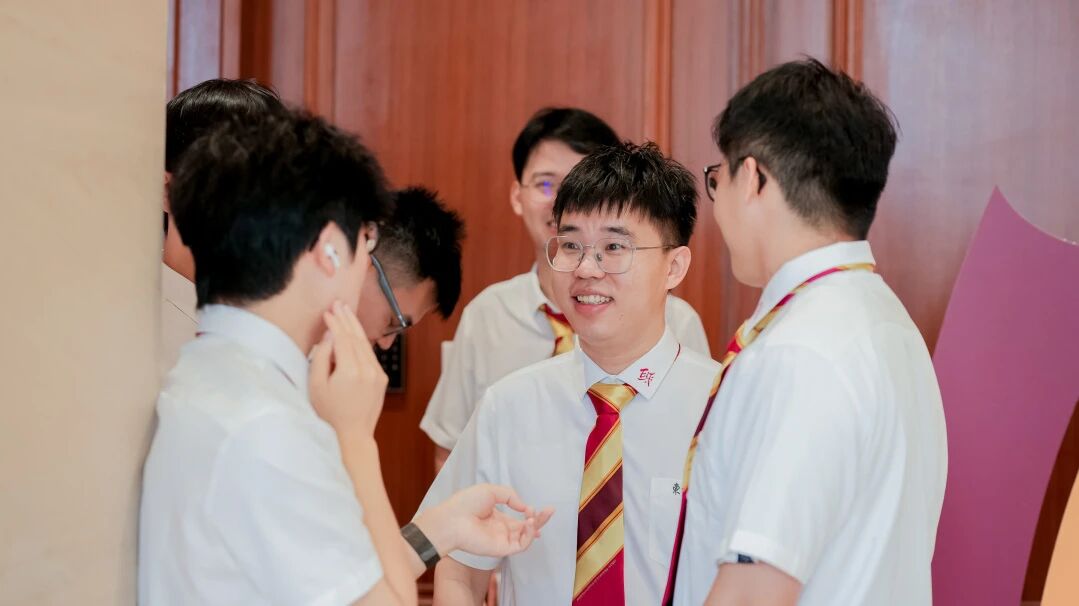
"What matters most in a PhD is not about finding the perfect direction, but about developing judgment through exploration."
Enabling robots to truly understand and act in a complex world—the core challenge of embodied intelligence—is about more than perception; it is about action. Wenyao Zhang's doctoral research is aimed directly at this very challenge. In a series of projects. In a series of projects, he and his collaborators organically integrated vision-language-action (VLA) models with World Model, offering new technical pathways for robot manipulation tasks.
"DreamVLA was not the product of a flash of inspiration, but of repeated dismantling and rebuilding." His deepest sense of achievement came from "finally seeing a problem being solved bit by bit after long persistence." For Zhang, choosing EIT meant choosing a place where students are encouraged to explore which questions matter.
During his doctoral studies, an academic discussion left a deep impression on him: faculty and students from different backgrounds clashed intensely over a question, bringing different perspectives to the table while engaging in frank, focused discussion. At that moment, he felt that EIT truly encourages young people to participate in high-level intellectual debate.
This atmosphere helped him complete the transformation from a student who "finished tasks" to an independent researcher who "defines problems."
As he embarks on the next stage of his journey, he will continue exploring embodied intelligence and hopes to produce research that is “influential and insightful for the community.”
"Stay curious, take a long-term view, and don't be afraid to ask questions or admit what you don't yet know," Wenyao Zhang says. "That, in itself, is an essential part of becoming an independent researcher."
Qi Wang: Defining AI Problems That Have Yet to Be Defined
Ph.D research focus: Model-based reinforcement learning
Next stop: Institute of Automation, Chinese Academy of Sciences, Assistant Research Fellow
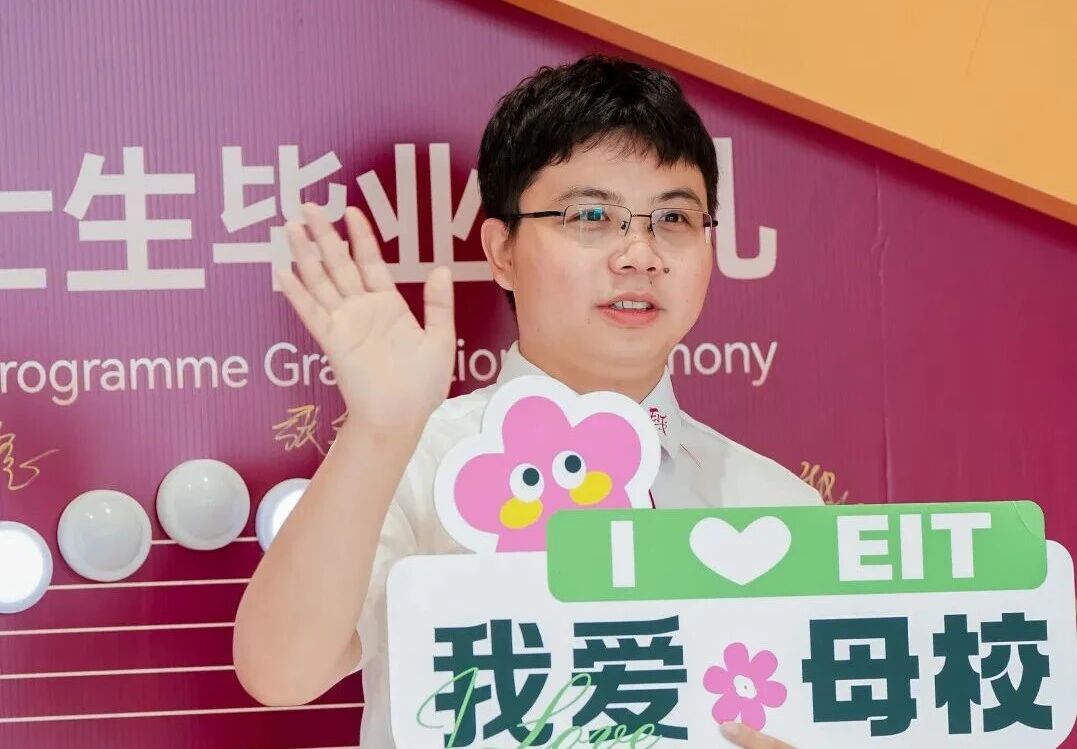
"Observe, reflect, and demystify." Qi Wang sums up his doctoral years with these three words, revealing a calm and reflective mindset.
Teaching AI to learn how to interact with its environment through "imagination" rather than massive real-world trial and error—this is the central question of model-based reinforcement learning and the problem Qi Wang has spent four years working on.
At EIT, the flat and open communication environment left a strong impression on him. "Students can easily interact with top scholars up close. Professor Wenjun Zeng attends the group meeting every week and discusses research ideas directly with students," Qi Wang says.
During his PhD, a paper by Qi Wang and his collaborators was accepted at ICLR 2025, a leading machine learning conference, and selected for a presentation. The work, which tries to enable reinforcement learning agents to look beyond immediate short-term rewards and make longer-term decisions through World Model, gave him a strong sense of achievement.
"During my PhD, I learned to reflect on the essence of different things. Many things that seem unrelated are actually the same at their core."
This insight has made Qi Wang unwilling to settle for solving only known problems.
His next stop is the Institute of Automation, Chinese Academy of Sciences. Looking ahead, he hopes to "solve AI problems that have not yet been defined." In an era when everyone is talking about AI, he reminds himself—and future EIT students—to learn to "set their own evaluation criteria."
Ye Liu: Empowering Real-World Industrial Applications with AI
Ph.D research focus: AI and industrial simulation
Next stop: Tenfong Technology, Algorithm Researcher
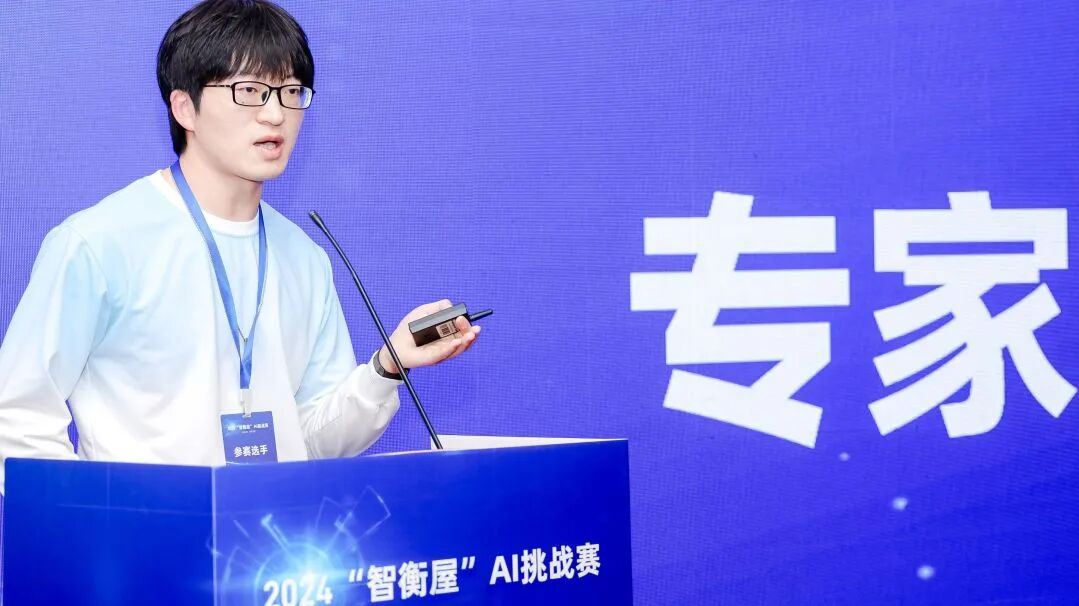
"Early on, I focused mainly on models, algorithms, and experimental results. Now I care more about whether a technology can be developed into a working system, whether it can be implemented, and whether it can meet real-world engineering needs."
Ye Liu's research focuses on the intersection of AI and industrial simulation, a quintessential interdisciplinary field. This aligns closely with EIT's emphasis on interdisciplinary integration. The experience of having dual advisors and studying across two campuses allowed him to receive rigorous academic training while staying close to industry, helping him avoid becoming trapped in a single perspective.
During his doctoral studies, Ye Liu led a team that developed an industrial computer-aided engineering (CAE) intelligent agent software system and put it into practical use. He admits that this achievement has given him a greater sense of accomplishment than any paper—"not just a result, but a system that actually runs."
After graduation, he will continue working in AI and intelligent industrial R&D, with the goal of turning CAE intelligent agents from prototype systems into stable, reliable industrial software platforms. For him, the value of research lies not only in publishing papers but also in truly solving pain points in industry.
"Future-oriented, daring to explore, and focused on real problems"—that is how Ye Liu describes the spirit of EIT. Having started out from EIT's laboratories, he hopes to bring this philosophy to the broader industrial front lines.
EIT's first cohort of collaboratively trained doctoral graduates are heading in different directions, but they share a common starting point: the banks of the Yong River.
Four years ago, they chose to set out from a university that was still under construction. Four years later, they are carrying EIT’s research ethos into a much broader landscape of innovation. This is perhaps the most valuable gift a new-type research university can give its students—and their greatest source of confidence as they face an uncertain future. Their innovation stories have only just begun.