K Jimmy Hsia
The August breeze sweeps across the Yong River as daylight spills over the clusters of campus buildings, casting a vibrant glow over this young new-type research university.
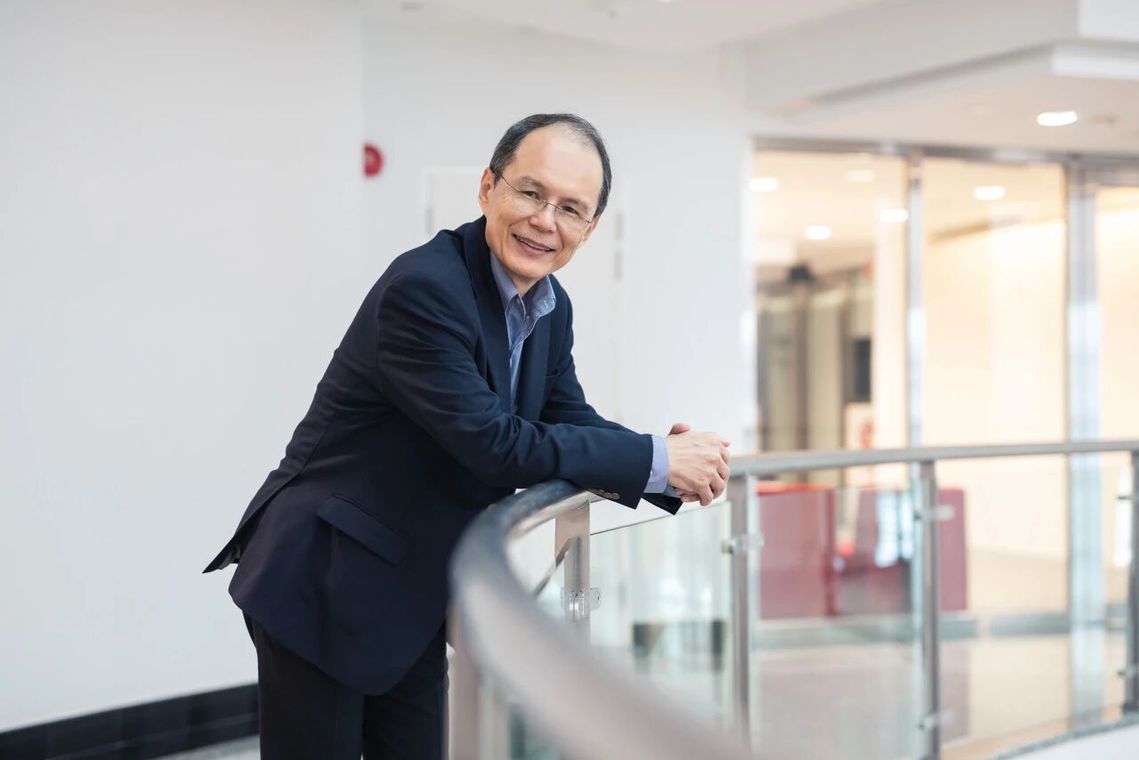
On August 1, internationally renowned applied mechanics expert, Professor K. Jimmy Hsia officially joined the Eastern Institute of Technology, Ningbo (EIT) on a full-time basis. Having previously held positions at world-class institutions including the University of Illinois at Urbana-Champaign, Carnegie Mellon University, and Nanyang Technological University, Singapore, he has now made his first full-time commitment to a university in China.
A Career Across Continents: Understanding the Underlying Logic of University Development
Professor K. Jimmy Hsia's life trajectory is itself a condensed history of educational exchange between China and the world.
Born in Shanghai and raised in Beijing, he comes across as refined and soft-spoken, his fluent Mandarin dissolving any distance created by decades spent abroad. He earned his B.S. from Tsinghua University, M.S. from Beihang University, and later traveled to the Massachusetts Institute of Technology, where he received his Ph.D. in mechanical engineering.
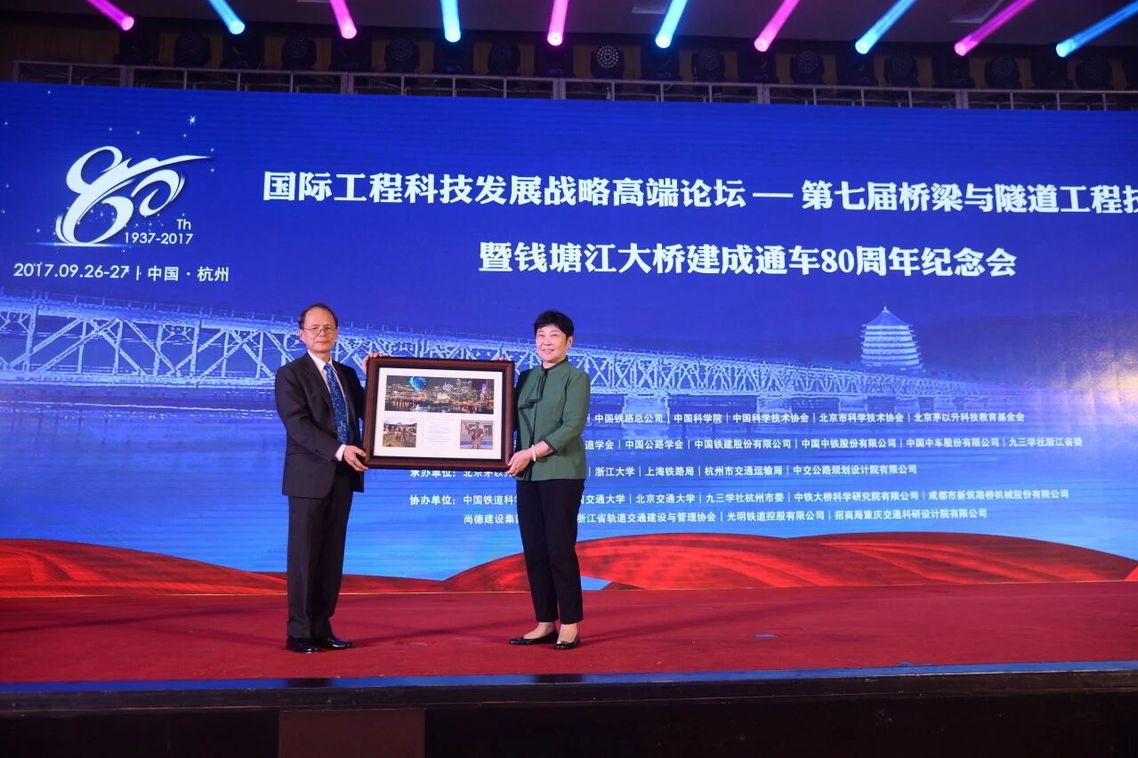
In 2017, on the 80th anniversary of the opening of the Qiantang River Bridge, Professor K. Jimmy Hsia (left) presents a gift to Yulin Mao (right), daughter of Dr. Yisheng Mao.
As an internationally recognized expert in applied mechanics, his research spans multiple frontier areas, including material failure and fracture, soft materials and soft robotics, micro- and nanoscale mechanical behavior and micro/nanotechnology, mechanical behavior in biological systems, biosensing and smart adhesion, and the development and application of biomedical devices.
His academic achievements have been widely recognized by the international scientific community. He was recipient of U.S. National Science Foundation (NSF) Research Initiation Award, Max-Planck Society Scholarship. He has been elected Fellow of American Association for the Advancement of Science (AAAS),Fellow of American Society of Mechanical Engineers (ASME), and Fellow of American Institute for Medical & Biological Engineering (AIMBE).
Yet what distinguishes him even more than his scientific credentials is his experience as a university administrator. Over the course of a career spanning nearly three decades, he began as the founding director of the Nano and Bio Mechanics Program at NSF, and went on to witness firsthand the strategic planning and development paths of several world-class universities of different types.
University of Illinois at Urbana-Champaign
"Launching interdisciplinary innovation initiatives to break down barriers between departments"
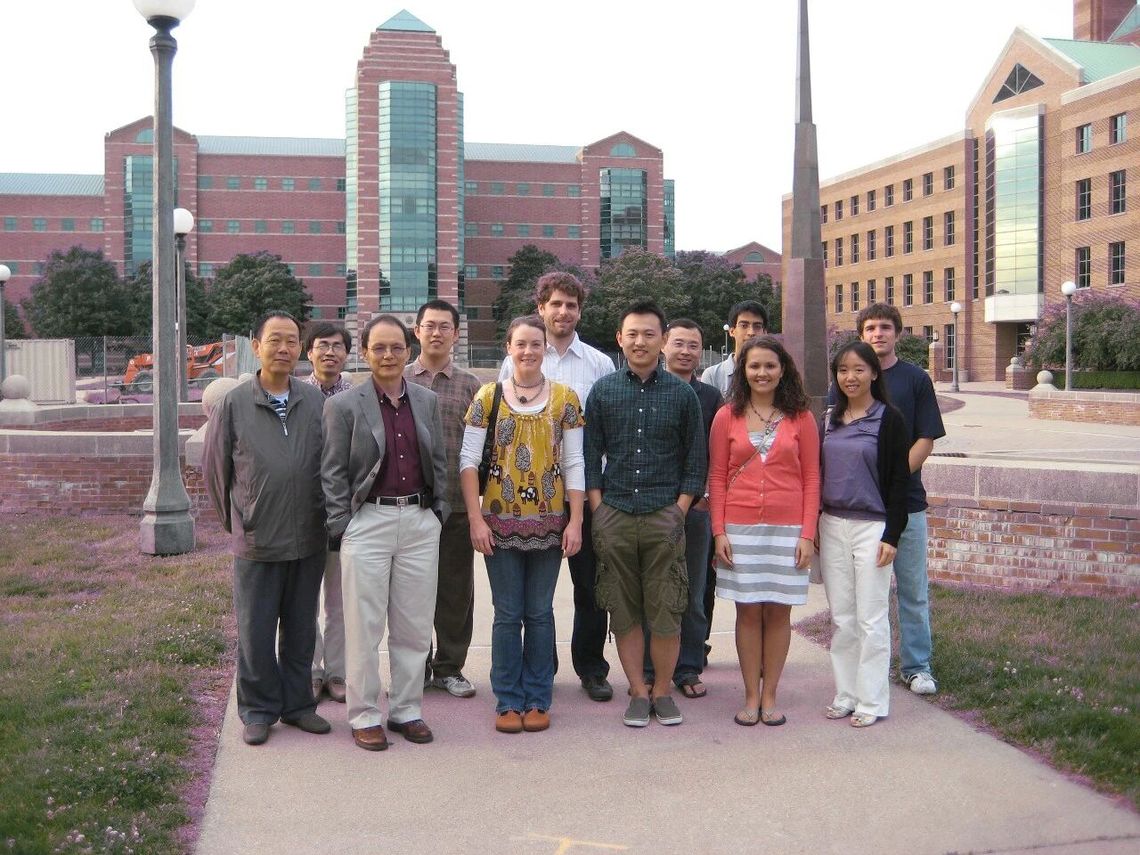
At the University of Illinois at Urbana-Champaign, Professor K Jimmy Hsia (front row, second from left) with colleagues.
In the 1990s, the College of Engineering at the University of Illinois at Urbana-Champaign was already among the best in the world, but integrating engineering with the life sciences and medicine remained a major challenge for the university.
As associate vice chancellor for research, K Jimmy Hsia spearheaded a university-wide interdisciplinary innovation initiative. Through a cost-sharing and resource-sharing mechanism, he tore down the “walls” between departments. In just over a year, more than a dozen cross-disciplinary teams took root, winning several multi-million-dollar grants from NSF and the National Institutes of Health (NIH), and setting a benchmark for university-wide interdisciplinary collaboration.
Carnegie Mellon University
"Building a global footprint and a model for localized international education"
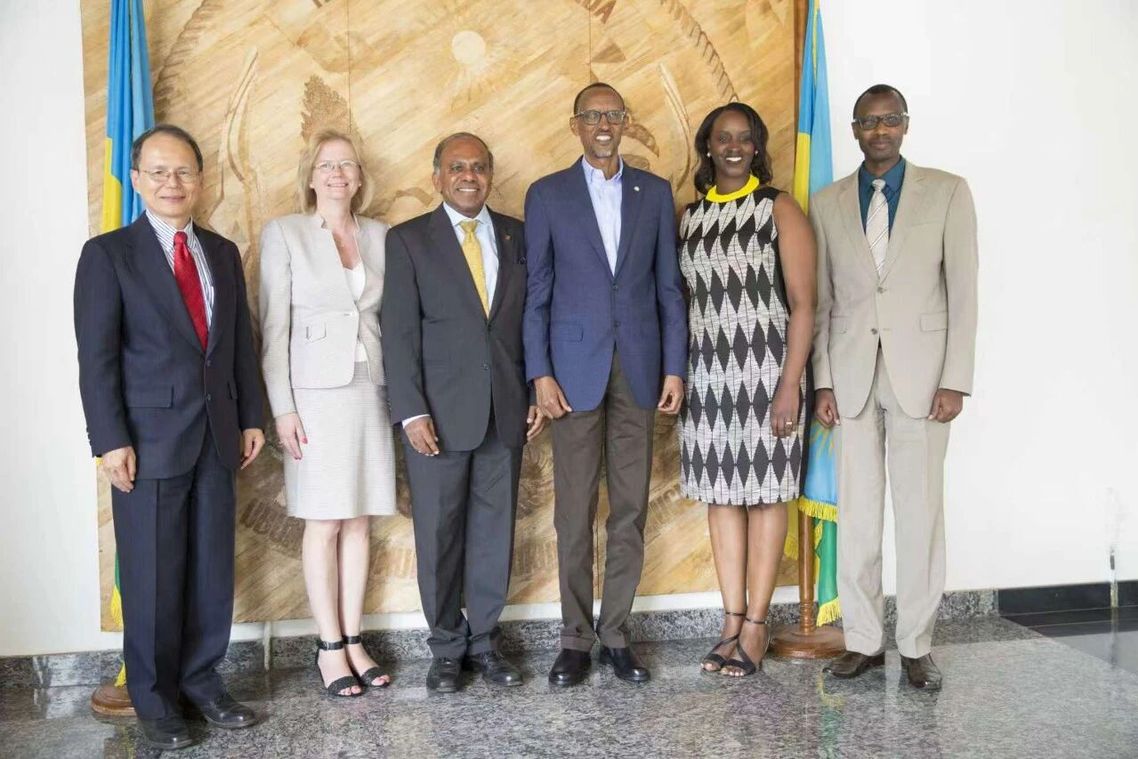
K Jimmy Hsia (first from left) meets with Paul Kagame, President of Rwanda (third from right).
Carnegie Mellon University is a small private research university whose computer science and robotics programs consistently rank among the best in the world. The key to its success lies in meticulous long-term strategic planning and a deep commitment to internationalization. As Vice Provost for International Programs and Strategy, K Jimmy Hsia was directly involved in the university’s global expansion.
Carnegie Mellon University has established branch campuses in countries including Qatar, Rwanda, and Australia.
The Qatar campus offers five flagship undergraduate programs in fields such as computer science, business, and artificial intelligence. Students are required to spend six to twelve months at the main campus in the United States, and more than half of the graduates are women—evidence that quality education resources can effectively break down barriers to women’s education in the region.
The Rwanda campus was built with dedicated facilities provided by the local government and focuses on cultivating homegrown digital talent. The achievements of the branch campus are displayed year-round on large screens at the airport, making it one of the country's "calling cards" to the world.
"True internationalization is not simply about recruiting a few international students and faculty members," K Jimmy Hsia says. "It is about tailoring high-quality educational resources to local needs and fostering genuine two-way exchange." He believes this lean, targeted model of global education offers valuable lessons for newly established universities.
Nanyang Technological University
"Creating the first graduate college to coordinate differentiated development across disciplines"
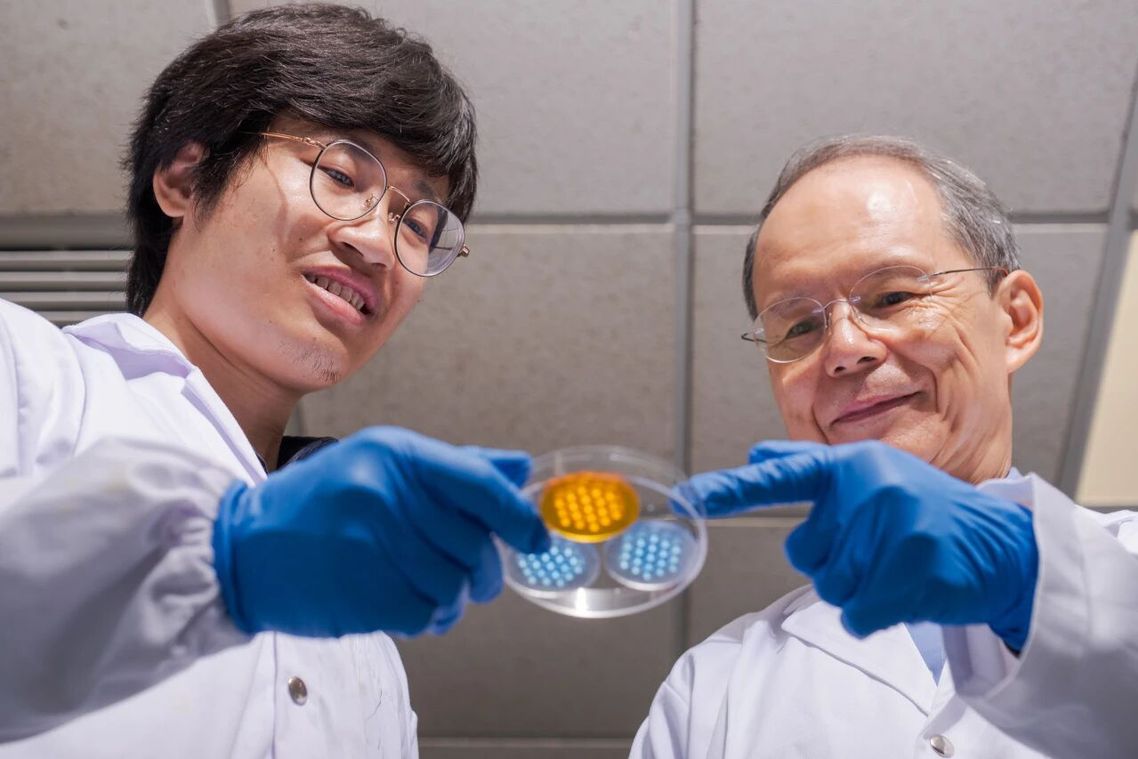
K Jimmy Hsia (right) discusses a smart adhesive device with student Changhong Linghu (left, now assistant professor at City University of Hong Kong).
By 2018, Nanyang Technological University's master's and doctoral programs across various schools were growing rapidly, but the university lacked a centralized body to oversee graduate education. K Jimmy Hsia was invited to lead the creation of the university's first Graduate College, elevating graduate education to a new level. He led his team in restructuring the graduate training framework from the top down, guiding each discipline to develop according to its own strengths, so that resources were no longer wasted in internal competition and interdisciplinary collaboration could truly take root.
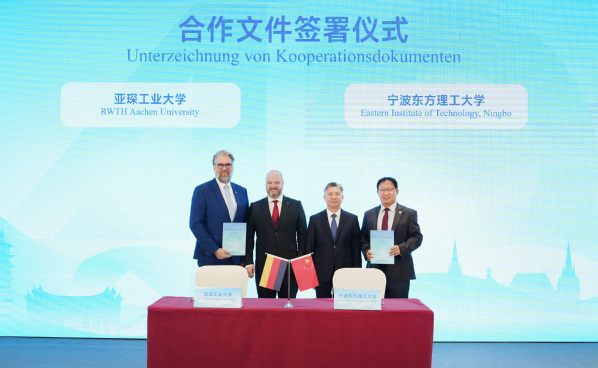
During his tenure as Vice President for Alumni and External Relations at Nanyang Technological University, K Jimmy Hsia mobilized global alumni network to help the university navigate the challenges of the later stages of the COVID-19 pandemic. He also actively explored international partnership by establishing joint training programs with institutions in China, Vietnam, India, Rwanda, and countries across Europe and the United States, further advancing NTU's internationalization.
A Full-Time Return: Charting a New Course on a Blank Slate
In the summer of 2026, K Jimmy Hsia chose to return to China and join EIT, a new-type research university.
"A mature, prestigious university is like a book that has already been written, whereas a newly established university is a blank sheet of paper," he says. "Without the constraints of an entrenched system, you can draw on the proven experience of world-class universities to build an educational system that fits domestic development while meeting international standards."
In his view, EIT's "blank slate" has a distinctive quality. Its founding vision—high-caliber foundation, compact yet distinguished, research oriented, and globally engaged—provides the ideal setting for applying the lessons of his years of experience. The mechanisms for interdisciplinary collaboration can be replicated; the global talent network can be leveraged; and the graduate training system can be put in place.
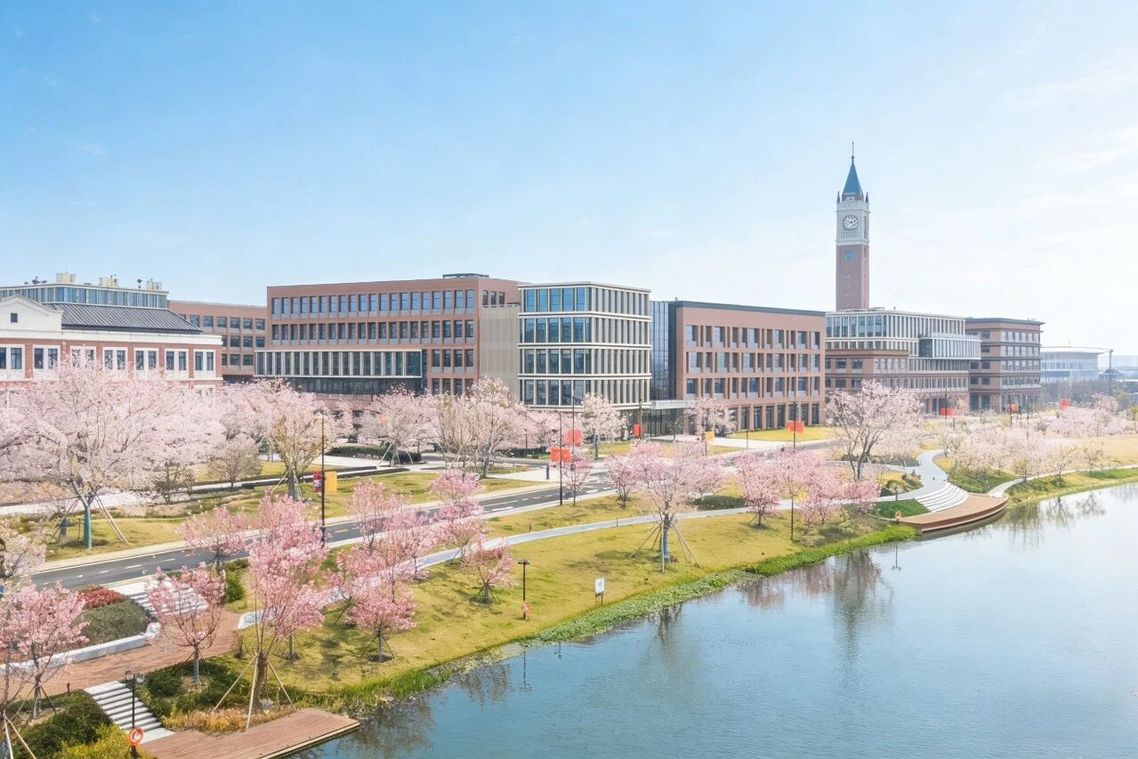
EIT Campus
More importantly, he adds, "We need to narrow the gap between Zhongguancun and Silicon Valley." K Jimmy Hsia offers an analogy: Zhongguancun is home to China's top talent, while Silicon Valley attracts the world's best minds. With its international orientation, EIT aims to create flexible and attractive talent policies, first-rate research platforms, and an academic environment that meets international standards, so that scholars from home and abroad can settle in comfortably and pursue their research freely.
He hopes to put his experience to work on the banks of the Yong River. Drawing on the global academic network he has built over decades spent abroad, he envisions EIT as a bridge to the world—a place where scholars of different backgrounds and nationalities can exchange ideas, and where an international academic ecosystem becomes part of everyday life.
In August, K Jimmy Hsia stands on the EIT campus, his shadow stretching behind him and the future unfolding before him. What lies ahead is a blank page, now being written by a scholar with decades of experience, and a bold experiment in building a new-type research university. It is all just beginning. And the wind from the Yong River, carrying the spirit of the open sea, is blowing toward wider horizons.