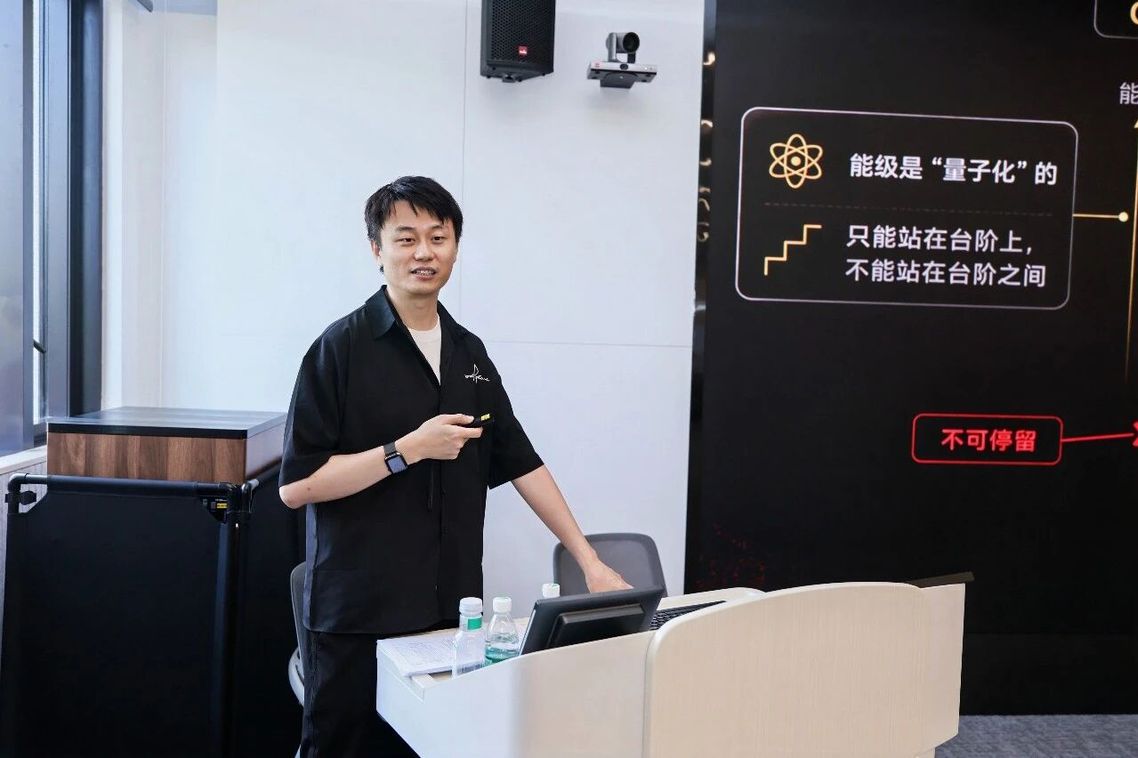
After one of his studies was published, Hang Zhang, Associate Professor in the College of Engineering at the Eastern Institute of Technology, Ningbo (EIT), received forty to fifty inquiry emails from around the globe. One person wrote on behalf of his mother seeking a remedy. A foundation hoped he would conduct clinical research on a rare skin disease. Tattoo artists and the team of a world-renowned athlete reached out, hoping to try the material.
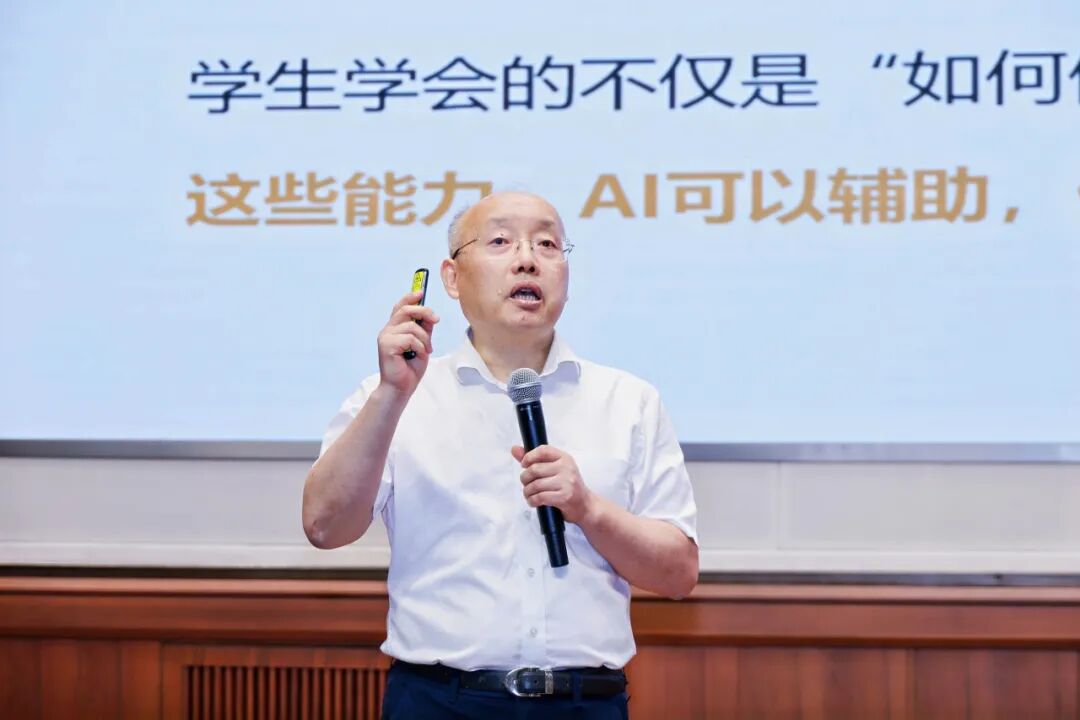
Zhang focuses on hydrogels. He received the 2026 "Future Chemical Engineering Scholars" Award from the Global Academy of Chinese Chemical Engineering Scholars and, on August 11, gave a keynote speech at the Future Chemical Engineering Forum during the Academy's 18th Annual Conference.
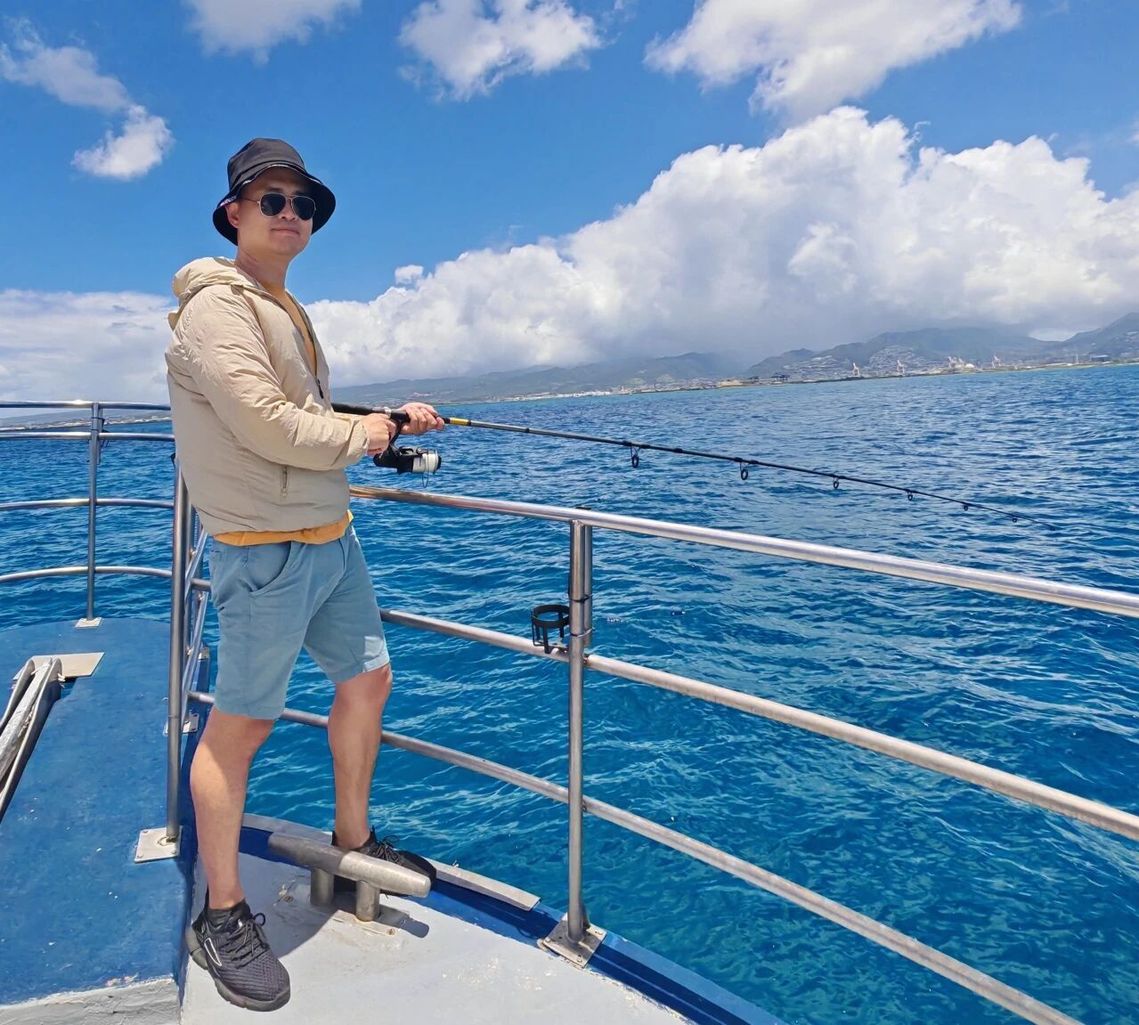
Hang Zhang fishing at the sea.
The Depth of History and the Breadth of the World
Zhang was born in Xuchang, Henan Province. The Central Plains are flat and devoid of mountains, yet they hold an inexhaustible history.
Xuchang is an important cradle of Three Kingdoms culture. Its streets remain steeped in stories from that era: Cao Cao welcomed Emperor Xian of Han and moved the capital here; at Baling Bridge, Guan Yu is said to have lifted Cao Cao's parting gift of a robe on the tip of his blade without dismounting—a gesture of unwavering loyalty(关公"灞陵桥挑袍"). The Spring and Autumn Tower, where the warrior saint Guan Yu is said to have read the Spring and Autumn Annals (《春秋》)at night, still seems to carry his presence a thousand years later.
Today, the city is often upstaged by Pang Dong Lai, the retail giant—when people hear "Xuchang," many first react with, "Oh, the place with Pang Dong Lai."
Although Xuchang has no mountains, Zhang carried his own "mountains and seas" in his heart. From the epic fantasy "The Lord of the Rings" and the television program "Zhengda Variety Show" to nature documentaries, Zhang was always drawn to the wider world as a teenager. He was also a devoted science fiction fan who never missed an issue of "Science Fiction World." "Back in the days when following a serialized story meant relying on print, I would even scour local newsstands while traveling, just to buy a copy of Science Fiction World with a new installment of ‘The Three-Body Problem’," Zhang said.
Always curious about the unknown, he studied materials science and engineering at Tongji University and later earned master's degree and doctoral degree in chemistry at RWTH Aachen University in Germany. Upon graduation, he received the university's highest doctoral thesis award, the Borchers- Plakette.
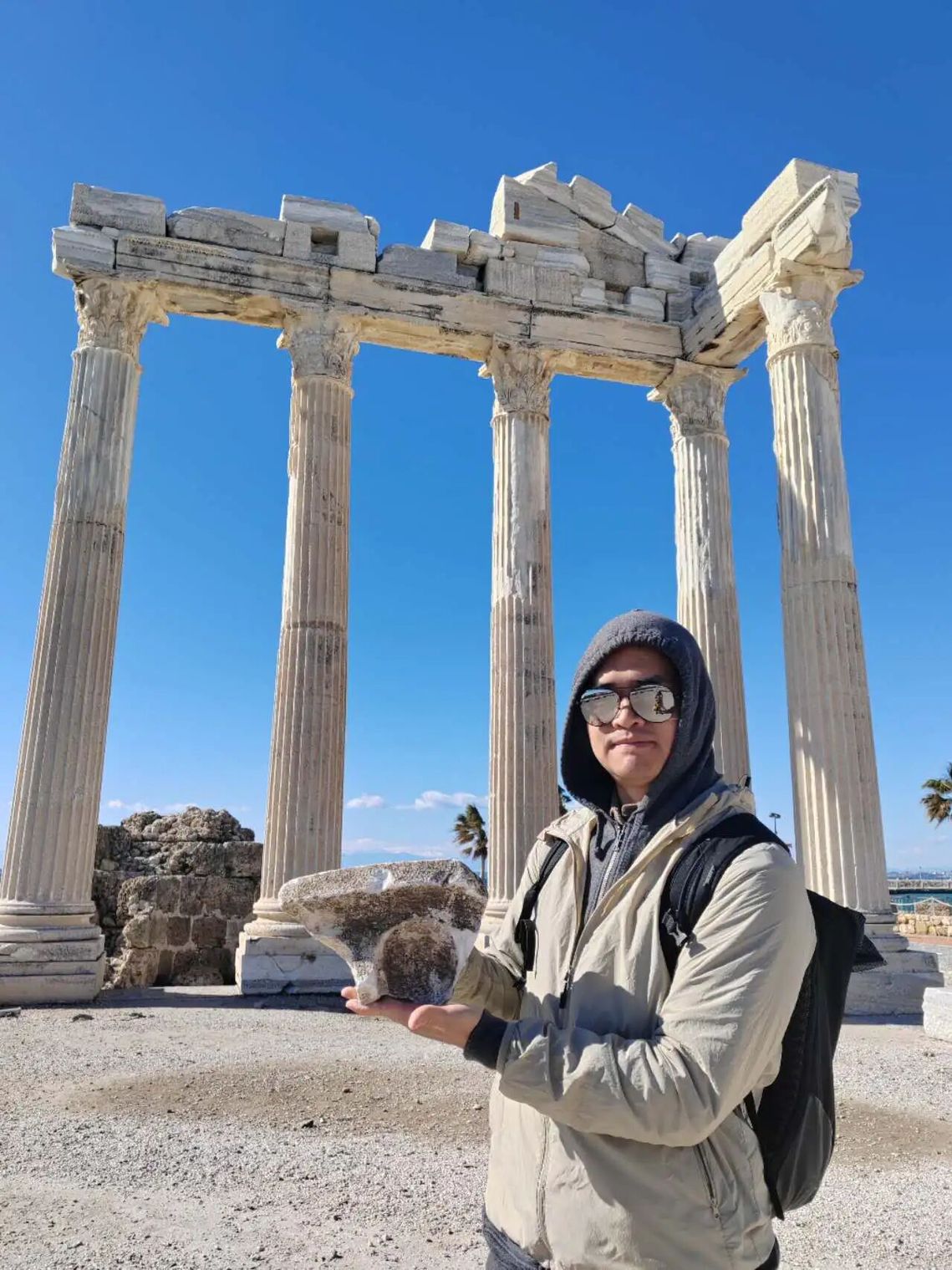
Hang Zhang in front of ancient Roman ruins.
He gradually found that research suited his interests perfectly: "It allows me to explore the unknown while also giving me opportunities to encounter different countries and cultures."
His research includes hydrogel design, soft matter processing, and bioinspired soft matter. Work on condition-reflex-inspired "learnable" soft materials and light-driven negative-feedback hydrogels has been published in journals such as Nature Nanotechnology.
Research That Is Fascinating, Research That Is Humane
Many of Zhang's inspirations come from everyday life. While growing melons on his balcony, he wondered how the tendrils of a watermelon vine find support and wrap around it. He once scooped a bottle of pond water in Aachen and studied under a microscope how microorganisms swim. He also observed squid at an aquarium in the Canary Islands—which produce striking changes in skin patterns when startled—and asked whether synthetic materials could achieve similar behavior.
"All kinds of odds and ends stored in your brain may suddenly become inspiration one day," Zhang said.
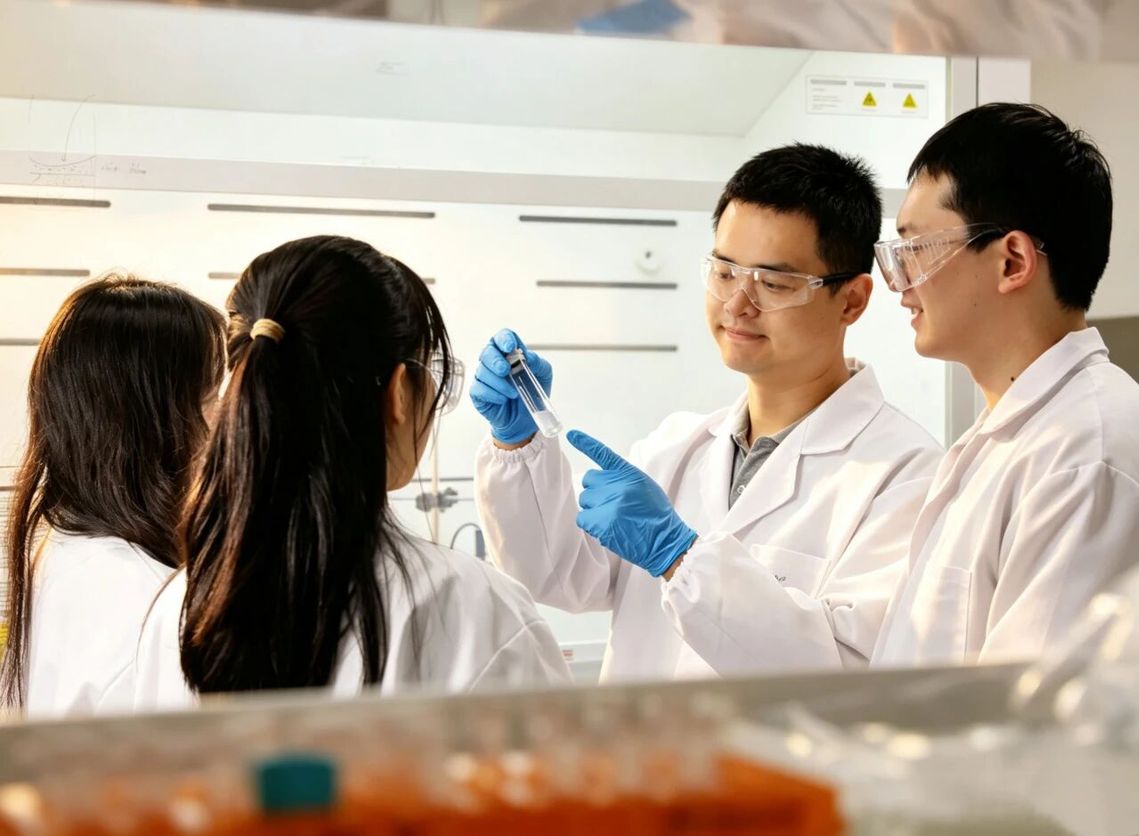
Hang Zhang discussing with students in the lab.
During a discussion, an idea flashed through his mind: "Skin has excellent mechanical properties and can heal itself after injury—can our materials do the same?"
Pursuing this line of inquiry, he and his collaborators proposed a new nanoconfinement effect that allows hydrogels to become stiffer while retaining self-healing properties. The paper was published in Nature Materials.
What he did not expect was that, after the paper was published, he would receive forty to fifty help-seeking emails from around the world.
One young man told him that his mother had long suffered from a skin disease and was in great pain: "If you have a solution, we are willing to volunteer for clinical trials."
A foundation abroad contacted him, hoping he would carry out in-depth research on the rare genetic disorder known as Epidermolysis bullosa.
Tattoo artists also reached out. Tattoos are common abroad and skin healing takes time: "Could your material make it heal faster?"
The team of an internationally renowned athlete also emailed, hoping to try the material for sports injury repair. When Zhang and his colleagues saw the email, their first reaction was: Could an email from someone this famous be a phishing scam?
"These requests from completely different groups—from rare disease patients to professional athletes—made me realize that although this is basic materials research inspired by biological systems and still faces many challenges before clinical application, it touches on a universal and real need. I had never imagined that doing research could connect me with so many people in different fields. I even learned about many rare skin diseases through this," Zhang said.
At that moment, he gained a new understanding of the meaning of research. He had once thought that research simply needed to be interesting, but through this experience he saw its potential to contribute to human health.
"Your feedback and stories have deeply moved our team. They reveal real needs that we cannot ignore. Although we cannot promise specific results or a timeline, we are committed to exploring how such materials may contribute to biomedical progress in the future," Zhang replied to each email, and he said he would continue to work in this field.
He received the 2026 "Future Chemical Engineering Scholars" Award from the Global Academy of Chinese Chemical Engineering Scholars and delivered a keynote presentation at the Future Chemical Engineering Forum during the Academy's 18th Annual Conference. A key reason for the award is that the forum focuses on whether applied fundamental research has produced creative results or new theories, and on their potential for future engineering applications.
Equal Exchange and Fertile Soil for Bold Ideas
As a young researcher, Zhang enjoys an easy rapport with his students. But this equality does not mean a lack of boundaries—the mentor's role entails professional guidance and academic expectations. He is serious when necessary and relaxed when possible.
This has much to do with his experience studying abroad.
While pursuing his master's degree in Germany, he once approached a seemingly stern professor with a question. Rather than talking down to him, the professor drew diagrams on the blackboard and explained on the spot, and the two discussed as peers. Later, drawn by interesting research, he joined the research group as an intern. After a postdoc interview in Finland, he was invited to a sauna with several prominent professors—an experience that made Zhang feel that exchanges beyond academic discussion could also be so open and natural.
These experiences taught him that a mentor's professionalism and authority are not built on distance, but on competence and judgment. Outside academia, teachers and students can also communicate as friends.”
Guided by this philosophy, he encourages students to think freely and imaginatively, even if their ideas sound unrealistic, and he sometimes takes his students to a farm on weekends to ride horses, pick strawberries, and barbecue.
In his view, every young researcher can forge a research path with their own distinctive character; there is no single template for success. As Bertrand Russell said, diversity is essential to happiness. But two things, he believes, are especially important: first, go deep enough in your own field, be patient, and stick with the direction you love; second, maintain an interdisciplinary perspective and dare to step outside your field to integrate ideas across disciplines.
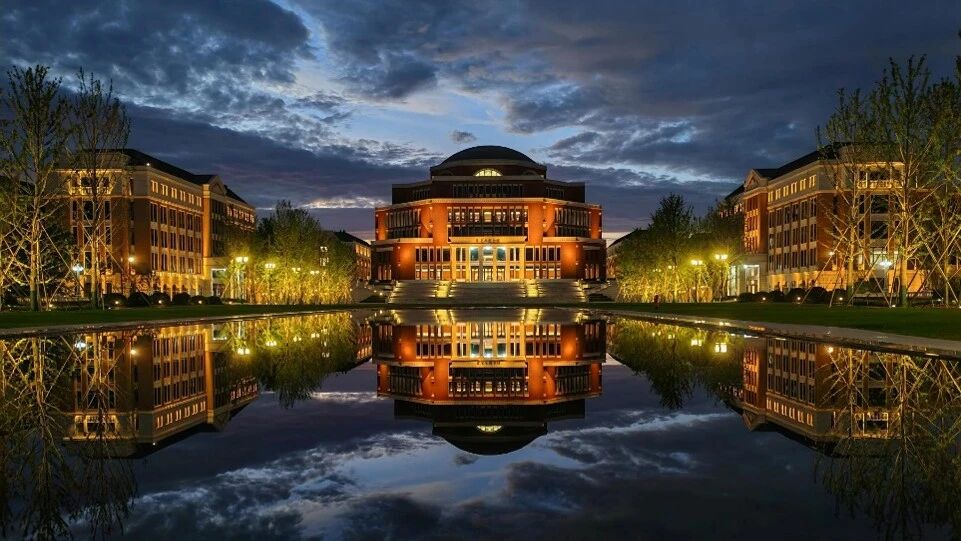
A night view of the library photographed by Hang Zhang.
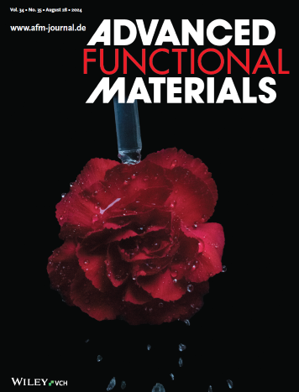
The moment a hydrogel meets flower petals, photographed by Hang Zhang and Amanda Eklund.
Outside work, he still enjoys observing the everyday life. He photographs the library at sunset reflected in the water and records the moment a hydrogel meets flower petals.
Zhang will continue to share his research story. His experience reflects life as a young PI at EIT: here there is not only a top-tier research environment, but also fertile soil where imaginative ideas can take root.
Nature Materials Paper:https://doi.org/10.1038/s41563-025-02146-5